Best time to visit Yogyakarta for events and culture
When to visit Yogyakarta for festivals, cultural events, and local celebrations — the months when the city is most alive.
Best month
June
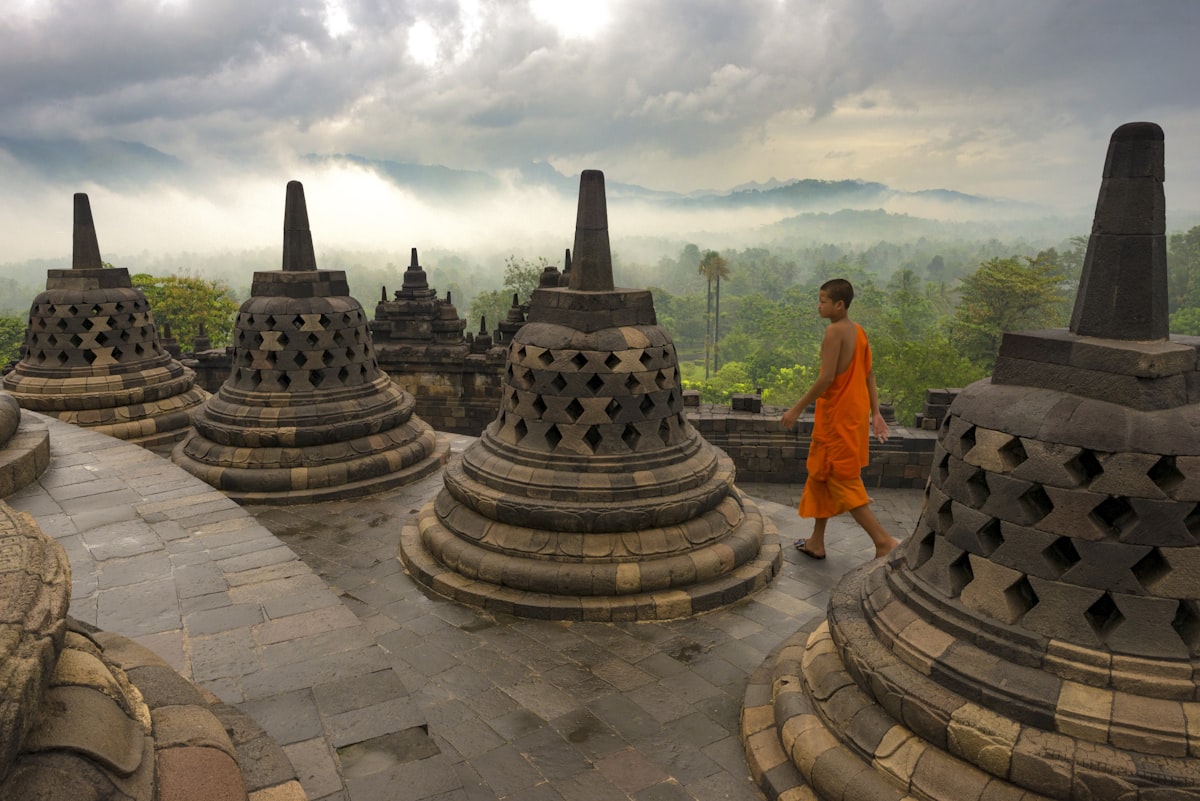
The dry season peak begins — near-perfect skies for Borobudur sunrise before full school-holiday crowds.
↑Near-zero rain (45mm): Borobudur sunrise virtually guaranteed — one of Southeast Asia's great spectacles
↑Batik workshops, silver workshops, and wayang performances operating at full schedule
↑Waisak (Buddhist full moon celebration at Borobudur) falls in May–June: spectacular and unique
All months ranked — Events
Best match
The dry season peak begins — near-perfect skies for Borobudur sunrise before full school-holiday crowds.
#1 for events
Best match
Dry season opens — reliable morning sun and the best value window before June crowds arrive.
#2 for events
Best match
The dry season shoulder: crowds thin, prices ease, weather still reliably clear.
#3 for events
Best match
Transition month — noticeably drier, Borobudur sunrise reliably clears by mid-month.
#4 for events
Best match
The absolute driest month — flawless temple conditions but peak domestic and international crowds.
#5 for events
Best match
Shoulder month — good value and manageable rain; mornings typically clear for temples.
#6 for events
Strong option
Driest month of the year — perfect Borobudur sunrise but peak crowds and prices.
#7 for events
Worth considering
Monsoon returns in force — cultural and indoor experiences hold up, temple touring doesn't.
#8 for events
Worth considering
Monsoon beginning to ease — occasional clear mornings appear, but afternoons remain unpredictable.
#9 for events
Avoid
Peak monsoon meets Christmas tourism — high prices for poor weather; avoid unless you can't help it.
#10 for events
Avoid
Peak monsoon: 320mm of rain makes Borobudur sunrise a muddy lottery.
#11 for events
Avoid
Still deep monsoon — marginally drier than January but Borobudur sunrise remains unreliable.
#12 for events