Warsaw
Stare Miasto (Old Town)
Maksym Harbar / Unsplash
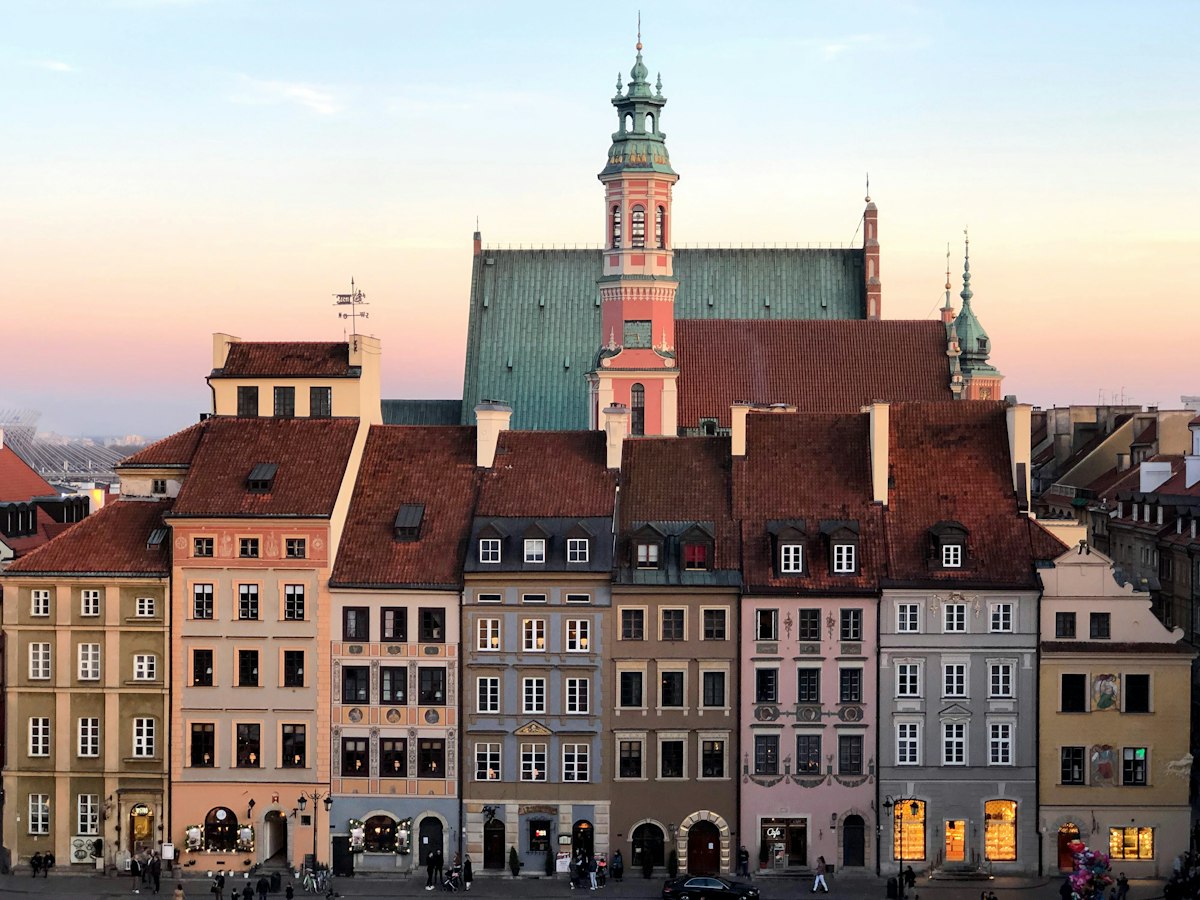
Warsaw's UNESCO-listed reconstructed Old Town — the city's most iconic quarter and essential on any first visit.
Stare Miasto is one of the most remarkable urban reconstruction projects in history: almost entirely destroyed during the Second World War, Warsaw's Old Town was painstakingly rebuilt brick-by-brick from paintings and photographs and inscribed as a UNESCO World Heritage Site in 1980. The colourful Market Square, the Royal Castle, St John's Cathedral and the Barbican gatehouse are all within a compact, highly walkable area. It is undeniably touristy, but the sheer improbability of what was achieved here — a medieval city centre rebuilt from rubble — gives it a poignancy that sets it apart from more intact European old towns.
Scores
Walkability
Transit
Price
Local feel
Nightlife
Family-friendly
Centrality
What you gain
- ↑The Royal Castle, Market Square and Barbican — Warsaw's most essential historic sights — all within a 10-minute walk
- ↑The rebuilding story itself is remarkable; the Old Town Museum explains the reconstruction in detail and adds extraordinary depth to the visit
- ↑Beautiful at any time of year: summer café terraces, autumn colour on the fortifications, Christmas market in December
What you sacrifice
- ↓The most touristy neighbourhood in Warsaw; café and restaurant prices in the Market Square are well above local norms
- ↓Crowds peak in July and August — the narrow lanes can feel overwhelmed on summer weekends
Best for
Avoid if
Other Warsaw neighbourhoods
Warsaw's modern city centre — the Palace of Culture, business hotels and everything within easy reach by metro.
Warsaw's residential heartland — great independent cafés, Lazienki Park on the doorstep, and almost no tourists.
Warsaw's edgy east-bank district — street art, Soviet-era neon, raw galleries and the city's most creative energy.
Know where to stay — now find when to go.
Best time to visit Warsaw →