Best time to visit Kenya without the crowds
When to visit Kenya for fewer tourists — quieter sites, more authentic local atmosphere, and less pressure on transport and restaurants.
Best month
June
Dry season resumes — the safari season begins and the wildebeest migration build-up starts.
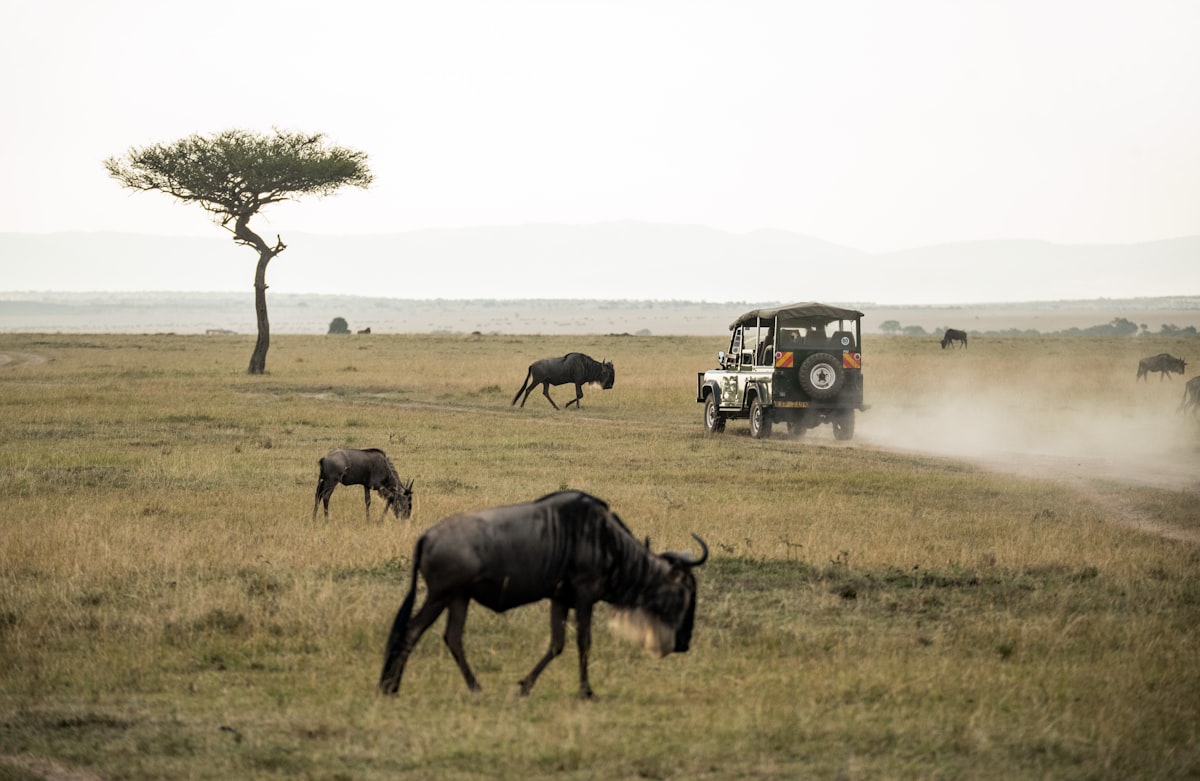
↑June marks the resumption of Kenya's long dry season and the reopening of most Masai Mara camps after the long rains. Road conditions rapidly recover, the grass begins to dry, and the first advance columns of wildebeest from Tanzania's Serengeti begin pushing north into the Mara Triangle. By late June, herds of 50,000–200,000 animals are visible in the Mara Triangle — the advance guard of the full July–September migration.
↑Nairobi in June is at its most pleasant — cool, clear, and dry, with the altitude (1,795m) keeping temperatures at a perfect 22–25°C. This is the city's cultural peak: the Nairobi Gallery, the Karen Blixen Museum (the original Out of Africa farmhouse), and the Giraffe Centre at Langata are all busy but not overwhelmed.
↑The Kenyan coast in June sees the SE trade winds pick up strongly. Diani Beach and Watamu receive reliable, cooling sea breezes that keep temperatures at 27–28°C without the April–May humidity. Indian Ocean snorkelling conditions at the Marine National Parks (Watamu, Malindi, Kisite-Mpunguti) are at their annual best from June.
All months ranked — Without crowds
Best match
Dry season resumes — the safari season begins and the wildebeest migration build-up starts.
#1 for without crowds
Best match
Short Rains peak — shoulder season prices at good camps, but game viewing requires flexibility.
#2 for without crowds
Best match
Long Rains tapering — Diani Coast starts to look attractive and Mara is still difficult.
#3 for without crowds
Best match
Wildebeest calving season in the Mara — predator activity at its most intense and memorable.
#4 for without crowds
Best match
Long Rains begin — green landscapes but game viewing becomes harder as vegetation thickens.
#5 for without crowds
Best match
Short Rains arrive, migration ends, prices drop — Nairobi marathon and excellent Amboseli.
#6 for without crowds
Best match
Dry season continues — excellent visibility, hot in lowlands, and ideal Amboseli conditions.
#7 for without crowds
Worth considering
Peak rainy season — cheapest prices, lowest crowds, and dramatically difficult game viewing.
#8 for without crowds
Strong option
Migration continues, crowds begin to thin — arguably the sweet spot of the Mara season.
#9 for without crowds
Strong option
Short Rains ending, dry season resuming — calving season approaches and Christmas premium arrives.
#10 for without crowds
Strong option
The Great Migration peaks — 1.5 million wildebeest and the most spectacular river crossings.
#11 for without crowds
Strong option
Migration peak continues — the most intense river crossings and predator action of the year.
#12 for without crowds