Kenya · Month comparison
June vs July
July ranks #1 overall vs June at #2. The Great Migration peaks — 1.5 million wildebeest and the most spectacular river crossings.
June
#2 of 12 months
Best match
Dry season resumes — the safari season begins and the wildebeest migration build-up starts.
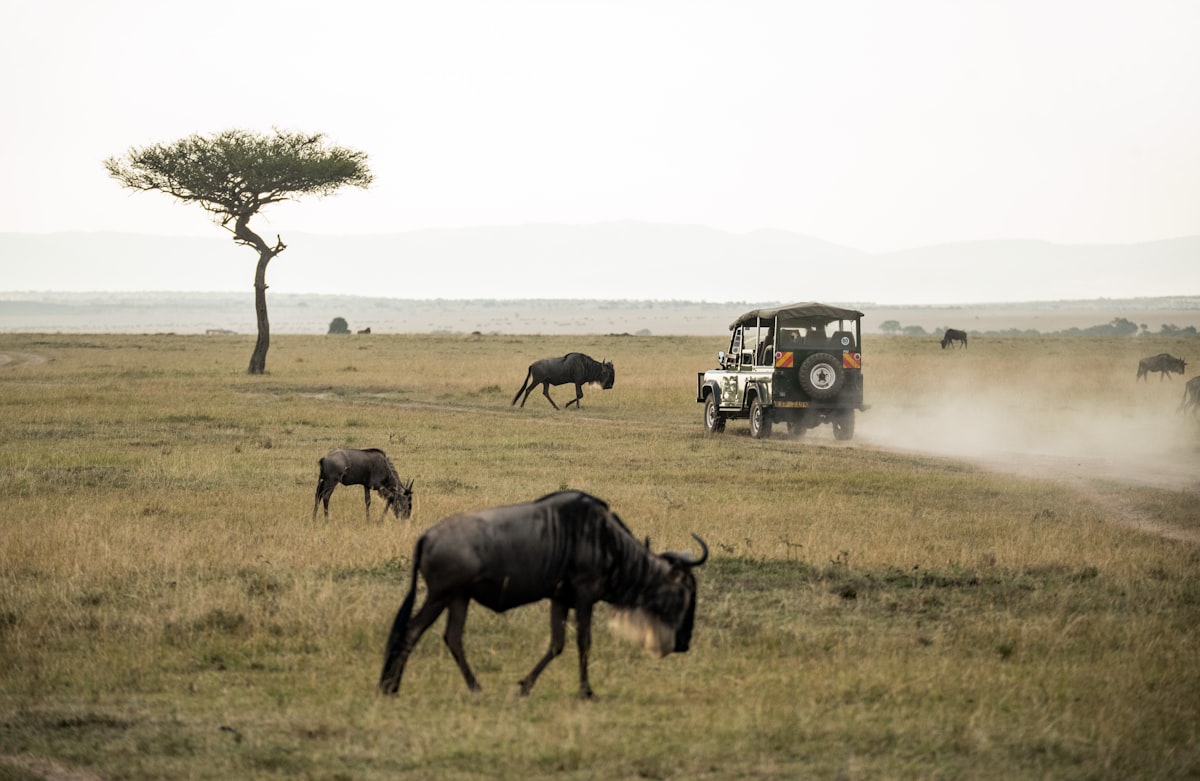
- ↑June marks the resumption of Kenya's long dry season and the reopening of most Masai Mara camps after the long rains. Road conditions rapidly recover, the grass begins to dry, and the first advance columns of wildebeest from Tanzania's Serengeti begin pushing north into the Mara Triangle. By late June, herds of 50,000–200,000 animals are visible in the Mara Triangle — the advance guard of the full July–September migration.
- ↑Nairobi in June is at its most pleasant — cool, clear, and dry, with the altitude (1,795m) keeping temperatures at a perfect 22–25°C. This is the city's cultural peak: the Nairobi Gallery, the Karen Blixen Museum (the original Out of Africa farmhouse), and the Giraffe Centre at Langata are all busy but not overwhelmed.
July
#1 of 12 months
Best match
The Great Migration peaks — 1.5 million wildebeest and the most spectacular river crossings.
- ↑July is the month Kenya exists for in the global travel imagination. The Great Migration river crossings begin in earnest: the Mara River crossing points — Crossing No. 1 in the Mara Triangle, Lookout Hill, and the Serena crossing — host wildebeest plunging into the river in groups of thousands, with Nile crocodiles (some over 5 metres long) intercepting the herd mid-water. A single crossing event can last 2–4 hours and involve 50,000–200,000 animals. There are no guarantees on timing — crossings occur based on wildebeest instinct and predator pressure — but July is the peak month for crossing frequency.
- ↑The Maralal International Camel Derby (typically late July, Maralal town in Samburu County) is one of East Africa's most extraordinary cultural and sporting events — amateur and professional camel racing drawing participants from across Kenya and internationally. The surrounding Samburu landscape, distinct from the Mara, hosts elephants, reticulated giraffes, and Grevy's zebra.
| Factor | June | July |
|---|---|---|
| Weather score | 7 | 9 |
| Value score | 7 | 3 |
| Crowd score | 7 | 3 |
| Events score | 7 | 10 |
| Atmosphere | 8 | 10 |
| Avg high temp | 24.5°C | 23.4°C |
| Monthly rain | 55mm | 24mm |
| Daily sunshine | 7.8hrs | 8.7hrs |
June trade-offs
- ↓June prices are building toward peak season. Mid-range Mara camps climb back toward $350–$500pppn as the dry season begins and demand recovers. Premium camps approach their peak rates by late June.
- ↓The river crossings — the most dramatic moments of the Great Migration, when wildebeest plunge into the Mara River through crocodile-infested water — are not reliably occurring in June. Herds are building and moving but the defining crossing events are a July–September phenomenon.
July trade-offs
- ↓July is Kenya's most expensive month. Premium Mara camps (Angama Mara, Mahali Mzuri, AndBeyond Bateleur Camp) charge $1,000–$1,500pppn fully inclusive. Even mid-range camps with less-than-perfect locations run $400–$600pppn. Booking 6–12 months in advance is advised for the best camps — the most desirable river-adjacent positions sell out by March for July.
- ↓The Masai Mara in July is crowded by African safari standards — multiple vehicles converging on predator sightings and crossing events is a reality. At popular crossing points, the vehicle concentration can feel at odds with the wilderness experience. This is mitigated in the conservancies (Olare-Motorogi, Naboisho, Ol Kinyei) which impose vehicle limits per sighting.
Scores compare months within Kenya. Climate data: Open Meteo ERA5 30-year normals (1991–2020). Methodology →