Krabi · Month comparison
April vs March
March ranks #1 overall vs April at #2. Still-excellent conditions at better value — the dry season's best month for most visitors.
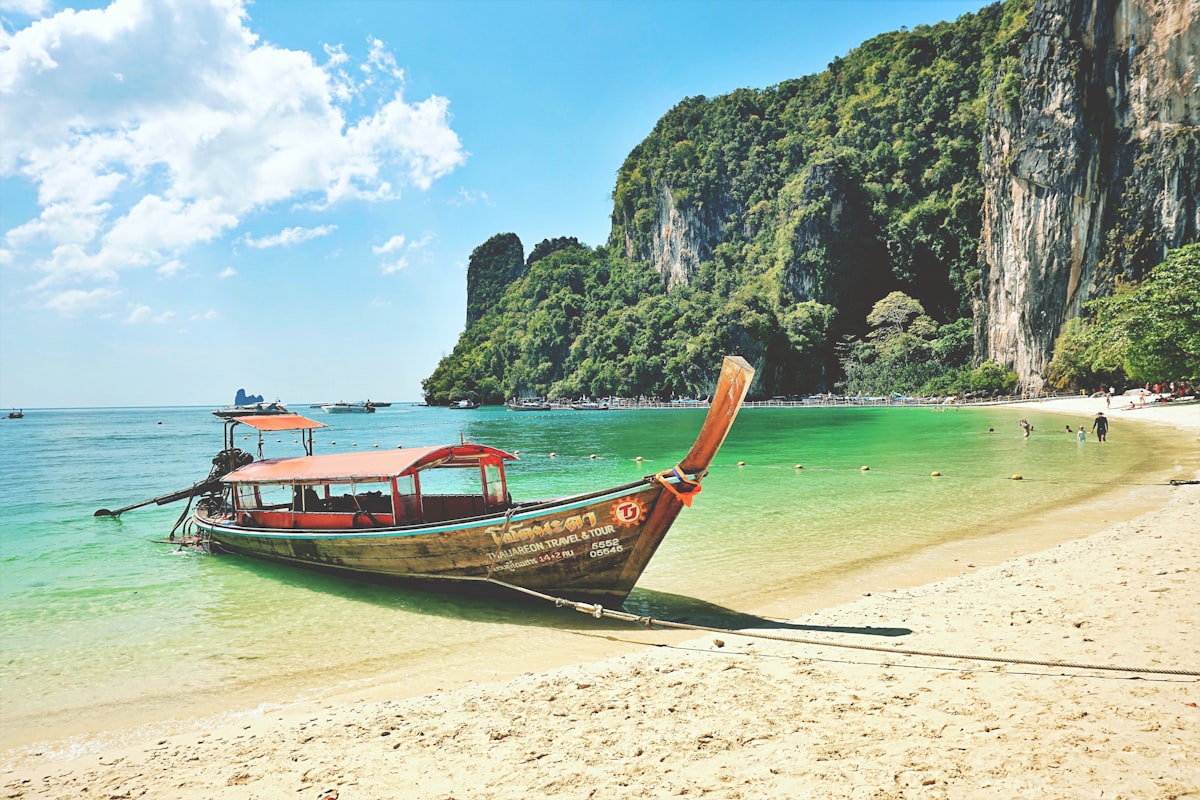
April
#2 of 12 months
Best match
Songkran and the tail of the dry season — festive, transitional, and good value.
- ↑Songkran (April 13–15): Ao Nang erupts into city-wide water fights; one of the most joyful festivals in Southeast Asia and a genuine Krabi highlight
- ↑Prices 30–40% below February peak with early-April conditions still dry enough for Railay day trips and island tours

March
#1 of 12 months
Best match
Still-excellent conditions at better value — the dry season's best month for most visitors.
- ↑Conditions nearly identical to February at noticeably lower prices: the dry season's best value window on the Andaman coast
- ↑All island tours, Railay longtail transfers, and Four Islands trips operating at full capacity
| Factor | April | March |
|---|---|---|
| Weather score | 7 | 9 |
| Value score | 6 | 5 |
| Crowd score | 6 | 5 |
| Events score | 7 | 4 |
| Atmosphere | 7 | 8 |
| Avg high temp | 34°C | 34°C |
| Monthly rain | 85mm | 45mm |
| Daily sunshine | 8hrs | 8.5hrs |
April trade-offs
- ↓Monsoon approaching: sea conditions variable from mid-April, some Four Islands and longtail trips cancelled on rough days
- ↓Songkran week brings its own crowd surge to Ao Nang — and getting soaked on Songkran day is not optional
- ↓Heat intensifying toward 34°C highs with rising humidity; rock climbing on Railay wall is best done before 9am
March trade-offs
- ↓Temperatures rising toward 34°C with increasing humidity: midday on the beach or mid-route rock climb becomes genuinely hot
- ↓Some Ao Nang hotel rates remain elevated through Thai school holiday weeks in late March
- ↓Sea conditions beginning to shift toward month end — occasional swell precedes the approaching monsoon
Scores compare months within Krabi. Climate data: Open Meteo ERA5 30-year normals (1991–2020). Methodology →