

Showing: Mar · Unsplash / Unsplash
Thailand · Asia Pacific
Best time to visit Krabi
March
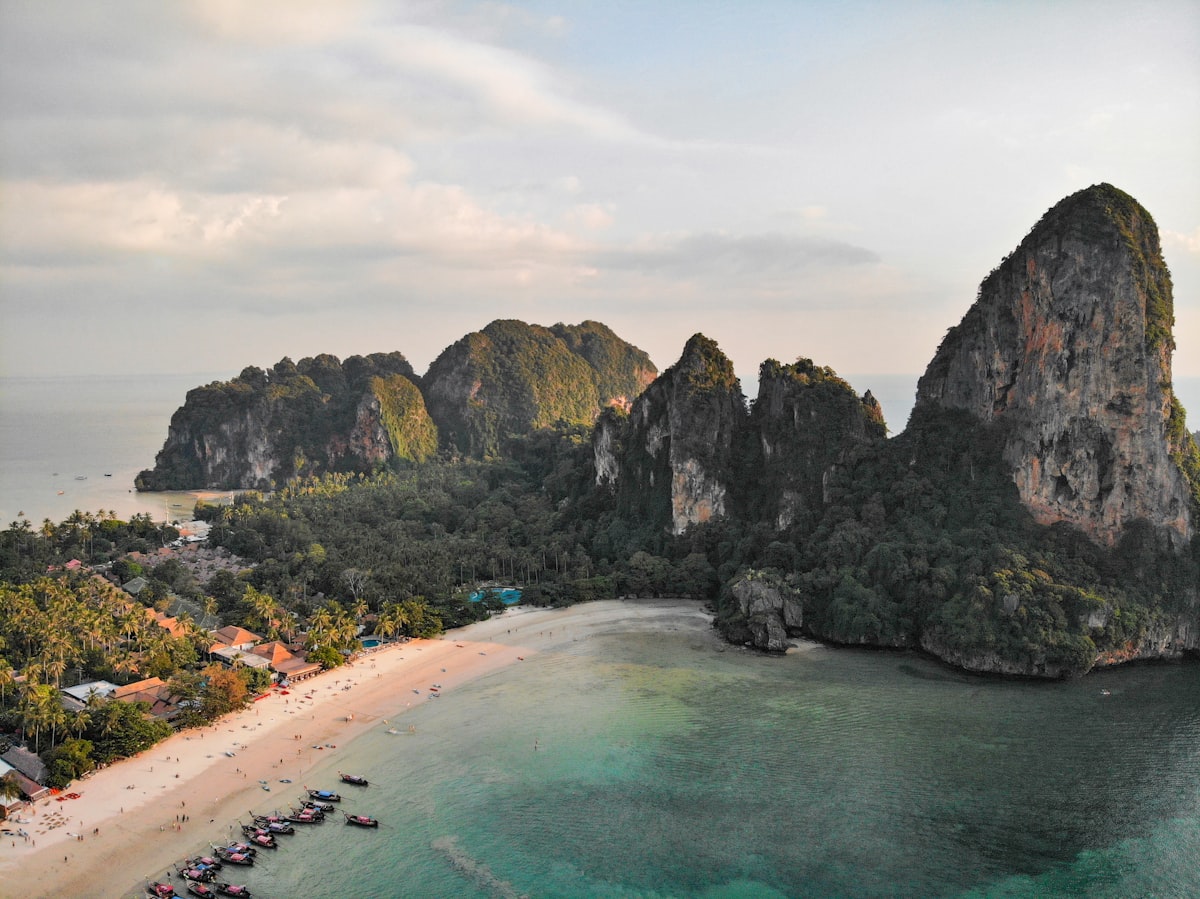
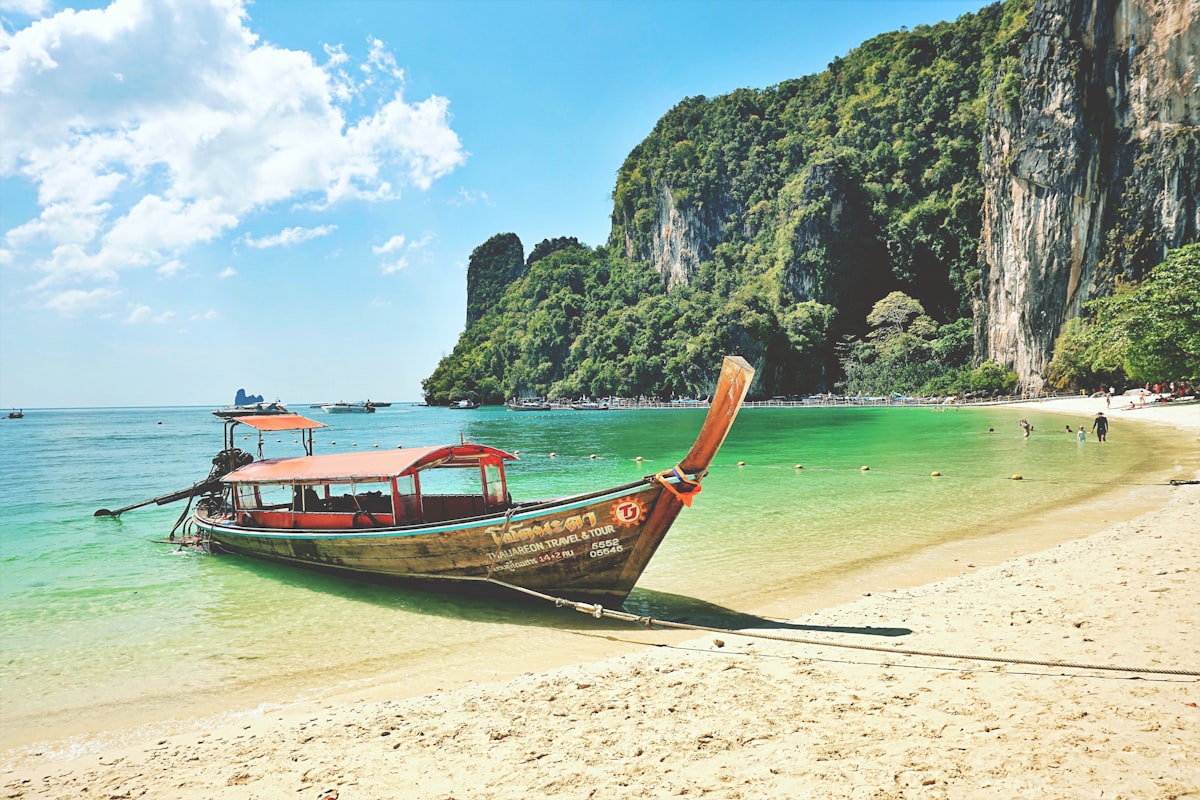
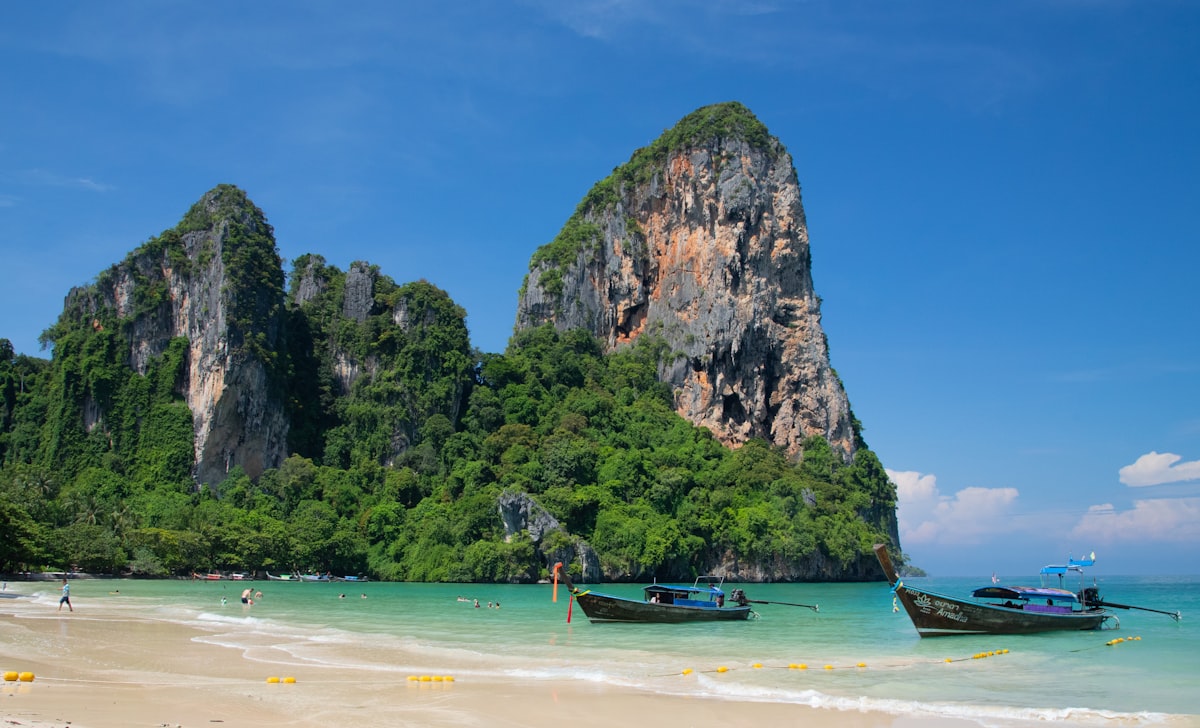
Mar scores highest overall — reliable weather and strong local atmosphere. Set your priorities below to personalise this result.
What matters most to you?
All 12 months — click any to expand
Mar
Unsplash / Unsplash
Still-excellent conditions at better value — the dry season's best month for most visitors.
34°C
High
24°C
Low
45mm
Rain
8.5h
Sun/day
What you gain
- ↑Conditions nearly identical to February at noticeably lower prices: the dry season's best value window on the Andaman coast
- ↑All island tours, Railay longtail transfers, and Four Islands trips operating at full capacity
- ↑European school holidays end mid-March — Railay beach eases noticeably from mid-month
What you sacrifice
- ↓Temperatures rising toward 34°C with increasing humidity: midday on the beach or mid-route rock climb becomes genuinely hot
- ↓Some Ao Nang hotel rates remain elevated through Thai school holiday weeks in late March
- ↓Sea conditions beginning to shift toward month end — occasional swell precedes the approaching monsoon
Mar scores highest overall — reliable weather and strong local atmosphere. Set your priorities below to personalise this result.
Mar
Still-excellent conditions at better value — the dry season's best month for most visitors.
34°C
High
45mm
Rain
8.5h
Sun
- ↑Conditions nearly identical to February at noticeably lower prices: the dry season's best value window on the Andaman coast
- ↑All island tours, Railay longtail transfers, and Four Islands trips operating at full capacity
- ↑European school holidays end mid-March — Railay beach eases noticeably from mid-month
- ↓Temperatures rising toward 34°C with increasing humidity: midday on the beach or mid-route rock climb becomes genuinely hot
- ↓Some Ao Nang hotel rates remain elevated through Thai school holiday weeks in late March
- ↓Sea conditions beginning to shift toward month end — occasional swell precedes the approaching monsoon
Top travel windows
★ BestMarch
Best overall
Highest combined score
34°C
High
45mm
Rain
8.5h
Sun
September
Best for value
Lowest prices & fees
31°C
High
265mm
Rain
4.5h
Sun
September
Fewest crowds
Quietest month
31°C
High
265mm
Rain
4.5h
Sun
Breakdown by priority
Best for weather
March
34°C high · 45mm rain · 8.5hrs sun/day
Best for budget
September
Lowest hotel prices of the year: even the better Ao Nang properties at minimum rates
Fewest crowds
September
Krabi coast near-empty: Ao Nang's normally busy beach strip deserted, local restaurants quiet and unhurried
Worst time to visit
September
265mm of rainfall — the worst weather month on Krabi's Andaman coast; Railay effectively unreachable for most of the month
Where to stay in Krabi
All neighbourhoods →
Krabi Town
The provincial capital — where actual Thais live, and the transport hub for the whole coast.
3/10
Central
7/10
Walk
8/10
Transit
Ao Nang
The main mainland hub — the most convenient and complete base for all Krabi coast activity.
9/10
Central
7/10
Walk
6/10
Transit
Also exploring

Tokyo
Japan
A city of dramatic seasonal contrasts — cherry blossom crowds, oppressive summer humidity, and golden autumn foliage — where the wrong timing can make or break the trip.

Bali
Indonesia
A Hindu island of rice terraces, temple ceremonies, and surf breaks where the monsoon makes timing genuinely binary — the difference between dry and wet season is not subtle.

Maldives
Maldives
A destination defined almost entirely by its monsoon calendar — the difference between the NE dry season (November–April) and SW wet season (May–October) is not subtle and shapes every aspect of the experience.
Worth knowing
March scores highest overall. December is the most crowded month — avoid if you can. See crowd-free ranking →
Month by month breakdown
January#4▾
Gains
- ↑Only 25mm of rain all month: the limestone karst towers glow in clear January light — the signature Krabi postcard
- ↑Longtail boats to Railay Beach and the Four Islands tour (Ko Poda, Chicken Island) operating at full capacity every day
- ↑Rock climbing season in full swing: dry limestone on Railay East wall makes January the premier month for climbers of all levels
Sacrifices
- ↓High season prices: beachfront Railay accommodation at 2–3× off-season rates; Ao Nang hotels similarly elevated
- ↓Railay is the most sought-after beach in southern Thailand — longtail queues and limited bed availability throughout the month
- ↓Advance booking essential; last-minute arrivals often unable to secure Railay accommodation at any price
February#5▾
Gains
- ↑20mm rainfall and 9 hours of sunshine: the most reliable beach and climbing weather in the Andaman calendar
- ↑Four Islands tour and Railay longtail transfers operating flawlessly — sea conditions at their calmest
- ↑Rock climbing on Railay East: completely dry limestone gives optimal grip; February draws serious climbers from across Asia
Sacrifices
- ↓Peak of the high season: Railay accommodation and Ao Nang hotels at maximum rates — often 20–30% above January
- ↓Railay West Beach crowded throughout; longtail queues from Ao Nang regularly exceed 30 minutes
- ↓No last-minute availability on Railay at any budget; day-trip boats to Ko Poda book out
March#1▾
Gains
- ↑Conditions nearly identical to February at noticeably lower prices: the dry season's best value window on the Andaman coast
- ↑All island tours, Railay longtail transfers, and Four Islands trips operating at full capacity
- ↑European school holidays end mid-March — Railay beach eases noticeably from mid-month
Sacrifices
- ↓Temperatures rising toward 34°C with increasing humidity: midday on the beach or mid-route rock climb becomes genuinely hot
- ↓Some Ao Nang hotel rates remain elevated through Thai school holiday weeks in late March
- ↓Sea conditions beginning to shift toward month end — occasional swell precedes the approaching monsoon
April#2▾
Gains
- ↑Songkran (April 13–15): Ao Nang erupts into city-wide water fights; one of the most joyful festivals in Southeast Asia and a genuine Krabi highlight
- ↑Prices 30–40% below February peak with early-April conditions still dry enough for Railay day trips and island tours
- ↑Accommodation availability returns after the peak-season crunch — Railay accessible without months of advance planning
Sacrifices
- ↓Monsoon approaching: sea conditions variable from mid-April, some Four Islands and longtail trips cancelled on rough days
- ↓Songkran week brings its own crowd surge to Ao Nang — and getting soaked on Songkran day is not optional
- ↓Heat intensifying toward 34°C highs with rising humidity; rock climbing on Railay wall is best done before 9am
May#12▾
Gains
- ↑Prices drop 40–50% from peak season: Ao Nang hotels and even some Railay properties at their most affordable
- ↑Ao Nang virtually empty: restaurants, cafés, and the beach strip quiet without the dry-season crowds
- ↑Krabi's interior — Tiger Cave Temple and Thung Teao Forest Natural Trail — accessible without any queues
Sacrifices
- ↓Longtail boats to Railay Beach increasingly unreliable: cancelled or very rough on storm days — you can be effectively stranded on Railay if the sea turns
- ↓Four Islands tour suspended: Ko Poda and Chicken Island routes closed for the season as swells make the crossing unsafe
- ↓Rock climbing on Railay East wall rained out: wet limestone becomes dangerously slippery and most operators close
June#8▾
Gains
- ↑Some of the lowest accommodation rates of the year: mid-range Ao Nang properties at budget prices
- ↑Krabi Town's night market and riverside food stalls operating for locals — genuine Thai life at local prices
- ↑Koh Lanta (same monsoon timing) also quiet: the whole Krabi coast available cheaply for those focused on culture over beach
Sacrifices
- ↓215mm of rainfall with heavy daily downpours, often multi-hour: outdoor plans consistently disrupted
- ↓Longtail boat service to Railay severely curtailed — the beach is technically reachable on calm days but service is unreliable
- ↓Rock climbing completely off: all operators on Railay East wall closed for the wet season; wet limestone is dangerous
July#7▾
Gains
- ↑Cheapest accommodation of the year: Ao Nang hotels at rock-bottom rates, even beachside properties
- ↑Krabi completely uncrowded: a fundamentally different destination from the November–April version
- ↑Tiger Cave Temple (1,237 steps) rewarded with jungle views and zero crowds at the summit
Sacrifices
- ↓225mm of rainfall: the Andaman monsoon at full strength, with daily heavy downpours interrupting any outdoor activity
- ↓Railay Beach largely cut off: longtail service to Railay runs only when conditions allow — plan nothing that depends on it
- ↓All island tours (Four Islands, Ko Lanta day trips) suspended; rock climbing on Railay East wall fully closed
August#11▾
Gains
- ↑Ultra-low hotel rates persist in Ao Nang: 4-star properties at 2-star prices for those unbothered by rain
- ↑Krabi Town's local food scene fully operational with not a tour group in sight
- ↑Mangrove kayaking tours sometimes run on calmer morning windows between the heavy rain spells
Sacrifices
- ↓235mm of rainfall with rough sea conditions continuing throughout: the Andaman's worst sustained weather window
- ↓Railay Beach boat transfers dependent on daily sea state — cancellation possible at any time, making overnight stays risky
- ↓Rock climbing wall on Railay East remains slippery and off-limits; check operators are open before travelling for this purpose
September#10▾
Gains
- ↑Lowest hotel prices of the year: even the better Ao Nang properties at minimum rates
- ↑Krabi coast near-empty: Ao Nang's normally busy beach strip deserted, local restaurants quiet and unhurried
- ↑Krabi Town estuary and mangrove tours still possible on occasional calm mornings
Sacrifices
- ↓265mm of rainfall — the worst weather month on Krabi's Andaman coast; Railay effectively unreachable for most of the month
- ↓Boat services to Railay suspended for extended periods; some longtail operators stop running altogether until October
- ↓Many beach-side accommodation properties and tour operators partially close or operate skeleton service
October#9▾
Gains
- ↑Prices remain at off-peak levels while the sea begins to calm in the final week of October
- ↑Late October: first longtail trips to Railay restart reliably as the monsoon retreats — the early-bird window before prices rise
- ↑Ao Nang restaurants and tour operators reopening for the coming season; the coast quietly coming back to life
Sacrifices
- ↓245mm of rainfall, especially in early October: the monsoon lingers and Railay boat access remains unreliable through mid-month
- ↓Railay and Four Islands tours not reliably operating until late October at the earliest
- ↓Rock climbing on Railay East wall only safe in the final days of the month as limestone begins to dry
November#3▾
Gains
- ↑Rainfall drops sharply and longtail boats to Railay run daily again from mid-November — the best value window for the full Krabi experience
- ↑Rock climbing operators on Railay East wall reopen as limestone dries: November is the climber's secret month before December crowds arrive
- ↑Prices 30–40% below the December–February peak: four islands tours, longtails, and Ao Nang accommodation all affordable
Sacrifices
- ↓Early November still variable: some rain days linger from the monsoon transition, and a few Railay boat trips are still disrupted
- ↓Sea conditions improving but not yet at February optimum — occasional choppier days on the Ao Nang–Railay crossing
- ↓Accommodation on Railay fills quickly from mid-November as the dry season accelerates toward Christmas
December#6▾
Gains
- ↑Dry season in full swing: 40mm rainfall, calm Andaman seas, and daily longtail service to Railay and all island tours
- ↑Railay at its most dramatic in clear December light: the limestone towers reflected in turquoise water that defines Southeast Asian beach imagery
- ↑Christmas and New Year atmosphere across Ao Nang; beach bars and restaurants at their most festive
Sacrifices
- ↓Most expensive month for accommodation: Christmas and New Year surcharges make December prices match or exceed February on Railay and in Ao Nang
- ↓Railay West Beach at its most crowded — longtail queues from Ao Nang stretch to an hour during the Christmas week peak
- ↓Advance booking essential months ahead; last-minute Railay access not realistic during Christmas week
How this is calculated
Climate data
Open Meteo ERA5
30-year normals (1991–2020). Temperature, rainfall, sunshine, humidity.
Price & crowd
Tourism research
Seasonal pricing from tourism authority data. Directional — compares months within a destination only.
Personalisation
Weighted scoring
Your priorities change the weights. Budget-first users get different results than weather-first users.
Share this result
March is the best time to visit Krabi
Travel timing updates
New destinations and timing guides, when they land.
No spam. Unsubscribe anytime.