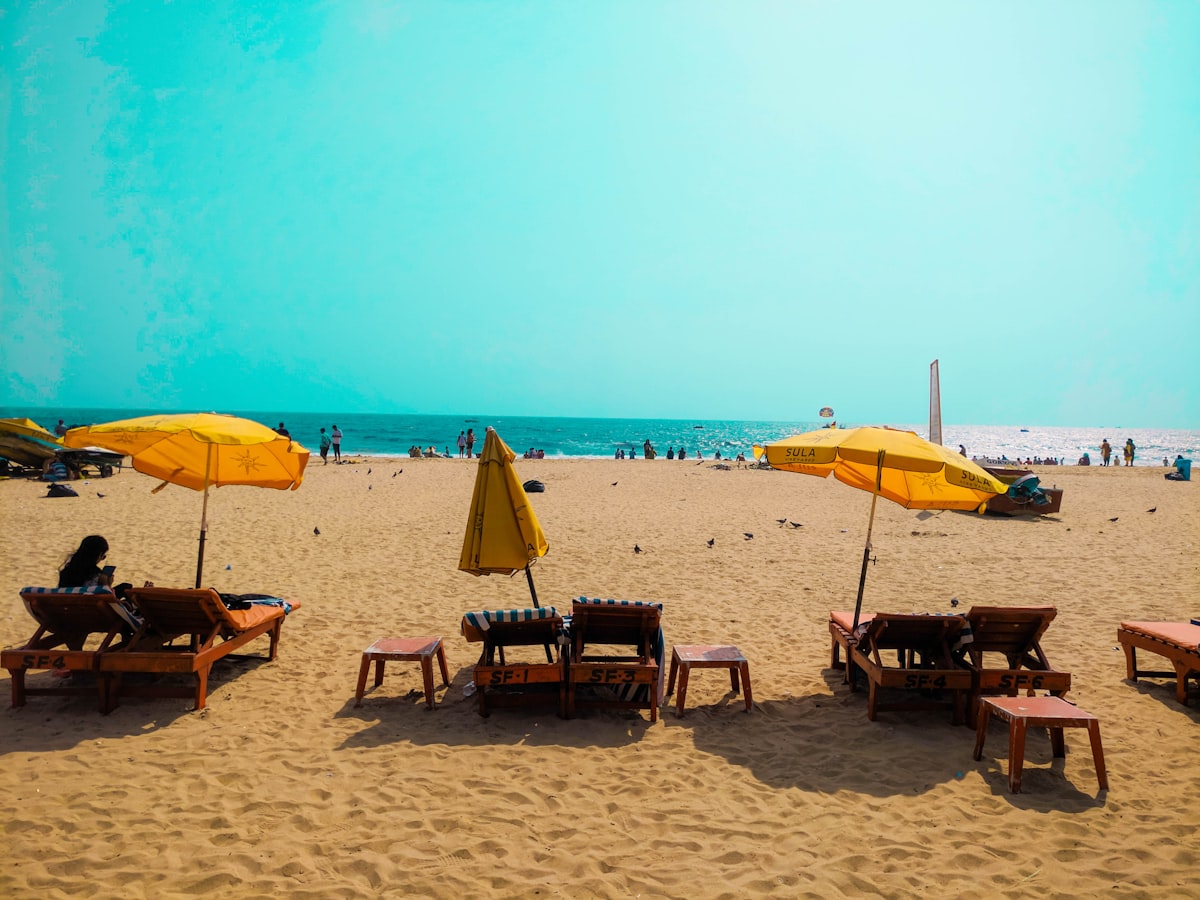
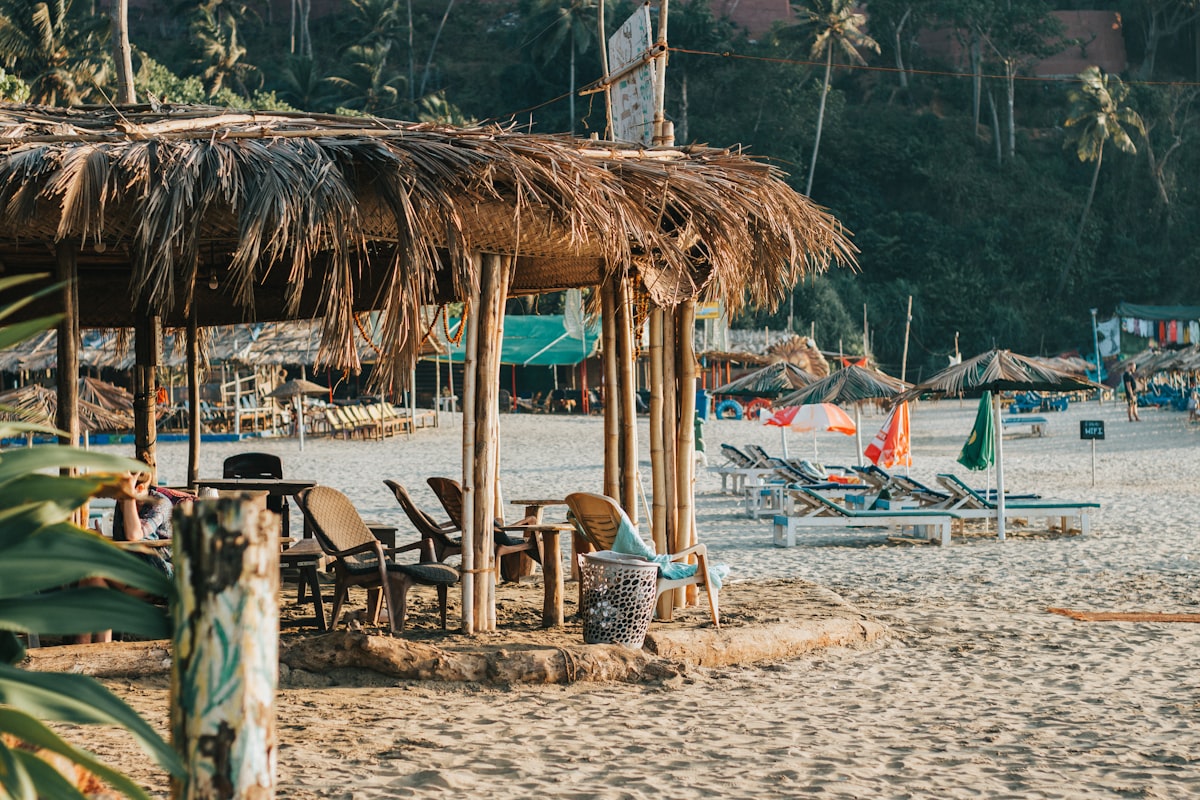
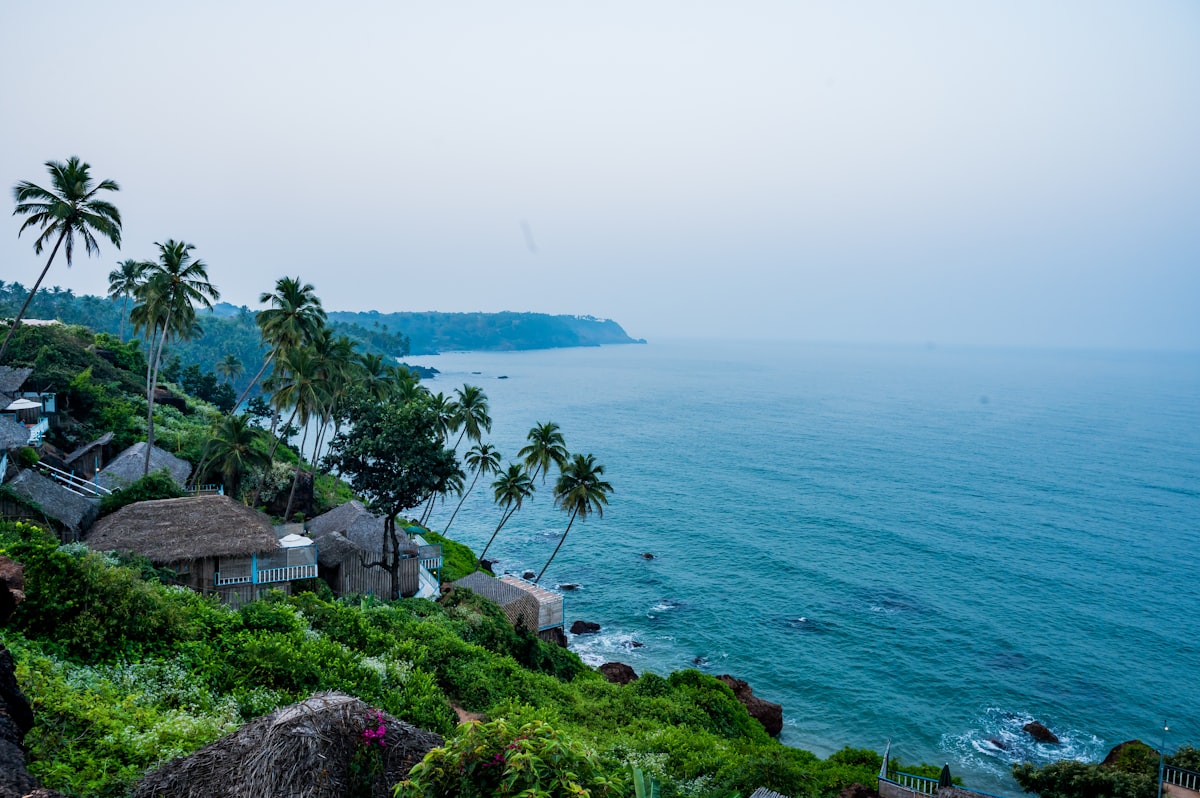
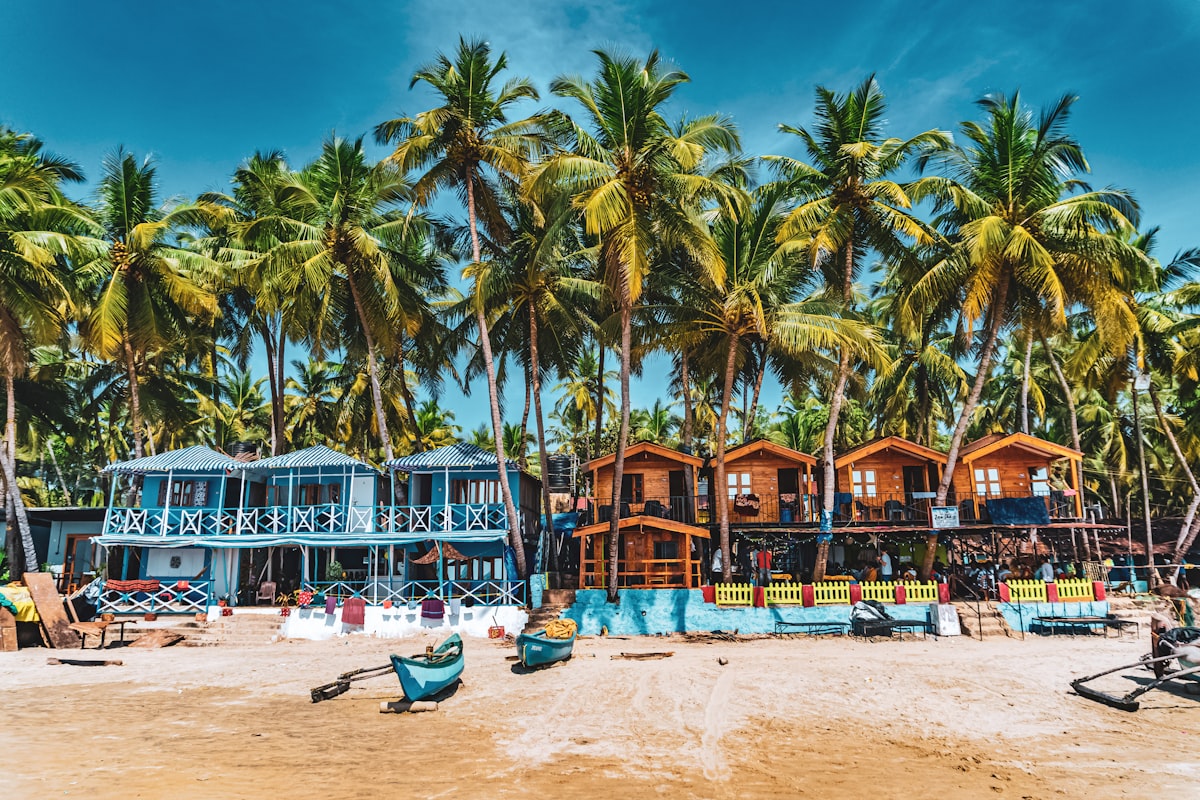

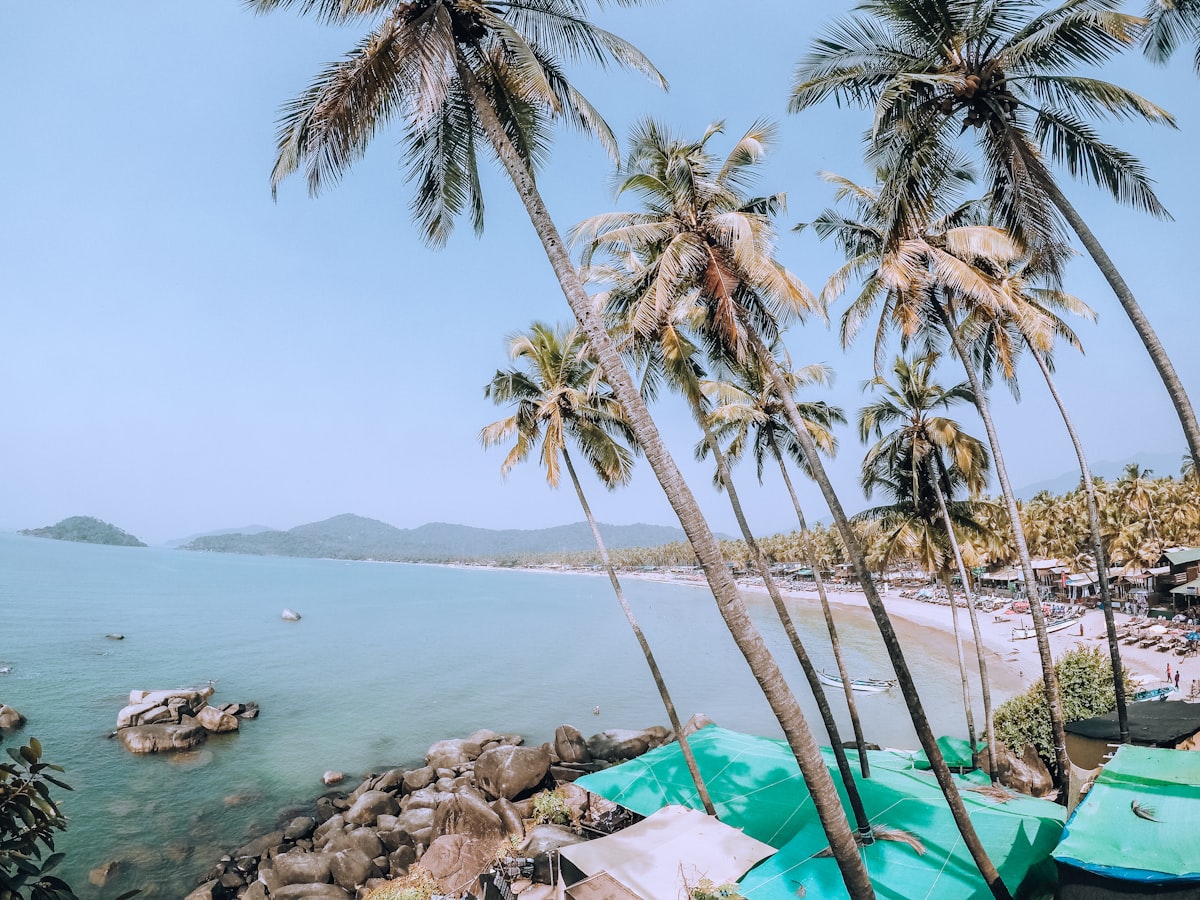
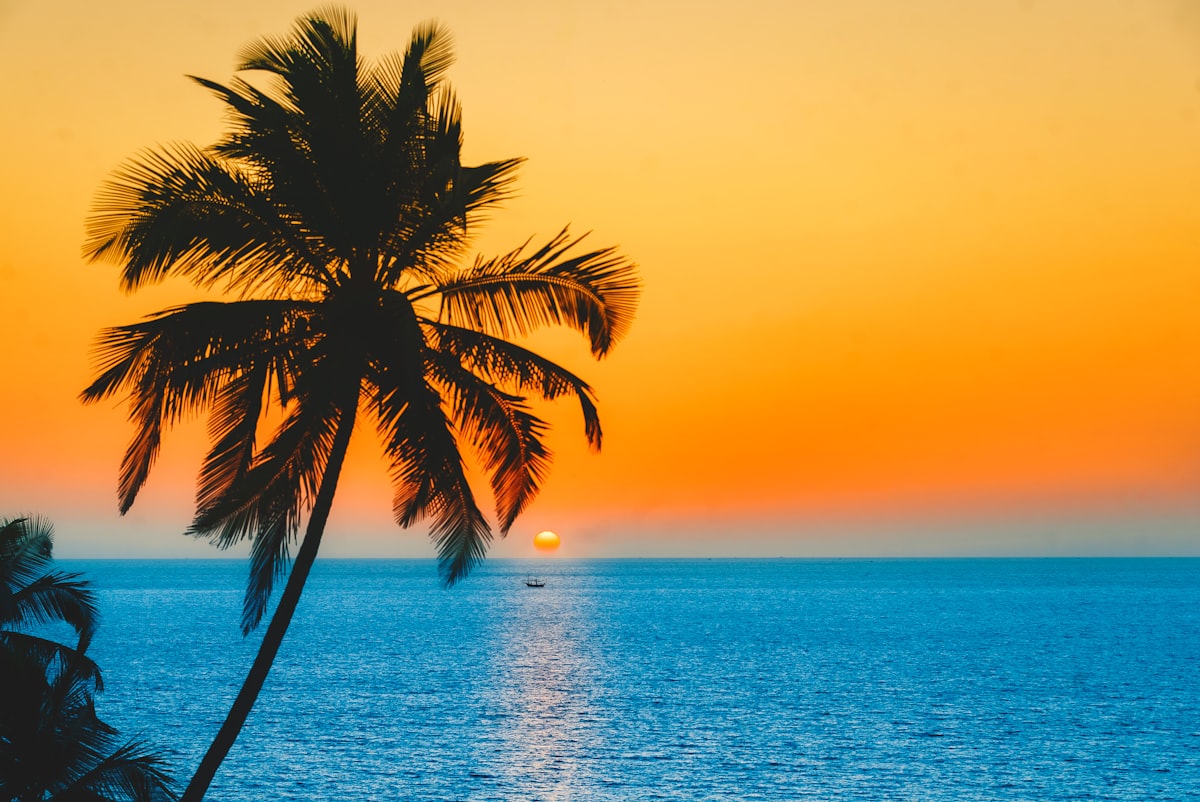
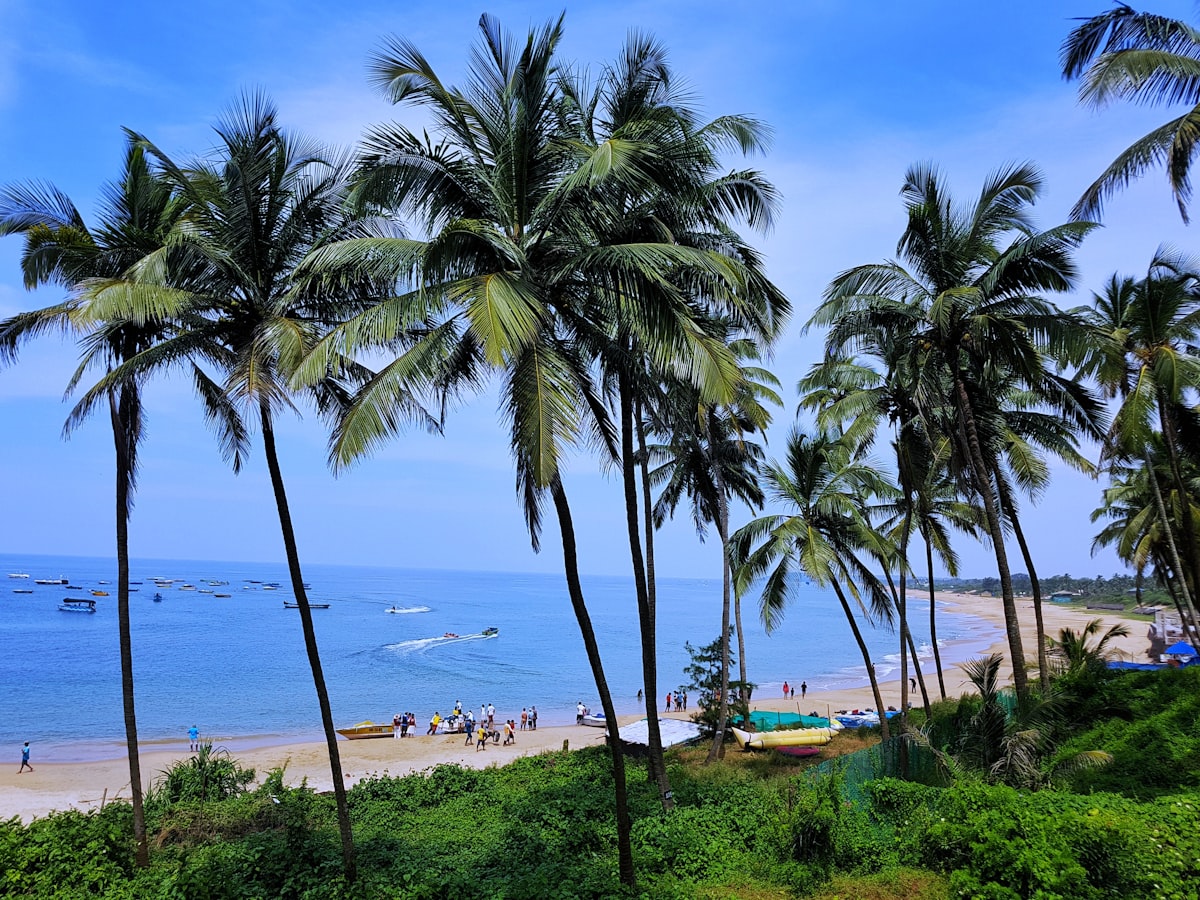
Showing: Feb · Sarang Pande / Unsplash
India · South Asia
Best time to visit Goa
February
Feb scores highest overall — reliable weather and strong local atmosphere. Set your priorities below to personalise this result.
What matters most to you?
All 12 months — click any to expand
Feb
Sarang Pande / Unsplash
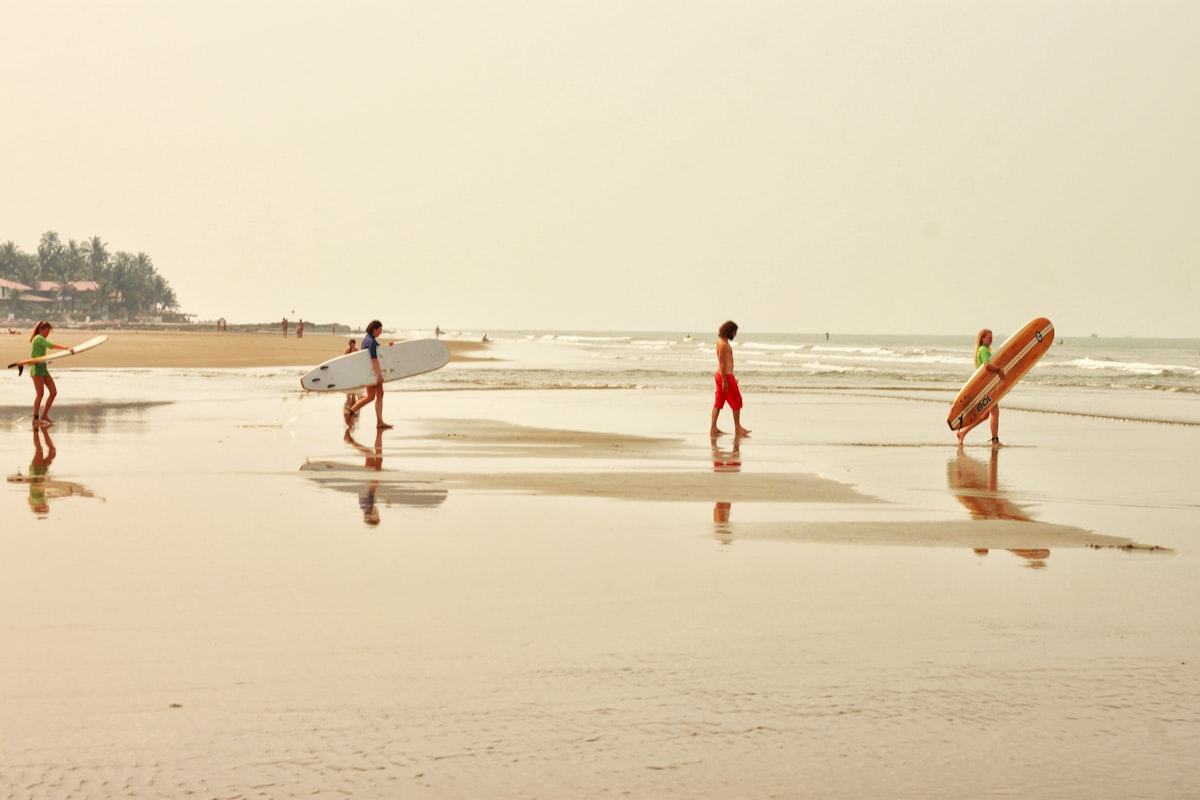
Goa Carnival transforms the coast — the Portuguese-influenced street festival is the most unique event in India's calendar.
33°C
High
20°C
Low
2mm
Rain
9.8h
Sun/day
What you gain
- ↑Goa Carnival (typically late February, exact dates move with the calendar) is a three-day explosion of floats, music, and colour that has no equivalent elsewhere in India — the Portuguese legacy preserved in a way that makes Goa feel like a genuinely different country
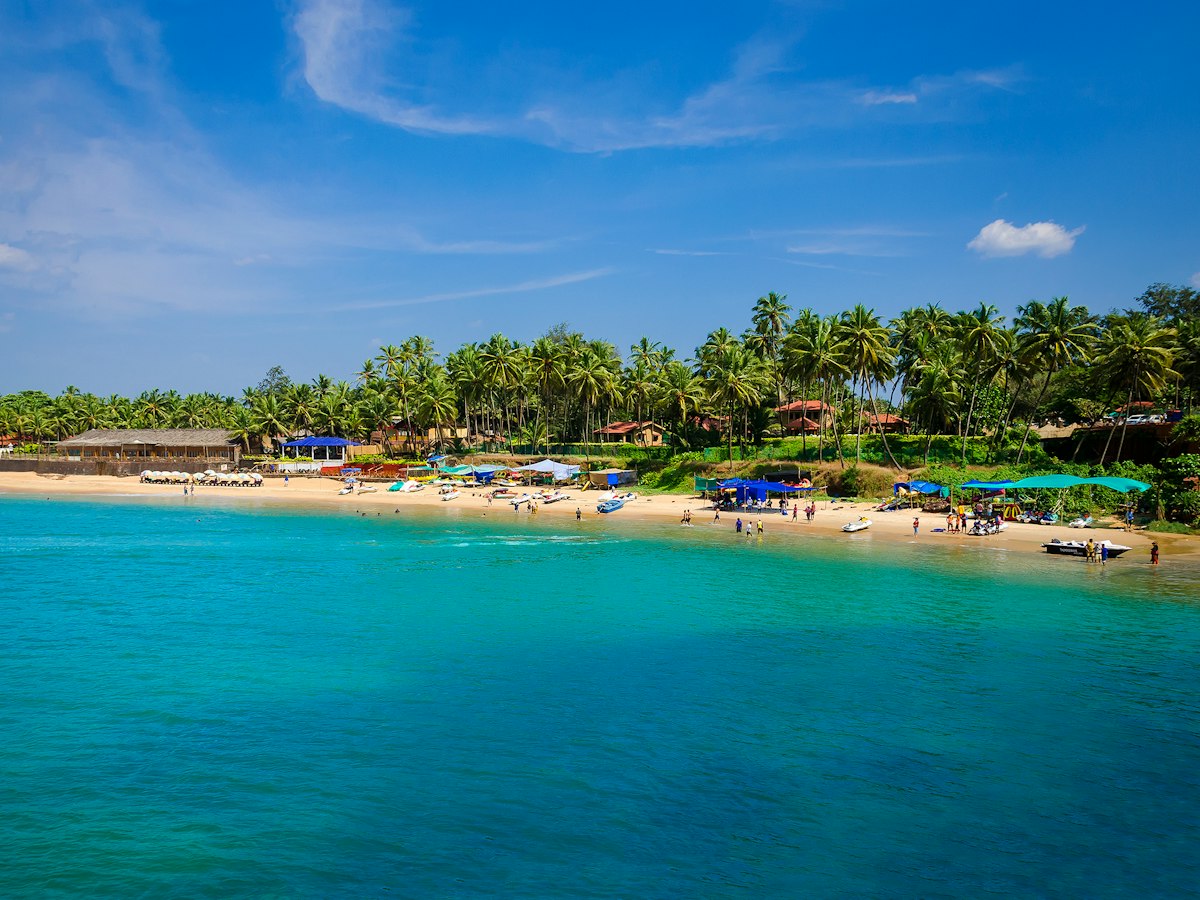
- ↑Weather is marginally the best of the peak season: February averages 9.8 sunshine hours and the very lowest rainfall; swimming conditions are excellent at every beach from Arambol to Palolem
- ↑Slightly fewer crowds than January as the school holidays end and some European visitors return home; the vibe on beaches like Anjuna and Vagator is more relaxed than the packed Christmas-New Year period
What you sacrifice
- ↓Carnival weekend brings significant domestic Indian tourism to Panaji and the main beach towns; accommodation books out completely for the festival period — plan months ahead
- ↓Still expensive: February pricing is marginally below January's absolute peak but well above the shoulder season; budget travellers are squeezed
- ↓The peak season infrastructure means some beaches (particularly Baga and Calangute) are at their most commercial and crowded; the contrast with the monsoon emptiness could not be greater
Feb scores highest overall — reliable weather and strong local atmosphere. Set your priorities below to personalise this result.
Feb
Goa Carnival transforms the coast — the Portuguese-influenced street festival is the most unique event in India's calendar.
33°C
High
2mm
Rain
9.8h
Sun
- ↑Goa Carnival (typically late February, exact dates move with the calendar) is a three-day explosion of floats, music, and colour that has no equivalent elsewhere in India — the Portuguese legacy preserved in a way that makes Goa feel like a genuinely different country
- ↑Weather is marginally the best of the peak season: February averages 9.8 sunshine hours and the very lowest rainfall; swimming conditions are excellent at every beach from Arambol to Palolem
- ↑Slightly fewer crowds than January as the school holidays end and some European visitors return home; the vibe on beaches like Anjuna and Vagator is more relaxed than the packed Christmas-New Year period
- ↓Carnival weekend brings significant domestic Indian tourism to Panaji and the main beach towns; accommodation books out completely for the festival period — plan months ahead
- ↓Still expensive: February pricing is marginally below January's absolute peak but well above the shoulder season; budget travellers are squeezed
- ↓The peak season infrastructure means some beaches (particularly Baga and Calangute) are at their most commercial and crowded; the contrast with the monsoon emptiness could not be greater
Top travel windows
★ BestFebruary
Best overall
Highest combined score
33°C
High
2mm
Rain
9.8h
Sun
June
Best for value
Lowest prices & fees
31°C
High
520mm
Rain
2.5h
Sun
June
Fewest crowds
Quietest month
31°C
High
520mm
Rain
2.5h
Sun
Breakdown by priority
Best for weather
February
33°C high · 2mm rain · 9.8hrs sun/day
Best for budget
June
The cheapest time of year by a significant margin: those few hotels that remain open offer their lowest rates; for those genuinely interested in Goa's non-beach culture (churches, architecture, inland villages), accommodation cost is minimal
Fewest crowds
June
Almost no other tourists: Panaji and Old Goa's churches and architecture can be explored with complete solitude — the Basilica of Bom Jesus has no queue in June
Worst time to visit
September, June, August, July
The sea remains dangerous and beach infrastructure stays closed; September is technically still monsoon season despite the gradual tapering
Where to stay in Goa
All neighbourhoods →Panaji / Old Goa
The capital and its Portuguese heritage — UNESCO churches, the Fontainhas Latin quarter, and the best restaurants in the state.
9/10
Central
8/10
Walk
7/10
Transit
Calangute / Baga
Goa's busiest beach strip — crowded, commercial, and the centre of the package tourism and nightlife circuit.
8/10
Central
8/10
Walk
6/10
Transit
Also exploring
Tokyo
Japan
A city of dramatic seasonal contrasts — cherry blossom crowds, oppressive summer humidity, and golden autumn foliage — where the wrong timing can make or break the trip.
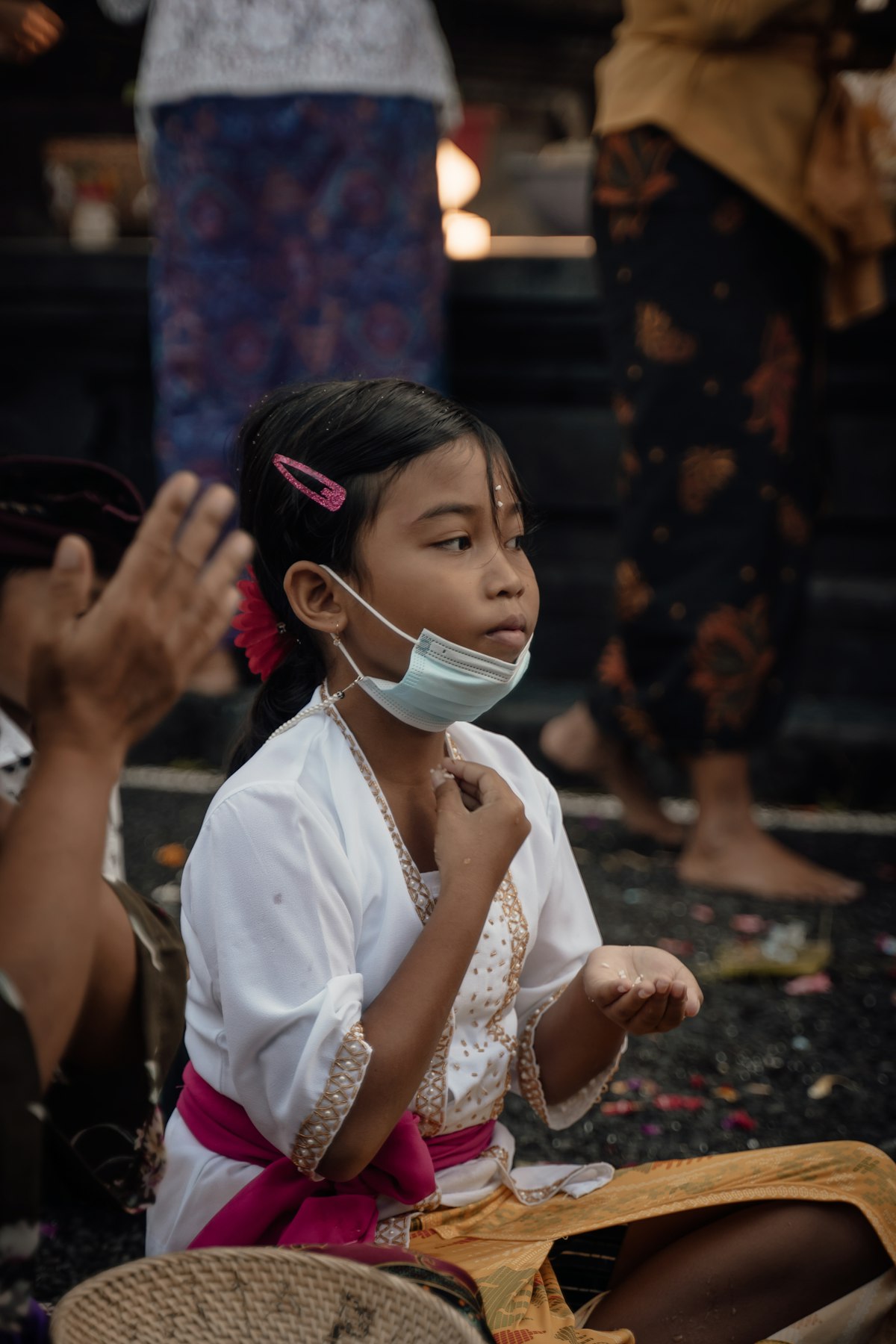
Bali
Indonesia
A Hindu island of rice terraces, temple ceremonies, and surf breaks where the monsoon makes timing genuinely binary — the difference between dry and wet season is not subtle.

Maldives
Maldives
A destination defined almost entirely by its monsoon calendar — the difference between the NE dry season (November–April) and SW wet season (May–October) is not subtle and shapes every aspect of the experience.
Worth knowing
February scores highest overall. December is the most crowded month — avoid if you can. See crowd-free ranking →
Month by month breakdown
January#4▾
Gains
- ↑The closest thing to perfect beach weather available in Asia: 32°C, essentially zero rain (2mm for the month), 9.5 sunshine hours daily, and warm seas — Palolem and Calangute at their most beautiful and swimmable
- ↑The full Goa infrastructure is open: every beach shack, resort, water sports operator, and nightclub from Morjim to Palolem is operating at full capacity with the best staff and supplies of the season
- ↑January has the best conditions for day trips: Old Goa's churches in golden afternoon light, spice plantation tours, and the hire-a-scooter coastal route from Calangute to Anjuna to Vagator are all at their most rewarding
Sacrifices
- ↓Peak pricing across the board: hotels on Calangute and Candolim are at their annual maximum, flight prices from European hubs are at their highest, and taxi rates have risen to match demand
- ↓Beach shacks at Baga and Calangute are operating at capacity; popular spots like Britto's or the Curlies cliff bar at Anjuna require either a reservation or patience on weekends
- ↓Crowds are at their post-New Year settled-peak: the NYE chaos has passed but the January sun-seekers from Europe fill the resorts through the month
February#1▾
Gains
- ↑Goa Carnival (typically late February, exact dates move with the calendar) is a three-day explosion of floats, music, and colour that has no equivalent elsewhere in India — the Portuguese legacy preserved in a way that makes Goa feel like a genuinely different country
- ↑Weather is marginally the best of the peak season: February averages 9.8 sunshine hours and the very lowest rainfall; swimming conditions are excellent at every beach from Arambol to Palolem
- ↑Slightly fewer crowds than January as the school holidays end and some European visitors return home; the vibe on beaches like Anjuna and Vagator is more relaxed than the packed Christmas-New Year period
Sacrifices
- ↓Carnival weekend brings significant domestic Indian tourism to Panaji and the main beach towns; accommodation books out completely for the festival period — plan months ahead
- ↓Still expensive: February pricing is marginally below January's absolute peak but well above the shoulder season; budget travellers are squeezed
- ↓The peak season infrastructure means some beaches (particularly Baga and Calangute) are at their most commercial and crowded; the contrast with the monsoon emptiness could not be greater
March#5▾
Gains
- ↑The European school holiday departure in late February creates a noticeable thinning of crowds in March; the same Palolem or Anjuna that was packed in January becomes genuinely peaceful, with beach shacks still operating but tables available
- ↑Prices drop meaningfully from peak: mid-range hotels in Candolim and Anjuna fall 20–30% from their January rates; flights become more competitive
- ↑Shigmo festival (March) is Goa's Hindu spring festival: colourful processions through Panaji and the beach towns with traditional Goan folk dances — a cultural counterpoint to the Carnival of February
Sacrifices
- ↓Heat is climbing: 34°C highs with increasing humidity make March afternoon sightseeing (Old Goa churches, Panaji streets) more demanding than in January; early mornings and evenings are the more comfortable windows
- ↓Some beach shacks begin closing their kitchens earlier as the season nears its end; the full menu of North Goa's restaurant scene starts contracting
- ↓Sea conditions begin changing: the water remains swimmable but choppiness increases and occasional jellyfish become more common as the pre-monsoon period approaches
April#7▾
Gains
- ↑Good value: April pricing is comfortably in the affordable tier — some of the best rates of the entire year on quality accommodation in Candolim and South Goa
- ↑The crowd levels have dropped dramatically; Palolem in April is the kind of quiet, palm-shaded beach experience that Palolem in December is not — hammocks available, shack owners have time to talk, the pace is slower
- ↑Fishing boats still operate and fresh seafood at beach shacks remains excellent — the fish markets at Calangute and Mapusa are still lively before the monsoon fishing restrictions begin
Sacrifices
- ↓Heat and humidity are genuinely uncomfortable by midday: 34°C with 72% humidity means the midday beach experience is tiring rather than relaxing for many visitors; shade and water are essential
- ↓Some beach shacks on the smaller North Goa beaches (Morjim, Ashwem) begin closing in April as operators head home before the monsoon; full infrastructure availability is no longer guaranteed
- ↓The event calendar is quiet: the festival season is over and the pre-monsoon period has nothing of significance to anchor a visit
May#8▾
Gains
- ↑Prices are at their near-annual minimum: hotel rates drop to their floor as operators try to fill rooms before closing for the monsoon; significant savings on accommodation costs
- ↑The Goa that remains open in May is genuinely quiet: Old Goa's Basilica of Bom Jesus, the spice plantations of Ponda, and the Portuguese-era houses of Panaji's Fontainhas quarter are all accessible without any tourist pressure
- ↑Pre-monsoon light over Goa's landscape has a particular dramatic quality: the skies build enormous thunderheads and the vegetation is at its driest and most golden before the rains transform everything green
Sacrifices
- ↓Most beach shacks have closed or reduced to skeleton operations; the full beach experience that defines a Goa visit is not available in May
- ↓Hot and increasingly humid: 33°C with 78% humidity and the pre-monsoon build-up makes extended outdoor activity uncomfortable; sea conditions deteriorate with choppy surf and swimming advisories at exposed beaches
- ↓Many quality restaurants and hotels in Calangute, Baga, and Anjuna close entirely for their annual maintenance period before June
June#10▾
Gains
- ↑The cheapest time of year by a significant margin: those few hotels that remain open offer their lowest rates; for those genuinely interested in Goa's non-beach culture (churches, architecture, inland villages), accommodation cost is minimal
- ↑The monsoon transforms Goa's landscape in ways that are genuinely beautiful if experienced from shelter: the rice paddies flood green, waterfalls appear in the Western Ghats, and the vegetation is lush in a way peak season never offers
- ↑Almost no other tourists: Panaji and Old Goa's churches and architecture can be explored with complete solitude — the Basilica of Bom Jesus has no queue in June
Sacrifices
- ↓The southwest monsoon delivers 520mm of rain in June — persistent heavy downpours, flooding of low-lying beach areas, and dangerous surf make beach access impossible; all beach shacks close by regulation
- ↓Many hotels, restaurants, and tourist services shut entirely for the monsoon period — the infrastructure available even at budget prices is limited
- ↓The essential Goa experience (beach, seafood shacks, sunsets over the Arabian Sea) is completely unavailable: this is an avoid month for the overwhelming majority of visitors
July#12▾
Gains
- ↑Goa is essentially empty: anyone determined to visit in July has one of the most historically rich coasts in South Asia almost entirely to themselves — Old Goa's 16th-century Portuguese churches without another visitor in sight
- ↑Budget accommodation at absolute floor rates for the few properties that remain open; a base to explore inland Goa's spice gardens and traditional villages for almost nothing
- ↑The Western Ghats behind Goa are at their most spectacular in the monsoon: the Dudhsagar Waterfalls reach full volume in July and the jungle scenery is extraordinary if you can access the roads
Sacrifices
- ↓580mm of rain — the heaviest month of the year by volume; the Arabian Sea is violent, all beaches are off-limits, coastal roads flood, and the experience for most visitors is simply torrential rain from a hotel window
- ↓Almost the entire beach and restaurant infrastructure is shut: no beach shacks, no water sports, no sunset bars, no tourist boats to the islands; the activities that define a Goa visit are all closed
- ↓Dudhsagar Waterfalls and forest roads may be inaccessible due to flooding and landslide risk; the monsoon inland experience requires careful research before committing
August#11▾
Gains
- ↑Indian Independence Day (August 15) brings the only genuine public event of the monsoon season: celebrations in Panaji's main square with a local atmosphere quite different from peak season's international tourist culture
- ↑For those researching Goa's architecture and history, August offers the Old Goa Heritage Walk and the Goa State Museum in Panaji without any competition from tourist groups
- ↑Absolute lowest accommodation prices of the year for the properties that remain open; those on extended India trips can use Goa as a very cheap base for inland day trips
Sacrifices
- ↓490mm of rain in August means continued monsoon intensity — the coast is not accessible, beaches are dangerous, and the humidity at 89% makes even indoor sightseeing uncomfortable without good air conditioning
- ↓Beach shacks, water sports, scuba operators, and boat services remain closed through August; the defining Goa experience is unavailable for a third consecutive month
- ↓Roads in low-lying areas flood regularly; transport between beach towns can be disrupted and reliable taxis are harder to find with the tourist infrastructure reduced
September#9▾
Gains
- ↑Rain tapers slightly from the July-August peak: 310mm is still very heavy but some dry windows begin appearing, making inland exploration (spice plantations, Old Goa) occasionally viable between showers
- ↑Ganesh Chaturthi (September, date varies with the lunar calendar) is Goa's biggest Hindu festival: 10 days of processions, music, and immersion ceremonies in the rivers — a genuinely culturally significant event that most visitors never see
- ↑Prices remain at their annual floor; budget travellers who want Goa's culture, food, and architecture without the beach scene can do so extremely cheaply
Sacrifices
- ↓The sea remains dangerous and beach infrastructure stays closed; September is technically still monsoon season despite the gradual tapering
- ↓Weather unpredictability makes planning difficult: a clear morning can become a torrential afternoon without warning; outdoor plans in September require significant flexibility
- ↓Most quality beach hotels and shacks remain closed until October — the reopening happens gradually through September's end and quality options are limited
October#6▾
Gains
- ↑Beach infrastructure reopens through October: shacks on Palolem, Anjuna, and Calangute begin the season with fresh staff and supplies, and the beaches are at their lushest and cleanest after the monsoon has washed everything
- ↑Diwali (date varies with the lunar calendar, often October-November) brings the most spectacular lighting of the year to Panaji's streets and the fishing villages; Goa's celebrations have a distinctly Portuguese-Hindu hybrid character
- ↑Prices are in the affordable tier and availability is good: a far better value-to-experience ratio than peak season, with October quality beach weather increasingly common in the second half of the month
Sacrifices
- ↓95mm of rain means October is still a transitional month — a wet week remains possible and some rain-affected days should be planned for; this is not yet the guaranteed sunshine of November
- ↓Some restaurants and beach bars are still in their opening week; full menus and optimal service take a few weeks to settle into peak-season mode
- ↓Surf conditions can still be choppy after the monsoon; swimming at exposed beaches like Vagator is more variable than at the sheltered south Goa beaches of Palolem and Agonda
November#2▾
Gains
- ↑Sunburn Festival (early-to-mid December start, with November events building) is one of Asia's largest electronic music festivals, held in North Goa: the combination of world-class DJs, beach venue, and the Goa party culture makes it a serious draw
- ↑Weather reaches peak-season quality: 32°C, minimal rain (20mm), and 9 sunshine hours — effectively the same conditions as January at meaningfully lower prices and with thinner crowds
- ↑November is the optimal month for those wanting the full Goa experience without paying January rates: beach shacks are fully operational, menus are complete, and the beaches are not yet at their Christmas capacity
Sacrifices
- ↓Prices are rising from October: November sits in the moderate tier as the season gets established and bookings from European winter-sun seekers fill the better properties
- ↓Sunburn Festival weekend (if timing overlaps) brings a massive crowd to North Goa's venues and surrounding accommodation; prices spike for the festival period specifically
- ↓Some of the best South Goa beach properties (particularly Agonda) book out in November as returning regulars secure their preferred weeks ahead of the Christmas-New Year peak
December#3▾
Gains
- ↑New Year's Eve in Goa is one of South Asia's great celebrations: fireworks over the beaches from Calangute to Palolem, beach parties that run until dawn, and the entire coast operating at maximum festive energy — if you want to be somewhere on December 31, Goa delivers
- ↑Sunburn Festival (typically Vagator, December) is Asia's largest electronic music festival by attendance: 300,000+ over three days with international headliners in a clifftop setting above the Arabian Sea — the defining Goa party event
- ↑Perfect beach conditions: essentially zero rain, 32°C, and clear evenings that make the Goa sunset-watching culture (cliff bars at Anjuna, sunset bars at Palolem) operate at its absolute best
Sacrifices
- ↓The most expensive month in Goa by a significant margin: beachfront hotels command peak rates, direct flights from European cities are at maximum price, and taxis triple their rates on Christmas Eve and New Year's Eve
- ↓Beaches at Calangute, Baga, and Candolim in the Christmas-New Year week are packed to the point of uncomfortable density; quieter alternatives require going to South Goa or the northern beaches above Anjuna
- ↓Sunburn Festival and New Year bring the largest crowds of the year to North Goa: accommodation within 10km of the festival site is booked months in advance; last-minute arrivals face very limited and expensive options
How this is calculated
Climate data
Open Meteo ERA5
30-year normals (1991–2020). Temperature, rainfall, sunshine, humidity.
Price & crowd
Tourism research
Seasonal pricing from tourism authority data. Directional — compares months within a destination only.
Personalisation
Weighted scoring
Your priorities change the weights. Budget-first users get different results than weather-first users.
Share this result
February is the best time to visit Goa
Travel timing updates
New destinations and timing guides, when they land.
No spam. Unsubscribe anytime.