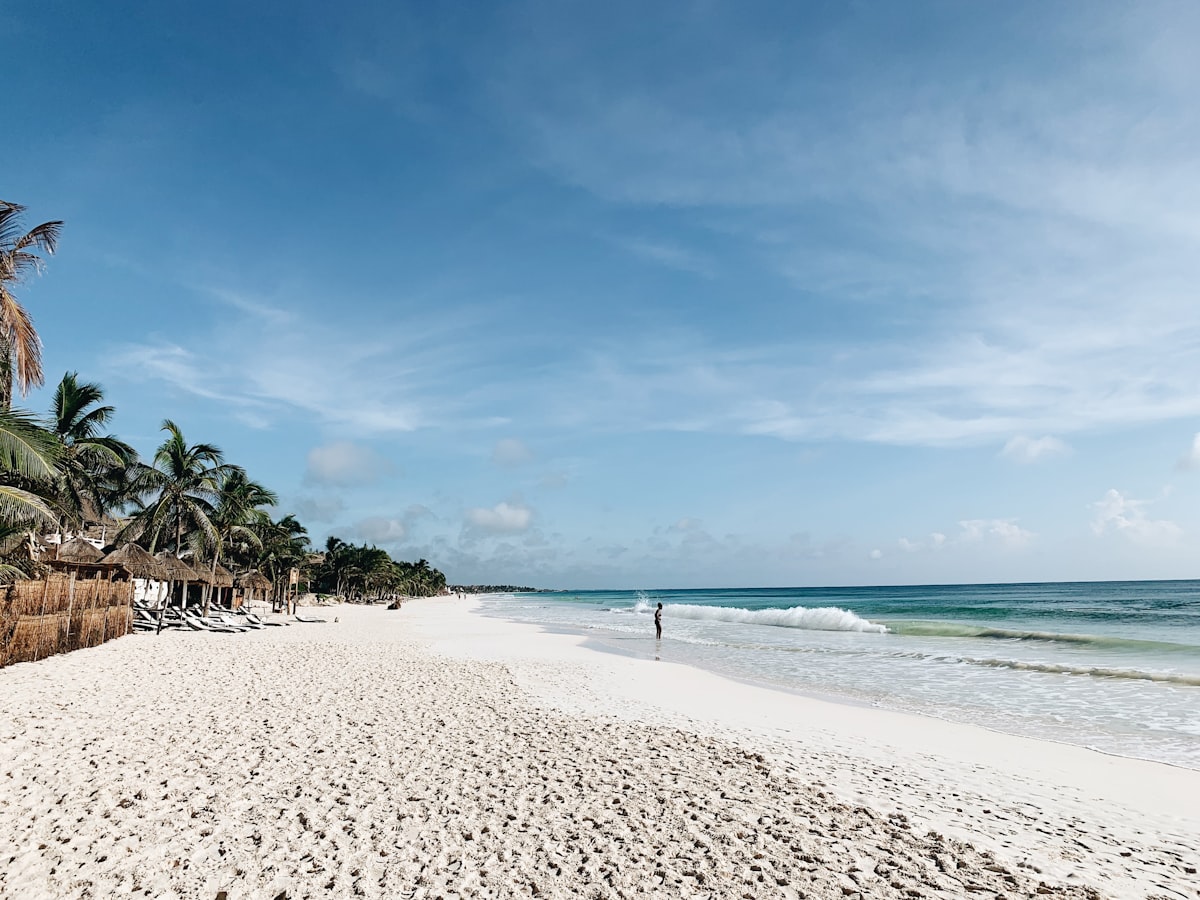
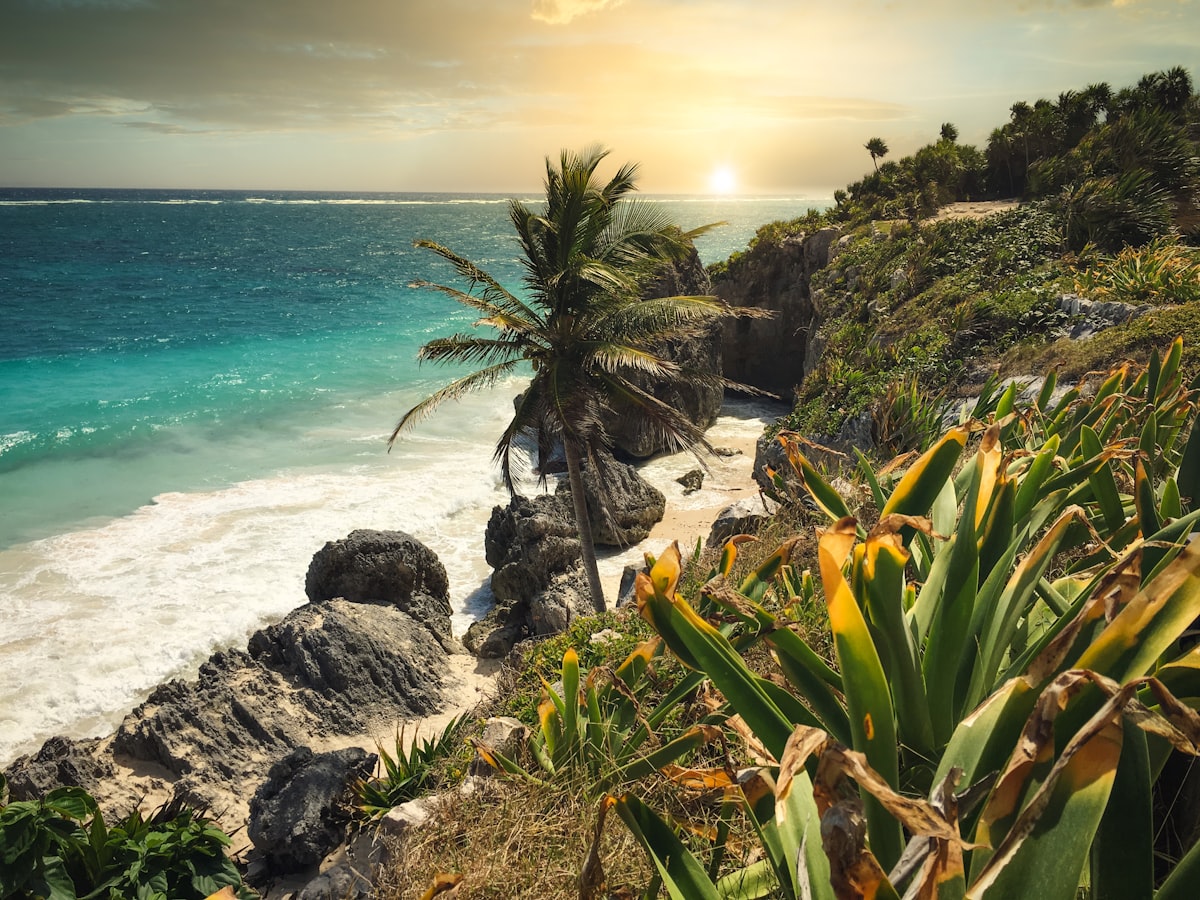

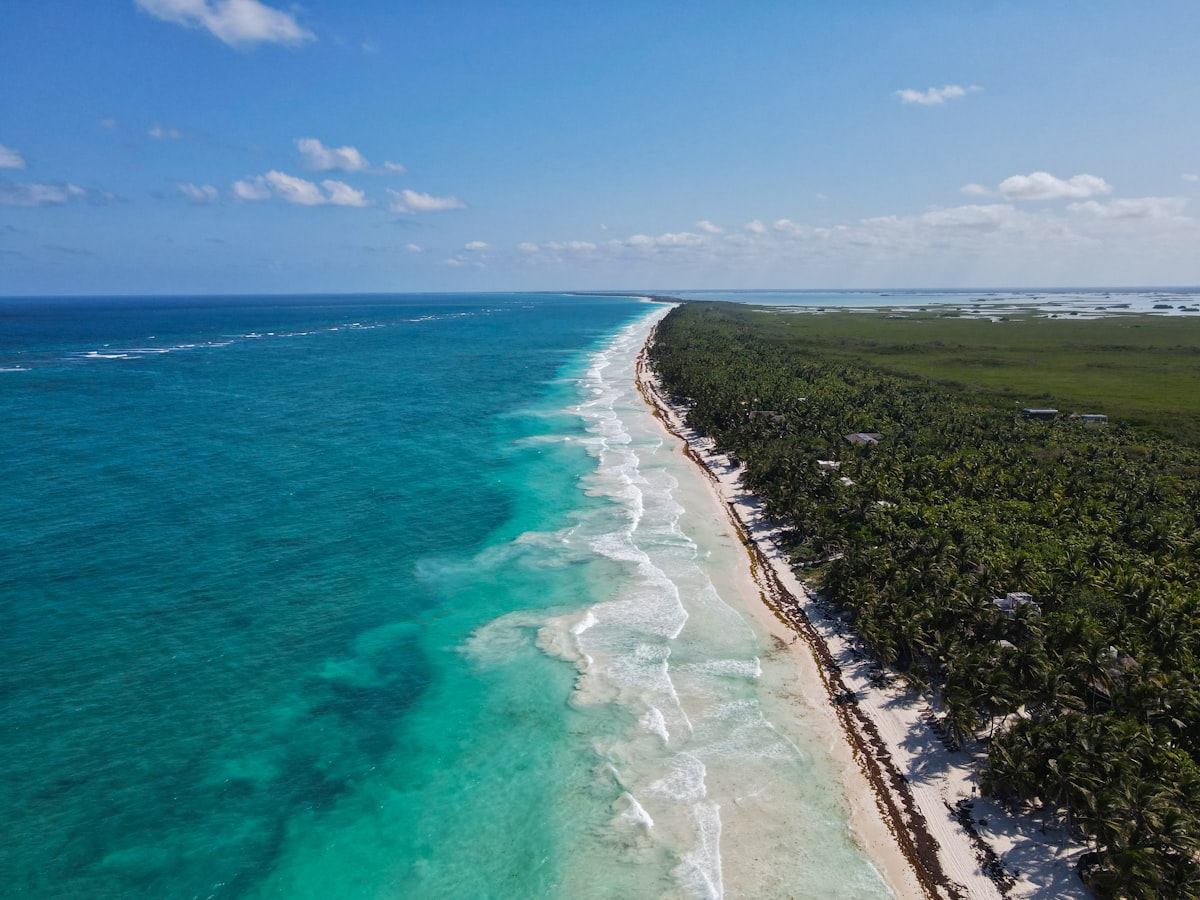
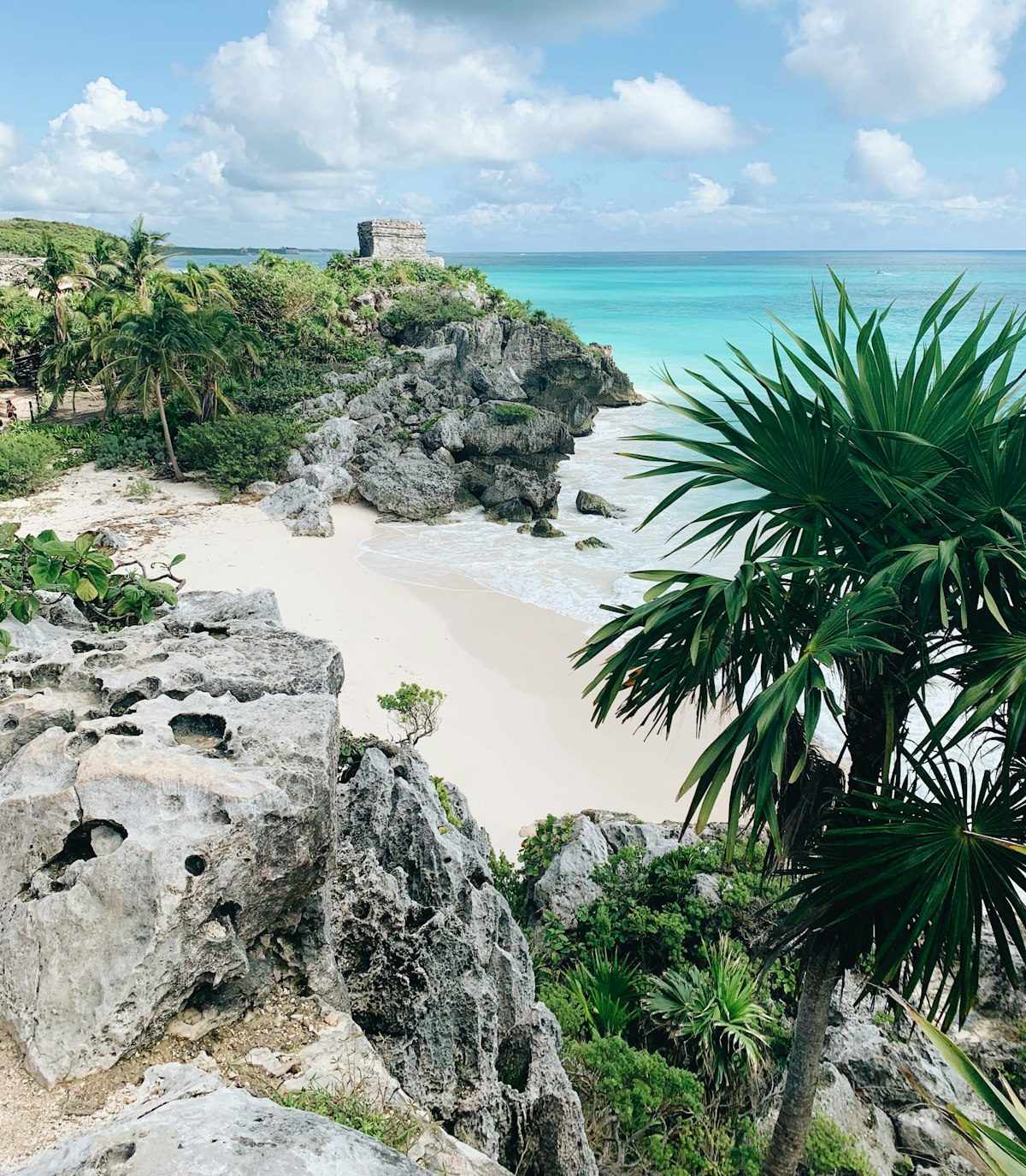
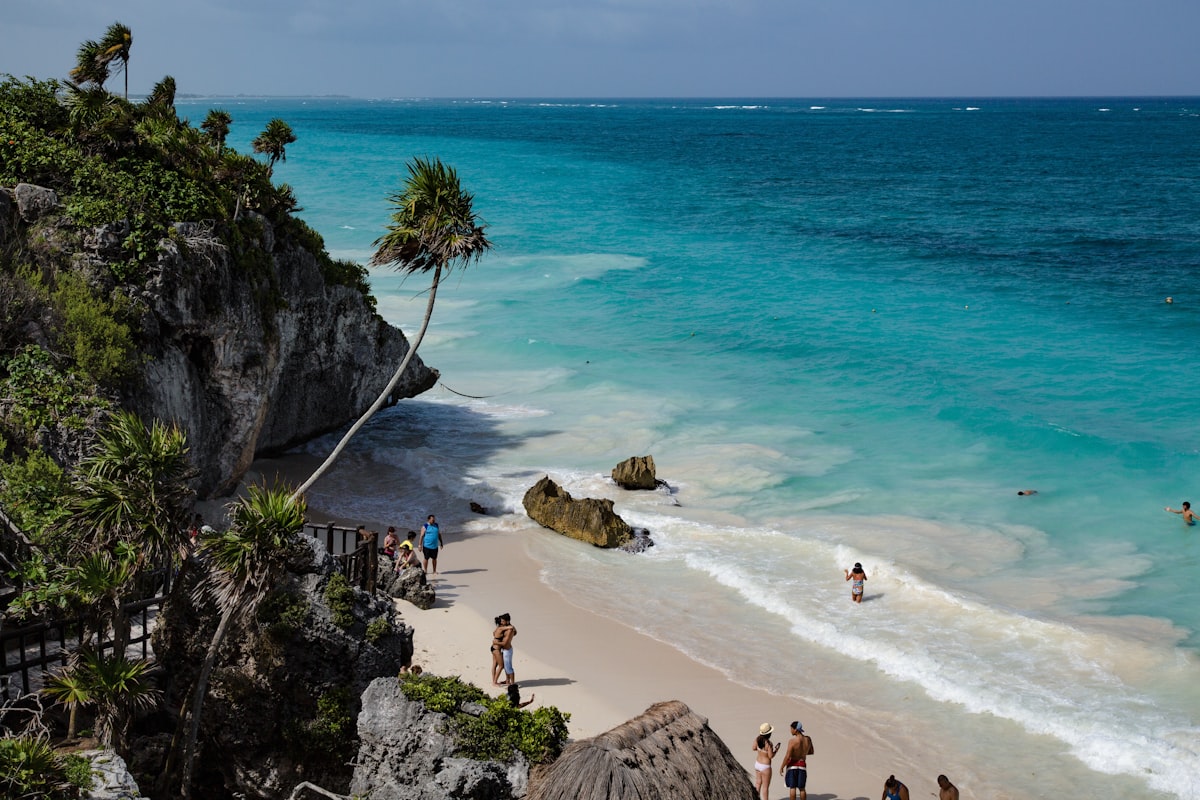



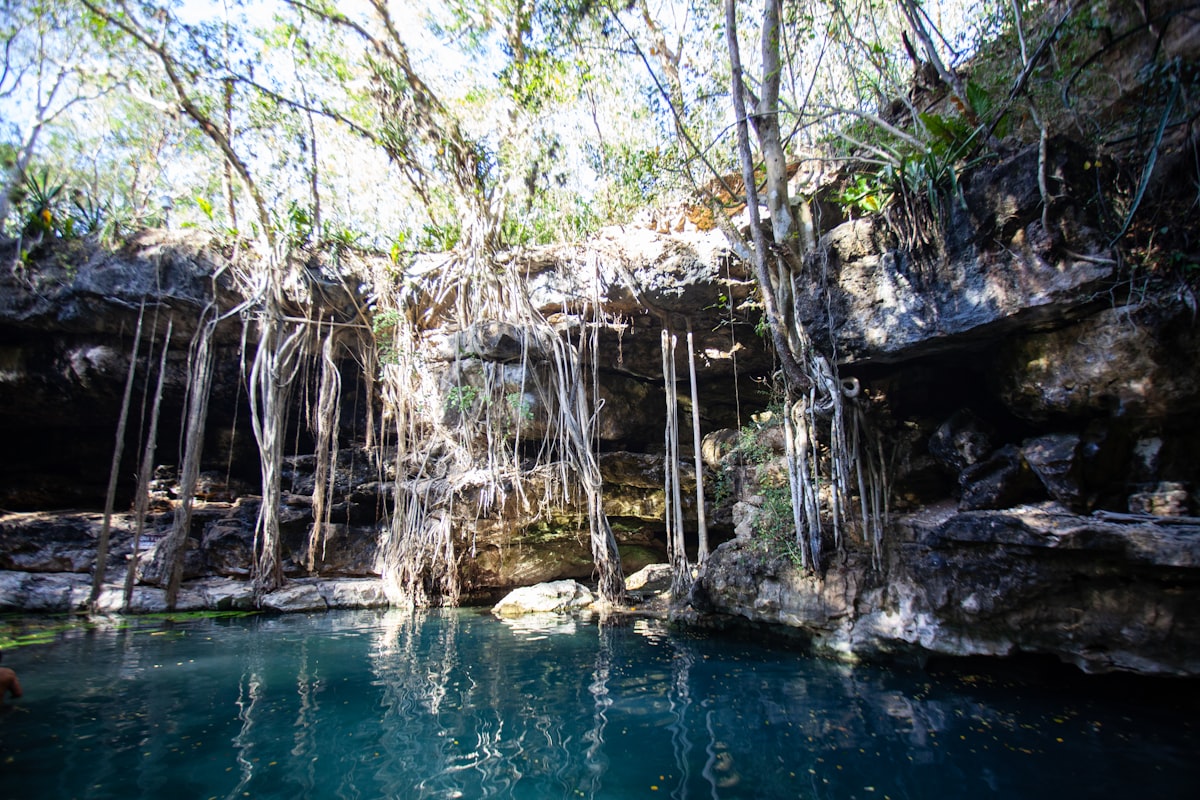
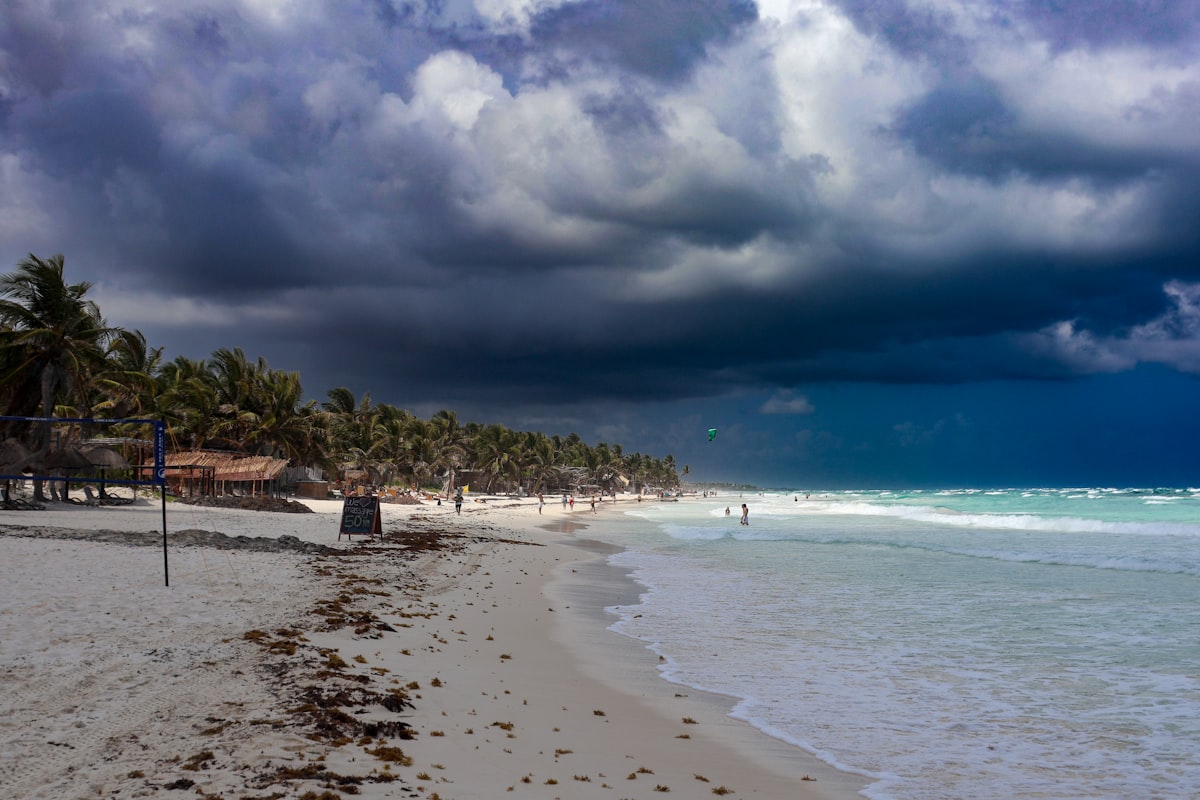
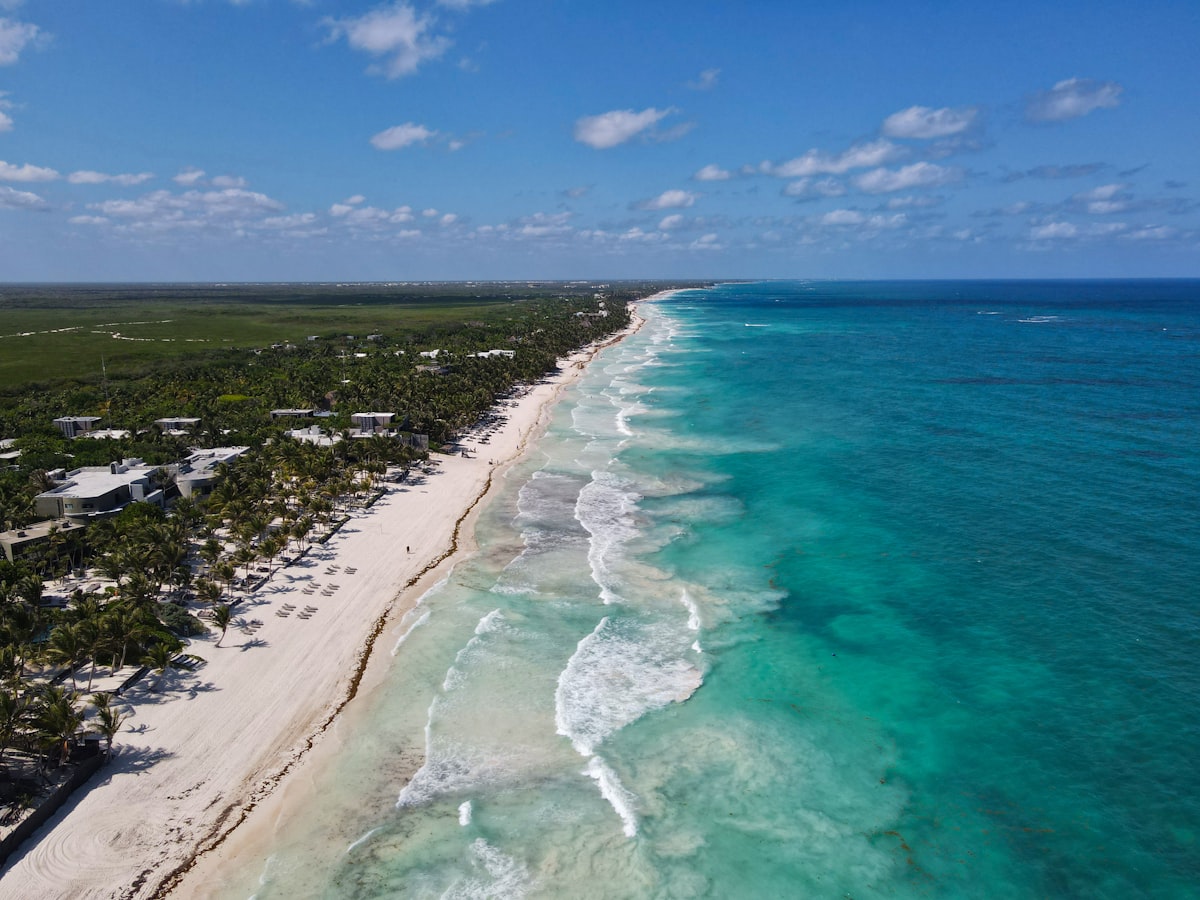
Showing: Nov · Anna Sullivan / Unsplash
Mexico · Caribbean & Central America
Best time to visit Tulum
November
Nov scores highest overall — reliable weather and good value. Set your priorities below to personalise this result.
What matters most to you?
All 12 months — click any to expand
Nov
Anna Sullivan / Unsplash
The sweet spot transition: dry season returning, low crowds, good value — the locals' favourite.
29°C
High
22°C
Low
71mm
Rain
8h
Sun/day
What you gain
- ↑Día de Muertos (Nov 1–2) in Tulum Pueblo: stunning altars, marigold decorations, and genuine community celebration
- ↑Dry season increasingly establishing itself: sun-to-rain ratio swinging back in the traveller's favour
- ↑Value window before Christmas premium kicks in: good availability at reasonable rates
What you sacrifice
- ↓Early November still sees meaningful rain (71mm) — not yet fully dry season reliability
- ↓Some beach clubs still on reduced wet-season schedules in early November
- ↓Water temperature at its lowest (still 27°C, but noticeable to those accustomed to August warmth)
Nov scores highest overall — reliable weather and good value. Set your priorities below to personalise this result.
Nov
The sweet spot transition: dry season returning, low crowds, good value — the locals' favourite.
29°C
High
71mm
Rain
8h
Sun
- ↑Día de Muertos (Nov 1–2) in Tulum Pueblo: stunning altars, marigold decorations, and genuine community celebration
- ↑Dry season increasingly establishing itself: sun-to-rain ratio swinging back in the traveller's favour
- ↑Value window before Christmas premium kicks in: good availability at reasonable rates
- ↓Early November still sees meaningful rain (71mm) — not yet fully dry season reliability
- ↓Some beach clubs still on reduced wet-season schedules in early November
- ↓Water temperature at its lowest (still 27°C, but noticeable to those accustomed to August warmth)
Top travel windows
★ BestNovember
Best overall
Highest combined score
29°C
High
71mm
Rain
8h
Sun
September
Best for value
Lowest prices & fees
32°C
High
189mm
Rain
6.5h
Sun
September
Fewest crowds
Quietest month
32°C
High
189mm
Rain
6.5h
Sun
Breakdown by priority
Best for weather
January
28°C high · 38mm rain · 9.2hrs sun/day
Best for budget
September
Absolute cheapest month: rates 60–70% below dry season peak, almost everything negotiable
Fewest crowds
September
Practically empty: cenotes, ruins, and the beach road without another tourist in sight
Also exploring

New York
USA
A city that never fully quiets — but its personality shifts dramatically by season, from sweltering humid summers to crisp autumn perfection to blizzard-prone winters.
Rio de Janeiro
Brazil
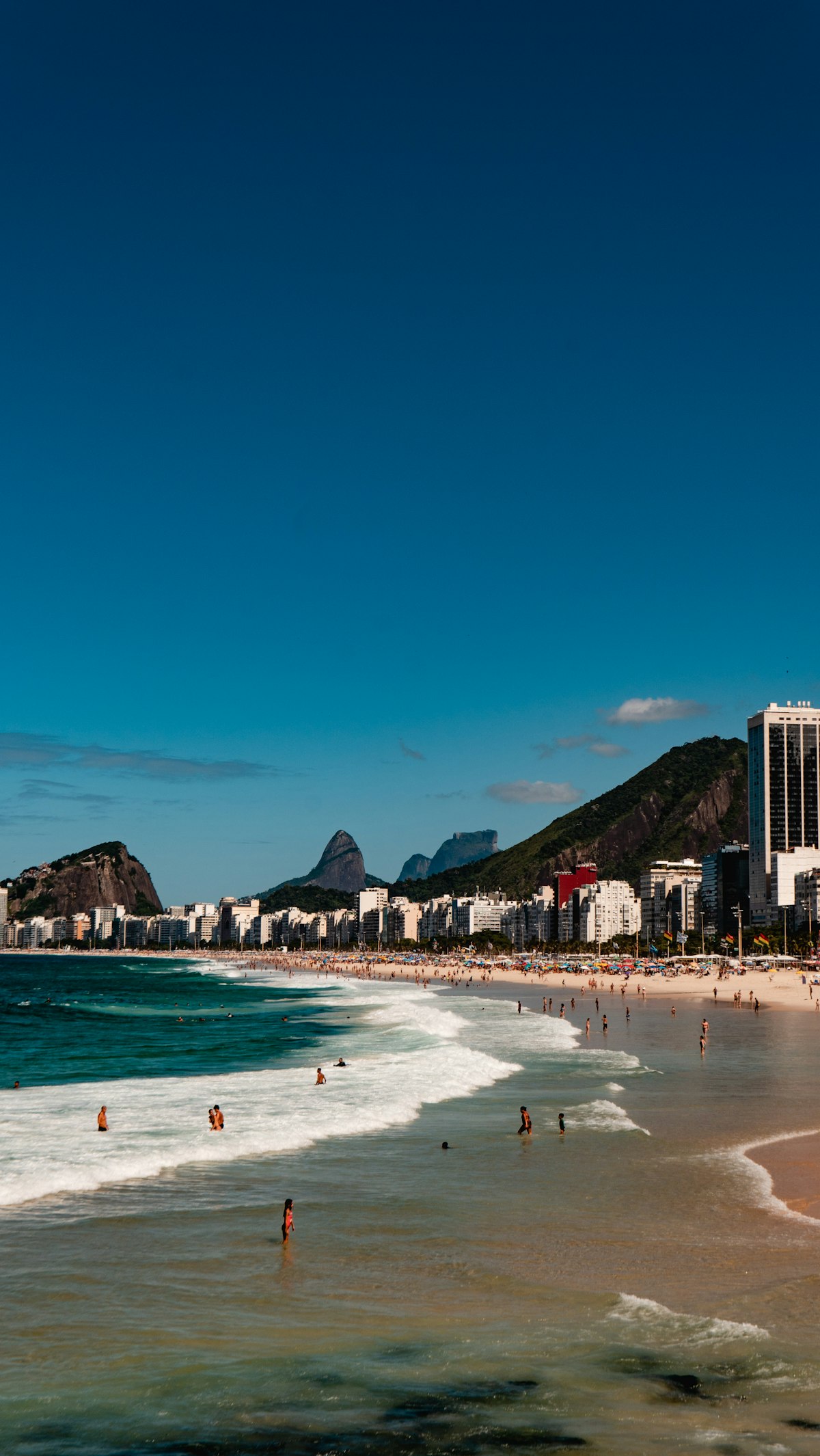
A Southern Hemisphere city where summer (December–March) brings Carnival and 264mm of rain simultaneously, and the real sweet spot is the dry Southern winter — June to September — when most travellers don't think to come.

Mexico City
Mexico
A highland metropolis at 2,240 metres where the altitude tempers the heat to perpetual spring in the dry months, Día de Muertos transforms Mixquic and Azcapotzalco into one of the world's great ceremonies, and the October–April dry season gives the clearest conditions for exploring what is genuinely one of the planet's finest food, museum, and architecture cities.
Where to stay in Tulum
All neighbourhoods →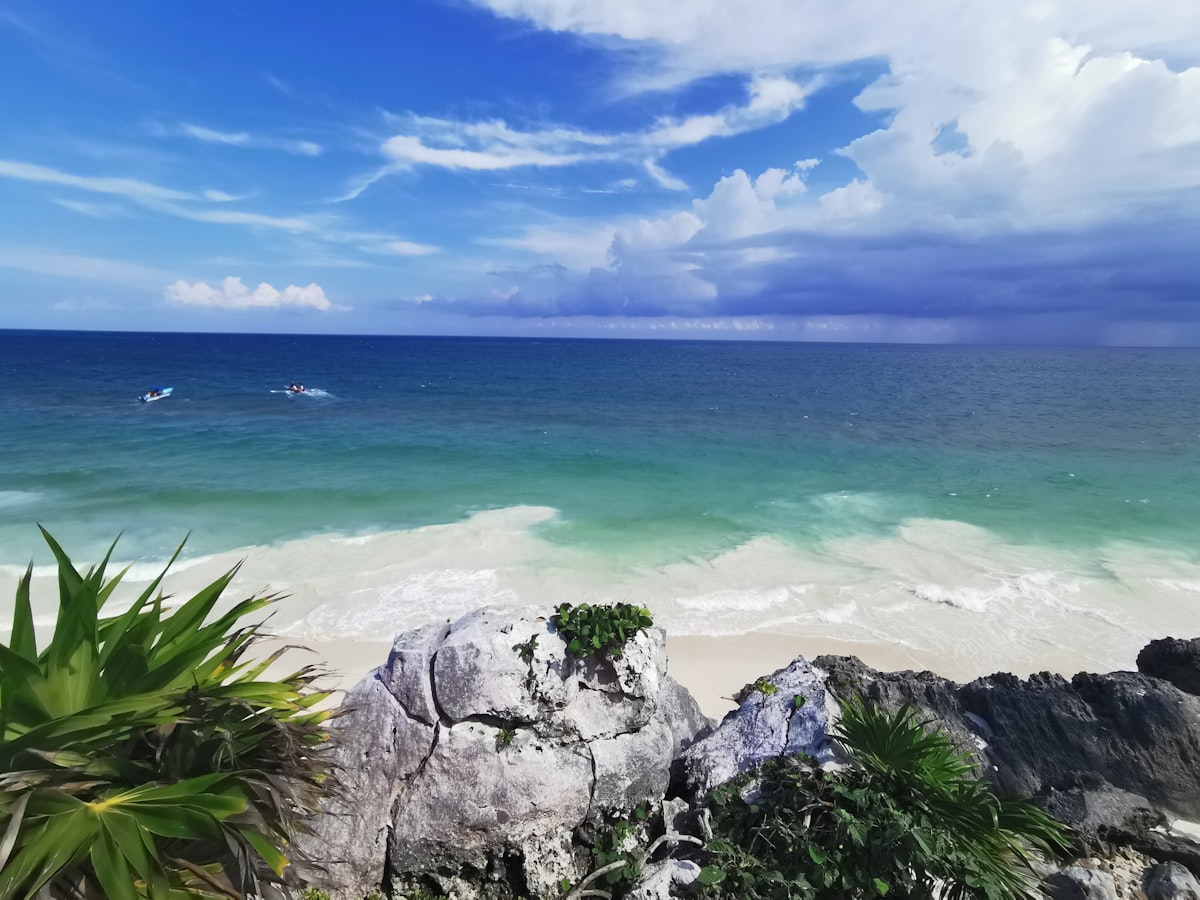
Tulum Pueblo (Town)
The real Mexican town — taco stands, local pharmacies, and a fraction of the beach road prices.
7/10
Central
8/10
Walk
6/10
Transit
La Veleta
Tulum's cheapest "nice" area — bohemian cafés, local residents, and a neighbourhood changing faster than any other.
5/10
Central
6/10
Walk
4/10
Transit
Worth knowing
November scores highest overall. March is the most crowded month — avoid if you can. See crowd-free ranking →
Month by month breakdown
January#2▾
Gains
- ↑Driest and most comfortable conditions: 28°C with 74% humidity and 9.2h of sun daily
- ↑Cenotes at their clearest and least crowded — Dos Ojos and Gran Cenote genuinely peaceful in January mornings
- ↑Tulum ruins best visited this month: minimum queue times and photogenic winter light
Sacrifices
- ↓Post-New Year prices remain elevated; beachfront boutique hotels at seasonal premium
- ↓North wind (Nortes) can bring cooler breezy days and choppy Caribbean surf in early January
- ↓The digital nomad and wellness crowd is firmly in residence — Tulum is not undiscovered
February#3▾
Gains
- ↑Lowest rainfall of the year (30mm): most reliably sunny days, ideal for beach and snorkelling
- ↑Humidity at its most comfortable (72%): mornings feel crisp and evenings pleasant
- ↑Whale sharks off the coast near Isla Holbox (2.5h north) at peak season — day trip opportunity
Sacrifices
- ↓Valentine's week pushes hotel prices up; beach clubs fully booked for romantic packages
- ↓Moderate tourist volume means popular cenotes still require early arrival to beat crowds
- ↓Beach erosion on some sections of the hotel zone after winter Nortes storms
March#6▾
Gains
- ↑Best weather of the year: 9.8h sunshine, lowest humidity (70%), virtually zero rain
- ↑Spring equinox at Tulum ruins (Mar 21): the descending serpent shadow on the main pyramid draws crowds
- ↑Water temperatures ideal for snorkelling; Mesoamerican Reef visibility at its annual best
Sacrifices
- ↓Spring break (mid-March through April) fills the hotel zone with party-seeking college crowds — the antithesis of the wellness experience many visitors seek
- ↓Prices spike toward peak: boutique hotels and beach clubs at their most expensive
- ↓Advance booking essential 3–4 months out; last-minute options extremely limited
April#7▾
Gains
- ↑Weather still excellent: warm water, reliable sun, and 9.3h daily — conditions almost identical to March
- ↑Spring break crowds thinning by late April; beach clubs and cenotes more manageable
- ↑Flamingos at Celestún (4h west) at maximum numbers in April — day trip opportunity
Sacrifices
- ↓Still expensive: hotel zone prices remain at seasonal premium through Easter week
- ↓Easter (Semana Santa) brings domestic Mexican tourism in huge numbers — roads and beaches packed around the holiday
- ↓Humidity beginning to climb toward wet season levels; evenings noticeably warmer
May#5▾
Gains
- ↑Prices fall 25–35% from peak season; best-value window for beach-road boutique hotels
- ↑Tourist numbers drop sharply — cenotes less crowded than any point since December
- ↑Rains when they come are brief afternoon showers; mornings reliably sunny
Sacrifices
- ↓Humidity climbing noticeably (76%): outdoor activity becomes more uncomfortable, especially midday
- ↓Wet season is beginning — occasional thunderstorms disrupt beach afternoons
- ↓Some beach clubs and wellness retreats on reduced staffing before June
June#9▾
Gains
- ↑Prices 40–50% below dry season peak; some beach-road properties at near half-price
- ↑Cenotes practically empty — Gran Cenote and Dos Ojos with almost no queue in the rainy season
- ↑Jungle and mangrove ecosystem at its most lush and photogenic after rains
Sacrifices
- ↓Hurricane season officially begins June 1 — storm risk is real, not theoretical; travel insurance essential
- ↓Heavy rain (142mm) typically falls in intense afternoon downpours that can last 2–3 hours
- ↓High humidity (83%) makes outdoor exploration genuinely uncomfortable for much of the day
July#10▾
Gains
- ↑Mexican summer holiday season: lively local atmosphere, domestic restaurants and markets busier
- ↑Rain is typically afternoon thunder: mornings are warm and clear enough for beach or ruins visits
- ↑Prices still well below dry-season peak despite increased domestic demand
Sacrifices
- ↓Hurricane risk remains significant through July — named storms can and do cause direct hits
- ↓Beach road flooding common after heavy rain; eco-lodge access can be disrupted
- ↓Humidity (82%) and heat (32°C) make midday outdoor time genuinely exhausting
August#12▾
Gains
- ↑Prices near their lowest: beach-road hotels at 50–60% below February peak
- ↑Sargassum seaweed, while a persistent issue, is often cleared by local currents in August
- ↑Scuba diving in cenotes is unaffected by surface weather — an option for rain days
Sacrifices
- ↓Highest hurricane risk month in combination with September: direct strike probability meaningfully elevated
- ↓Hottest temperatures of the year (33°C) combined with 84% humidity makes outdoor activity gruelling
- ↓Beach quality variable: heavy rain disturbs sea clarity, sargassum risk remains, and jellyfish increase
September#11▾
Gains
- ↑Absolute cheapest month: rates 60–70% below dry season peak, almost everything negotiable
- ↑Practically empty: cenotes, ruins, and the beach road without another tourist in sight
- ↑September 16 Mexican Independence Day in Tulum Pueblo — local celebration, authentic atmosphere
Sacrifices
- ↓Peak hurricane month: highest statistical probability of a named storm making landfall on the Yucatán coast
- ↓Wettest month (189mm) with 6.5h sunshine — extended multi-day rain events not unusual
- ↓Some beach clubs, boutique hotels, and tour operators close entirely for the month
October#8▾
Gains
- ↑Día de Muertos preparations building through October; Tulum Pueblo altars and celebrations are genuinely beautiful
- ↑Hurricane risk falling week by week through October; late October feels significantly safer than September
- ↑Prices remain very competitive; shoulder rates without the September storm anxiety
Sacrifices
- ↓Still very wet (153mm): afternoon rain sessions remain the norm through early October
- ↓Some tourist infrastructure only partially re-opening from September closures
- ↓Sargassum seaweed returns as winds change in October — beach quality variable
November#1▾
Gains
- ↑Día de Muertos (Nov 1–2) in Tulum Pueblo: stunning altars, marigold decorations, and genuine community celebration
- ↑Dry season increasingly establishing itself: sun-to-rain ratio swinging back in the traveller's favour
- ↑Value window before Christmas premium kicks in: good availability at reasonable rates
Sacrifices
- ↓Early November still sees meaningful rain (71mm) — not yet fully dry season reliability
- ↓Some beach clubs still on reduced wet-season schedules in early November
- ↓Water temperature at its lowest (still 27°C, but noticeable to those accustomed to August warmth)
December#4▾
Gains
- ↑Dry season fully restored: 8.8h sunshine, 49mm rain, and comfortable 76% humidity
- ↑Christmas and New Year Tulum: vibrant beach-road scene with international visitors and curated events
- ↑Cenotes at their seasonal best — clear water, fewer tourists than Jan–Feb (which are busier post-New Year)
Sacrifices
- ↓Christmas and New Year week prices match or exceed March peak; beach-road eco-hotels at their most expensive
- ↓Popular venues and cenote tours require booking 2–3 months in advance
- ↓The "wellness and spiritual" Tulum is hardest to find in December; the commercial, party version dominates
How this is calculated
Climate data
Open Meteo ERA5
30-year normals (1991–2020). Temperature, rainfall, sunshine, humidity.
Price & crowd
Tourism research
Seasonal pricing from tourism authority data. Directional — compares months within a destination only.
Personalisation
Weighted scoring
Your priorities change the weights. Budget-first users get different results than weather-first users.
Share this result
November is the best time to visit Tulum
Travel timing updates
New destinations and timing guides, when they land.
No spam. Unsubscribe anytime.