


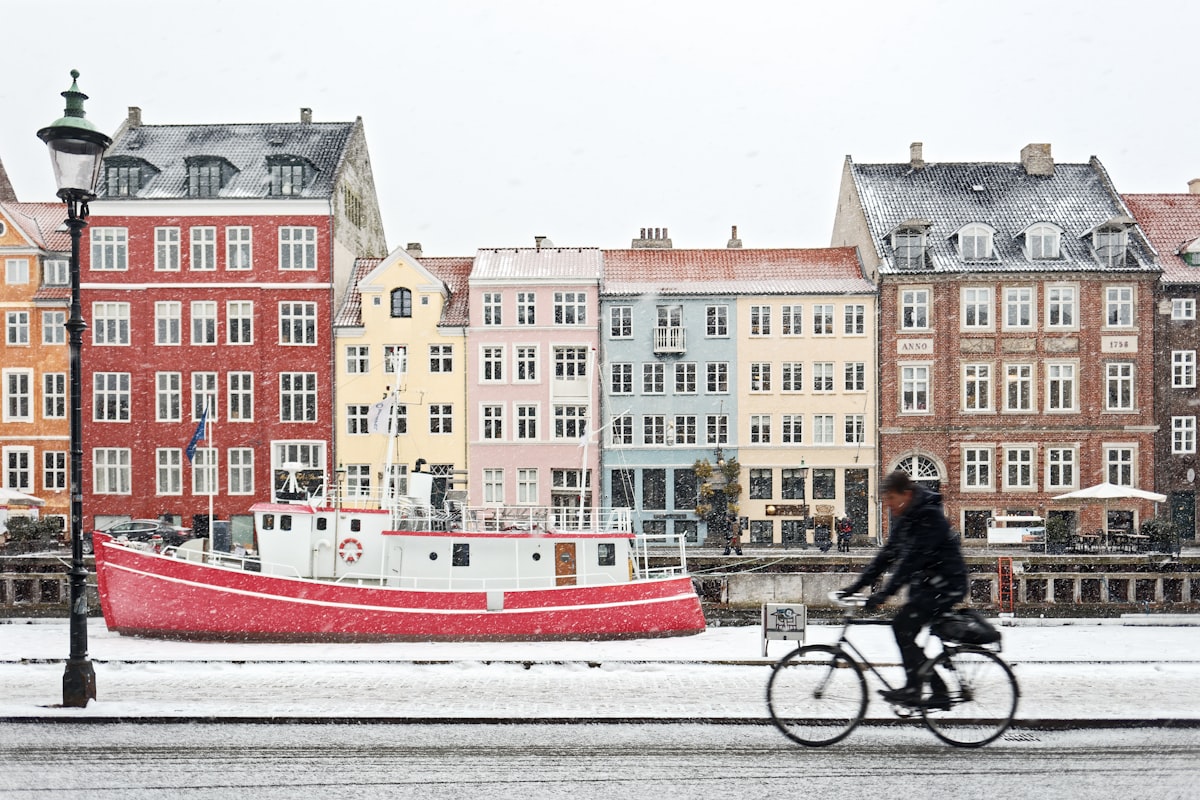
Showing: Jul · Nick Karvounis / Unsplash
Denmark · Northern Europe
Best time to visit Copenhagen
July
Jul scores highest overall — reliable weather and strong local atmosphere. Set your priorities below to personalise this result.
What matters most to you?
All 12 months — click any to expand
Jul
Nick Karvounis / Unsplash
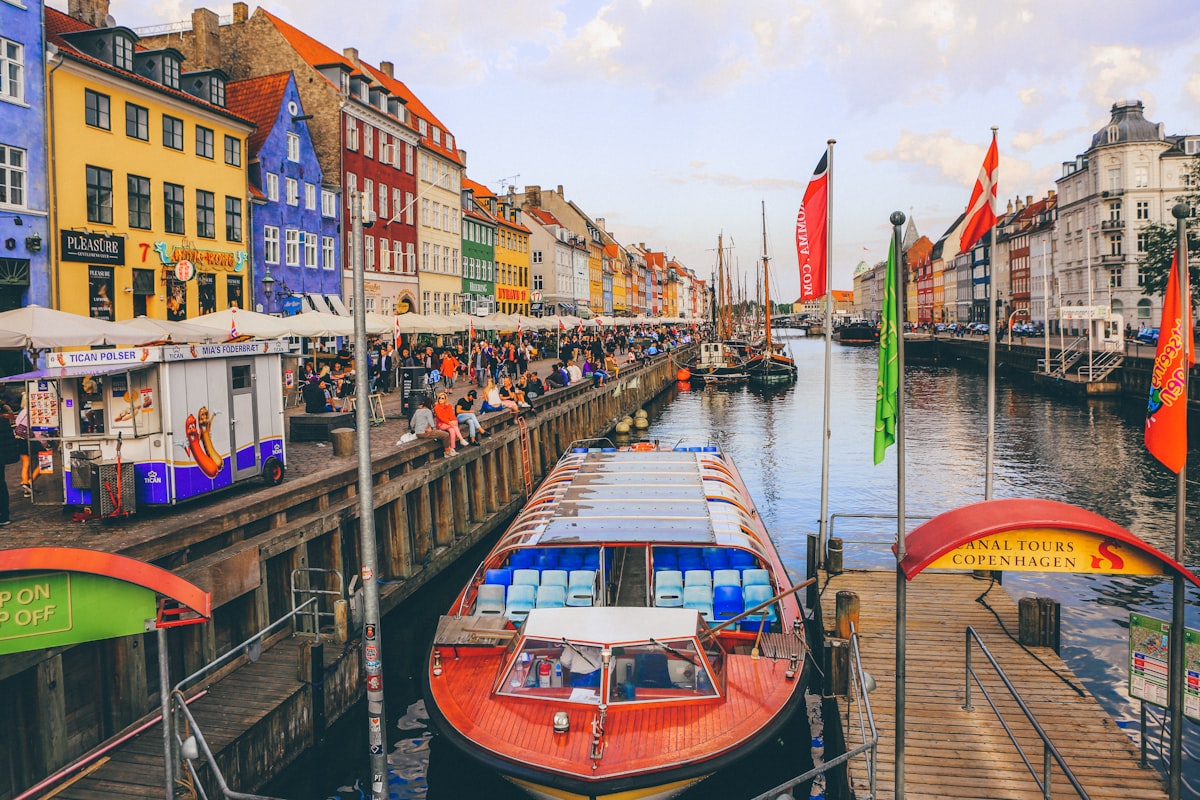
Copenhagen Jazz Festival transforms the entire city for ten days — and the weather finally justifies everything the Danes have been waiting for.
22°C
High
15°C
Low
65mm
Rain
7.5h
Sun/day
What you gain
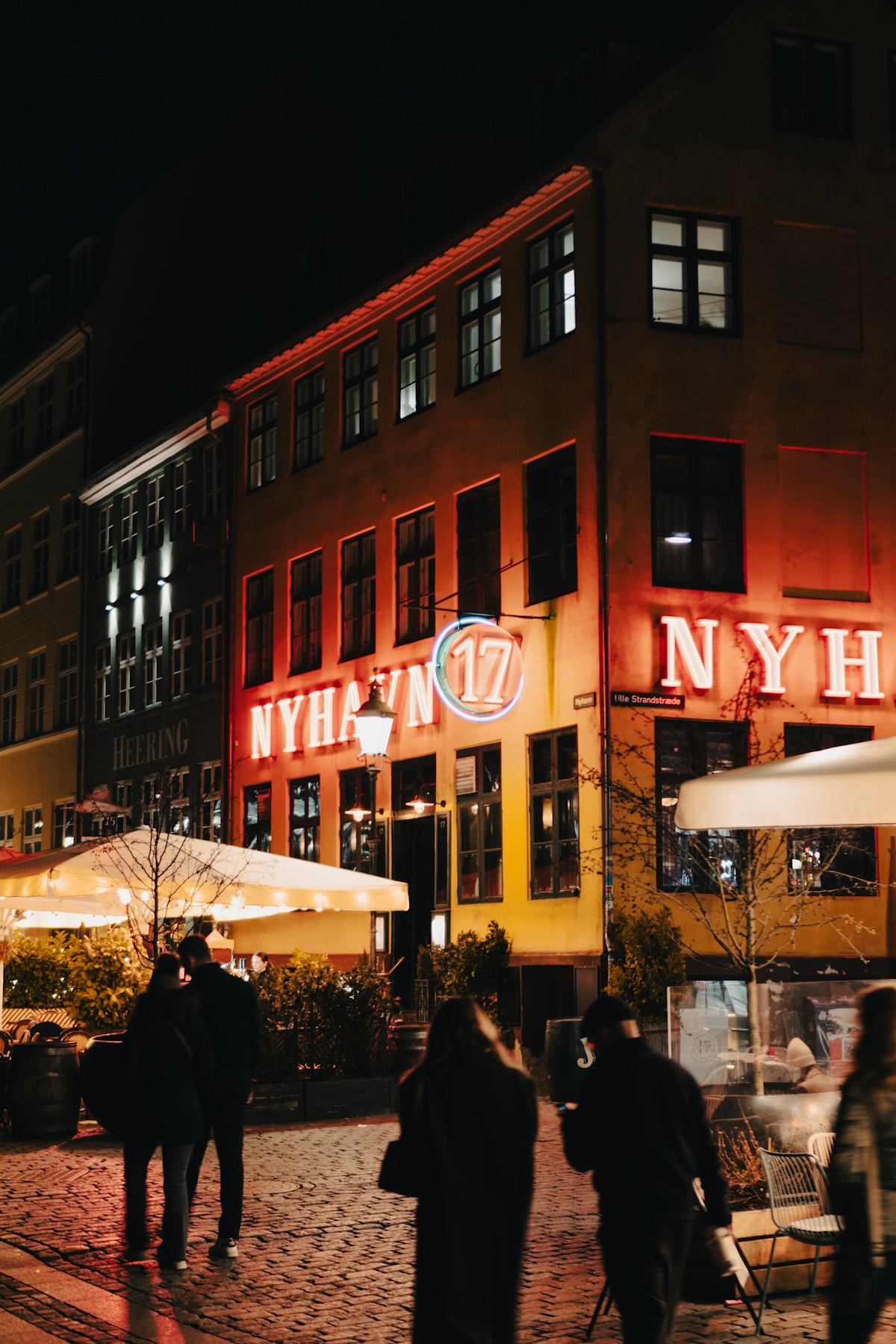
- ↑Copenhagen Jazz Festival (first two weeks of July) is the definitive city event — over 1,000 concerts across 100+ venues, many free in city squares, parks, and streets; jazz in Nyhavn, Kongens Have, and Tivoli simultaneously; the entire city becomes a concert hall
- ↑Peak summer weather: 22°C average highs, long evenings, and the harbour swimming at its best; this is the Copenhagen the Danes build their year around and the version that justifies the city's reputation
- ↑Tivoli Gardens is at full capacity with its summer programme, outdoor concerts, and the carnival atmosphere that makes it one of the world's genuinely special amusement parks rather than just a heritage attraction
What you sacrifice
- ↓Peak season pricing: hotels at their annual maximum, restaurants requiring advance booking, and popular spots commanding high prices; Copenhagen is one of Europe's most expensive cities and July is its most expensive month
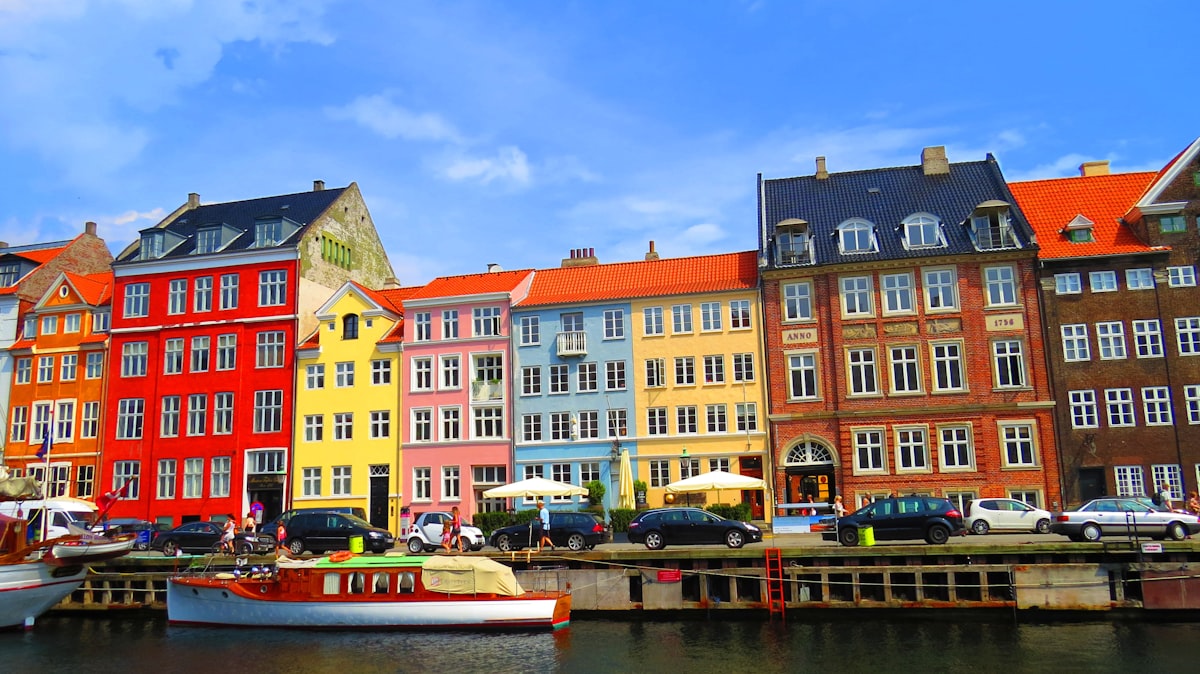
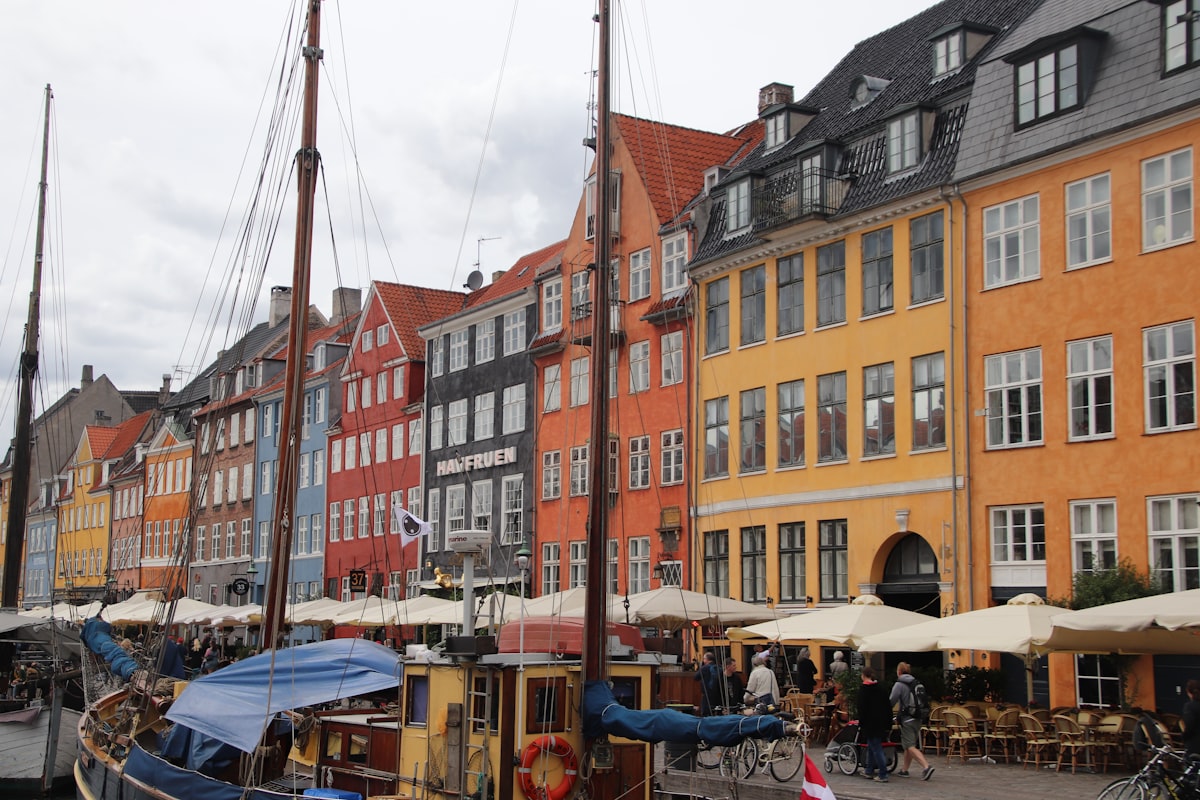
- ↓Crowds everywhere — Nyhavn is elbow-to-elbow, Tivoli has long ride queues, and the canal boat tours are fully booked days in advance; the city works hard to accommodate visitors but is under genuine pressure
- ↓65mm of July rainfall means even peak summer isn't rainproof — afternoon showers remain possible and will disrupt outdoor festival plans
Jul scores highest overall — reliable weather and strong local atmosphere. Set your priorities below to personalise this result.
Jul
Copenhagen Jazz Festival transforms the entire city for ten days — and the weather finally justifies everything the Danes have been waiting for.
22°C
High
65mm
Rain
7.5h
Sun
- ↑Copenhagen Jazz Festival (first two weeks of July) is the definitive city event — over 1,000 concerts across 100+ venues, many free in city squares, parks, and streets; jazz in Nyhavn, Kongens Have, and Tivoli simultaneously; the entire city becomes a concert hall
- ↑Peak summer weather: 22°C average highs, long evenings, and the harbour swimming at its best; this is the Copenhagen the Danes build their year around and the version that justifies the city's reputation
- ↑Tivoli Gardens is at full capacity with its summer programme, outdoor concerts, and the carnival atmosphere that makes it one of the world's genuinely special amusement parks rather than just a heritage attraction
- ↓Peak season pricing: hotels at their annual maximum, restaurants requiring advance booking, and popular spots commanding high prices; Copenhagen is one of Europe's most expensive cities and July is its most expensive month
- ↓Crowds everywhere — Nyhavn is elbow-to-elbow, Tivoli has long ride queues, and the canal boat tours are fully booked days in advance; the city works hard to accommodate visitors but is under genuine pressure
- ↓65mm of July rainfall means even peak summer isn't rainproof — afternoon showers remain possible and will disrupt outdoor festival plans
Top travel windows
★ BestJuly
Best overall
Highest combined score
22°C
High
65mm
Rain
7.5h
Sun
February
Best for value
Lowest prices & fees
4°C
High
37mm
Rain
2.9h
Sun
February
Fewest crowds
Quietest month
4°C
High
37mm
Rain
2.9h
Sun
Breakdown by priority
Best for weather
July
22°C high · 65mm rain · 7.5hrs sun/day
Best for budget
February
Budget pricing continues across hotels and restaurants; set-lunch menus at Copenhagen's celebrated Nordic kitchens are the best-value entry point to a city with serious dining credentials
Fewest crowds
February
The driest month of the year by raw millimetres — 37mm means crisp, clear winter days are possible, and sunshine hours begin their long climb back toward summer
Worst time to visit
February, November, January
Temperature averages match January; 4°C highs with damp North Sea air is a genuine test for those not dressed for it
Where to stay in Copenhagen
All neighbourhoods →Indre By / City Centre
Strøget, Tivoli, and the city's main sights — touristy but unavoidable for a first visit.
10/10
Central
10/10
Walk
10/10
Transit
Vesterbro
Copenhagen's coolest neighbourhood — the Meatpacking District, Kødbyen bars, and the city's best nightlife.
7/10
Central
9/10
Walk
8/10
Transit
Also exploring
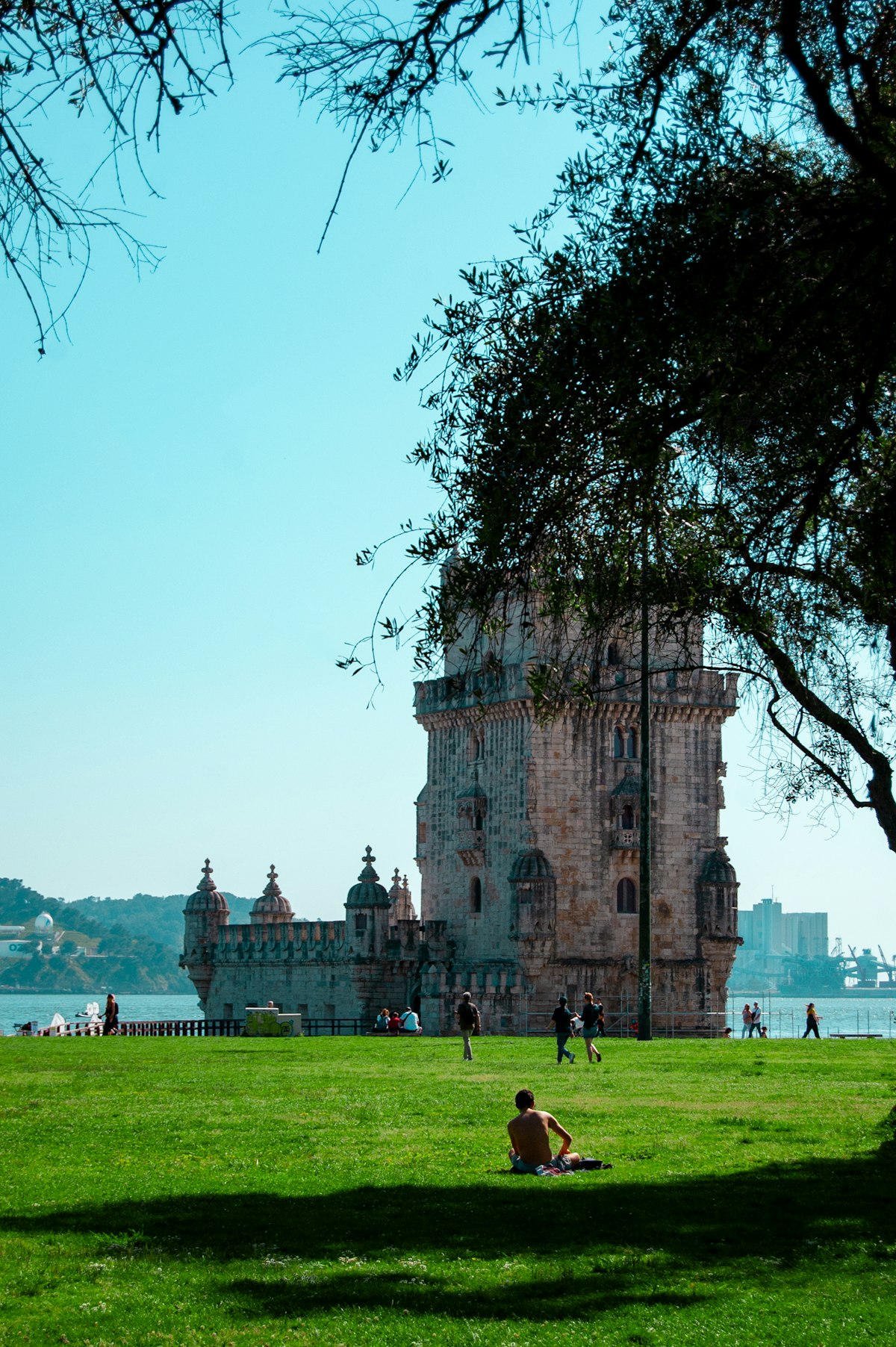
Lisbon
Portugal
A sun-drenched Atlantic capital where tram lines weave through hilltop neighbourhoods and prices stay genuinely affordable by Western European standards.
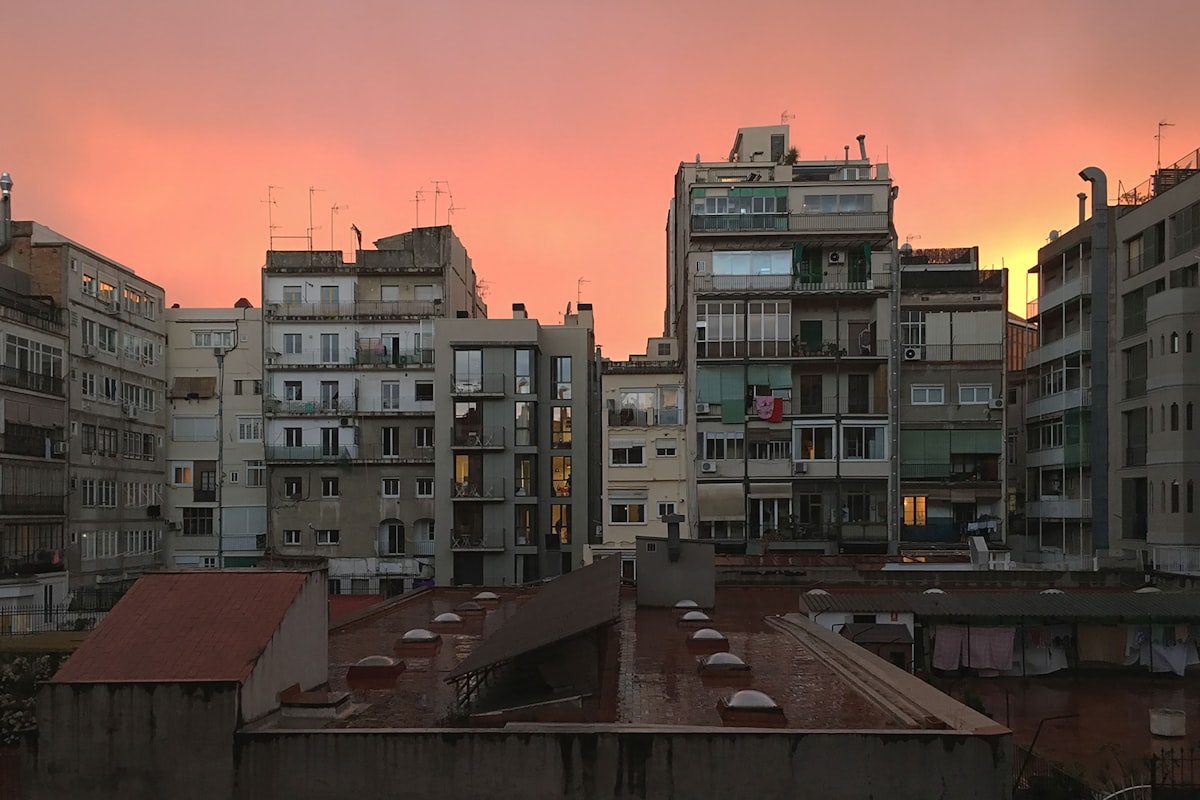
Barcelona
Spain
A Mediterranean city that runs on architecture, food markets, and beach culture — with a tourism problem that makes timing absolutely critical.
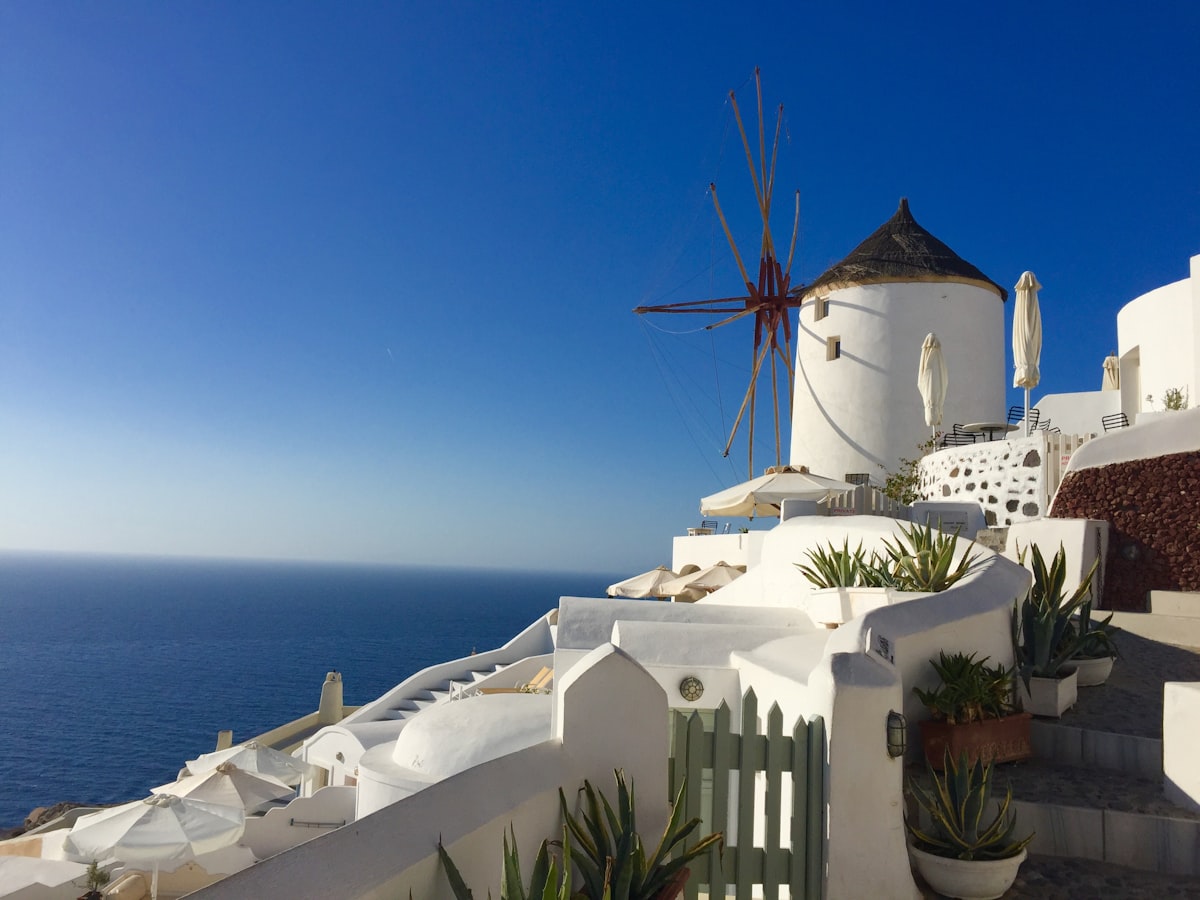
Santorini
Greece
The caldera sunsets and white-washed cliffside villages are real — but so is a tourism infrastructure that was never designed for 3 million annual visitors.
Month by month breakdown
January#12▾
Gains
- ↑Hotel rates are at their annual floor — the same four-star properties that command premium rates in July cost a fraction in January; genuinely excellent value for one of Europe's most expensive cities
- ↑The city is authentically local: no cruise ships, minimal tourist crowds, and the café and restaurant scene operating for Copenhageners rather than visitors
- ↑Indoor Copenhagen is world-class regardless of season — the National Museum, SMK (National Gallery of Denmark), and the design scene at Danish Architecture Centre need no sunshine to be excellent
Sacrifices
- ↓Approximately 1.8 sunshine hours daily is one of the most oppressively dark months in northern Europe; overcast grey is the default from morning to the early afternoon darkness
- ↓Average high of 4°C with wind chill from the coast makes outdoor exploration genuinely uncomfortable — Nyhavn's famous colourful facades are harder to appreciate through a down jacket
- ↓Tivoli Gardens is closed; the city's single most iconic attraction doesn't open until spring, which removes a significant anchor from any itinerary
February#10▾
Gains
- ↑The driest month of the year by raw millimetres — 37mm means crisp, clear winter days are possible, and sunshine hours begin their long climb back toward summer
- ↑Budget pricing continues across hotels and restaurants; set-lunch menus at Copenhagen's celebrated Nordic kitchens are the best-value entry point to a city with serious dining credentials
- ↑The city is at its most intimate — lines at popular spots like Torvehallerne food market are non-existent, and you'll have Nyhavn's waterfront largely to yourself
Sacrifices
- ↓Temperature averages match January; 4°C highs with damp North Sea air is a genuine test for those not dressed for it
- ↓The event calendar is essentially empty — no festivals, no major openings; Copenhagen in February is for those who want the city itself, not a scheduled experience around it
- ↓Tivoli remains closed and many seasonally operated canal boat tours have not yet resumed
March#7▾
Gains
- ↑CPH:DOX, one of Europe's most respected documentary film festivals, typically runs in March — a serious cultural event with an international programme that draws global filmmakers to Copenhagen's cinemas
- ↑Daylight hours increase rapidly and noticeably from week to week; the transformation from February darkness to spring light is remarkable and motivating for outdoor exploration
- ↑Hotels remain affordable while the city gains energy — the shoulder season sweet spot before summer pricing kicks in
Sacrifices
- ↓Still cold: 7°C average highs with possible late-winter wind; outdoor café culture that defines Copenhagen's summer is weeks away
- ↓Tivoli Gardens stays closed until mid-April, and many canal activities and outdoor markets are not yet running at summer capacity
- ↓Unpredictable weather — a sunny March day can feel genuinely spring-like; a wet grey one can feel indistinguishable from January
April#4▾
Gains
- ↑Tivoli Gardens reopens mid-April for its spring season — one of the world's oldest amusement parks in full flower, with rides, gardens, and the park's distinctive romantic atmosphere at a fraction of summer crowds
- ↑Cherry blossoms at Bispebjerg Kirkegård create one of Copenhagen's most photogenic annual moments — a genuinely local experience and one of the city's lesser-known highlights
- ↑Daylight reaches 14+ hours by late April — outdoor Copenhagen is viable again; café terraces open, canal boat tours resume, and the cycling culture that defines the city comes back into full view
Sacrifices
- ↓Temperature in April remains cool; 11°C is pleasant in sunshine but still requires layers, and an overcast spring day is meaningfully colder than it looks
- ↓Easter week pushes hotel demand up and some attractions get genuinely busy — price and crowd advantages of winter shoulder season begin to fade
- ↓Rain remains possible throughout; April is one of the drier months statistically but individual days can be miserable
May#3▾
Gains
- ↑Daylight reaches 16+ hours by late May — the long Nordic evenings are becoming a real phenomenon; outdoor dining and canal-side walks are viable well into the evening without a jacket
- ↑The city's cycling and outdoor culture is in full flow: Frederiksberg Gardens, the Lakes, and the harbour swimming baths begin operating for the season
- ↑Temperatures are reliably comfortable — 16°C is ideal for exploring on foot or by bike, and the city's world-class culinary scene (from Noma's spiritual successors to Torvehallerne market) is at full capacity
Sacrifices
- ↓Hotel prices are now in moderate territory and rising toward summer rates — the budget window has closed
- ↓Crowds begin building, particularly at Nyhavn and Tivoli, as European summer travel gets underway
- ↓May weather remains variable — the statistical sunshine hours are good but individual rainy days are a real possibility that require plan flexibility
June#2▾
Gains
- ↑Distortion festival (early June) takes over Copenhagen's streets neighbourhood by neighbourhood for five days — one of Europe's most distinctive urban music festivals, free in its street party format and embedded in the city's actual neighbourhoods rather than a festival field
- ↑Daylight peaks at 17+ hours around the solstice — the sky never gets truly dark; outdoor Copenhagen operates until midnight and beyond, with locals at canal-side bars and street food stalls in conditions that are genuinely extraordinary by Northern European standards
- ↑Harbour swimming is open and at full capacity — Copenhagen's famous harbour baths are a defining city experience, and June is the best month to join locals jumping into the Inner Harbour
Sacrifices
- ↓Peak prices arrive alongside peak summer: hotels are expensive, particularly around Distortion week; book well in advance for anything near the city centre
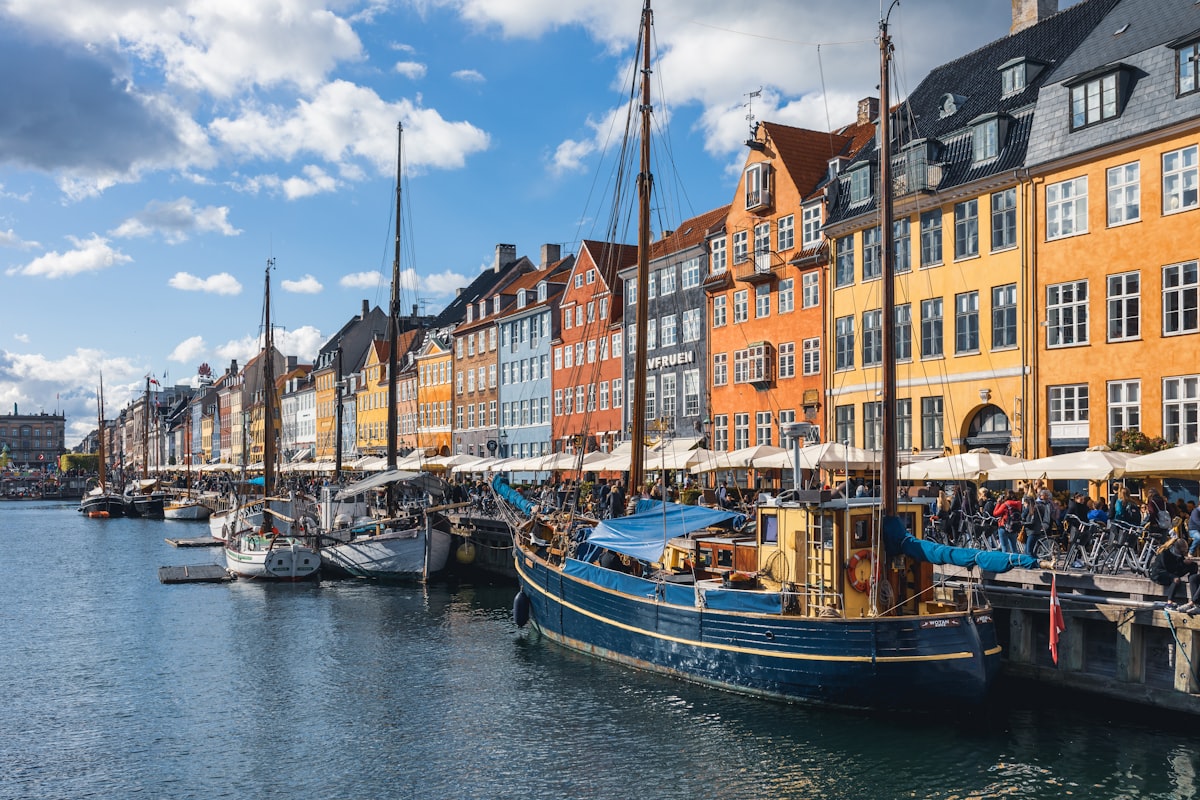
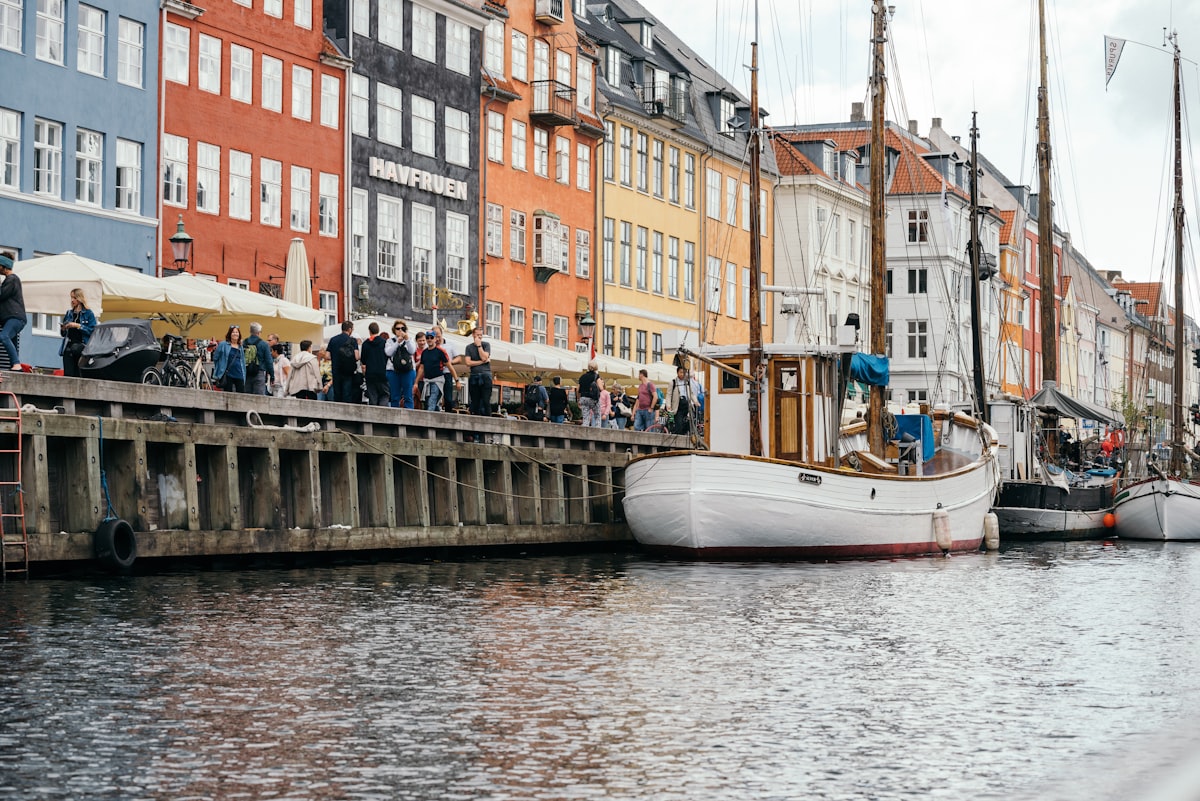
- ↓Nyhavn in June is one of Europe's most tourist-dense waterfront experiences — the colourful buildings and outdoor seating that photographs beautifully is visited by enormous crowds; arrive early morning for photography
- ↓61mm of rainfall despite the summer month means occasional wet days that interrupt the outdoor idyll; Copenhagen in June can surprise with a full rainy day
July#1▾
Gains
- ↑Copenhagen Jazz Festival (first two weeks of July) is the definitive city event — over 1,000 concerts across 100+ venues, many free in city squares, parks, and streets; jazz in Nyhavn, Kongens Have, and Tivoli simultaneously; the entire city becomes a concert hall
- ↑Peak summer weather: 22°C average highs, long evenings, and the harbour swimming at its best; this is the Copenhagen the Danes build their year around and the version that justifies the city's reputation
- ↑Tivoli Gardens is at full capacity with its summer programme, outdoor concerts, and the carnival atmosphere that makes it one of the world's genuinely special amusement parks rather than just a heritage attraction
Sacrifices
- ↓Peak season pricing: hotels at their annual maximum, restaurants requiring advance booking, and popular spots commanding high prices; Copenhagen is one of Europe's most expensive cities and July is its most expensive month
- ↓Crowds everywhere — Nyhavn is elbow-to-elbow, Tivoli has long ride queues, and the canal boat tours are fully booked days in advance; the city works hard to accommodate visitors but is under genuine pressure
- ↓65mm of July rainfall means even peak summer isn't rainproof — afternoon showers remain possible and will disrupt outdoor festival plans
August#5▾
Gains
- ↑Copenhagen Pride (typically mid-August) is one of Scandinavia's largest and most joyful events — the parade draws enormous crowds through the city centre and the city's liberal, design-forward culture is at its most confident and visible
- ↑Weather matches July at its peak: 22°C, long evenings, harbour swimming, and outdoor Copenhagen at full bloom; this is genuinely excellent Nordic summer
- ↑August is the last full month of outdoor harbour swimming and canal culture before temperatures drop — locals treat it as the precious final stretch of summer and the atmosphere reflects that urgency and celebration
Sacrifices
- ↓Peak prices persist from July: hotels, restaurants, and activities at their annual maximum; budget travellers should avoid August entirely
- ↓Crowds remain at July levels — the combination of summer tourism and Pride week means the city centre is under serious visitor pressure
- ↓Daylight is already perceptibly shorter than June — still exceptional by any standard but the magic of the solstice is fading
September#6▾
Gains
- ↑September is genuinely comfortable: 18°C highs mean outdoor café culture and cycling remain fully viable, while summer's tourist peak has passed; Nyhavn and Tivoli are enjoyable rather than overwhelmed
- ↑Hotel prices fall notably from August peak — the same central properties at meaningfully lower rates while weather remains pleasant; the best value-weather balance of the summer-adjacent months
- ↑Copenhagen's restaurant scene enters its most creative autumn period — menus shift to game, root vegetables, and the New Nordic pantry at its most seasonal; the best time to book a serious restaurant
Sacrifices
- ↓62mm of autumn rainfall and shortening days — September can bring sustained grey periods that eat into outdoor plans
- ↓Harbour swimming season closes at the end of August or early September; one of the city's defining summer experiences is over
- ↓Tivoli moves to reduced hours before its Halloween season begins in mid-October; the park is operating but not at summer capacity
October#8▾
Gains
- ↑Tivoli Halloween (mid-October to early November) transforms the park with pumpkin decorations, themed rides, and a theatrical atmosphere that is genuinely excellent and less crowded than the summer season
- ↑Frederiksberg Gardens and the city's parks reach their autumn peak — the copper beech trees and formal gardens in October are legitimately beautiful and a counterpoint to summer's canal-centric tourism
- ↑Affordable pricing across hotels and restaurants: October sits in the sweet spot between summer peak and winter darkness, with the city still lively and functional at prices that make Copenhagen's otherwise expensive dining scene more approachable
Sacrifices
- ↓Daylight drops to under 10 hours and continues falling rapidly — afternoon darkness arrives earlier each week through the month; outdoor plans need to start early
- ↓66mm of October rainfall with increasing wind — Copenhagen in autumn rain is a different city from its summer incarnation and requires appropriate gear and attitude
- ↓The outdoor canal culture that defines summer Copenhagen is effectively over; what makes the city special in July works differently in 13°C with failing light
November#11▾
Gains
- ↑Hotel prices among the year's lowest: pre-Christmas November offers genuine budget opportunities in a city that is rarely affordable
- ↑Tivoli's Christmas market opens in mid-November — one of Europe's finest, with an authentic Danish Christmas atmosphere (æbleskiver, gløgg, and the park's unique combination of rides and decorations) without December's crowds
- ↑The city's celebrated hyggelig indoor culture — candlelit restaurants, serious coffee shops, and Denmark's world-class design scene — is at its most immersive when the weather compels you inside
Sacrifices
- ↓Approximately 2 hours of sunshine daily: November in Copenhagen is genuinely dark, with overcast grey skies the overwhelming norm and daylight gone by 4pm
- ↓8°C average highs with North Sea wind feel significantly colder than the numbers suggest; outdoor exploration is uncomfortable rather than invigorating
- ↓Much of the outdoor Copenhagen — canal boat tours, harbour baths, cycling culture — is not a viable experience in November conditions
December#9▾
Gains
- ↑Tivoli Gardens Christmas market (mid-November to December 31) is the finest version of the park — fairy lights, the vintage rides running in frost, a Christmas market with serious Danish food, and a romantic atmosphere that justifies Copenhagen's reputation as a winter destination worth visiting
- ↑The city leans fully into hygge: candlelit restaurants, Christmas lunches (julefrokost), and the Danish art of winter comfort are at their most concentrated; experiencing Copenhagen's culture in December is as authentic as any summer visit
- ↑Christmas shopping on Strøget and in the Indre By neighbourhood squares feels genuinely festive — the Danes take Christmas seriously and the city's design sensibility makes even the decorations worth looking at
Sacrifices
- ↓Only 1.5 sunshine hours daily: December is darker than November, and arriving or departing in daylight requires early movement
- ↓Hotel prices spike for December and the Christmas market period — Tivoli's reputation draws visitors from across Europe and prices reflect the demand
- ↓Cold, dark, and potentially wet or icy: visiting Tivoli in December is magical but requires full winter gear; the experience is built around the twinkling lights against darkness rather than anything resembling comfortable outdoor weather
How this is calculated
Climate data
Open Meteo ERA5
30-year normals (1991–2020). Temperature, rainfall, sunshine, humidity.
Price & crowd
Tourism research
Seasonal pricing from tourism authority data. Directional — compares months within a destination only.
Personalisation
Weighted scoring
Your priorities change the weights. Budget-first users get different results than weather-first users.
Share this result
July is the best time to visit Copenhagen
Travel timing updates
New destinations and timing guides, when they land.
No spam. Unsubscribe anytime.