
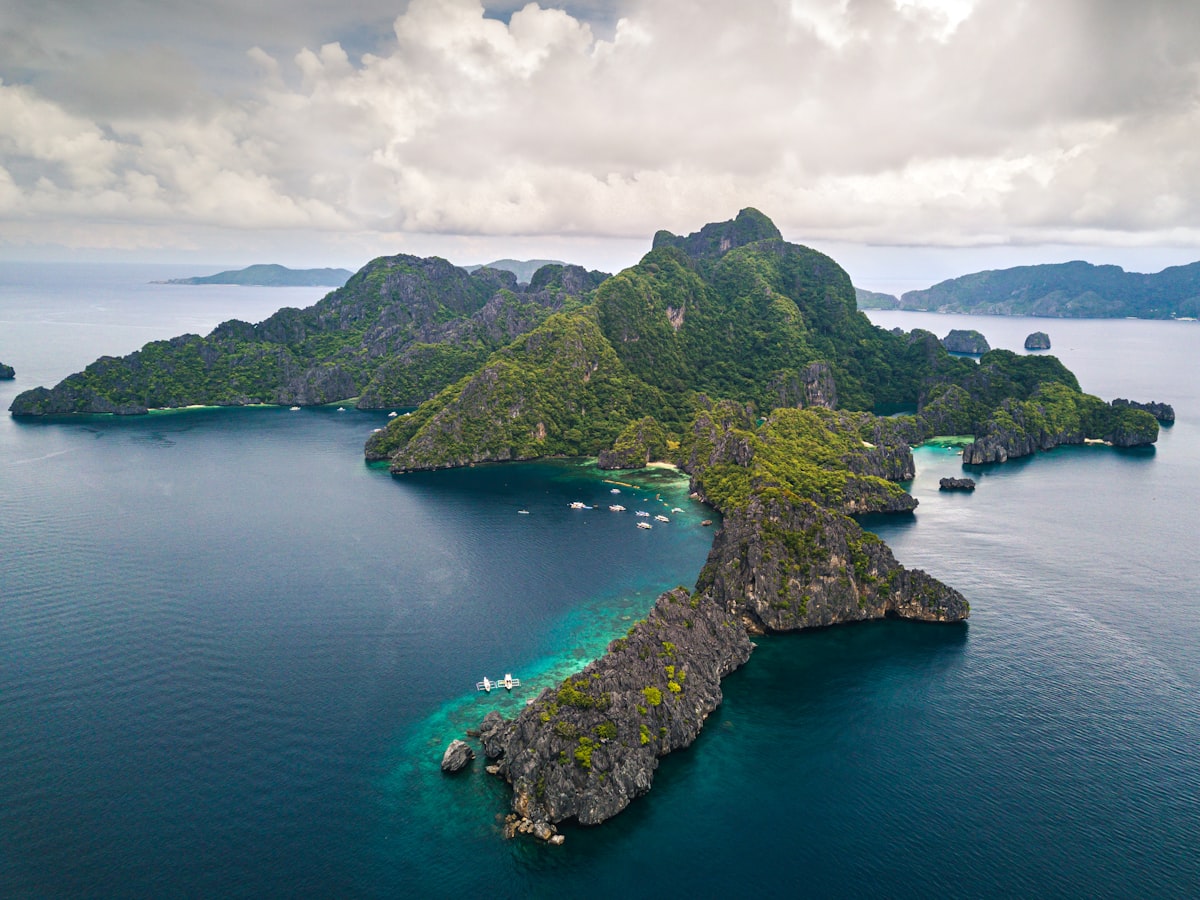
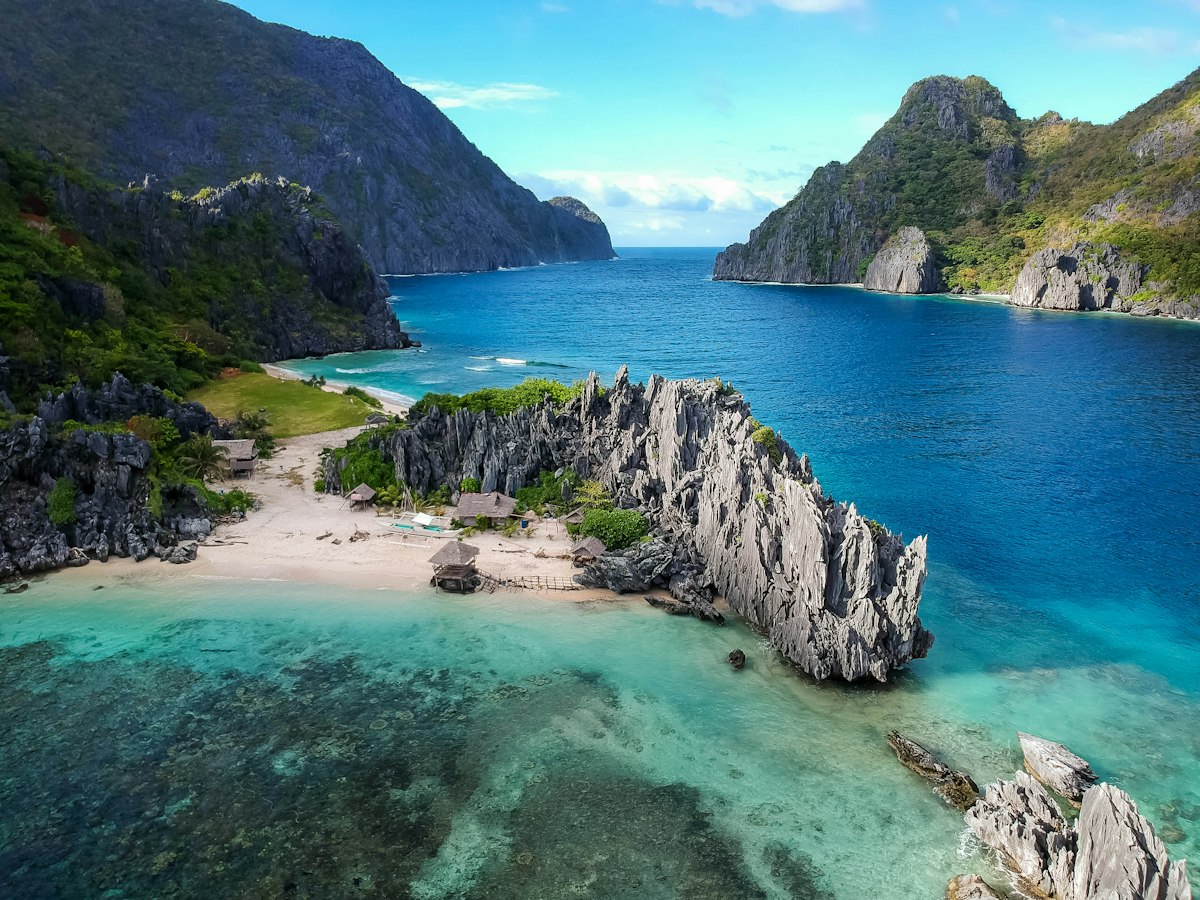
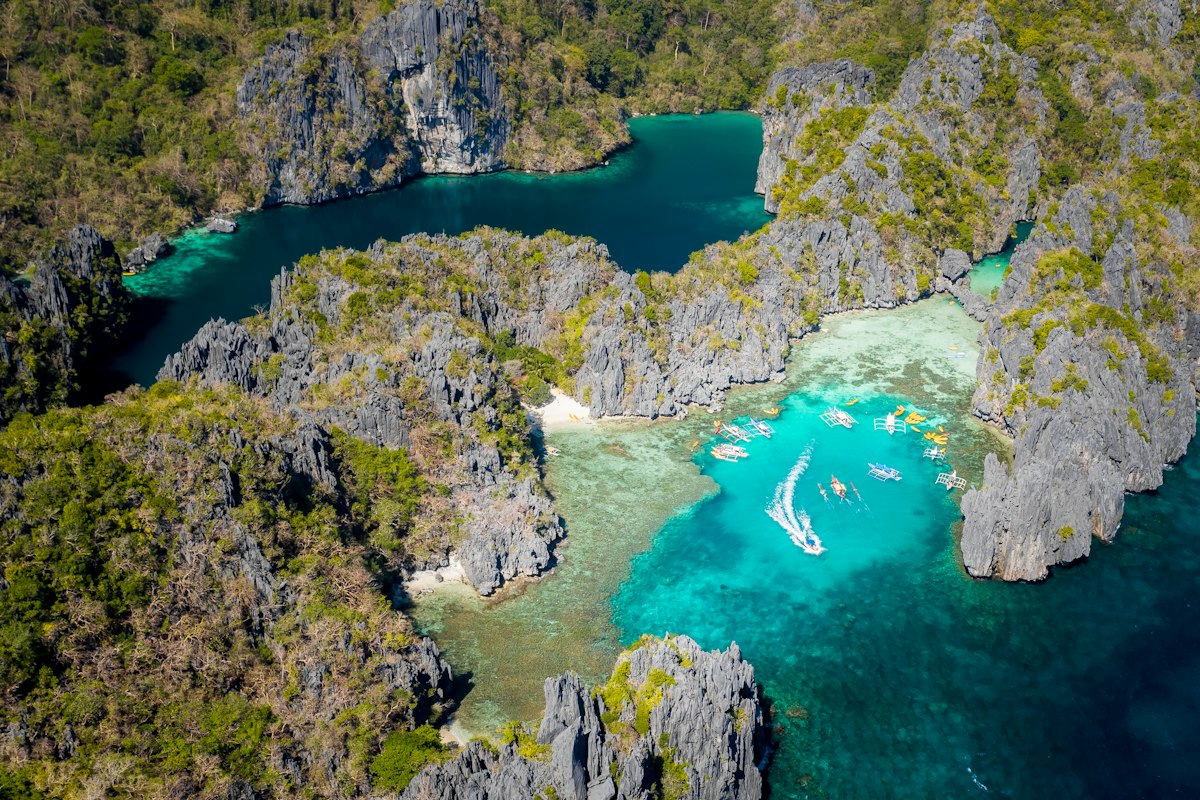

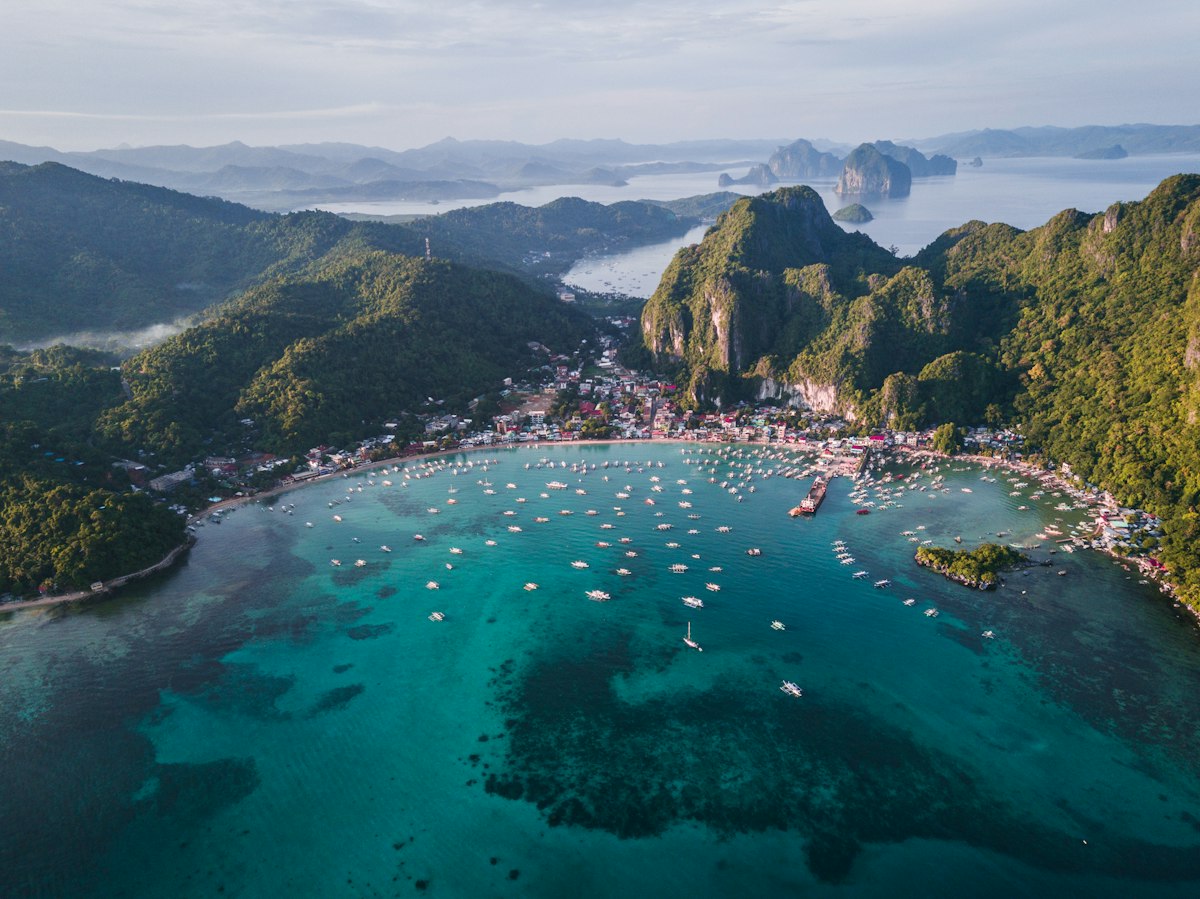

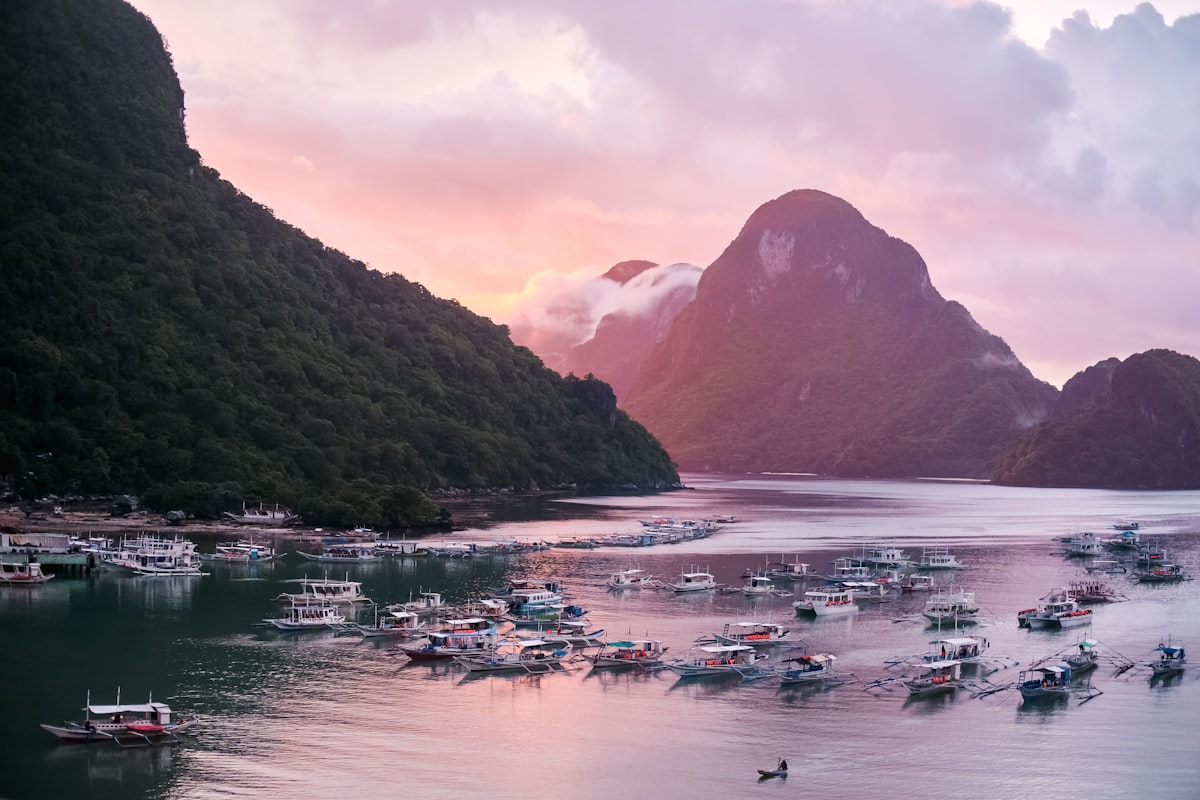


Showing: Dec · Roman Lezhnin / Unsplash
Philippines · Southeast Asia
Best time to visit Palawan
December
Dec scores highest overall — reliable weather and strong local atmosphere. Set your priorities below to personalise this result.
What matters most to you?
All 12 months — click any to expand
Dec
Roman Lezhnin / Unsplash
Peak season builds through December — excellent dry conditions, Christmas atmosphere, and prices rising sharply.
29°C
High
22°C
Low
42mm
Rain
7.8h
Sun/day
What you gain
- ↑December is reliably dry at 42mm and sunny — boat tours operate every day and the water is returning to its peak-season clarity; excellent conditions
- ↑Christmas and New Year create a genuinely festive atmosphere in El Nido town — Filipino hospitality at its most celebratory; the island is worth experiencing in the festive season
- ↑Temperatures are at their most comfortable (29°C) with reduced humidity — the only month where the heat never feels oppressive
What you sacrifice
- ↓Prices jump sharply from the second week of December — Christmas and New Year week are the most expensive period of the year in some properties, comparable to January
- ↓The week between Christmas and New Year brings maximum crowd pressure: boats are full, Nacpan Beach is packed, and El Nido town is at its busiest
- ↓Pre-Christmas week (December 22–25) and New Year's Eve can feel chaotic rather than festive if you are unprepared for Filipino Christmas scale
Dec scores highest overall — reliable weather and strong local atmosphere. Set your priorities below to personalise this result.
Dec
Peak season builds through December — excellent dry conditions, Christmas atmosphere, and prices rising sharply.
29°C
High
42mm
Rain
7.8h
Sun
- ↑December is reliably dry at 42mm and sunny — boat tours operate every day and the water is returning to its peak-season clarity; excellent conditions
- ↑Christmas and New Year create a genuinely festive atmosphere in El Nido town — Filipino hospitality at its most celebratory; the island is worth experiencing in the festive season
- ↑Temperatures are at their most comfortable (29°C) with reduced humidity — the only month where the heat never feels oppressive
- ↓Prices jump sharply from the second week of December — Christmas and New Year week are the most expensive period of the year in some properties, comparable to January
- ↓The week between Christmas and New Year brings maximum crowd pressure: boats are full, Nacpan Beach is packed, and El Nido town is at its busiest
- ↓Pre-Christmas week (December 22–25) and New Year's Eve can feel chaotic rather than festive if you are unprepared for Filipino Christmas scale
Top travel windows
★ BestDecember
Best overall
Highest combined score
29°C
High
42mm
Rain
7.8h
Sun
July
Best for value
Lowest prices & fees
30°C
High
250mm
Rain
4h
Sun
July
Fewest crowds
Quietest month
30°C
High
250mm
Rain
4h
Sun
Breakdown by priority
Best for weather
January
29°C high · 30mm rain · 8.5hrs sun/day
Best for budget
July
The absolute cheapest month to visit — rooms that cost ₱10,000/night in January are available for ₱2,000 or less; the Philippines on a backpacker budget is viable
Fewest crowds
July
Puerto Princesa's Underground River (UNESCO World Heritage Site) remains accessible regardless of sea conditions and is almost empty of tourists
Worst time to visit
July, August, September
250mm of rainfall is the monthly peak — sustained downpours, not afternoon showers; El Nido island-hopping tours are cancelled for most of the month and operators openly advise against booking
Where to stay in Palawan
All neighbourhoods →El Nido Town
The gateway to the Bacuit Archipelago — boat tours, limestone cliffs, and the liveliest strip in Palawan.
10/10
Central
8/10
Walk
5/10
Transit
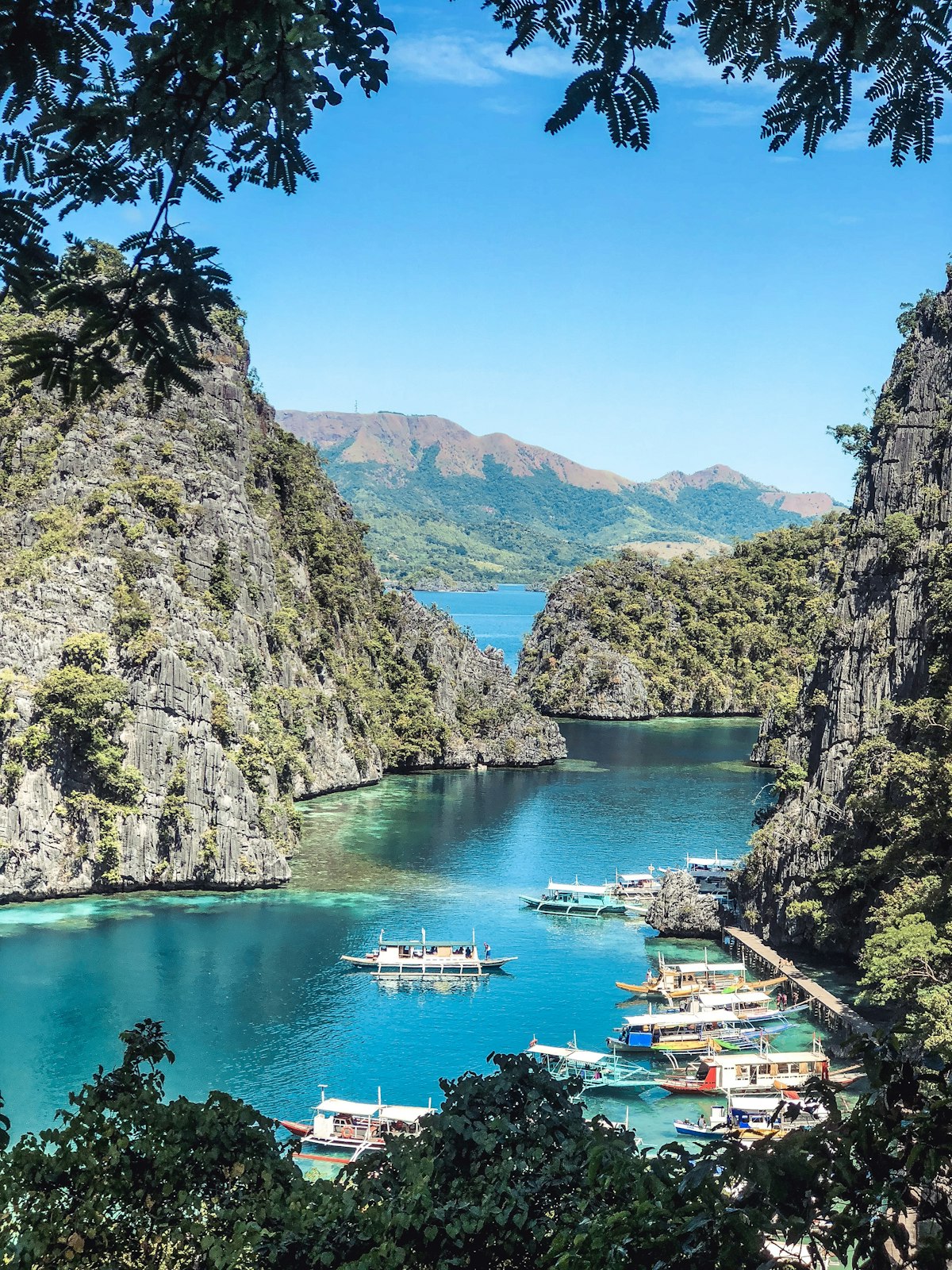
Coron Town
The WWII wreck diving capital of Asia — more laid-back than El Nido, with Kayangan Lake and limestone scenery.
8/10
Central
7/10
Walk
4/10
Transit
Also exploring

Tokyo
Japan
A city of dramatic seasonal contrasts — cherry blossom crowds, oppressive summer humidity, and golden autumn foliage — where the wrong timing can make or break the trip.
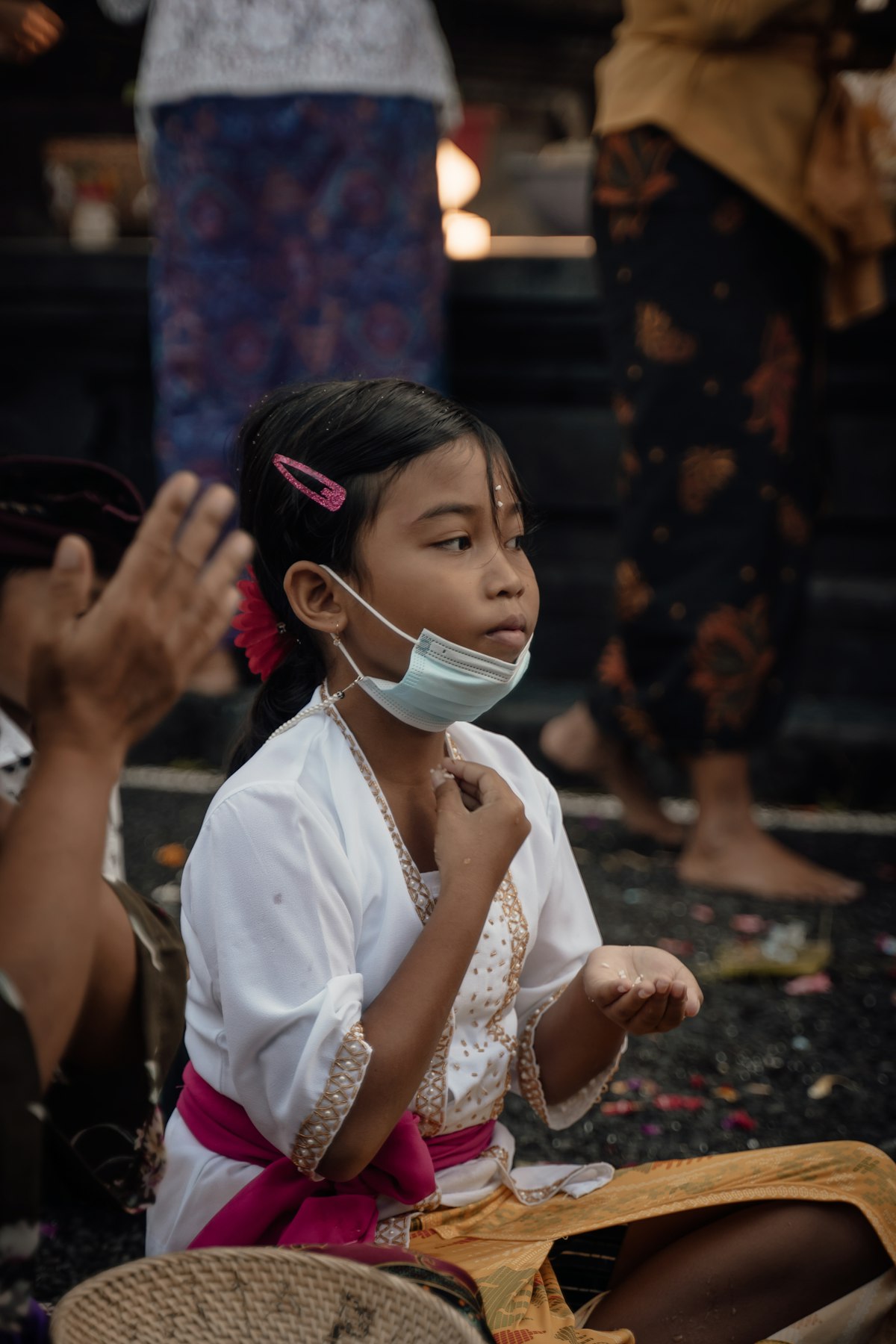
Bali
Indonesia
A Hindu island of rice terraces, temple ceremonies, and surf breaks where the monsoon makes timing genuinely binary — the difference between dry and wet season is not subtle.

Maldives
Maldives
A destination defined almost entirely by its monsoon calendar — the difference between the NE dry season (November–April) and SW wet season (May–October) is not subtle and shapes every aspect of the experience.
Worth knowing
December scores highest overall. January is the most crowded month — avoid if you can. See crowd-free ranking →
Month by month breakdown
January#3▾
Gains
- ↑The driest month of the year at just 30mm — El Nido boat tours to the Big and Small Lagoons run every day without cancellations, and the water is at its clearest and calmest
- ↑Temperatures are perfect: 29°C with low humidity makes touring the limestone islands genuinely comfortable rather than punishing
- ↑The full range of island-hopping tours, kayaking, snorkelling, and diving all operate at maximum capacity — this is Palawan at its most functional
Sacrifices
- ↓Peak pricing across all accommodation: El Nido bungalows and boutique resorts charge annual maximums, and properties book out weeks in advance
- ↓El Nido town and popular beaches like Nacpan and Las Cabanas are at maximum capacity — sunrise at viewpoints requires an early start to beat the crowds
- ↓Boats to popular lagoons and Helicopter Island fill quickly; tours from lesser operators can feel rushed and overcrowded
February#4▾
Gains
- ↑February averages just 20mm of rainfall — statistically the driest month in Palawan's calendar; sea conditions are reliable and boat tours almost never cancel
- ↑Water visibility in the lagoons and dive sites around Coron reaches its annual best; the limestone-filtered turquoise colour that defines Palawan photos is at its most intense
- ↑Valentine's season brings couples to the island, adding a festive atmosphere to the resorts and restaurants of El Nido town
Sacrifices
- ↓Prices are at or near their annual peak — comparable to January; budget options book out completely and mid-range properties charge a premium
- ↓The most popular attractions (Big Lagoon, Kayangan Lake in Coron, Nacpan Beach) are as busy as they will be all year
- ↓Temperatures start climbing toward 30°C — still manageable, but the heat on exposed limestone boat decks is noticeable by midday
March#6▾
Gains
- ↑Rainfall stays very low at 25mm and sea conditions remain reliable — boat tours to Tour A, B, C, and D in El Nido all run comfortably
- ↑Temperatures are warming to 31°C, making the turquoise lagoon water feel more refreshing rather than uncomfortably cold; snorkelling is ideal
- ↑Crowds begin to ease slightly from the January-February peak, making it marginally easier to secure last-minute bookings and uncrowded beach time
Sacrifices
- ↓Still expensive — prices remain well above mid-season rates; this is the tail of peak season, not a value window
- ↓Daytime heat on open boats is genuine at 31°C; sunscreen, hats, and shade are not optional
- ↓Easter week (date varies) can spike crowd levels sharply as Filipino domestic tourism surges — check dates and book accordingly
April#5▾
Gains
- ↑Rainfall remains low at 35mm — the last reliably dry month before the monsoon approaches; boat tours continue to run without significant cancellations
- ↑Prices begin to soften from the February peak — mid-range accommodation in El Nido and Coron is more available and somewhat better value
- ↑Beaches are noticeably less crowded than January through March — the international peak has passed and Palawan feels more spacious
Sacrifices
- ↓April is the hottest month at 32°C; island-hopping on open boats under direct sun for six hours is uncomfortable without proper protection
- ↓Easter falls in March or April — Philippine Holy Week brings significant domestic travel that can fill budget accommodation completely
- ↓The rainy season is approaching; later in April, occasional afternoon squalls can disrupt boat schedules at short notice
May#7▾
Gains
- ↑Prices drop significantly from peak — El Nido resorts and guesthouses are 30–50% cheaper than January rates, and availability is abundant
- ↑Crowds are noticeably lower; the beaches and lagoons feel more like the Palawan of the photographs rather than a managed tourist queue
- ↑Rain arrives in short afternoon bursts rather than all-day downpours — mornings are generally clear and boat tours can still run with some flexibility
Sacrifices
- ↓Rainfall jumps to 80mm — the edge of the rainy season; some tours may be delayed or rescheduled depending on sea conditions
- ↓Heat and humidity combine at 32°C / 80% — the shoulder of the hot-wet season is genuinely uncomfortable if you are unacclimatised
- ↓The water begins to lose some of its peak-season clarity as rain runoff increases; snorkelling visibility can vary day to day
June#8▾
Gains
- ↑The cheapest month of the year: accommodation at a fraction of peak rates, and the rare El Nido or Coron experience of almost total solitude
- ↑Determined travellers who accept the weather risk can find deals unavailable at any other time; Puerto Princesa and the Underground River remain more accessible than the northern islands
- ↑The landscape is at its most dramatically green and lush — Palawan's jungle interior is extraordinary after months of rain
Sacrifices
- ↓170mm of rainfall and strengthening monsoon winds mean El Nido island-hopping tours are frequently cancelled outright — the turquoise lagoon experience that defines Palawan may be unavailable
- ↓Rough seas make the Coron wrecks harder to access and snorkelling conditions poor; diving operators sometimes suspend operations entirely
- ↓This is the beginning of typhoon season — while El Nido is less directly exposed than other Philippine islands, there is genuine weather risk
July#10▾
Gains
- ↑The absolute cheapest month to visit — rooms that cost ₱10,000/night in January are available for ₱2,000 or less; the Philippines on a backpacker budget is viable
- ↑Puerto Princesa's Underground River (UNESCO World Heritage Site) remains accessible regardless of sea conditions and is almost empty of tourists
- ↑For those willing to accept the constraints, Port Barton — quieter and more sheltered than El Nido — offers authentic community life and jungle walks
Sacrifices
- ↓250mm of rainfall is the monthly peak — sustained downpours, not afternoon showers; El Nido island-hopping tours are cancelled for most of the month and operators openly advise against booking
- ↓Typhoon risk peaks in July and August; while Palawan's north-south orientation provides some protection, direct hits do occur and evacuation situations are not theoretical
- ↓Many smaller resorts and guesthouses close entirely; the tourism infrastructure of El Nido and Coron partially shuts down
August#11▾
Gains
- ↑Palawan at its most deserted — for travellers who value solitude above all else, August offers empty beaches and a raw natural environment untouched by tourism
- ↑Prices are at their absolute minimum and accommodation is negotiable; a week-long trip costs a fraction of peak season
- ↑The Puerto Princesa Underground River and inland jungle experiences are still operable with local guides, offering a different perspective on Palawan
Sacrifices
- ↓270mm of rain is the wettest month on record — it is not a question of rain disrupting plans, it is a question of whether plans are possible at all; El Nido boat operations are largely suspended
- ↓Typhoon season is at peak intensity — Typhoon-force weather systems can ground flights, close airports, and make evacuation impossible; travel insurance with cancellation cover is essential but may not cover weather delays
- ↓Accommodation quality suffers: some properties deferred maintenance until the low season, and the reduced staff and closed restaurants create a hollow experience
September#12▾
Gains
- ↑Rainfall begins to ease slightly from August's peak — still 230mm, but there are occasional sunny windows that do not exist in July and August
- ↑Prices and availability remain very low; those who travelled in July-August and survived have already departed, leaving Palawan genuinely to itself
- ↑Coron's wreck diving can occasionally operate in September on calmer days — visibility in the wrecks is sometimes better in the quieter periods
Sacrifices
- ↓El Nido remains largely shut for boat tours — 230mm of rain and unpredictable seas mean the defining experience of Palawan is still not reliably available
- ↓Typhoon risk is still elevated; the Philippines experiences some of its most significant named storms in September
- ↓Most travellers who arrive in September do so accidentally or out of necessity — very few who research Palawan would choose this month deliberately
October#9▾
Gains
- ↑Rainfall drops sharply from September — 130mm is moderate rather than prohibitive, and El Nido boat operators begin tentatively resuming tours on suitable days
- ↑Prices are still in the affordable range with good availability — a genuinely good value window if you accept some weather uncertainty
- ↑By late October, calm spells are long enough for multi-day island-hopping; travellers with flexibility can pick up tours at short notice when weather opens
Sacrifices
- ↓October is still in the tail of typhoon season — weather windows are improving but not reliable; same-day cancellations remain a possibility
- ↓Water clarity is still recovering from months of monsoon rain; the visibility in the lagoons and dive sites is not at its best
- ↓The tourism infrastructure is only partially reopened — some resorts are still doing seasonal maintenance and staff numbers are reduced
November#2▾
Gains
- ↑El Nido island-hopping tours are fully back in operation — November is when the defining Palawan experience becomes reliably available again after five months of disruption
- ↑Rainfall drops to just 50mm and sunshine returns to 7.2 hours daily — conditions approach the quality of the peak dry season without the peak-season prices or crowds
- ↑Nacpan Beach, the Secret Beach, and the inland lagoons are accessible and uncrowded compared to January-February; this is underrated Palawan
Sacrifices
- ↓Prices are rising quickly as the dry season establishes itself — November is no longer a budget month, particularly in the second half
- ↓Early November can still see some residual typhoon weather; the season officially ends in November but tail events do occur
- ↓The rush of bookings from travellers who waited out the monsoon means popular resorts fill faster than in October
December#1▾
Gains
- ↑December is reliably dry at 42mm and sunny — boat tours operate every day and the water is returning to its peak-season clarity; excellent conditions
- ↑Christmas and New Year create a genuinely festive atmosphere in El Nido town — Filipino hospitality at its most celebratory; the island is worth experiencing in the festive season
- ↑Temperatures are at their most comfortable (29°C) with reduced humidity — the only month where the heat never feels oppressive
Sacrifices
- ↓Prices jump sharply from the second week of December — Christmas and New Year week are the most expensive period of the year in some properties, comparable to January
- ↓The week between Christmas and New Year brings maximum crowd pressure: boats are full, Nacpan Beach is packed, and El Nido town is at its busiest
- ↓Pre-Christmas week (December 22–25) and New Year's Eve can feel chaotic rather than festive if you are unprepared for Filipino Christmas scale
How this is calculated
Climate data
Open Meteo ERA5
30-year normals (1991–2020). Temperature, rainfall, sunshine, humidity.
Price & crowd
Tourism research
Seasonal pricing from tourism authority data. Directional — compares months within a destination only.
Personalisation
Weighted scoring
Your priorities change the weights. Budget-first users get different results than weather-first users.
Share this result
December is the best time to visit Palawan
Travel timing updates
New destinations and timing guides, when they land.
No spam. Unsubscribe anytime.