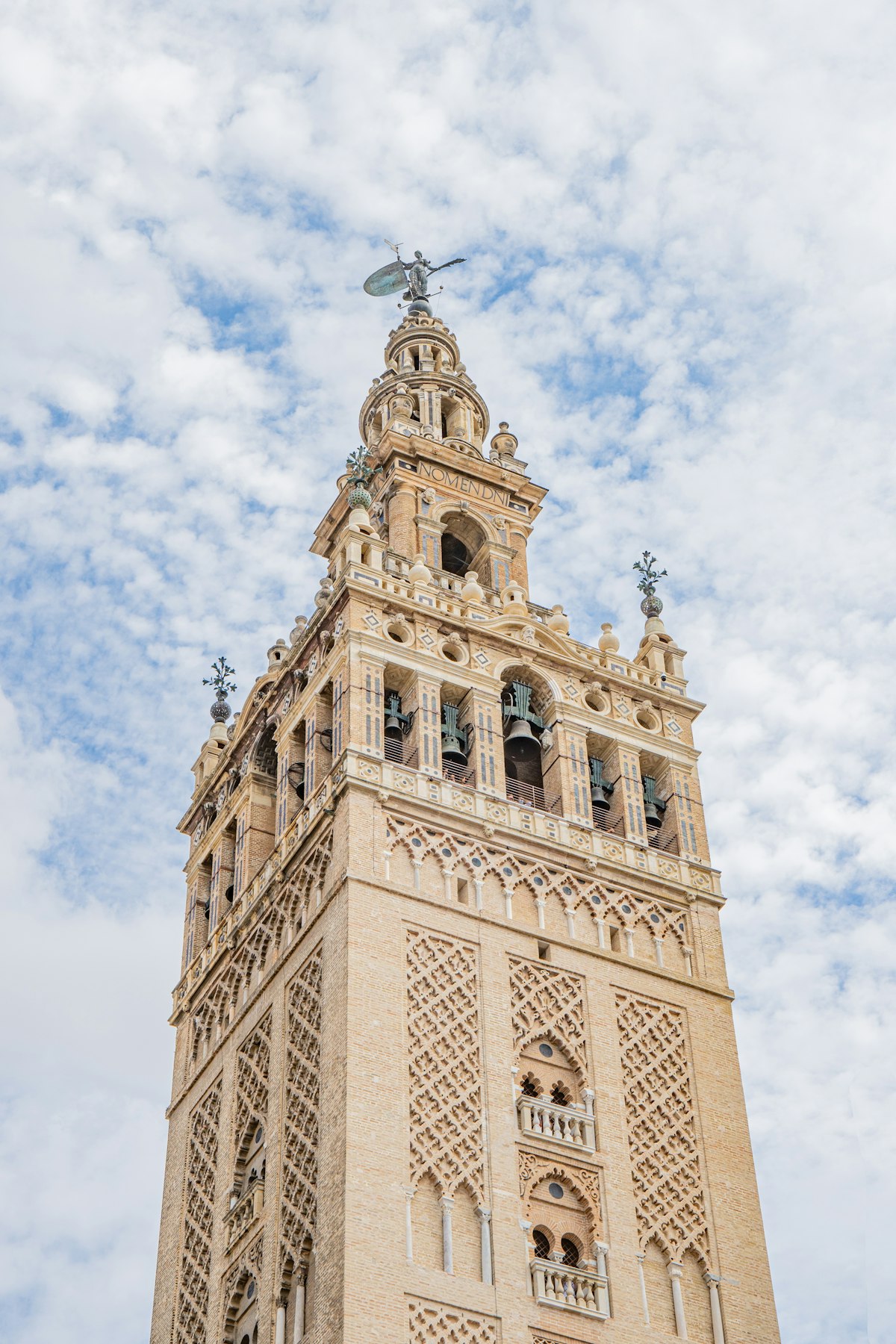
Showing: Oct · Unsplash / Unsplash
Spain · Europe
Best time to visit Seville
October
Oct scores highest overall — reliable weather and good value. Set your priorities below to personalise this result.
What matters most to you?
All 12 months — click any to expand
Oct
Unsplash / Unsplash
The best month to visit Seville — ideal weather, lower prices, the city back to itself.
24°C
High
15°C
Low
60mm
Rain
7h
Sun/day
What you gain
- ↑24°C days with low humidity and golden autumn light: the best conditions of the year for walking the old town without heat or winter grey
- ↑Accommodation prices approaching January lows while all sights, restaurants, and cultural life are fully operational
- ↑Locals have returned after summer: the tapas bars of Triana and the Macarena neighbourhood operate at their authentic best
What you sacrifice
- ↓Some October rain is likely — not the persistent grey of northern Europe, but occasional heavy showers that can last half a day
- ↓Daylight shortening toward 11 hours by month end: late afternoons require earlier dinner planning than in summer
- ↓The Alcázar and Cathedral remain popular; October is not the empty city of January — advance booking still advisable
Oct scores highest overall — reliable weather and good value. Set your priorities below to personalise this result.
Oct
The best month to visit Seville — ideal weather, lower prices, the city back to itself.
24°C
High
60mm
Rain
7h
Sun
- ↑24°C days with low humidity and golden autumn light: the best conditions of the year for walking the old town without heat or winter grey
- ↑Accommodation prices approaching January lows while all sights, restaurants, and cultural life are fully operational
- ↑Locals have returned after summer: the tapas bars of Triana and the Macarena neighbourhood operate at their authentic best
- ↓Some October rain is likely — not the persistent grey of northern Europe, but occasional heavy showers that can last half a day
- ↓Daylight shortening toward 11 hours by month end: late afternoons require earlier dinner planning than in summer
- ↓The Alcázar and Cathedral remain popular; October is not the empty city of January — advance booking still advisable
Top travel windows
★ BestOctober
Best overall
Highest combined score
24°C
High
60mm
Rain
7h
Sun
★ BestOctober
Best for value
Lowest prices & fees
24°C
High
60mm
Rain
7h
Sun
November
Fewest crowds
Quietest month
18°C
High
75mm
Rain
6h
Sun
Breakdown by priority
Best for weather
October
24°C high · 60mm rain · 7hrs sun/day
Best for budget
October
Accommodation prices approaching January lows while all sights, restaurants, and cultural life are fully operational
Fewest crowds
November
Very affordable accommodation with walk-in availability at most properties: Seville's value window before Christmas rises
Worst time to visit
July, August
Daily highs regularly reaching 38–42°C: the Cathedral interior, the narrow lanes of Santa Cruz, and any outdoor activity before 19:00 are genuinely oppressive
Where to stay in Seville
All neighbourhoods →Barrio de La Macarena
The authentic working-class barrio north of the centre — local life, medieval walls, and the best value in the old city.
5/10
Central
9/10
Walk
6/10
Transit
El Centro / El Arenal
The commercial heart and riverside embankment — the practical middle between Santa Cruz and Triana.
8/10
Central
9/10
Walk
7/10
Transit
Also exploring
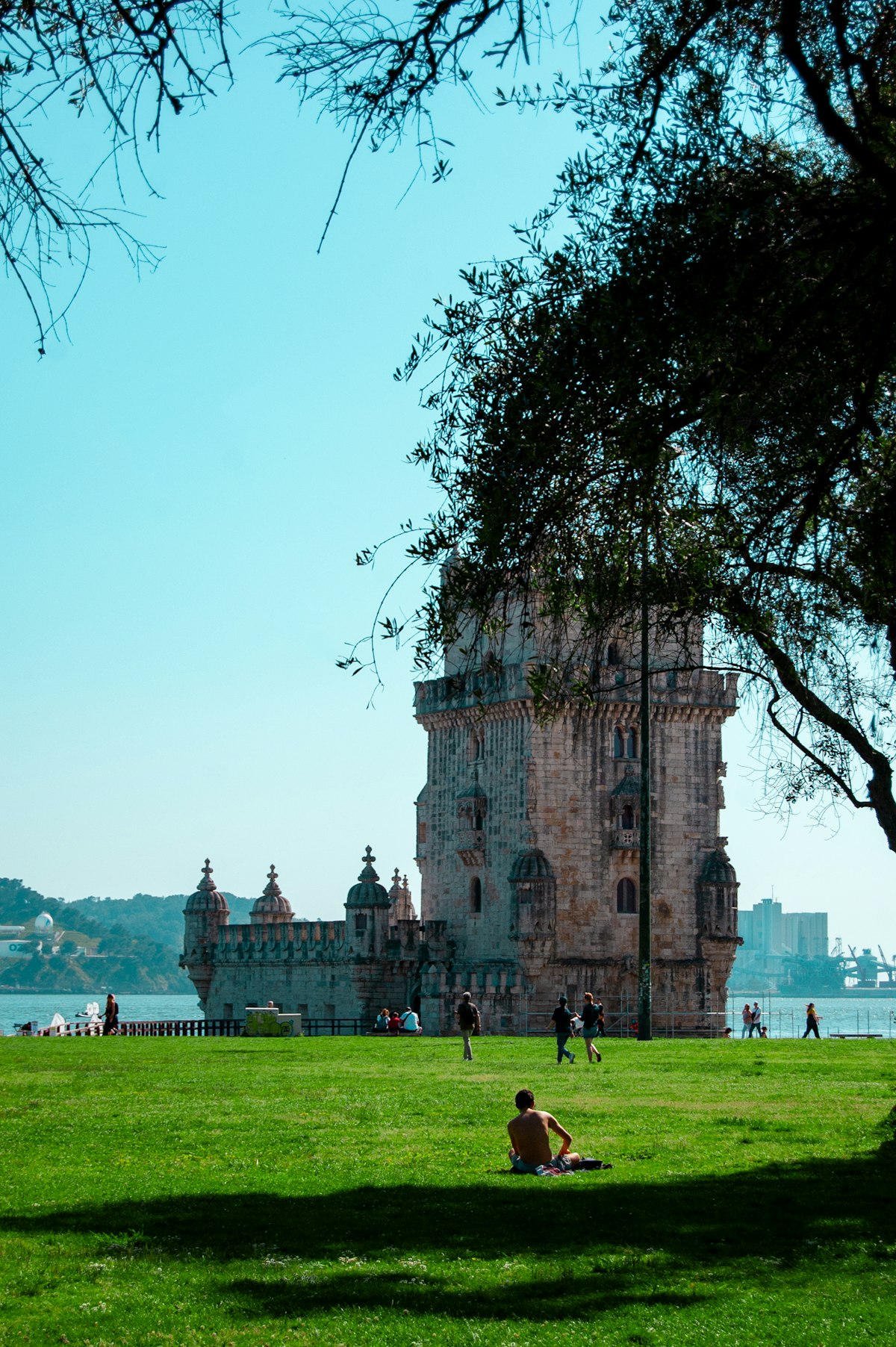
Lisbon
Portugal
A sun-drenched Atlantic capital where tram lines weave through hilltop neighbourhoods and prices stay genuinely affordable by Western European standards.
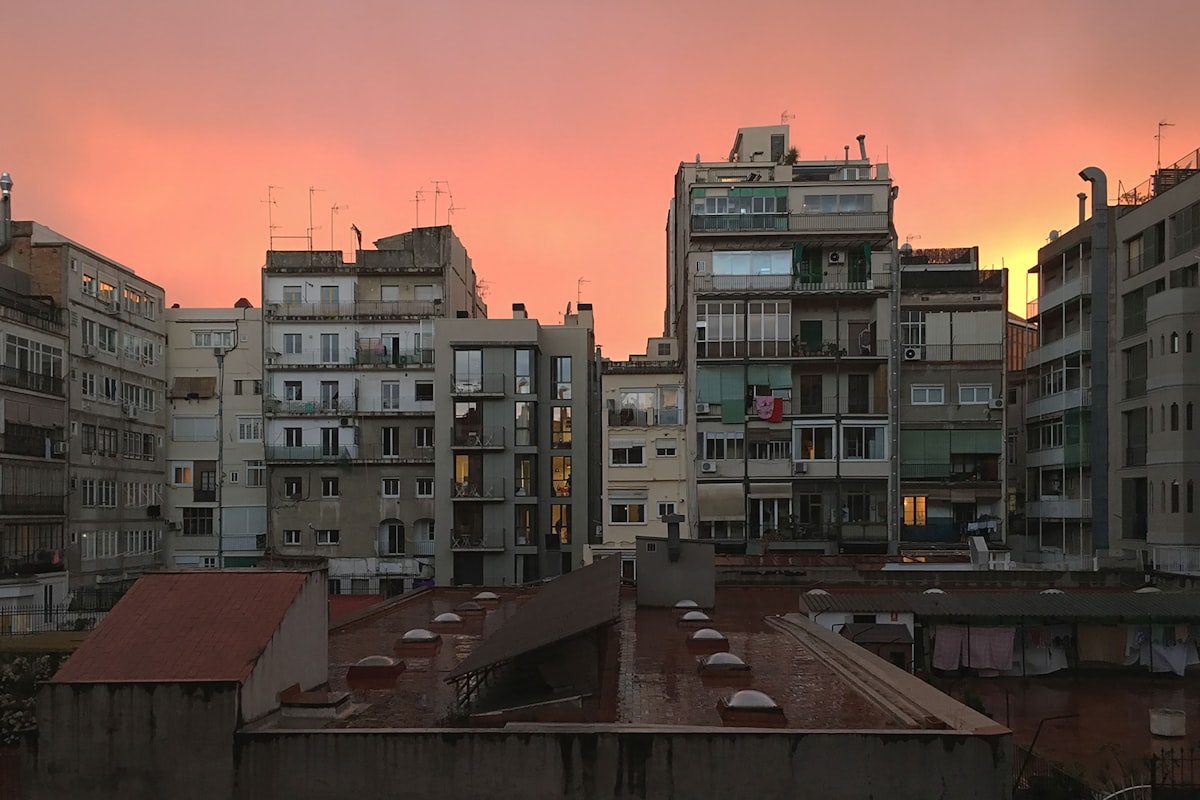
Barcelona
Spain
A Mediterranean city that runs on architecture, food markets, and beach culture — with a tourism problem that makes timing absolutely critical.
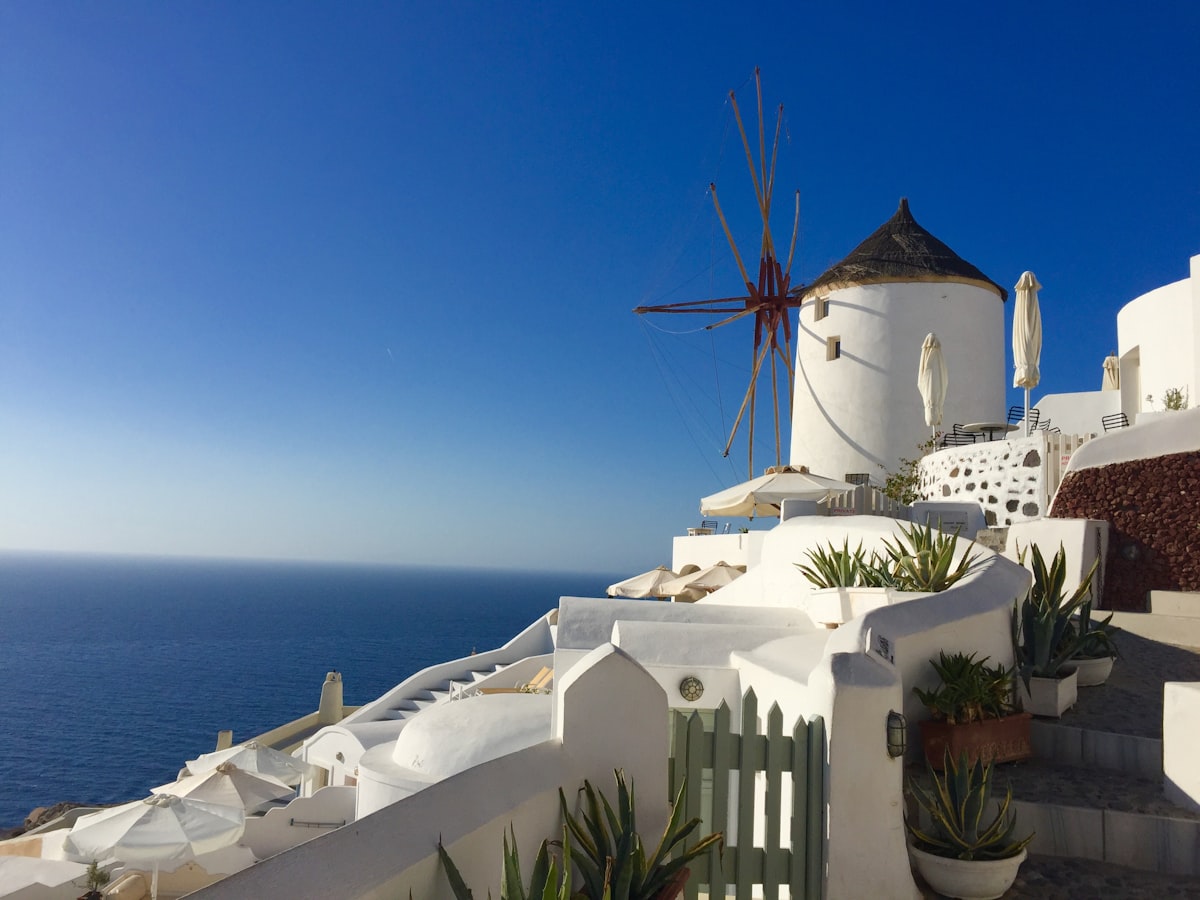
Santorini
Greece
The caldera sunsets and white-washed cliffside villages are real — but so is a tourism infrastructure that was never designed for 3 million annual visitors.
Worth knowing
October scores highest overall. April is the most crowded month — avoid if you can. See crowd-free ranking →
Month by month breakdown
January#9▾
Gains
- ↑Accommodation prices at their lowest: the same hotel that charges €200 in April is routinely under €80 in January
- ↑The historic old town — Santa Cruz lanes, the Alcázar gardens, the Cathedral interior — entirely accessible without queues or crowds
- ↑Mild temperatures of 14–16°C make walking the old city all day genuinely comfortable; tapas bars full of locals rather than tour groups
Sacrifices
- ↓The Alcázar gardens are past their peak and some blooms absent; orange blossom season is still two months away
- ↓Shorter days (around 9 hours of daylight) with periodic rain weeks interrupting outdoor plans
- ↓January has no significant festivals or cultural events — the city is at its quietest and most ordinary
February#6▾
Gains
- ↑Still very affordable accommodation with low crowds across the entire historic district
- ↑February light on the Giralda and the Alcázar is clean and golden — excellent for photography without summer haze
- ↑Occasional almond blossom in the Alcázar gardens gives a preview of the floral season to come
Sacrifices
- ↓Weather remains variable: February can bring extended rainy spells of several days that disrupt outdoor sightseeing
- ↓Carnival (Carnaval) occurs in February or early March but Seville's is modest compared to Cádiz — not a major draw
- ↓Evenings still cool at 7–9°C, limiting terrace dining that defines the Seville experience at its best
March#5▾
Gains
- ↑Orange blossom fragrance fills the old city from mid-March: the streets of Santa Cruz and the Alcázar gardens at their most evocative before the Easter crowds arrive
- ↑Temperatures reach 20–22°C by midday: warm enough for terrace dining without summer heat
- ↑Pre-Easter prices still moderate — 30–40% cheaper than the April peak for accommodation across the city
Sacrifices
- ↓Early March can still bring wet weeks: the spring transition is not guaranteed, and rainy days are common
- ↓Crowds beginning to build toward Easter: the Alcázar and Cathedral see noticeably more visitors than February
- ↓If Easter falls in late March, all April peak conditions apply — prices spike and accommodation fills weeks ahead
April#7▾
Gains
- ↑Semana Santa (Holy Week): 60,000 members of brotherhood carry floats through the old city in candlelit processions that are the most dramatic religious spectacle in Europe
- ↑Feria de Abril (two weeks after Easter): a week of flamenco dresses, horseback processions, casetas, and dancing that is entirely unlike anything else in Spain
- ↑Perfect spring weather of 22–26°C with minimal rain: the conditions that showcase Seville's architecture and outdoor culture at their finest
Sacrifices
- ↓Accommodation prices at maximum: the cheapest rooms double; good hotels need booking six or more months ahead for Semana Santa week
- ↓Restaurants fully booked, queues at every major sight, and the streets around the Cathedral impassable during processions
- ↓Feria de Abril is a local insider event — access to the best private casetas requires invitation, and tourists often find themselves watching from outside
May#2▾
Gains
- ↑27°C days with low humidity and 9+ hours of sunshine: warm enough for full terrace culture but not yet oppressively hot
- ↑Prices 30–40% below the April peak: the city's accommodation and restaurants return to reason after the Easter surge
- ↑Cruces de Mayo (May 3–5): neighbourhood flower crosses and the broader spring festival season give Seville continued festive energy
Sacrifices
- ↓Crowds building steadily as summer approaches: the Alcázar, Cathedral, and Santa Cruz lanes remain busy throughout
- ↓Booking the Alcázar in advance is essential — walk-in entry often unavailable by mid-May
- ↓Temperatures approaching 30°C by month end: midday is increasingly uncomfortable for extended outdoor exploration
June#10▾
Gains
- ↑11 hours of sunshine per day: extraordinarily long evenings well suited to the late Spanish dinner culture and the cool-of-evening plaza life
- ↑Virtually no rain: Seville in June is reliably dry, making it dependable for those who need guaranteed sunshine
- ↑The Alcázar gardens in June bloom: jasmine and roses scent the courtyards that are best explored at opening time (9:30) before the heat arrives
Sacrifices
- ↓Temperatures reaching 32°C by afternoon: midday sightseeing in the Cathedral or across the Plaza de España is physically demanding
- ↓International summer tourism peaks: the Santa Cruz lanes and Alcázar entrances at their most congested from 10:00 to 18:00
- ↓Locals adapt to the heat by extending siesta hours — some smaller businesses reduce daytime service
July#11▾
Gains
- ↑Virtually no rain (3mm in the entire month): for those seeking guaranteed sunshine and dry outdoor dining, it is delivered without qualification
- ↑Long summer evenings extend to 22:00 — the paseo and late tapas culture reach their annual peak when locals brave the streets after 20:00
- ↑Rooftop bars and the Seville riverside embankment at their most animated in the late evenings
Sacrifices
- ↓Daily highs regularly reaching 38–42°C: the Cathedral interior, the narrow lanes of Santa Cruz, and any outdoor activity before 19:00 are genuinely oppressive
- ↓Many locals have left for the coast: some neighbourhood bars reduce hours, and the city's authentic life is partially suspended
- ↓Accommodation prices near their annual peak driven by international summer tourism despite — or because of — the extreme conditions
August#12▾
Gains
- ↑Ultra-long evenings and a lively late-night atmosphere that runs until 2–3am in the outdoor bars along the Alameda de Hércules
- ↑The Museum of Fine Arts and the Cathedral (with air conditioning) offer genuine refuge during the hottest hours
- ↑Late August to early September: some temperatures begin to ease slightly and domestic tourism starts to thin
Sacrifices
- ↓August is the least comfortable month for walking Seville's historic core: 36–40°C with all-day sun and minimal shade in the Santa Cruz lanes
- ↓International tourists replace the locals who have abandoned the city for the coast: the city's authentic character is at its annual low
- ↓Hotels and Airbnbs at near-maximum prices despite the heat — summer demand from northern European visitors drives rates
September#3▾
Gains
- ↑Temperatures drop from 36°C to a still-warm 29–32°C: outdoor sightseeing returns to being enjoyable rather than punishing throughout the day
- ↑Locals return from summer holidays: the neighbourhood bars, markets, and the authentic life of the city reconvenes from mid-September
- ↑Accommodation prices 20–30% below July–August peak and continuing to fall toward October's value window
Sacrifices
- ↓Early September still very hot: the transition from brutal to manageable is gradual and not complete until later in the month
- ↓Some occasional afternoon thunderstorms arrive in September — brief but heavy, making an umbrella worth carrying
- ↓International summer tourist numbers only gradually declining; Santa Cruz remains busy through most of the month
October#1▾
Gains
- ↑24°C days with low humidity and golden autumn light: the best conditions of the year for walking the old town without heat or winter grey
- ↑Accommodation prices approaching January lows while all sights, restaurants, and cultural life are fully operational
- ↑Locals have returned after summer: the tapas bars of Triana and the Macarena neighbourhood operate at their authentic best
Sacrifices
- ↓Some October rain is likely — not the persistent grey of northern Europe, but occasional heavy showers that can last half a day
- ↓Daylight shortening toward 11 hours by month end: late afternoons require earlier dinner planning than in summer
- ↓The Alcázar and Cathedral remain popular; October is not the empty city of January — advance booking still advisable
November#4▾
Gains
- ↑Very affordable accommodation with walk-in availability at most properties: Seville's value window before Christmas rises
- ↑The whole of the historic district — the Cathedral, the Alcázar gardens, Santa Cruz — accessible and unhurried
- ↑Local market and neighbourhood life at its most authentic: Mercado de Triana and La Macarena's daily rhythm fully resumed
Sacrifices
- ↓November brings Seville's most reliable rain: week-long grey spells are common, and outdoor terrace dining may not be comfortable
- ↓Temperatures can drop to 10°C at night — the outdoor café culture that defines the city requires warmer clothing
- ↓Shorter days (around 10 hours of daylight) and limited festival calendar make it quieter culturally than April or October
December#8▾
Gains
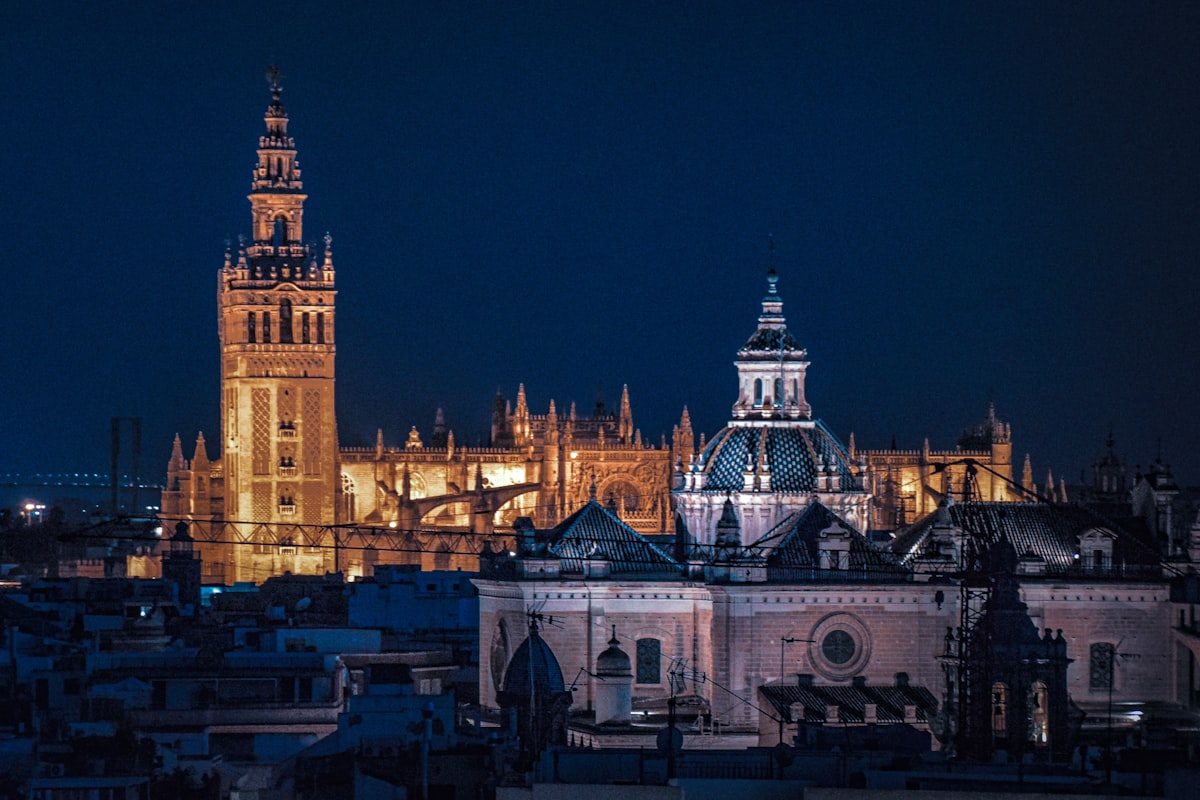
- ↑Nativity scenes (belenes) and Christmas lights throughout the historic district from early December — the Cathedral and Giralda brilliantly illuminated
- ↑Christmas market and the Cabalgata de Reyes (Three Kings Parade, January 5): the pre-Christmas period includes family-focused festivities
- ↑Moderate prices well below April peak: accommodation available with reasonable advance booking
Sacrifices
- ↓Chilly evenings at 7°C and a high chance of rain: outdoor plans are subject to weather in a way May and September are not
- ↓Shortest days of the year (around 9 hours of daylight) compress sightseeing into a narrower window
- ↓Christmas week brings a spike in European visitors and domestic holiday traffic; the city is not quiet between December 23 and January 2
How this is calculated
Climate data
Open Meteo ERA5
30-year normals (1991–2020). Temperature, rainfall, sunshine, humidity.
Price & crowd
Tourism research
Seasonal pricing from tourism authority data. Directional — compares months within a destination only.
Personalisation
Weighted scoring
Your priorities change the weights. Budget-first users get different results than weather-first users.
Share this result
October is the best time to visit Seville
Travel timing updates
New destinations and timing guides, when they land.
No spam. Unsubscribe anytime.