Krabi · Month comparison
January vs March
March ranks #1 overall vs January at #4. Still-excellent conditions at better value — the dry season's best month for most visitors.
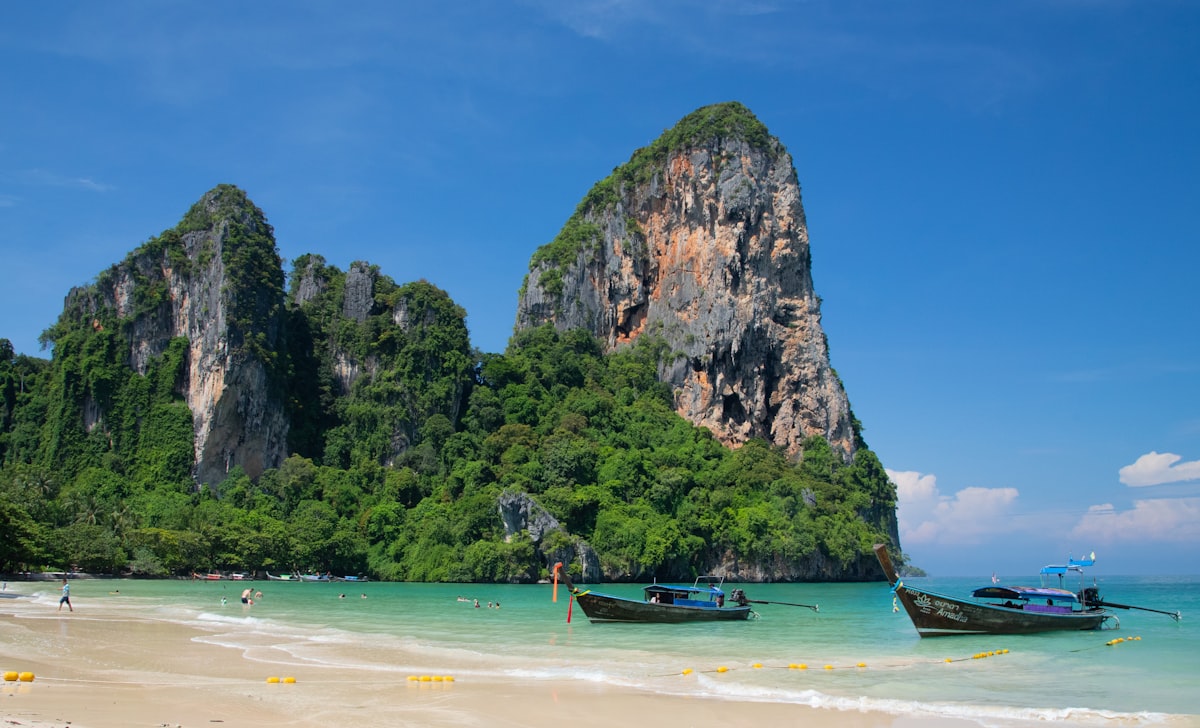
January
#4 of 12 months
Best match
Peak dry season — Railay at its most stunning, longtail boats running daily to every island.
- ↑Only 25mm of rain all month: the limestone karst towers glow in clear January light — the signature Krabi postcard
- ↑Longtail boats to Railay Beach and the Four Islands tour (Ko Poda, Chicken Island) operating at full capacity every day

March
#1 of 12 months
Best match
Still-excellent conditions at better value — the dry season's best month for most visitors.
- ↑Conditions nearly identical to February at noticeably lower prices: the dry season's best value window on the Andaman coast
- ↑All island tours, Railay longtail transfers, and Four Islands trips operating at full capacity
| Factor | January | March |
|---|---|---|
| Weather score | 9 | 9 |
| Value score | 3 | 5 |
| Crowd score | 4 | 5 |
| Events score | 4 | 4 |
| Atmosphere | 8 | 8 |
| Avg high temp | 32°C | 34°C |
| Monthly rain | 25mm | 45mm |
| Daily sunshine | 8.5hrs | 8.5hrs |
January trade-offs
- ↓High season prices: beachfront Railay accommodation at 2–3× off-season rates; Ao Nang hotels similarly elevated
- ↓Railay is the most sought-after beach in southern Thailand — longtail queues and limited bed availability throughout the month
- ↓Advance booking essential; last-minute arrivals often unable to secure Railay accommodation at any price
March trade-offs
- ↓Temperatures rising toward 34°C with increasing humidity: midday on the beach or mid-route rock climb becomes genuinely hot
- ↓Some Ao Nang hotel rates remain elevated through Thai school holiday weeks in late March
- ↓Sea conditions beginning to shift toward month end — occasional swell precedes the approaching monsoon
Scores compare months within Krabi. Climate data: Open Meteo ERA5 30-year normals (1991–2020). Methodology →