AlUla
Elephant Rock (Jabal AlFil) / Dadan
Unsplash / Unsplash
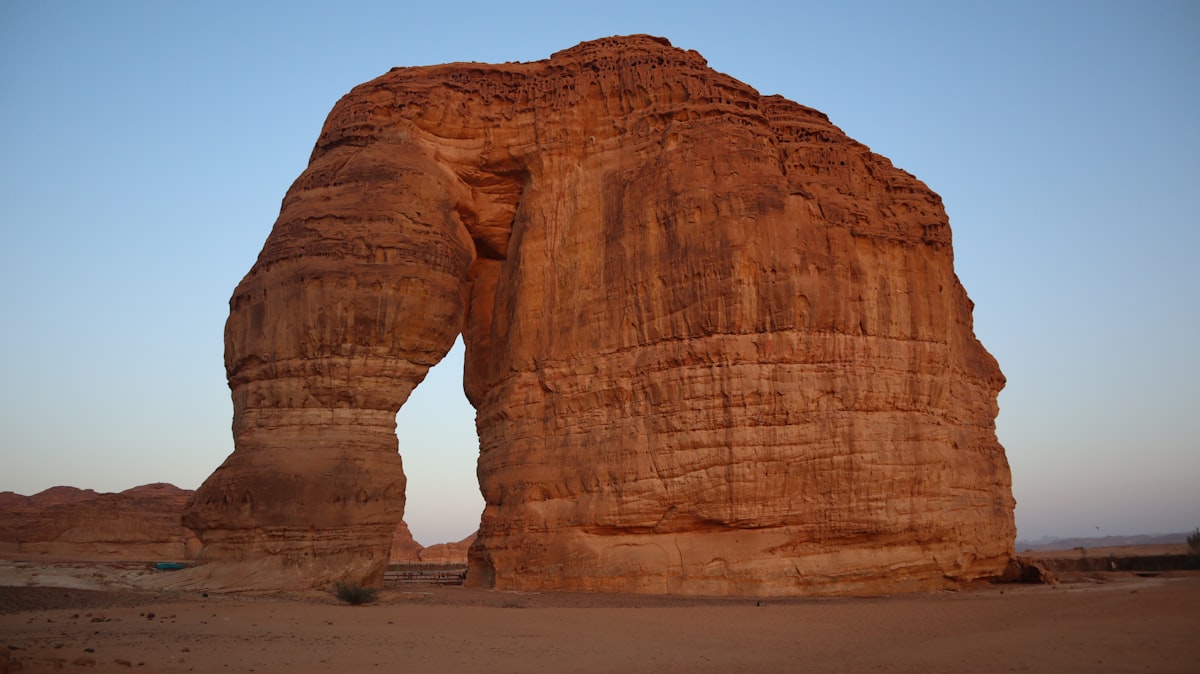
The volcanic rock elephant and the ancient Lihyanite city ruins — AlUla's most iconic landscape, 10 minutes from town.
Elephant Rock (Jabal AlFil) is the natural sandstone formation that has become AlUla's defining image: a 52-metre volcanic rock mass eroded over 92 million years into the unmistakable silhouette of an elephant, its trunk touching the desert floor. Floodlit at night and set against a blank-canvas desert horizon, it is one of the most photogenic geological features in the Middle East. A kilometre north lies Dadan, the ancient capital of the Dadan and Lihyan kingdoms (8th–2nd century BC) — pre-Nabataean tombs cut into the cliff face and a staircase ascending through inscribed walls to a dramatically positioned rock-cut sanctuary. Both sites are accessible on foot from the nearby car parks and are open to self-guided visits year-round.
Scores
Walkability
Transit
Price
Local feel
Nightlife
Family-friendly
Centrality
What you gain
- ↑Elephant Rock is free-access and self-guided — no booking required, day or night
- ↑Night illumination of Elephant Rock turns the site into one of the most magical desert spectacles in the region
- ↑Dadan staircase tombs predate Hegra by 600 years — a completely different pre-Nabataean civilisation layer
What you sacrifice
- ↓Very exposed site with no shade — heat makes visiting after 10am punishing Apr–Oct
- ↓Limited on-site interpretation at Dadan — context requires pre-reading or a guide
Best for
Avoid if
Other AlUla neighbourhoods
A 13th-century mud-brick ghost city in the palm oasis — 900 abandoned houses, winding alleyways, and a hilltop Ottoman fortress.
Saudi Arabia's first UNESCO World Heritage Site — 111 Nabataean rock tombs carved into sandstone mountains, 23km south of town.
The world's largest mirrored building, contemporary arts, luxury glamping, and the gateway to Sharaan Nature Reserve.
Know where to stay — now find when to go.
Best time to visit AlUla →