Dubai
Deira / Old Dubai
Nick Fewings / Unsplash
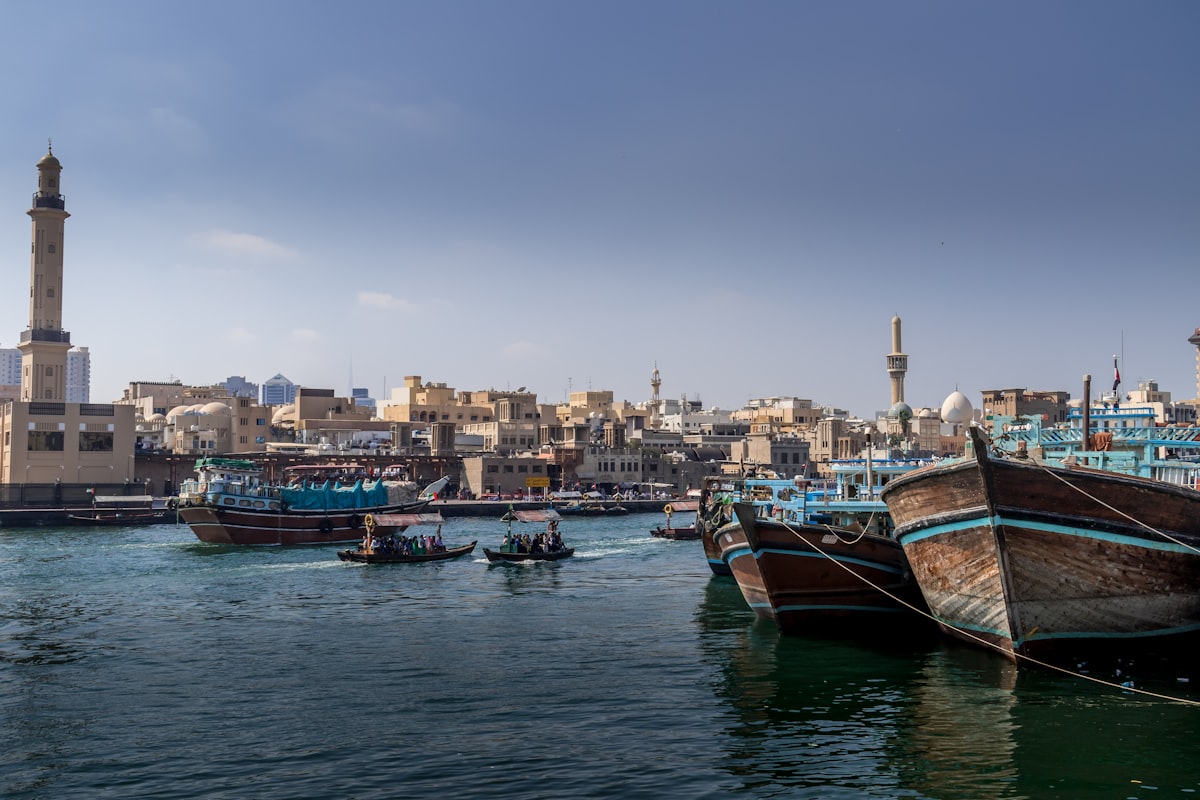
The Dubai that existed before the skyscrapers — gold souks, spice merchants, and the creek.
Deira and the surrounding Old Dubai area — including Bur Dubai across the creek — is where the city's actual history lives. The Gold Souk is the largest in the world; the adjacent Spice Souk fills the air with saffron, frankincense, and dried limes; the creek itself carries traditional abra wooden boats that have operated the same crossing for a century. The neighbourhood is busy, dense, and authentically commercial rather than tourist-managed — it's the part of Dubai that feels like the Middle East rather than a global hotel brand.
Scores
Walkability
Transit
Price
Local feel
Nightlife
Family-friendly
Centrality
What you gain
- ↑Gold Souk, Spice Souk, and the textile souks — some of the most atmospheric markets in the region, genuinely used by the local trading community rather than staged for visitors
- ↑The best value accommodation and food in central Dubai: budget hotels and authentic restaurants at fractions of the Marina or Downtown prices
- ↑The abra creek crossing (AED 1 each way) is the best value experience in Dubai — ten minutes on the water with the old city on both sides
What you sacrifice
- ↓Nightlife is almost non-existent; this is a working commercial neighbourhood that winds down early
- ↓Far from the beach and the modern attractions of Dubai Marina, Downtown, and JBR — you will need transport for most other parts of the city
- ↓The density and pace can feel overwhelming; the souks are crowded, the streets busy, and there is limited tourist infrastructure to help navigate
Best for
Avoid if
Other Dubai neighbourhoods
The most iconic skyline on earth — Burj Khalifa, Dubai Mall, and the Fountain in one walkable district.
A yacht-lined canal surrounded by towers — Dubai's most active waterfront neighbourhood.
Dubai's financial centre doubles as its best upscale dining and gallery district.
Know where to stay — now find when to go.
Best time to visit Dubai →