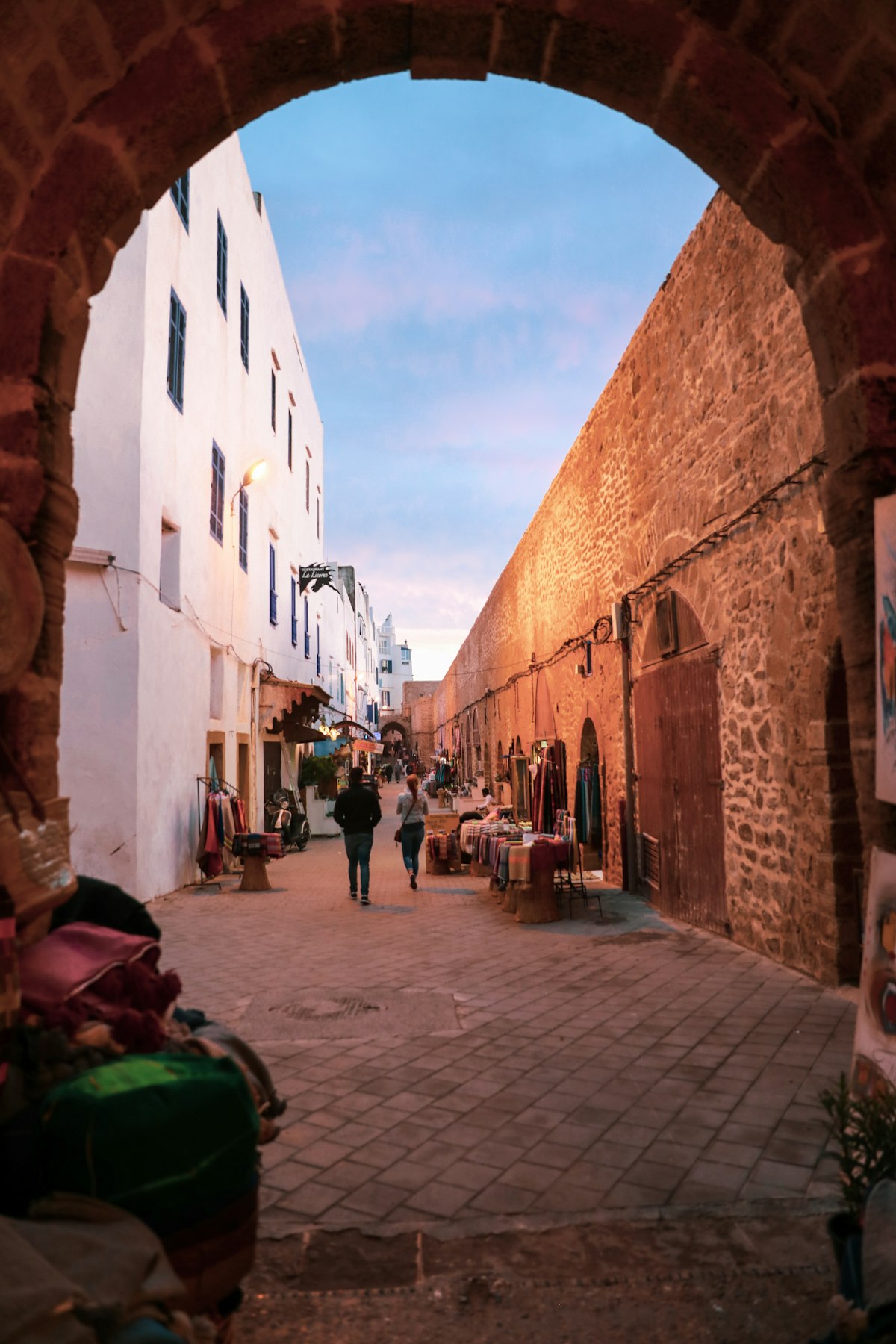
Essaouira
Marché Jdid & New Town
Unsplash / Unsplash
East of the medina walls — the real working-class Essaouira with the daily Souk Jdid market, bus station and 1970s-era apartment blocks.
Outside Bab Doukkala (the medina's east gate) the new town spreads in a 1970s-era grid of low concrete apartments, the central post office, Supratours and CTM bus stations, and the vast Souk Jdid covered market where locals do daily shopping — fresh produce, fish, mountains of olives, spice traders, butchers, and a separate carpet souk. No tourist infrastructure — almost no hotels, just guesthouses for traveling Moroccan workers. Cheap eateries (tagine and harira for MAD 25-40) cluster around Avenue Mohammed V. Essential for travellers who want to see Moroccan daily life without medina filter.
Scores
Walkability
Transit
Price
Local feel
Nightlife
Family-friendly
Centrality
What you gain
- ↑Souk Jdid market: real Moroccan fish, produce, spice trading without medina markup
- ↑Harira and tagine for MAD 30 in workmen's cafes on Avenue Mohammed V
- ↑Supratours and CTM bus terminals on doorstep — Marrakech and Agadir links
What you sacrifice
- ↓Almost no accommodation — must commute from medina
- ↓Limited tourist services — no English signage, cash only
- ↓Concrete blocks and bus-station gritty — not photogenic
Best for
Avoid if
Other Essaouira neighbourhoods
The medina's living-room square and the working fish port — cafe terraces, blue boats, the smell of grilled sardines.
The UNESCO-listed walled town and Skala fortifications — blue-and-white alleys, riads inside the 18th-century Portuguese-Moroccan ramparts.
The northern quarter inside the ramparts — historic Jewish neighbourhood, partly derelict, now a quiet alternative within the medina walls.
Know where to stay — now find when to go.
Best time to visit Essaouira →