Essaouira
Medina & Ramparts
Unsplash / Unsplash
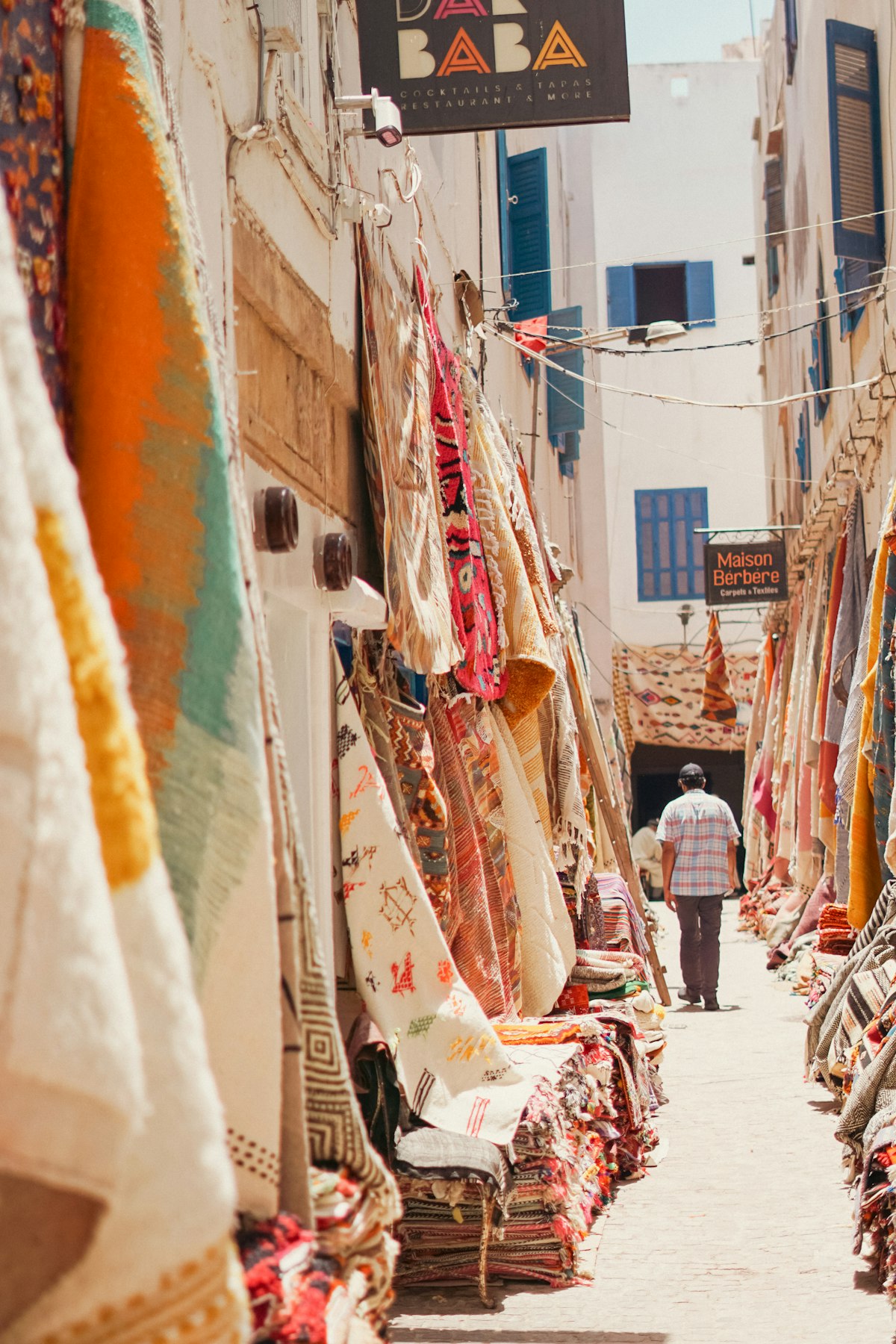
The UNESCO-listed walled town and Skala fortifications — blue-and-white alleys, riads inside the 18th-century Portuguese-Moroccan ramparts.
The walled medina, laid out by French architect Theodore Cornut in 1764 on Sultan Mohammed III's orders, is a rare orthogonal Moroccan medina — straight streets, manageable size (1km x 500m), no labyrinth-stress. Rue Mohammed El Beqal and Rue Sidi Mohammed Ben Abdellah are the two spine streets. The Skala de la Ville (sea bastion) is the iconic rampart walk where Orson Welles filmed Othello in 1949. Riads here range from Heure Bleue Palais (Relais & Chateaux, MAD 2,000+) to backpacker dorms at MAD 100. Galleries, argan-oil shops, jewellery and silver souks dominate ground floors.
Scores
Walkability
Transit
Price
Local feel
Nightlife
Family-friendly
Centrality
What you gain
- ↑Skala de la Ville rampart walk with cannons aimed at the Atlantic
- ↑Heure Bleue Palais rooftop sundowner over the medina at golden hour
- ↑Walking distance to port, Moulay Hassan square and main beach
What you sacrifice
- ↓Some persistent argan-oil and silver-shop tout pressure
- ↓Inside ramparts: no car access, luggage carts cost MAD 30-50
- ↓Festival weekends in June can mean shoulder-to-shoulder alleys
Best for
Avoid if
Other Essaouira neighbourhoods
The medina's living-room square and the working fish port — cafe terraces, blue boats, the smell of grilled sardines.
The northern quarter inside the ramparts — historic Jewish neighbourhood, partly derelict, now a quiet alternative within the medina walls.
East of the medina walls — the real working-class Essaouira with the daily Souk Jdid market, bus station and 1970s-era apartment blocks.
Know where to stay — now find when to go.
Best time to visit Essaouira →