Kyoto
Kyoto Station
Jonas Jacobsson / Unsplash
Maximum transit convenience — Shinkansen hub, affordable hotels, and Fushimi Inari two stops south.
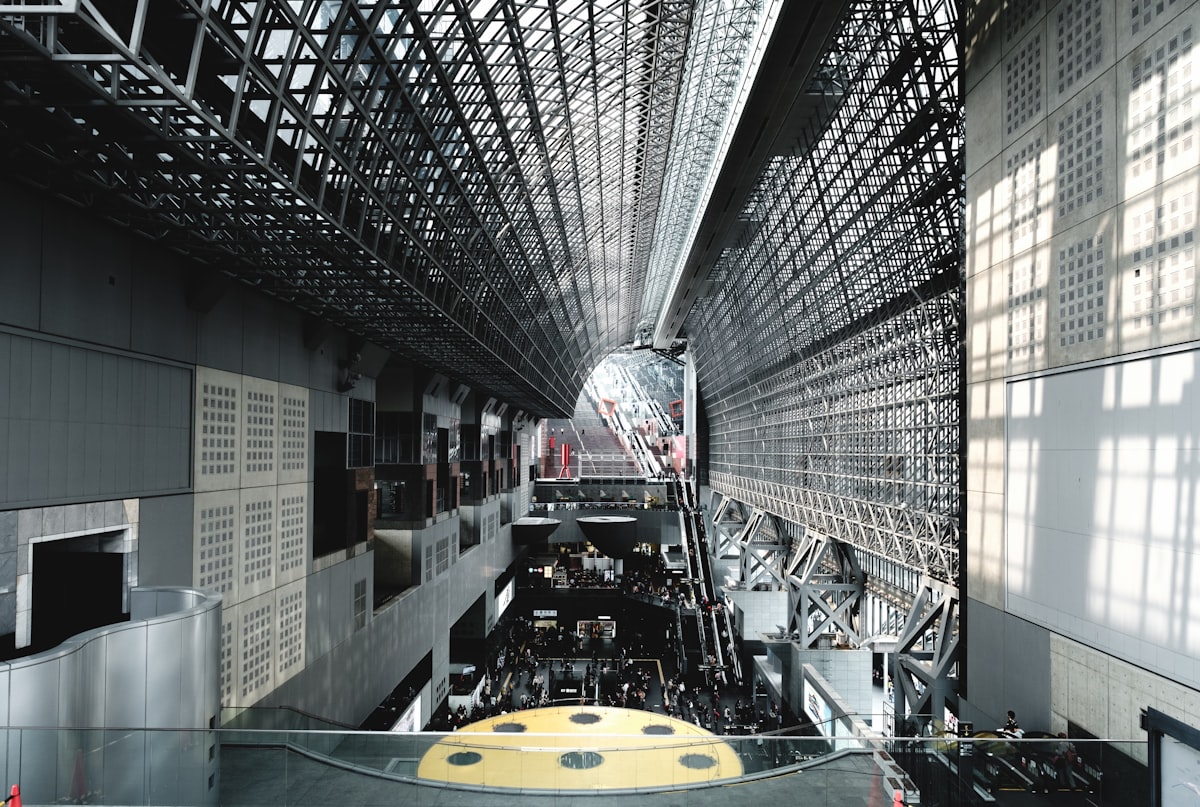
Kyoto Station is one of Japan's great pieces of architecture — a vast steel and glass structure housing multiple malls, a sky garden, and a rooftop walkway with city views. The surrounding neighbourhood is modern and practical: Shinkansen to Tokyo in 2 hours 15 minutes, buses to every temple, and the densest concentration of affordable business hotels in the city. Nishihonganji and Higashihonganji temples are within walking distance; Fushimi Inari is just two JR stops south.
Scores
Walkability
Transit
Price
Local feel
Nightlife
Family-friendly
Centrality
What you gain
- ↑Shinkansen direct from the hotel doorstep: Tokyo in 2h15min, Hiroshima in 1h, Osaka in 15 minutes
- ↑Lowest hotel prices in Kyoto: the highest concentration of affordable business hotels in the city
- ↑Fushimi Inari Taisha: the most iconic walk in Kyoto is just two JR stops away — reachable in 5 minutes
What you sacrifice
- ↓Not the Kyoto of photographs — the Station area is modern, practical, and not atmospheric
- ↓Gion and Higashiyama require a bus (20+ min) or taxi; the historic city is not walkable from here
- ↓Very quiet in the evenings: the neighbourhood is not a dining or nightlife destination
Best for
Avoid if
Other Kyoto neighbourhoods
Kyoto's practical heart — the best transit connections, Nishiki Market, and Pontocho for dinner.
The quintessential Kyoto — stone-paved lanes, the geisha district, and temple after temple.
The western mountains — bamboo groves, riverside temples, and Kyoto's most serene landscape.
Know where to stay — now find when to go.
Best time to visit Kyoto →