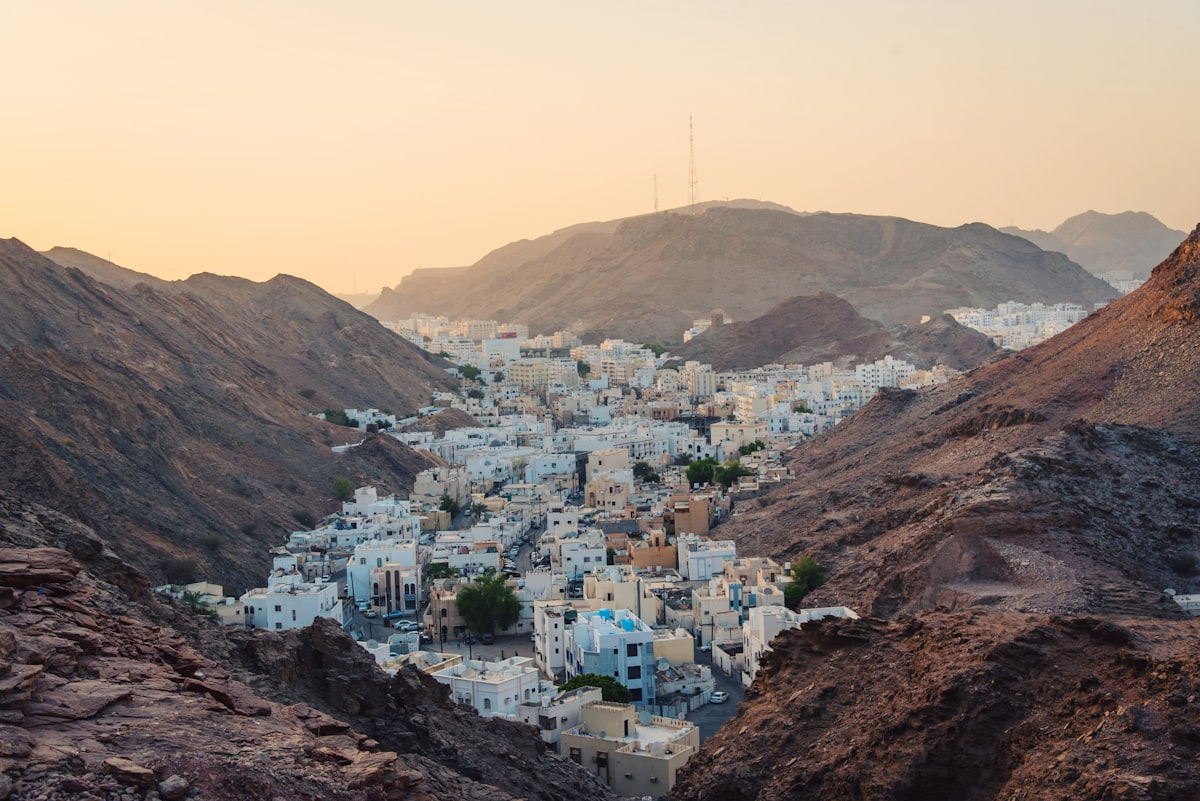
Muscat
Al Qurum
Unsplash / Unsplash
Modern Muscat's commercial and dining heart — the best restaurants, the national park beach, and the city's most functional neighbourhood.
Al Qurum is where contemporary Muscat does its daily business — the commercial district that runs from the diplomatic quarter toward the waterfront, with the Qurum Natural Park (the city's largest urban green space and festival venue) at its centre and the Qurum Beach (one of the city's best public beaches) at its southern edge. The neighbourhood has the highest concentration of good restaurants in Muscat, the best-organised supermarkets for self-catering visitors, and the city's most navigable road network. It's neither old nor particularly atmospheric, but it's where Muscat functions most efficiently.
Scores
Walkability
Transit
Price
Local feel
Nightlife
Family-friendly
Centrality
What you gain
- ↑The Al Qurum restaurant strip along Way 3018 and the surrounding blocks has the most varied and consistent dining in Muscat — from Bait Al Luban (traditional Omani cuisine in a heritage building, one of the best introductions to Omani food in the capital) to Lebanese, Indian, and international options that reflect the city's multinational population. Dinner for two at mid-range restaurants typically costs OMR 20–35 including drinks.
- ↑Qurum Natural Park (the large green public space managed by the municipality) hosts the Muscat Festival each January-February and provides the city's best jogging and walking infrastructure year-round in the cooler months. The park's amphitheatre and children's facilities are among the best public space amenities in the Gulf.
- ↑Al Qurum's position between the Royal Opera House Muscat (Shatti Al Qurum, 10 minutes west) and Muttrah (15 minutes east) makes it the most logistically central base for a mixed cultural and historic itinerary. The Royal Opera House, opened 2011 with a commission from Sultan Qaboos, hosts international opera, ballet, and concert programming of surprisingly high quality for its size.
What you sacrifice
- ↓Al Qurum has limited pedestrian character — like most of Muscat, the urban design assumes car ownership and distances between points of interest require driving rather than walking. The neighbourhood is functional rather than pleasurable to navigate on foot.
- ↓The area is primarily commercial office and residential — the evenings quiet earlier than the Shatti Al Qurum beach and entertainment district, and those seeking Muscat's most active after-dark scene should position west in Shatti Al Qurum.
Best for
Avoid if
Other Muscat neighbourhoods
The old port and soul of Muscat — Arabia's most authentic souq, a dhow harbour, and an ancient fort above the waterfront.
The walled original city — Al Alam Palace, twin Portuguese forts, and the most atmospheric corner of the capital.
Embassy row meets beach resort — Muscat's most polished strip, where the best hotels face the Gulf.
Know where to stay — now find when to go.
Best time to visit Muscat →