Patagonia
El Chaltén
Unsplash / Unsplash
Argentina's trekking capital — every trail in the national park starts at the village door, and every trail is free.
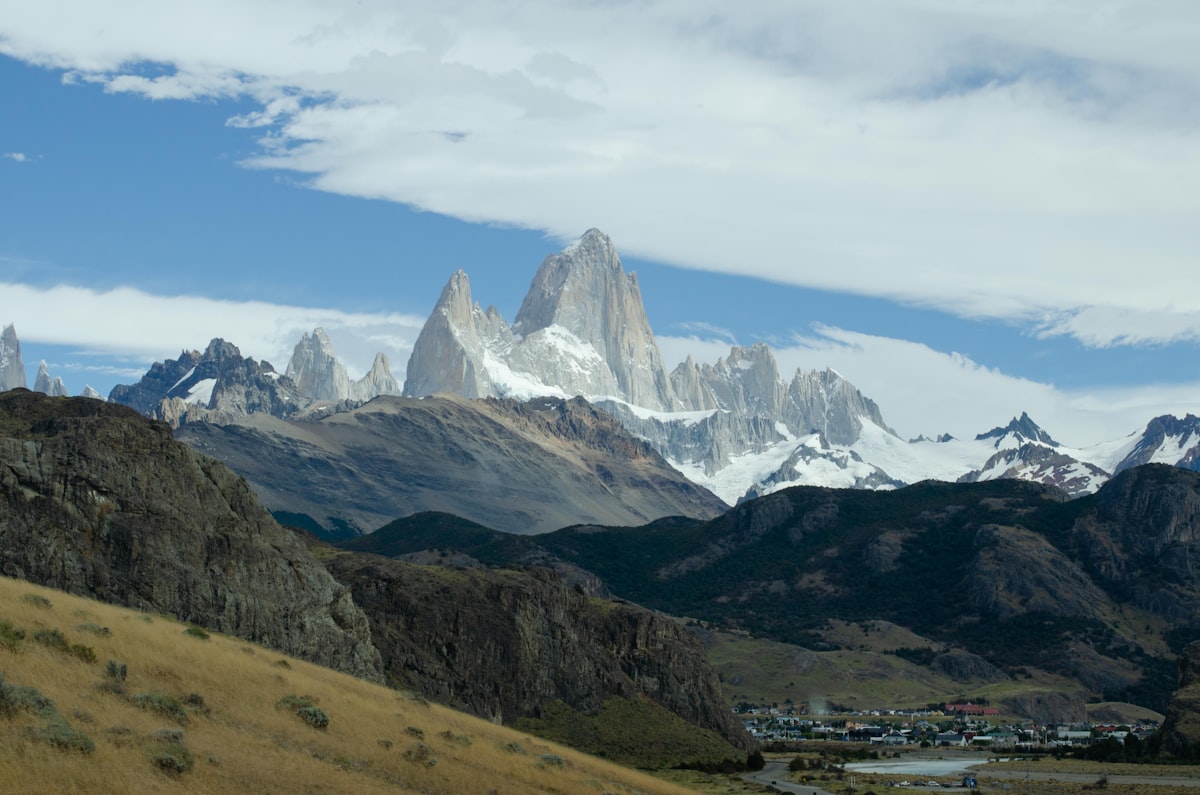
El Chaltén (population 1,500, founded 1985 specifically as a trekking base to establish an Argentine presence on the Chile border) sits directly at the entrance of Los Glaciares National Park's northern sector, with the Fitz Roy massif visible from every street in the village. Unlike Torres del Paine, where all trails require advance booking of refugios, El Chaltén's trails are free, permit-free, and accessed by walking out the village gate. The Fitz Roy trek (21km return, Laguna de los Tres) and the Cerro Torre trek (18km return, Laguna Torre) are both doable as day hikes from accommodation within the village. Access is by bus from El Calafate (3 hours, USD 25 each way, no flights).
Scores
Walkability
Transit
Price
Local feel
Nightlife
Family-friendly
Centrality
What you gain
- ↑Laguna de los Tres and the Fitz Roy viewpoint (21km return, 1,200m elevation gain): the view of Fitz Roy's rocky spires reflected in the glacial lagoon — achieved after a steep final push up loose moraine — is considered by mountaineers the most dramatic peak viewpoint in South America. No booking required: walk out of your hostel door at dawn.
- ↑Laguna Torre (18km return, gentler gradient): the approach to Cerro Torre, one of the world's most technically demanding climbing routes, through lenga beech forest and across a lateral moraine with calving glacier visible from the lake edge
- ↑Free trekking, low prices: El Chaltén is consistently the most affordable base in Patagonia. Hostels with dorms run USD 15–25/night, local restaurants serve lamb stew for USD 12, and the national park entry is included in the village — no separate park fee charged
What you sacrifice
- ↓Bus access only (3 hours from El Calafate): El Chaltén has no airport, and the road in from Route 40 is partially gravel — the most transport-limited of the main Patagonian bases
- ↓Village infrastructure is limited to trekking support: a handful of restaurants, one supermarket, and a fuel station — the outdoor equipment and food selection you need must be bought in El Calafate or Bariloche before arrival
Best for
Avoid if
Other Patagonia neighbourhoods
Chilean Patagonia's gateway city — Magellanic penguin colonies, the Strait of Magellan, and the logistics hub for Torres del Paine.
The southernmost city on earth — Tierra del Fuego National Park, Antarctic expedition gateway, and the end of the Pan-American Highway.
The gateway to Perito Moreno — Argentina's most accessible glacier town with its own airport and a comfortably walkable centre.
Know where to stay — now find when to go.
Best time to visit Patagonia →