Plovdiv
Old Town (Staria Grad)
Unsplash / Unsplash
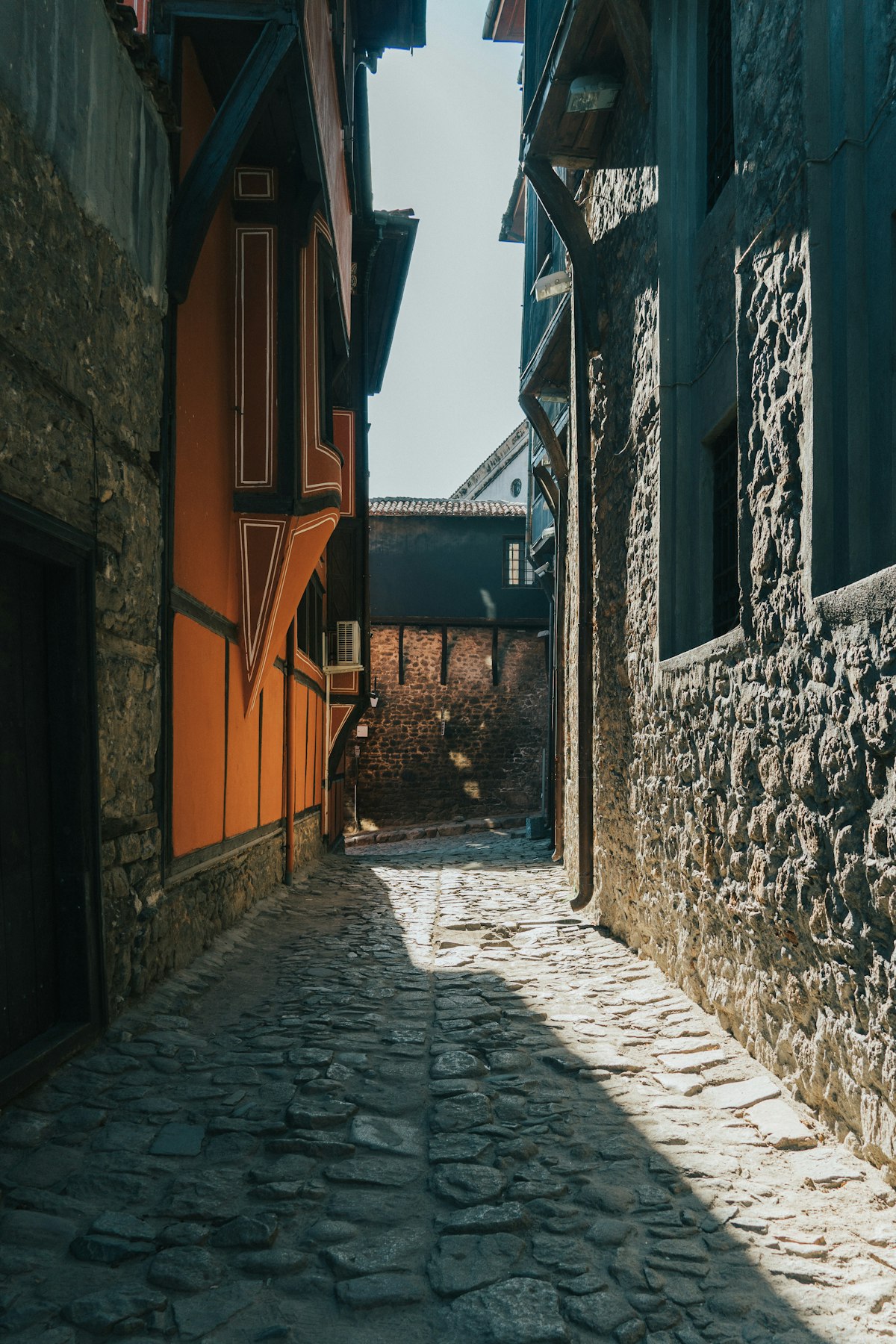
The hilltop National Revival quarter — the reason most people visit Plovdiv, and worth every steep cobblestone.
Staria Grad occupies three of Plovdiv's syenite hills and is one of the best-preserved historic quarters in the Balkans. The streets are lined with 19th-century merchant mansions in vivid ochre, blue and terracotta — their cantilevered upper storeys leaning over the cobblestones — and the working Roman Amphitheatre sits dramatically embedded in the hillside. The Ethnographic Museum, the Icon Museum and the Balabanov House are all within a five-minute walk of each other. It is the obvious base for first-time visitors and the most atmospheric address in the city, though it comes with tourist-level café pricing and the physical cost of steep lanes.
Scores
Walkability
Transit
Price
Local feel
Nightlife
Family-friendly
Centrality
What you gain
- ↑Direct access to the Roman Amphitheatre, Ethnographic Museum and the finest National Revival architecture in Bulgaria — all within a 10-minute walk
- ↑Boutique guesthouses in converted merchant mansions offer a genuinely unique stay — staying in the Old Town itself is part of the experience
- ↑Morning and evening light on the coloured facades is extraordinary; the quarter empties of day-trippers after 6pm
What you sacrifice
- ↓Steep, uneven cobblestones make it physically demanding and inaccessible for those with limited mobility
- ↓Café and restaurant prices in the tourist core are 30–40% above Kapana or Main Street equivalents
Best for
Avoid if
Other Plovdiv neighbourhoods
The long pedestrianised spine of the city — where local Plovdiv shops, eats and moves through its day.
The "Trap" — a labyrinth of artisan studios, street art, indie cafés and the best nightlife in Plovdiv.
Ancient Thracian ruins and panoramic city views on the highest hill — residential, quiet and genuinely local.
Know where to stay — now find when to go.
Best time to visit Plovdiv →