Porto
Baixa / Aliados
Unsplash / Unsplash
Porto's grand civic spine — the Avenida dos Aliados, the São Bento station, the Bolhão market, and the commercial heart of the city.
The Avenida dos Aliados is Porto's answer to a grand boulevard: a wide tree-lined avenue flanked by early twentieth-century Beaux-Arts buildings, anchored by the town hall at its northern end and the Praça da Liberdade at the south. Within three blocks are the São Bento railway station (tiled floor-to-ceiling with 20,000 blue-and-white azulejo panels depicting Portuguese history — one of the most spectacular interiors in Europe), the Mercado do Bolhão (the city's historic covered market, recently restored), and the dense commercial grid of Rua de Santa Catarina. It is Porto's spine rather than its soul — useful, central, and unavoidable.
Scores
Walkability
Transit
Price
Local feel
Nightlife
Family-friendly
Centrality
What you gain
- ↑São Bento railway station — the azulejo-tiled interior is one of the most spectacular spaces in Portugal and requires zero planning to visit; an unmissable fifteen minutes even in transit
- ↑The Mercado do Bolhão (recently restored to its original 1914 grandeur) is the best place in Porto to buy Portuguese produce, cured meats, cheeses, and fresh flowers from market traders who have worked here for decades
- ↑Maximum convenience: every transit line, the main hotel corridor, and easy walking distance to both the Ribeira and Cedofeita
What you sacrifice
- ↓The Baixa feels more commercial than characterful; Rua de Santa Catarina has good shopping but the streetscape lacks the intimacy of Bonfim or the drama of the Ribeira
- ↓Nightlife is limited for a city-centre location — the serious bar and restaurant scene requires walking to the Ribeira or taxi to Bonfim
- ↓Some of the hotel stock on and around the Aliados is large and business-oriented; the boutique character that defines Porto's most appealing guesthouses is found more easily in Ribeira or Bonfim
Best for
Avoid if
Other Porto neighbourhoods
Porto's bohemian quarter — independent galleries, vintage shops, the city's creative class, and some of its most interesting cafés.
Porto's emerging neighbourhood — a local residential feel, the city's best independent restaurants, and almost no tourist infrastructure.
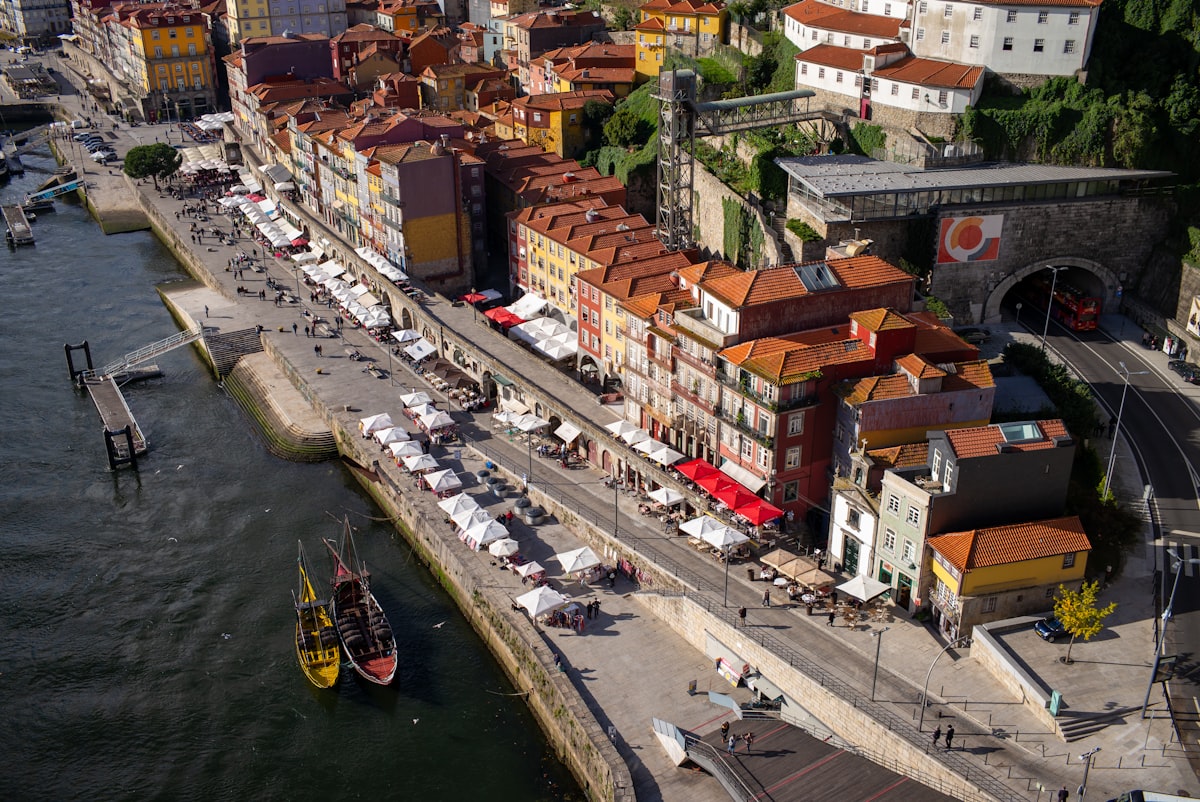
Porto's UNESCO-listed waterfront — the Dom Luís I bridge, the rabelo boats, and the city's most recognisable views.
Know where to stay — now find when to go.
Best time to visit Porto →