Milan
Porta Romana
Unsplash / Unsplash
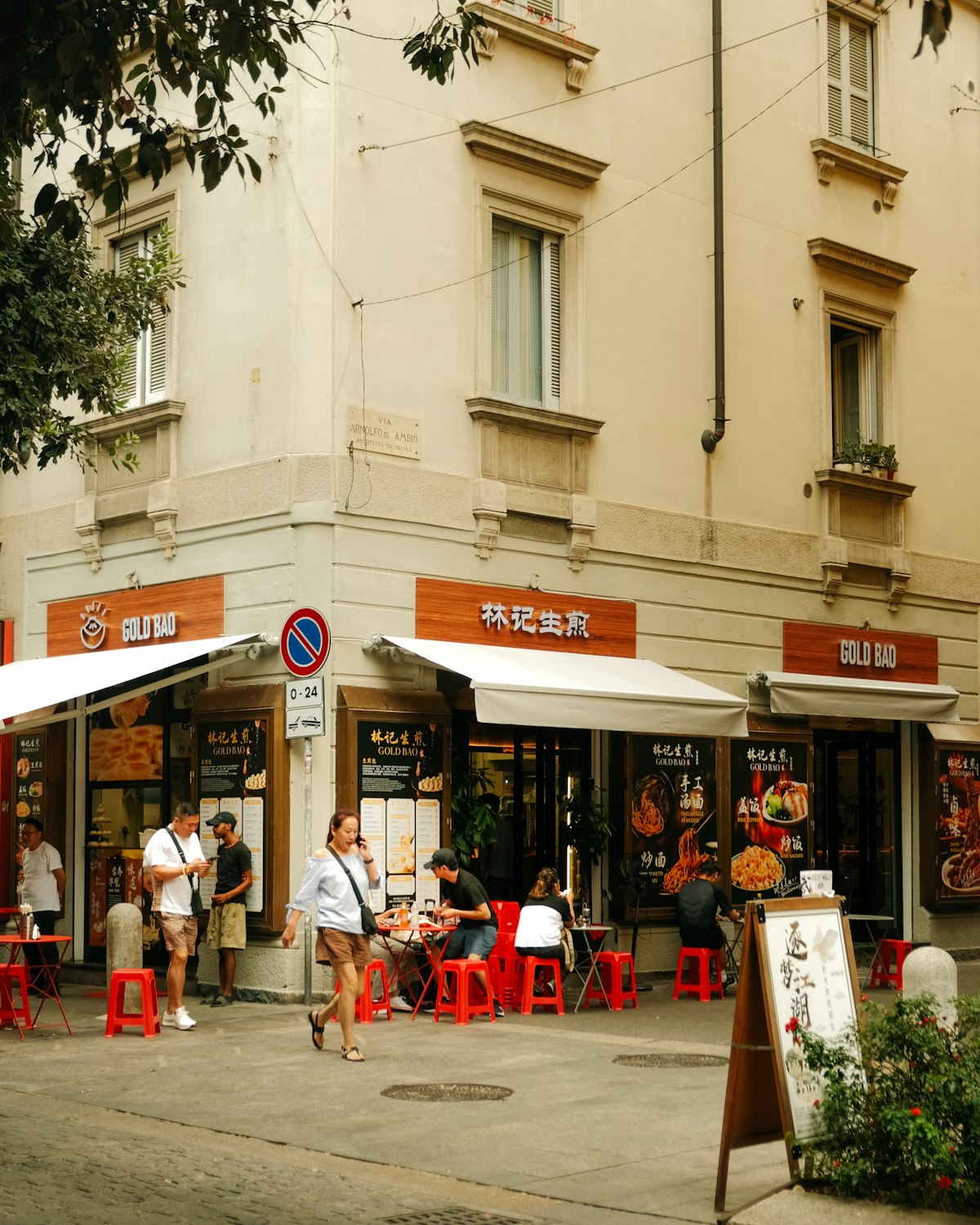
Milan's authentic south — Fondazione Prada, university district energy, and the local restaurant scene tourists don't find.
Porta Romana is a broadly defined southern residential district stretching from Corso di Porta Romana (the Roman road from Milan to Lodi) toward the Città Studi university campus. Its identity is anchored by the Fondazione Prada (Via Isarco 11, Rem Koolhaas / OMA, 2015): a seven-building arts complex on the site of a 1910 gin distillery that houses one of Italy's most ambitious contemporary art programs. The surrounding streets — particularly Corso Lodi, Via Muratori, and the blocks around Piazza Medaglie d'Oro — retain a residential character of genuine neighbourhood life: local bars where a coffee costs €1, restaurants without English menus, and the particular social texture of a university district that never became a tourist attraction.
Scores
Walkability
Transit
Price
Local feel
Nightlife
Family-friendly
Centrality
What you gain
- ↑Fondazione Prada (Thursday–Monday, €15): the most intellectually serious contemporary art institution in Italy, with permanent commissions by artists including Louise Bourgeois, Walter De Maria, and Robert Gober alongside changing exhibitions. The building is itself significant — Koolhaas's preservation of the historic distillery alongside new structures creates the most architecturally considered museum building in the city.
- ↑The neighbourhood's local restaurant market: trattorias on Corso Lodi and via Argelati serving proper Milanese food (risotto alla Milanese, cotoletta, ossobuco) at €12–18 primi without the tourism premium of Brera or Centro Storico.
- ↑Lowest hotel prices of any inner-city Milan neighbourhood: B&Bs and small hotels in Porta Romana and the adjacent Porta Vigentina area run €60–100/night for rooms that would cost €130–200 in Brera — the best-value base for anyone who will use the Metro for sightseeing
What you sacrifice
- ↓Distance from the Duomo and the main northern attractions: Porta Romana sits south of the historic centre, requiring a Metro ride (Crocetta or Porta Romana stations) or 25-minute walk to the cathedral quarter
- ↓The neighbourhood lacks the evening atmosphere of Navigli or the design showroom energy of Brera: it is genuinely residential, which means quieter evenings and fewer bar options within walking distance
Best for
Avoid if
Other Milan neighbourhoods
Milan's historic heart — the Duomo, Galleria Vittorio Emanuele II, La Scala, and the luxury Quadrilatero della Moda.
Milan's art district — the Pinacoteca, cobblestone streets, aperitivo bars, and the city's most photogenic neighbourhood.
Milan's canal district — the aperitivo capital of Europe, vintage markets, and the city's most local evening culture.
Know where to stay — now find when to go.
Best time to visit Milan →