Osaka
Namba / Dotonbori
Juliana Barquero / Unsplash
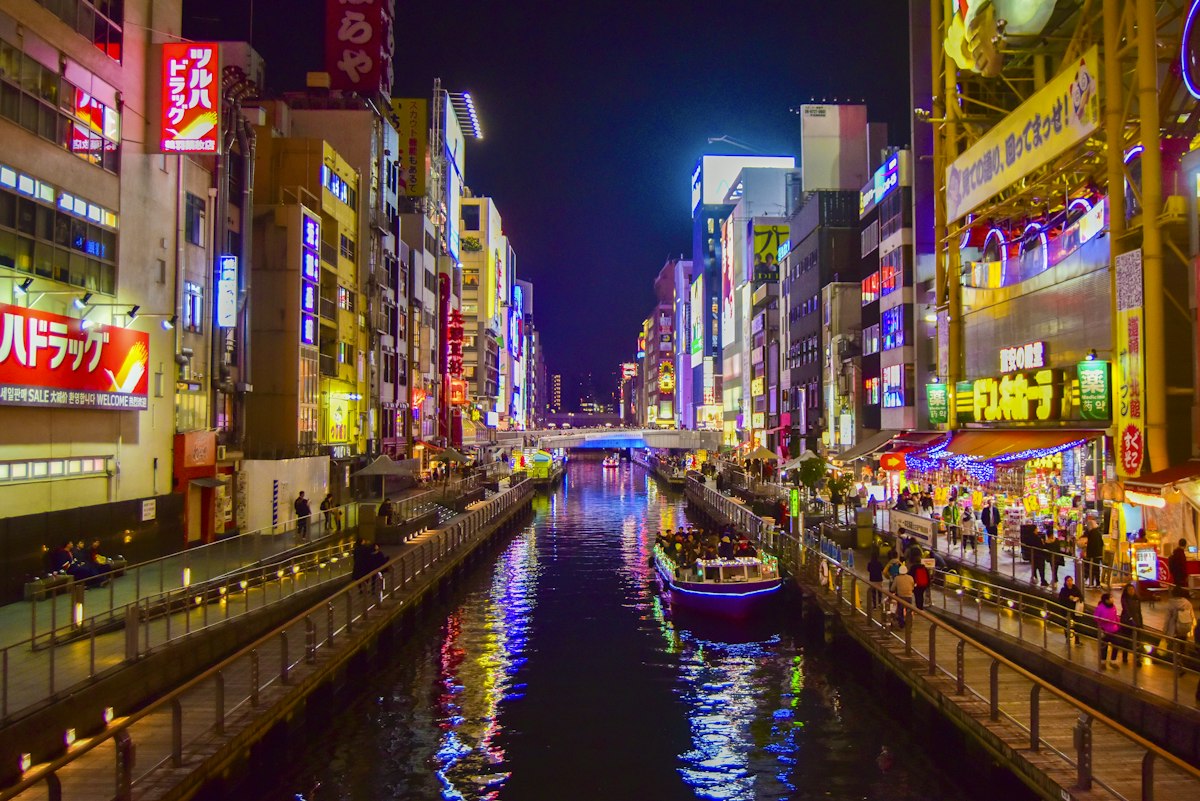
The eating and nightlife heart of Osaka — the Glico Running Man, takoyaki stalls, and wall-to-wall izakayas.
Namba-Dotonbori is where Osaka's reputation as Japan's food capital is earned street by street. The canal-side strip of Dotonbori — anchored by the famous Glico Running Man neon sign — is the most concentrated eating experience in East Asia: takoyaki stands, ramen shops, okonomiyaki restaurants, and kushikatsu counters stacked three floors high on buildings that spill lanterns into the canal below. Shinsaibashi shopping arcade runs north from here, connecting to the American Village and a nightlife scene that runs several hours past Tokyo equivalents. Yes, it is very touristy — and also completely essential.
Scores
Walkability
Transit
Price
Local feel
Nightlife
Family-friendly
Centrality
What you gain
- ↑Dotonbori eating — the density of excellent street food and sit-down restaurants within a 500m strip is unmatched in Japan; takoyaki from Aizuya, ramen from Kinryu, okonomiyaki from Chibo — all within walking distance
- ↑The nightlife runs genuinely late: Osaka's bars and clubs in the Namba area stay open well past midnight, with a raucous energy distinctly different from Tokyo's more restrained after-dark scene
- ↑Perfect connectivity: Namba station links to the Shinkansen hub at Shin-Osaka, Kansai Airport express, and all Osaka metro lines — the single most practical base in the city
What you sacrifice
- ↓Tourist density on Dotonbori canal is extreme in peak season — the strip between the Glico sign and Ebisubashi bridge operates at theme-park crowd levels from midday to midnight
- ↓Noise carries until 2–3am; rooms facing the canal or main shopping streets require earplugs for early sleepers
- ↓The immediate Dotonbori area is heavily optimised for tourists and does not represent the working-class Osaka that makes the city distinctive — that requires a trip to Shinsekai or Tennoji
Best for
Avoid if
Other Osaka neighbourhoods
Osaka's business and shopping district — Osaka Station, skyscraper rooftop views, and less tourist pressure than Namba.
Osaka's second skyline and best-kept secret — Abeno Harukas, local food markets, and almost no foreign tourists.
Retro working-class Osaka at its most authentic — Tsutenkaku Tower, kushikatsu counters, and zero tourist polish.
Know where to stay — now find when to go.
Best time to visit Osaka →