Osaka
Shinsekai
Red Shuheart / Unsplash
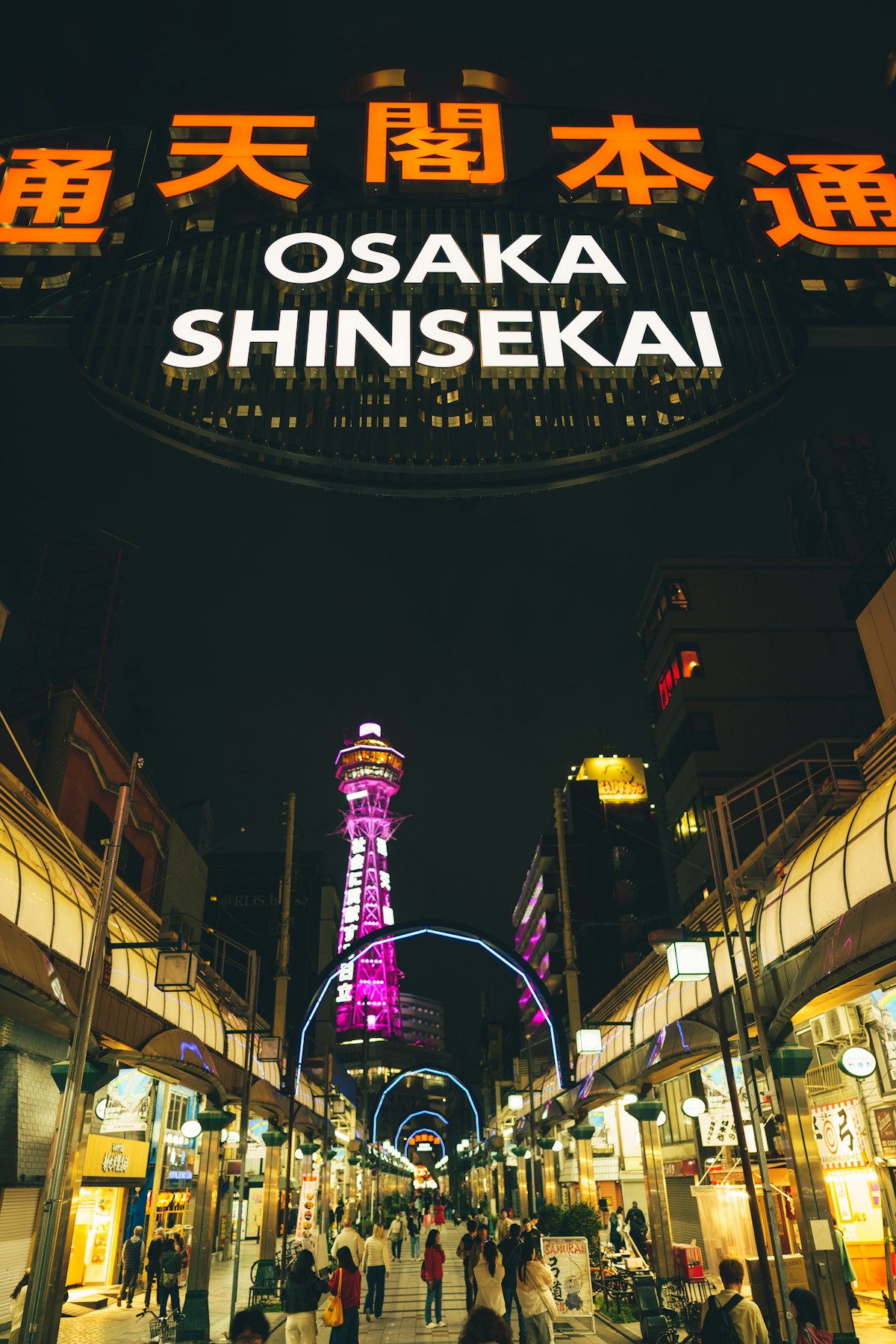
Retro working-class Osaka at its most authentic — Tsutenkaku Tower, kushikatsu counters, and zero tourist polish.
Shinsekai ("New World") was built in 1912 as a replica of Paris and New York and is now one of the most distinctive neighbourhoods in Japan: a faded, neon-lit grid of kushikatsu restaurants, pachinko parlours, and old men playing shogi under Tsutenkaku Tower. The neighbourhood wears its working-class identity without apology — no Instagram cafes, no English menus, just deep-fried skewers eaten standing at counters with automatic sauce dispensers and cold beer from vending machines on the pavement. The tower, Osaka's answer to the Eiffel, anchors the skyline and offers views over a neighbourhood that gentrification has somehow bypassed.
Scores
Walkability
Transit
Price
Local feel
Nightlife
Family-friendly
Centrality
What you gain
- ↑Kushikatsu (deep-fried skewers) is Shinsekai's contribution to Osaka's food culture: choose from 40+ skewer varieties at counters like Daruma and Yaekatsu, where the iron rule is "no double-dipping the sauce" — cheap, delicious, and deeply local
- ↑The most affordable eating and drinking in central Osaka — kushikatsu sets from ¥800, cold Asahi from ¥350 at street-facing vending machines, and counter yakitori for under ¥1,500 total
- ↑Tsutenkaku Tower observation deck offers an Osaka skyline perspective from a structure that genuinely feels like a time capsule — the retro signage, the old lift operators, and the Billiken lucky god statues are all authentic period detail
What you sacrifice
- ↓Shinsekai is not a base neighbourhood — there are few quality hotels; most visitors come on an evening from Namba (10 minutes by metro) rather than staying here
- ↓The neighbourhood's authentic scruffiness is part of the appeal but can feel uncomfortable for those expecting the curated Japan of Kyoto or central Tokyo
- ↓After 9–10pm on weekdays the neighbourhood quietens; it is more of an early-evening dinner destination than a late-night venue
Best for
Avoid if
Other Osaka neighbourhoods
The eating and nightlife heart of Osaka — the Glico Running Man, takoyaki stalls, and wall-to-wall izakayas.
Osaka's business and shopping district — Osaka Station, skyscraper rooftop views, and less tourist pressure than Namba.
Osaka's second skyline and best-kept secret — Abeno Harukas, local food markets, and almost no foreign tourists.
Know where to stay — now find when to go.
Best time to visit Osaka →