Patagonia
Torres del Paine
Unsplash / Unsplash
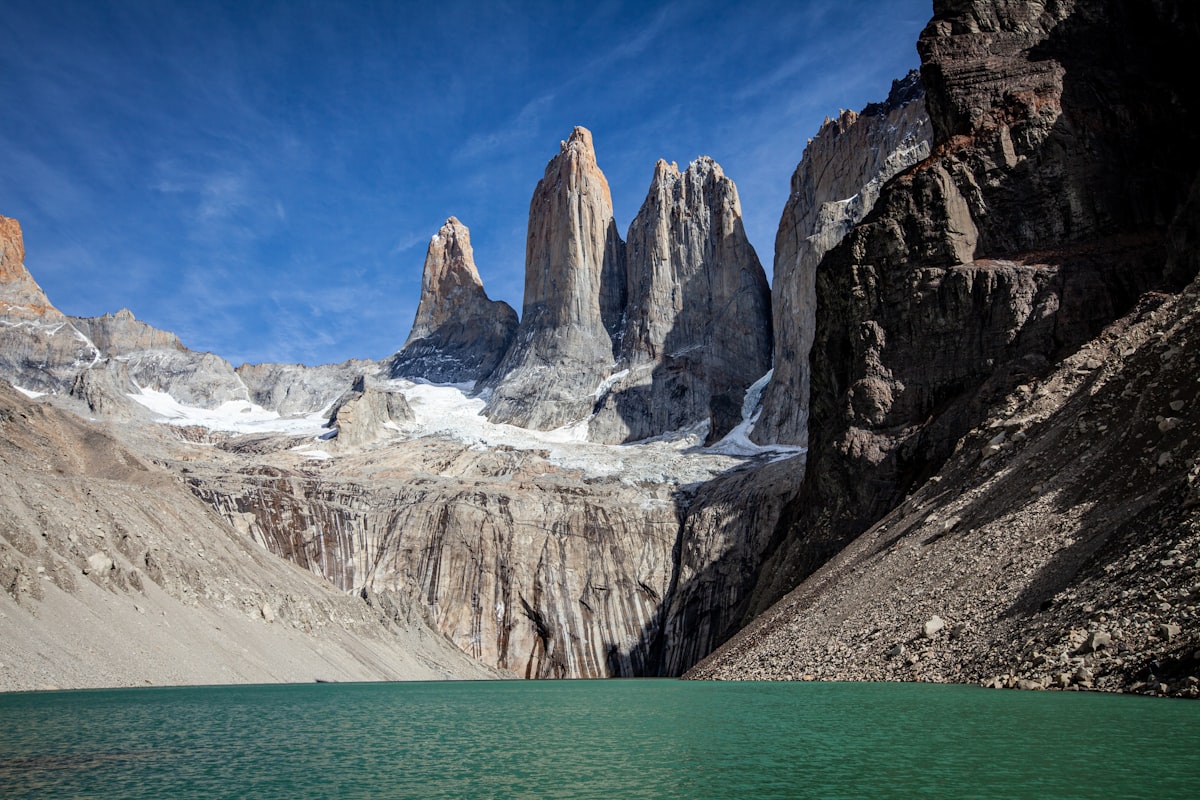
The world's most dramatic trekking park — the W-trek, Paine Grande, and the granite towers that define the Patagonia image.
Torres del Paine National Park (242,242 hectares, UNESCO Biosphere Reserve, southern Chile) is built around the Paine massif — a collection of granite towers, glaciers, and electric-blue lakes formed by a volcanic intrusion 12 million years ago. The W-trek (4–5 days) and O-circuit (7–9 days) are the park's defining trails, passing through Valle del Francés, the base of Paine Grande, the Mirador Base Torres, and the hanging glacier at Grey. Puerto Natales (113km south) is the gateway city, connected to the park by daily bus. The park is accessible October–April; winter closure applies from May to mid-September.
Scores
Walkability
Transit
Price
Local feel
Nightlife
Family-friendly
Centrality
What you gain
- ↑Mirador Base Torres (4–5 hours return from Refugio Las Torres): the sunrise view of the three granite towers reflected in the emerald lake is one of the world's iconic landscape photographs — every trekker on the W-trek makes this 4:00 AM start to reach the viewpoint at first light. The towers' color shifts from black to orange to gold in 20 minutes.
- ↑Valle del Francés and Mirador Británico: the hanging glaciers and moraine amphitheatre of the French Valley, reached on Day 3 of the standard W-trek, is arguably the most dramatic mountain scenery on the circuit — ice falls audible from the trail, condors circling on thermals above the valley walls.
- ↑Glacier Grey and the Grey Lake icebergs: the park's largest glacier (270 sq km) calves directly into a turquoise lake strewn with ice sculptures — accessible by trekking (7 hours from the Grey sector entrance) or by catamaran from Puerto Natales for non-trekkers.
What you sacrifice
- ↓W-trek refugio booking crisis: all beds (Refugio Paine Grande, Las Torres, Los Cuernos, Grey) open for reservation in early September and sell out within hours for January and February departures — missing this window means camping or abandoning peak-season dates
- ↓Patagonian wind at its most extreme: the Valle del Viento sector regularly sees winds exceeding 120 km/h that close sections of the trail for safety — hiking plans must be flexible enough to accommodate partial route closures
Best for
Avoid if
Other Patagonia neighbourhoods
Argentina's trekking capital — every trail in the national park starts at the village door, and every trail is free.
Chilean Patagonia's gateway city — Magellanic penguin colonies, the Strait of Magellan, and the logistics hub for Torres del Paine.
The southernmost city on earth — Tierra del Fuego National Park, Antarctic expedition gateway, and the end of the Pan-American Highway.
Know where to stay — now find when to go.
Best time to visit Patagonia →