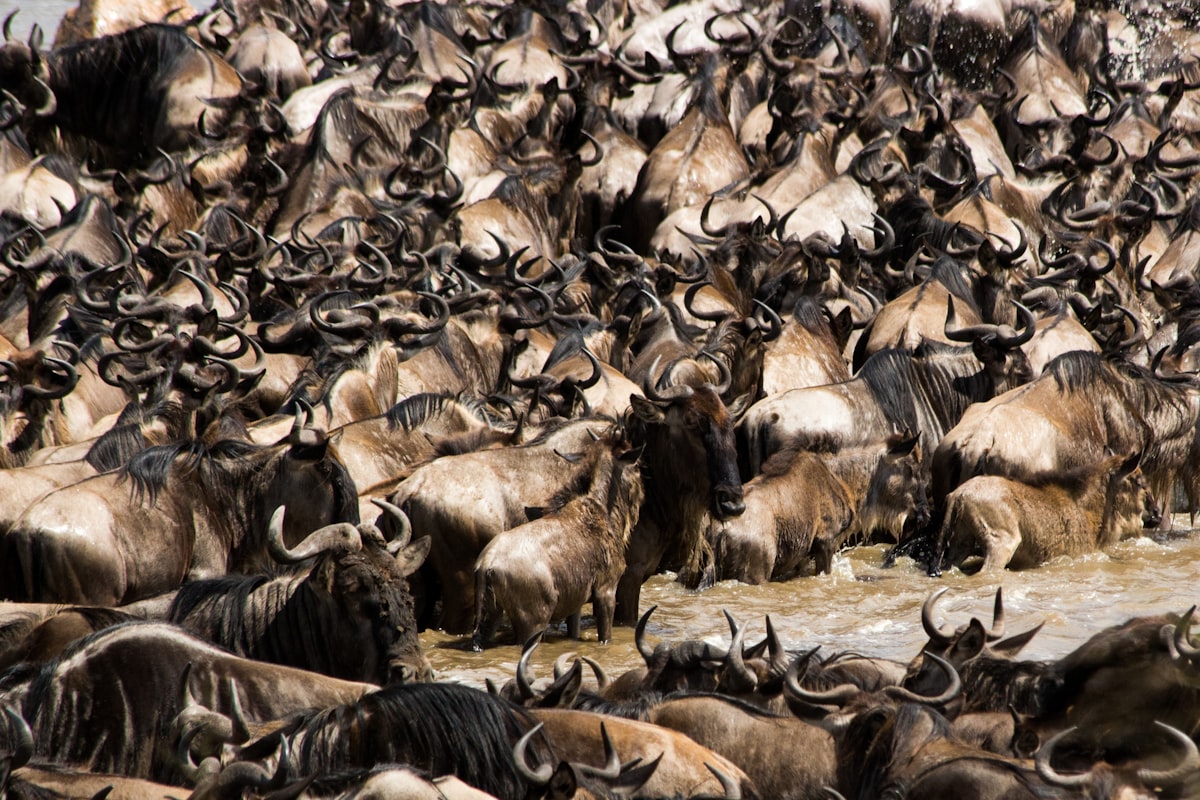
Tanzania
Ngorongoro Conservation Area
Unsplash / Unsplash
The world's largest intact volcanic caldera — a self-contained Eden with the highest wildlife density of any African park.
Ngorongoro Crater is the collapsed caldera of an ancient supervolcano, creating a natural enclosure of 260 square kilometres of floor at 1,800 metres altitude ringed by 600-metre walls. The crater holds a resident population of approximately 25,000 large animals — including the world's densest lion population, a resident black rhino population (rare and vulnerable), large elephant bull groups, and the only place on Earth where you can observe all Big Five within a single day without the need to track a migration. The Ngorongoro Conservation Area also encompasses the Olduvai Gorge (where hominid fossils dating 1.8 million years were discovered by the Leakeys) and the Ndutu plains (calving season for the wildebeest migration). The crater rim lodges are at 2,286 metres and have spectacular views into the caldera.
Scores
Walkability
Transit
Price
Local feel
Nightlife
Family-friendly
Centrality
What you gain
- ↑The Ngorongoro Crater floor offers the highest guaranteed wildlife density of any single game drive location in Africa: in a 6-hour crater floor visit, a reasonable expectation is lion (often multiple prides), black rhino (the crater is one of their last refuges in Tanzania), elephant, hippo in the lake, flamingo flocks, cheetah, hyena, and all five large herbivores; Big Five in a single day is genuinely achievable here
- ↑Olduvai Gorge (30km from the crater rim) is the site of some of the most important hominid fossil discoveries ever made: the Leakeys' excavations uncovered fossils of Homo habilis and Australopithecus boisei dating 1.8 million years; the on-site museum is basic but the ravine context is extraordinary
- ↑Proximity to Serengeti: the Conservation Area shares its western border with the Serengeti National Park, and a standard northern Tanzania circuit (Ngorongoro + Serengeti + Tarangire) operates out of Arusha in 5–7 days; Ngorongoro is a natural and essential add-on to any Serengeti visit
What you sacrifice
- ↓Vehicle regulations on the crater floor are strict — you must be in an official safari vehicle with a guide, and the number of vehicles permitted on the floor simultaneously is controlled; in peak season (July–August) the crater floor has more vehicles than it feels, and the most popular spots (hippo pool, rhino areas) attract simultaneous vehicle gatherings
- ↓Night camping on the crater floor is not permitted: all accommodation is on the rim at 2,286m, meaning the descent and ascent add 30–45 minutes each to every game drive; early starts (at the gate when it opens at 7am) are essential for maximum crater floor time
Best for
Avoid if
Other Tanzania neighbourhoods
The gateway city — a coastal East African metropolis, the Mafia Island marine park, and the ferry connections to Zanzibar and Pemba.
The world's most celebrated safari ecosystem — the Great Wildebeest Migration, the Big Five, and the open savannah that defined the idea of an African safari.
Africa's highest peak — a free-standing volcanic mountain walkable to 5,895m without technical climbing, through five distinct climate zones.
Know where to stay — now find when to go.
Best time to visit Tanzania →