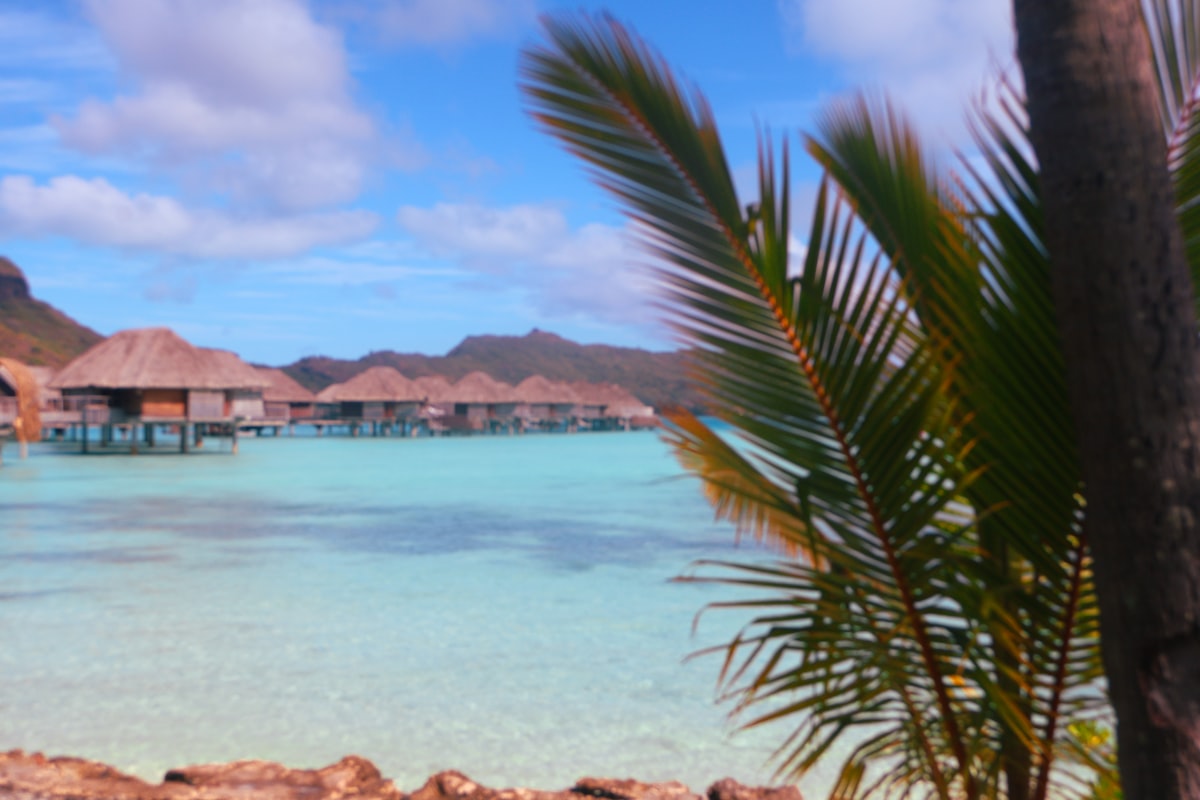
Bora Bora · French Polynesia
August
Equally perfect — July conditions continue, still peak season prices, humpback whale season at maximum.
Best match
#5 of 12 months
There are better months for Bora Bora — see the full ranking below.
See when to go instead →Climate
High
26°C
Low
19°C
Rain
38mm
Sun
9.5hrs/day
30-year climate normals · Open Meteo ERA5
How August scores in Bora Bora
Weather
Perfect
Value
Below average
Crowds
Low
Events
Very good
Atmosphere
Outstanding
What you gain in August
- ↑August matches July in weather quality and humpback whale abundance — the slight difference is that European school holidays (August is the peak French holiday month) add a family tourism dimension alongside the honeymooner demographic; the resort atmosphere in August is slightly more mixed in character than July's uniformly romantic intensity
- ↑Diving in August: the lagoon's visibility peaks (25–30m) and water temperature is perfectly comfortable (28°C) — the reef sharks, rays, and sea turtles of Bora Bora's lagoon are all at maximum activity; the Tupai atoll day trip (a heart-shaped atoll 25km north of Bora Bora) is at its most spectacular in the dry season
- ↑Motu picnic excursions: the outer motu islets of the lagoon (particularly Motu Tapu, the private reef islet used as a film location for several movies) are accessed by resort speedboat or private charter; a half-day motu picnic with a Polynesian guide, snorkelling the outer reef drop-off, and watching the sunset over Mount Otemanu from the motu beach represents the quintessential Bora Bora experience
What you sacrifice
- ↓August is as expensive as July across all accommodation categories and advance booking is equally essential
- ↓The humpback whale encounters that peak in July–August are on snorkel trips that depend on whale behaviour — encounters are not guaranteed; operators are prohibited from approaching within specified distances and the whale must choose to approach; allow 2–3 trips for a high probability encounter
- ↓Peak season trade wind strength can occasionally make afternoon lagoon activities uncomfortable: consistent 25-knot trade winds create choppy conditions on the outer lagoon that make some speedboat excursions rough; morning excursions before the trade wind builds (before 11am) are consistently smoother
How August compares to May (best month)
| Factor | August | May ★ |
|---|---|---|
| Weather | 10 | 8 |
| Value | 3 | 7 |
| Crowds | 2 | 6 |
August in other destinations
Lisbon (26.5°C)Barcelona (28.6°C)Tokyo (32.1°C)Bali (29.9°C)Santorini (26°C)Paris (24.3°C)New York (27.7°C)Marrakech (35.8°C)Amsterdam (21.4°C)Maldives (30.3°C)Rome (30.4°C)Bangkok (31.5°C)Istanbul (28°C)Vienna (25.9°C)Seoul (29°C)Dubrovnik (28.5°C)Rio de Janeiro (25.9°C)Kyoto (33.7°C)Phuket (31.3°C)Cape Town (17.2°C)Prague (26°C)Amalfi Coast (31°C)Mexico City (23°C)Medellín (29°C)Fiji (26°C)London (24°C)Sydney (18°C)Iceland (14°C)Tulum (33°C)Dubai (42°C)Singapore (32°C)Hoi An (33°C)Chiang Mai (31°C)Miami (33.3°C)Florence (31.8°C)Queenstown (9°C)Madrid (35.2°C)Porto (27°C)Edinburgh (19°C)Copenhagen (22°C)Budapest (28°C)Kraków (24°C)Tbilisi (31°C)Palawan (30°C)Hanoi (32°C)Osaka (34°C)Goa (30°C)Cusco (20°C)Buenos Aires (15°C)Mykonos (30°C)Zanzibar (26°C)Sri Lanka (30°C)Costa Rica (25°C)Cancun (32°C)Krabi (32°C)Athens (33°C)Seville (36°C)Cartagena (31°C)Siem Reap (31°C)Havana (32°C)Split (30°C)Taipei (34°C)Kuala Lumpur (32°C)Valletta (32°C)Ho Chi Minh City (32°C)Hawaii (31°C)Cappadocia (32°C)Dominican Republic (32°C)Jamaica (33°C)Tanzania (23°C)Seychelles (26°C)Nepal (27°C)Jordan (36°C)Azores (27°C)Los Angeles (28.5°C)Cairo (38.2°C)Kenya (24°C)Jaipur (32.8°C)Las Vegas (40.1°C)San Francisco (18°C)Madeira (28°C)Vancouver (23.3°C)Muscat (38.5°C)Lima (17.2°C)Cinque Terre (29°C)Kotor (32°C)Tel Aviv (32°C)Santiago (15°C)Bogotá (19°C)Bruges (22.4°C)Penang (32.3°C)Lombok (30.4°C)Cape Verde (29.5°C)Fez (37.2°C)Kerala (29°C)Kigali (26°C)Hong Kong (31°C)Oslo (23°C)Auckland (14°C)
Climate data: 30-year normals (1991–2020) from Open Meteo ERA5 reanalysis. Scores compare months within Bora Bora, not across destinations. Methodology →