Jaipur · India
April
Heat arrives hard — sites empty, prices fall, but outdoor time must be tightly managed.
Strong option
#10 of 12 months
There are better months for Jaipur — see the full ranking below.
See when to go instead →Climate
High
36.5°C
Low
22.1°C
Rain
7mm
Sun
9.8hrs/day
30-year climate normals · Open Meteo ERA5
How April scores in Jaipur
Weather
Average
Value
Excellent
Crowds
Excellent
Events
Average
Atmosphere
Very good
What you gain in April
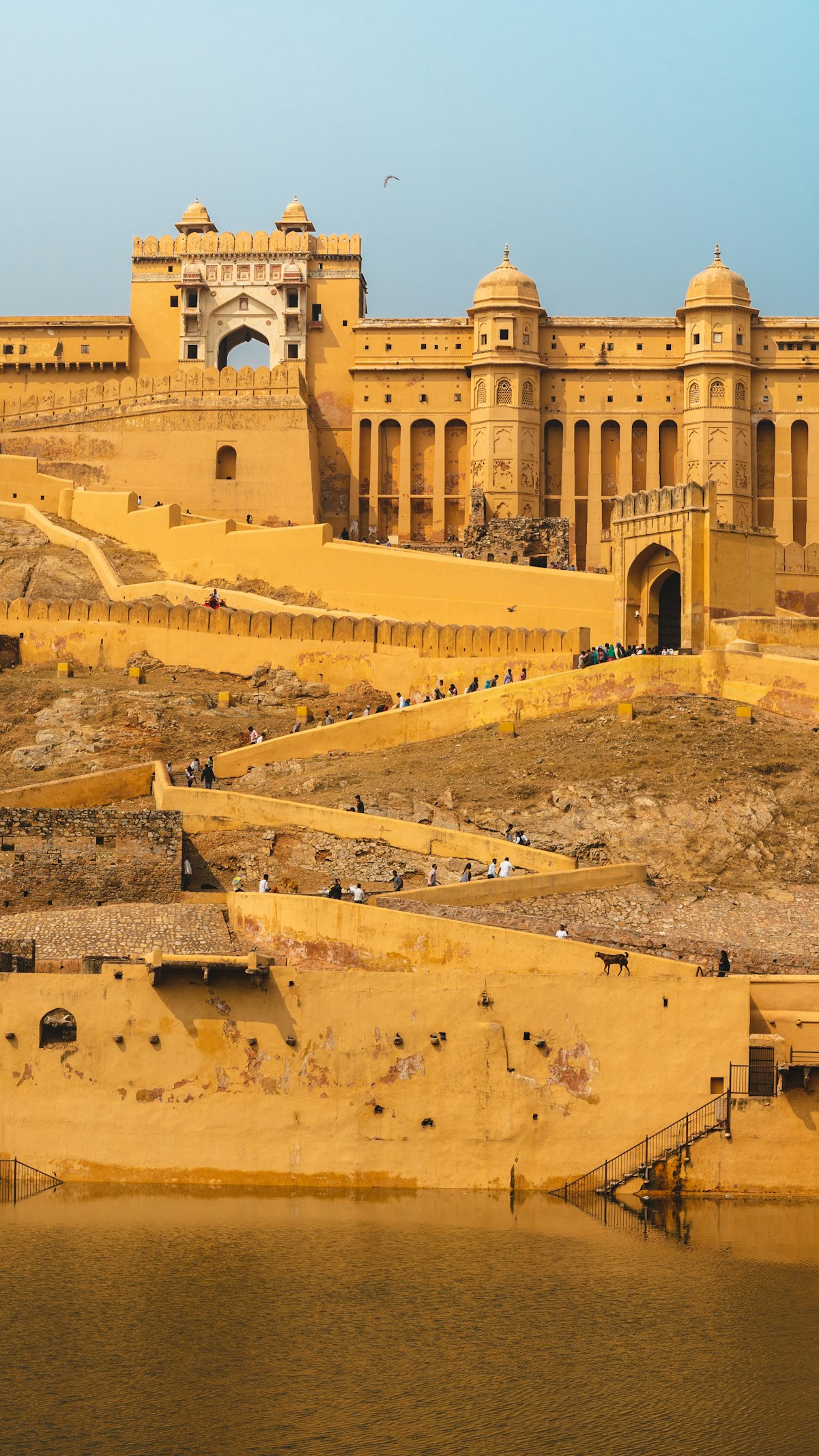
- ↑April sees tourism drop sharply as temperatures cross 35°C and international visitors retreat. For heat-tolerant travellers, this creates access to Jaipur's heritage sites without crowds. Amber Fort in the golden early morning light at 8am, with perhaps 50 other visitors rather than 2,000, is a profoundly different experience. The elephant stables, the zenana (women's quarters), and the Maota Lake reflection are all best photographed in the low-crowd April morning window.
- ↑Rambagh Palace, the Taj hotel in a 47-acre garden estate, drops to its lowest rack rates in April — around ₹18,000–₹25,000/night versus ₹45,000+ in peak season. The palace's Suvarna Mahal restaurant (one of India's great heritage dining rooms, set in a 19th-century banquet hall with gilded plasterwork) is at its most relaxed and bookable in April.
- ↑The gem markets of Johari Bazaar are worth extended time in April's cooler mornings. Jaipur is the world's largest coloured gemstone trading hub — rubies, emeralds, and sapphires primarily — and the gem merchants are more relaxed and willing to spend time with serious buyers when tourist pressure is lower.
What you sacrifice
- ↓April daytime temperatures of 36–38°C make outdoor sightseeing from 11am–5pm a heat-management challenge. Amber Fort's hilltop location, exposed to the sun with minimal shade, is genuinely dangerous in the afternoon at these temperatures. A strict early-morning strategy (7am–11am) followed by an air-conditioned hotel or restaurant break is essential.
- ↓The dry heat at 30% humidity is less oppressive than the humid heat of coastal India, but Jaipur's desert context means no cloud cover, direct sun exposure, and surface temperatures on stone monuments that can reach 55–60°C. Hats, water, and sunscreen are not optional.
How April compares to November (best month)
| Factor | April | November ★ |
|---|---|---|
| Weather | 4 | 10 |
| Value | 8 | 4 |
| Crowds | 8 | 4 |
April in other destinations
Lisbon (18°C)Barcelona (17.5°C)Tokyo (19.3°C)Bali (31.5°C)Santorini (16.5°C)Paris (14.7°C)New York (16°C)Marrakech (24.3°C)Amsterdam (12.3°C)Maldives (31.5°C)Rome (17.7°C)Bangkok (34.1°C)Istanbul (14.8°C)Vienna (15.2°C)Seoul (16°C)Dubrovnik (16.7°C)Rio de Janeiro (27.8°C)Kyoto (20.1°C)Phuket (33.8°C)Cape Town (22.3°C)Prague (16°C)Amalfi Coast (19°C)Mexico City (27°C)Medellín (27°C)Fiji (29°C)London (15°C)Sydney (22°C)Iceland (7°C)Tulum (31°C)Dubai (34°C)Singapore (33°C)Hoi An (31°C)Chiang Mai (35.5°C)Miami (28.3°C)Florence (18.6°C)Queenstown (15.5°C)Madrid (17.6°C)Porto (18°C)Edinburgh (12°C)Copenhagen (11°C)Budapest (17°C)Kraków (15°C)Tbilisi (18°C)Palawan (32°C)Hanoi (26°C)Osaka (20°C)Goa (34°C)Cusco (20°C)Buenos Aires (23°C)Mykonos (18°C)Zanzibar (30°C)Sri Lanka (32°C)Costa Rica (28°C)Cancun (31°C)Krabi (34°C)Athens (20°C)Seville (24°C)Cartagena (32°C)Siem Reap (35°C)Havana (29°C)Split (18°C)Taipei (26°C)Kuala Lumpur (33°C)Valletta (20°C)Ho Chi Minh City (36°C)Hawaii (28°C)Cappadocia (17°C)Dominican Republic (30°C)Jamaica (31°C)Tanzania (24°C)Seychelles (30°C)Nepal (27°C)Jordan (23°C)Azores (19°C)Bora Bora (29°C)Los Angeles (23.2°C)Cairo (30.2°C)Kenya (27.2°C)Las Vegas (27.9°C)San Francisco (16.2°C)Madeira (21.5°C)Vancouver (13.8°C)Muscat (36.2°C)Lima (23.5°C)Cinque Terre (17°C)Kotor (17°C)Tel Aviv (24°C)Santiago (22°C)Bogotá (18°C)Bruges (14°C)Penang (33.5°C)Lombok (31.8°C)Cape Verde (27.3°C)Fez (23.1°C)Kerala (34°C)Kigali (25°C)Hong Kong (25°C)Oslo (11°C)Auckland (19°C)
Climate data: 30-year normals (1991–2020) from Open Meteo ERA5 reanalysis. Scores compare months within Jaipur, not across destinations. Methodology →