Showing: Nov · Unsplash / Unsplash
India · Asia Pacific
Best time to visit Jaipur
November
Nov scores highest overall — reliable weather and strong local atmosphere. Set your priorities below to personalise this result.
What matters most to you?
All 12 months — click any to expand
Nov
Unsplash / Unsplash
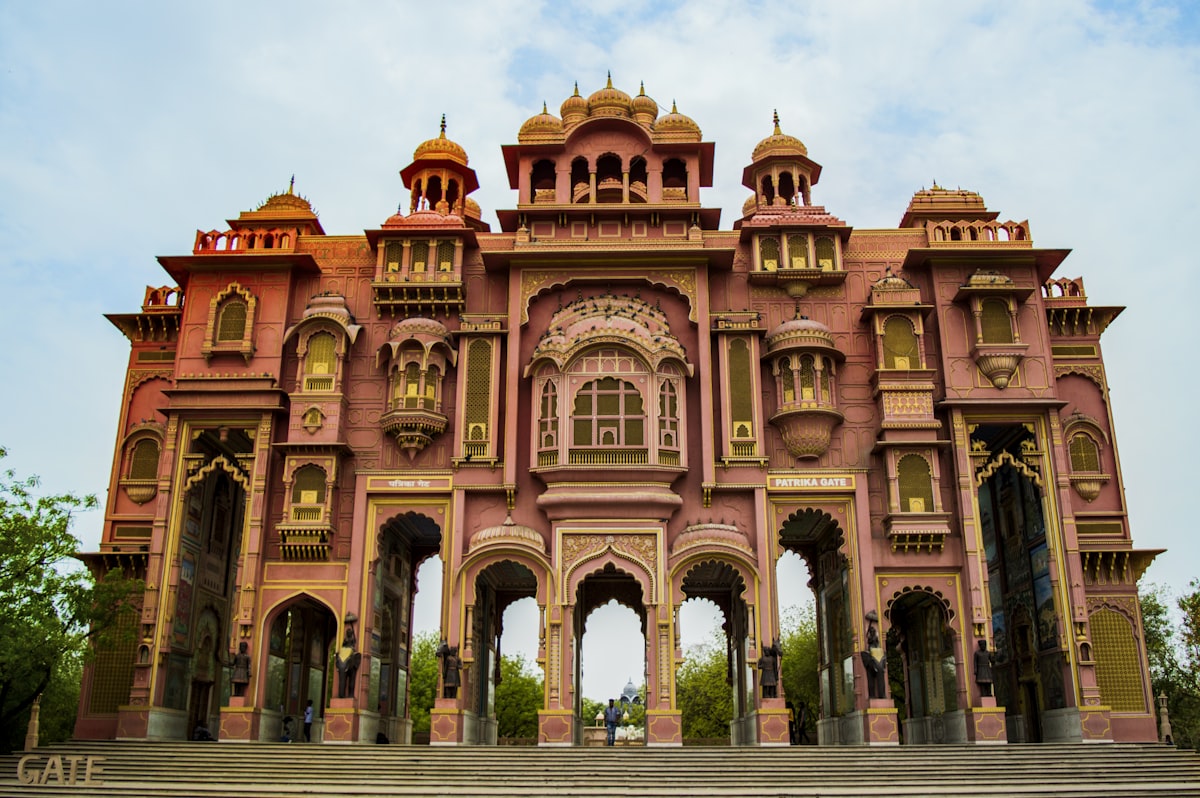
The best month — Pushkar Camel Fair, perfect weather, and Jaipur firing on every cylinder.
27.8°C
High
12.6°C
Low
9mm
Rain
8.9h
Sun/day
What you gain
- ↑The Pushkar Camel Fair (Kartik Mela, 5 days in late November determined by the Hindu lunar calendar, held at Pushkar 145km from Jaipur) is one of the world's great spectacles: 50,000+ camels, 200,000 traders and pilgrims, camel races, cattle trading, and the sacred Pushkar Lake ghats with their evening aarti ceremonies. The combination of the trading fair and the religious festival — Pushkar is one of India's holiest cities — makes this an unrepeatable event. Jaipur is the natural base for most visitors attending Pushkar.
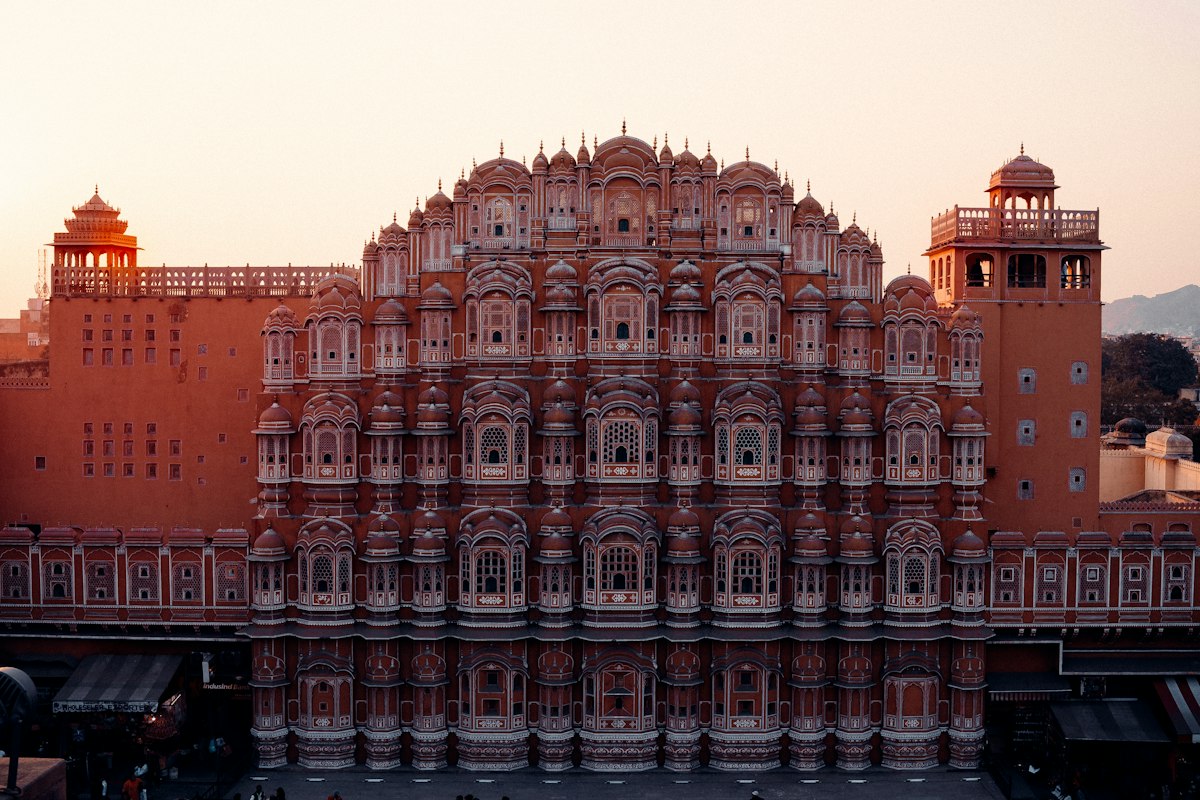
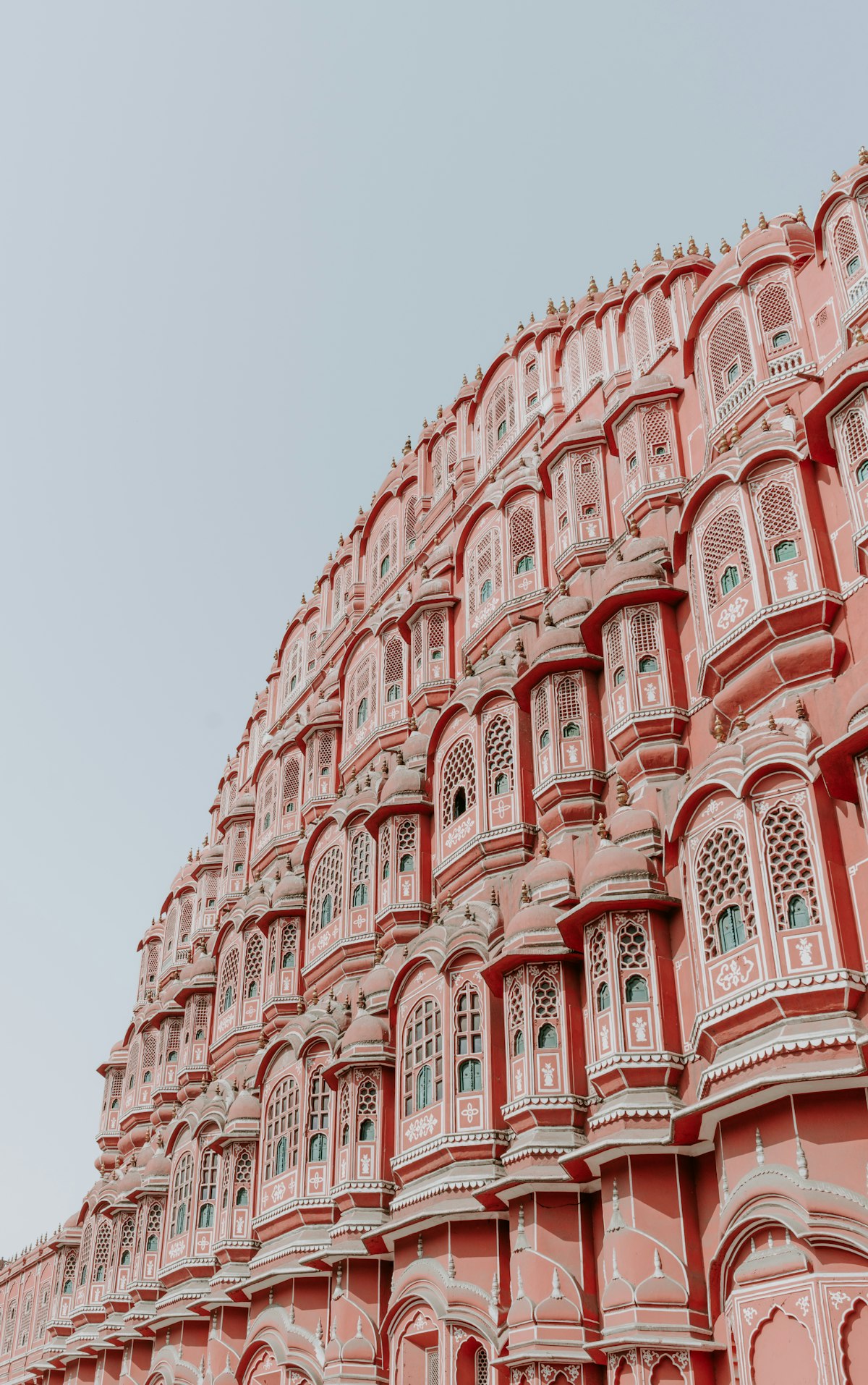
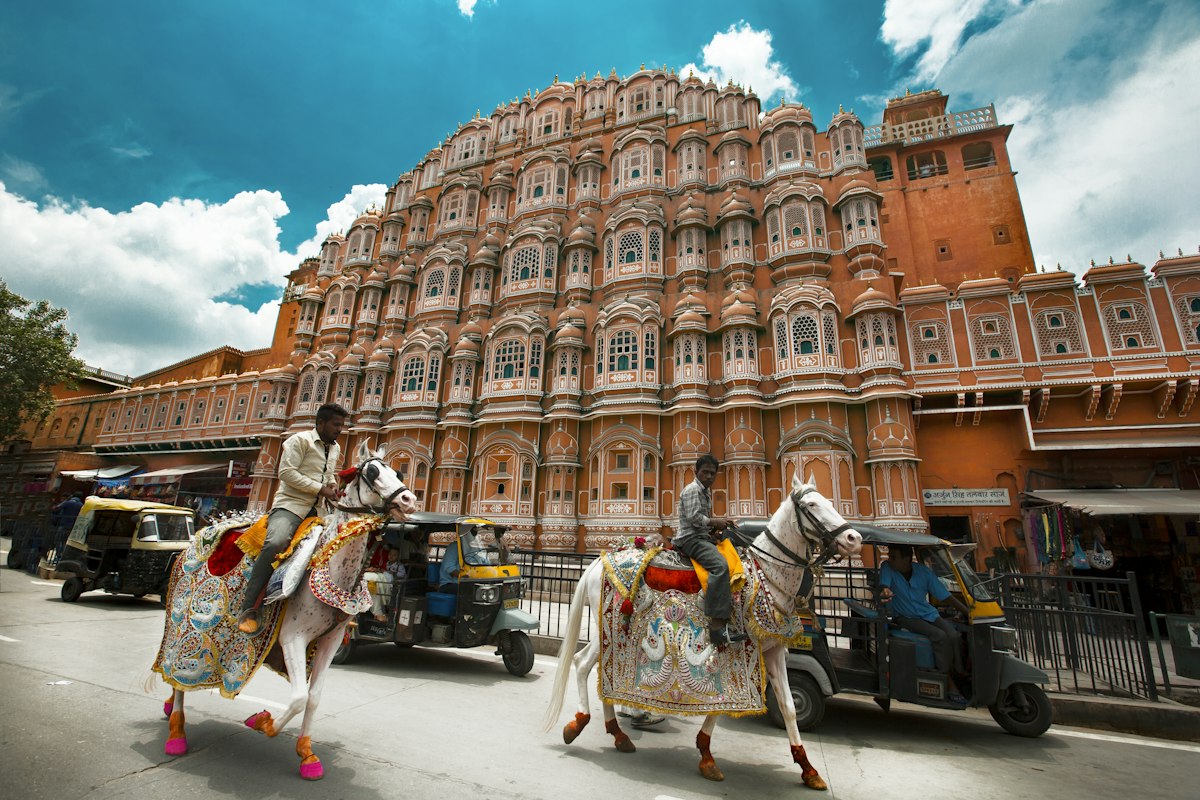
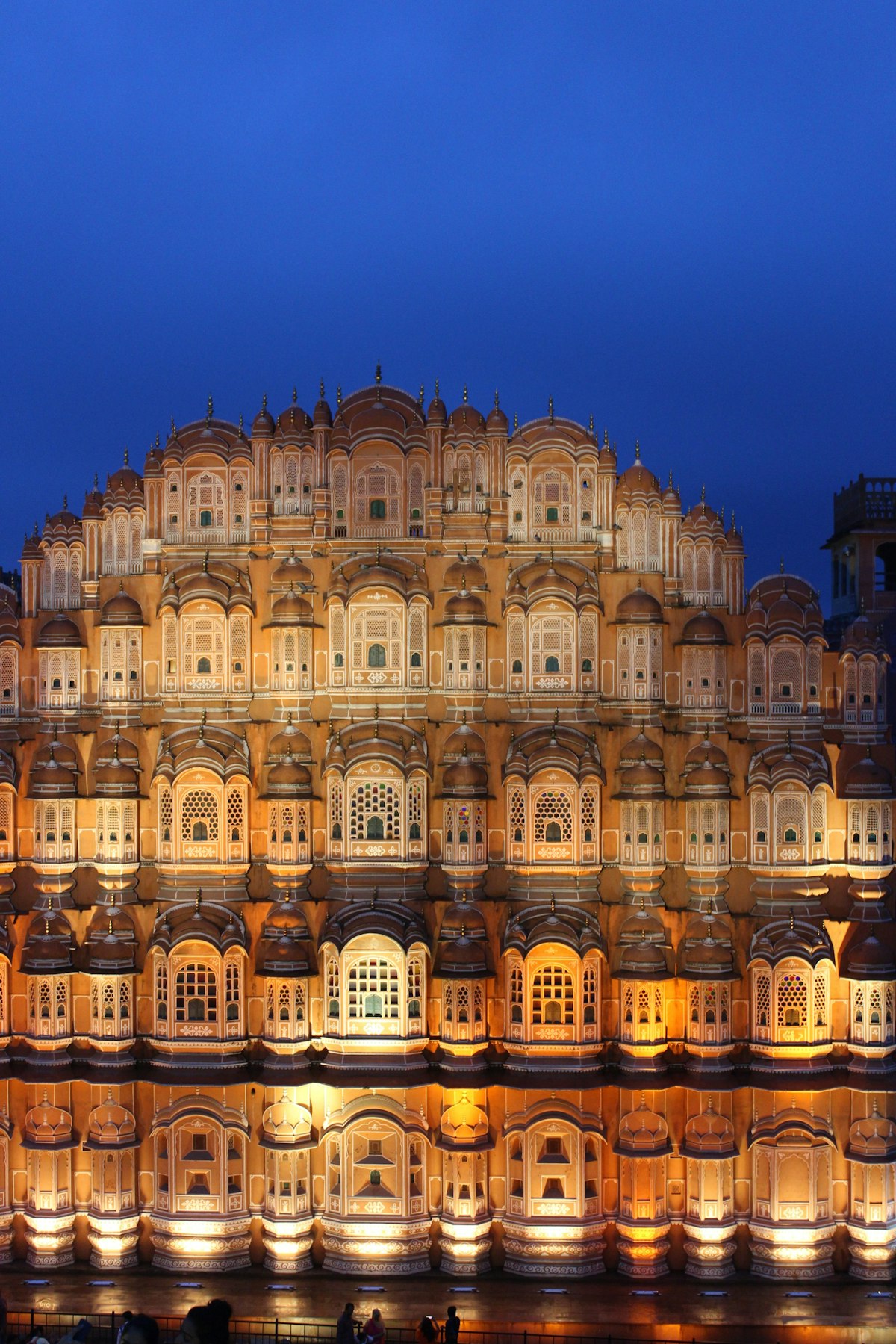
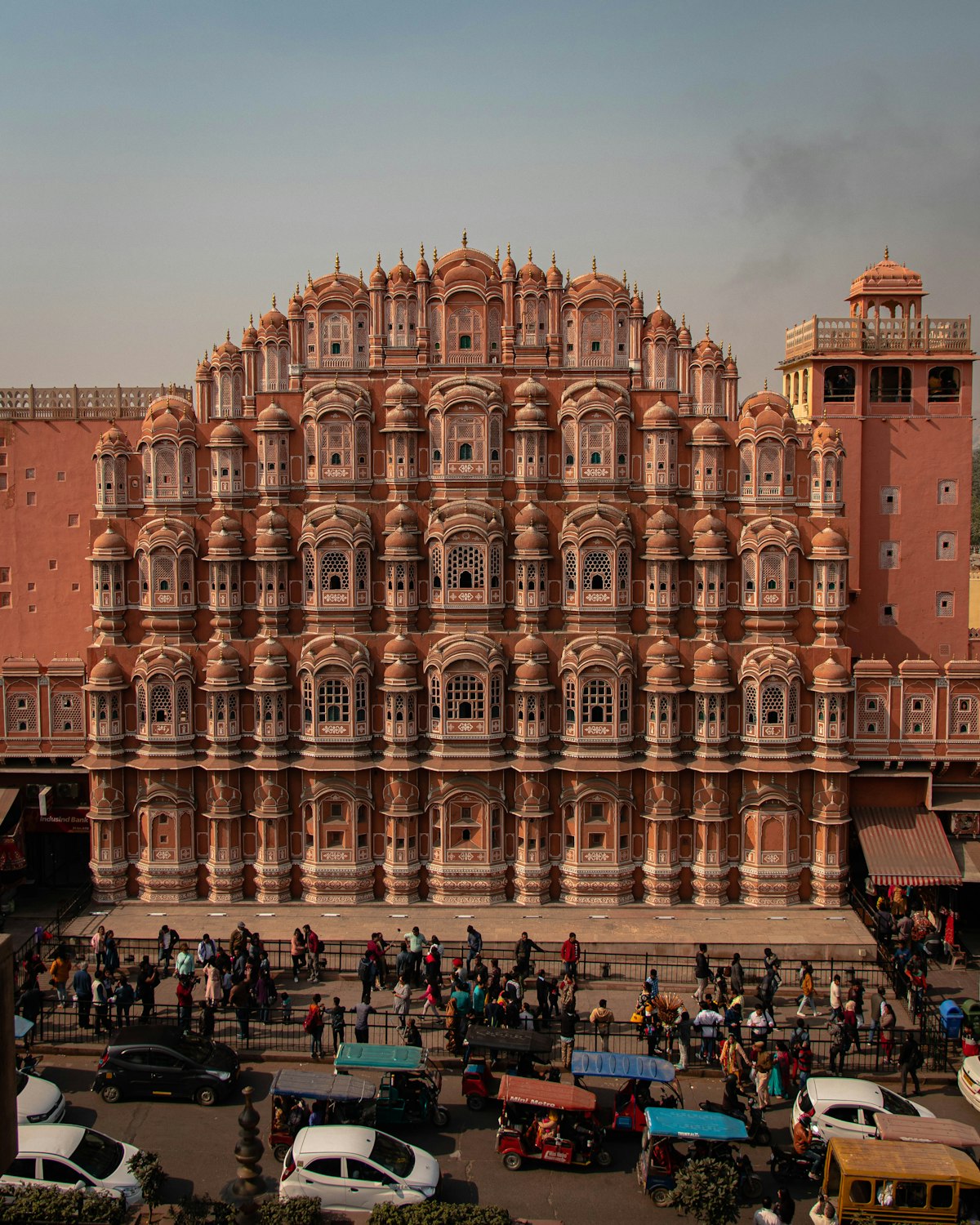
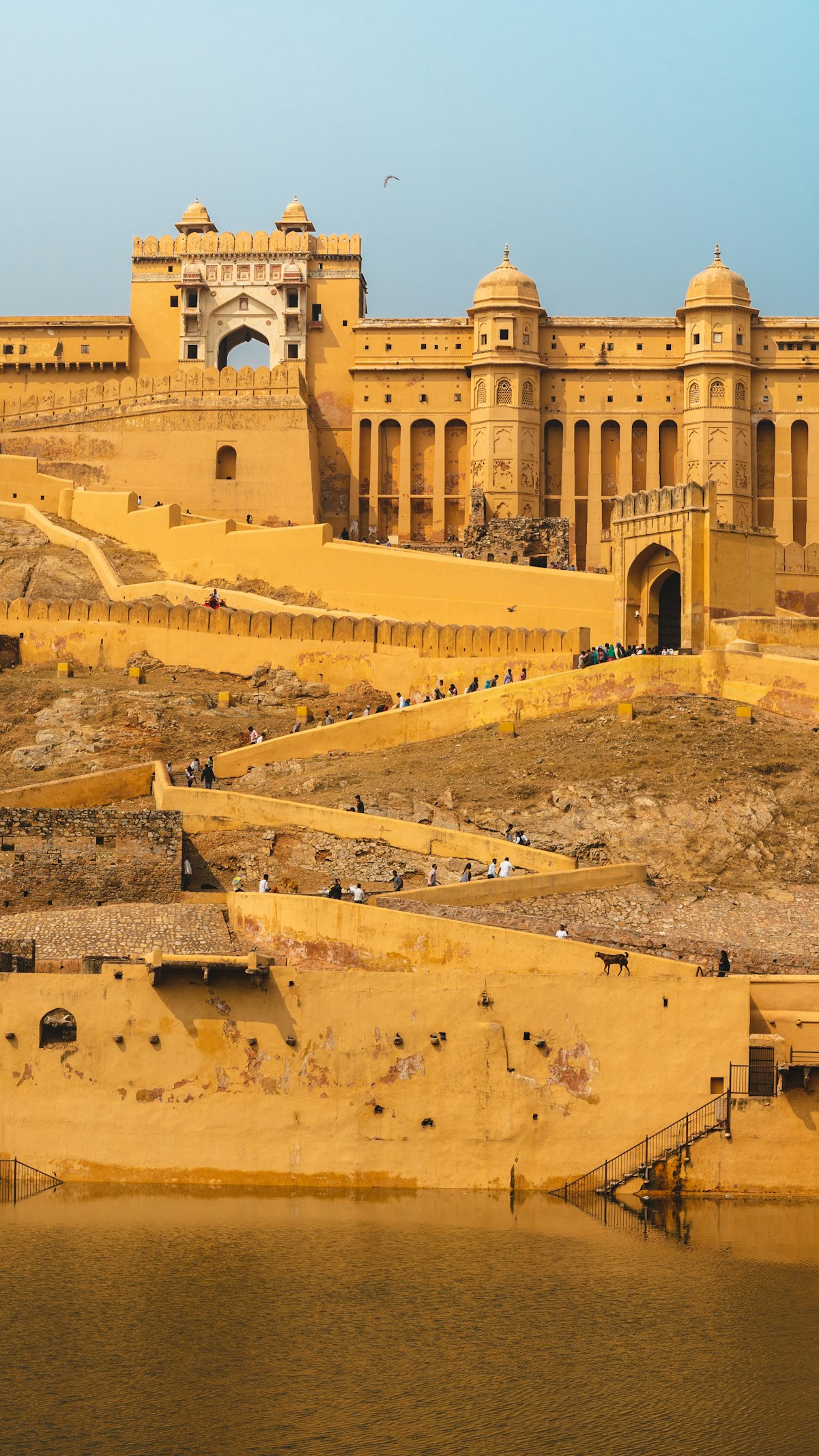
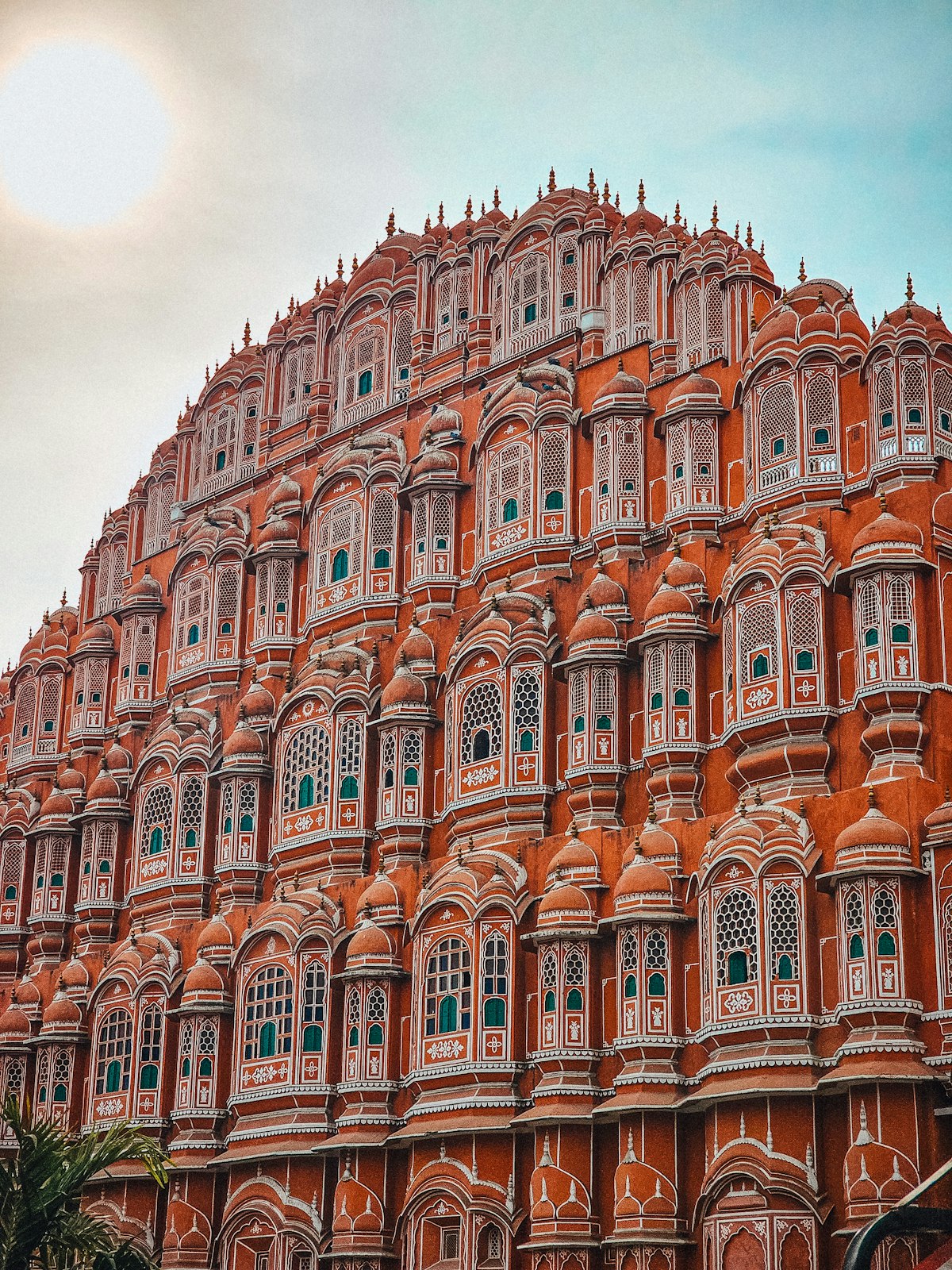
- ↑November weather is the pinnacle of Rajasthan travel conditions. At 27–28°C highs and 12°C comfortable evenings, every monument, every bazaar, and every rooftop restaurant is accessible in ideal conditions. The Hawa Mahal in the pink morning light of November, the Amber Fort courtyard in the late afternoon sun — these are the images that define Jaipur photography and November delivers the light quality that makes them.
- ↑The Amber Fort sound-and-light show (evenings, year-round but best in November's clear, cool air) runs in English, Hindi, and French and narrates Rajput history against the illuminated fort façade. At ₹200–₹295 per person, it is extraordinary value and one of the best light shows in India.
What you sacrifice
- ↓November is peak season and prices are at or near their January maximums. The Pushkar Fair period specifically creates acute accommodation pressure across Jaipur and Pushkar simultaneously — heritage hotels and boutique properties book out 3–4 months in advance for Pushkar dates. Rates at the Rambagh Palace and Jai Mahal Palace match January's JLF premiums.
- ↓The Pushkar Fair itself is crowded, commercial, and requires navigating significant tourist-focused pricing. The camels are real, the trading is real, but the experience is increasingly packaged for international visitors. Going with realistic expectations about the balance between authentic fair and tourist production is important.
Nov scores highest overall — reliable weather and strong local atmosphere. Set your priorities below to personalise this result.
Nov
The best month — Pushkar Camel Fair, perfect weather, and Jaipur firing on every cylinder.
27.8°C
High
9mm
Rain
8.9h
Sun
- ↑The Pushkar Camel Fair (Kartik Mela, 5 days in late November determined by the Hindu lunar calendar, held at Pushkar 145km from Jaipur) is one of the world's great spectacles: 50,000+ camels, 200,000 traders and pilgrims, camel races, cattle trading, and the sacred Pushkar Lake ghats with their evening aarti ceremonies. The combination of the trading fair and the religious festival — Pushkar is one of India's holiest cities — makes this an unrepeatable event. Jaipur is the natural base for most visitors attending Pushkar.
- ↑November weather is the pinnacle of Rajasthan travel conditions. At 27–28°C highs and 12°C comfortable evenings, every monument, every bazaar, and every rooftop restaurant is accessible in ideal conditions. The Hawa Mahal in the pink morning light of November, the Amber Fort courtyard in the late afternoon sun — these are the images that define Jaipur photography and November delivers the light quality that makes them.
- ↑The Amber Fort sound-and-light show (evenings, year-round but best in November's clear, cool air) runs in English, Hindi, and French and narrates Rajput history against the illuminated fort façade. At ₹200–₹295 per person, it is extraordinary value and one of the best light shows in India.
- ↓November is peak season and prices are at or near their January maximums. The Pushkar Fair period specifically creates acute accommodation pressure across Jaipur and Pushkar simultaneously — heritage hotels and boutique properties book out 3–4 months in advance for Pushkar dates. Rates at the Rambagh Palace and Jai Mahal Palace match January's JLF premiums.
- ↓The Pushkar Fair itself is crowded, commercial, and requires navigating significant tourist-focused pricing. The camels are real, the trading is real, but the experience is increasingly packaged for international visitors. Going with realistic expectations about the balance between authentic fair and tourist production is important.
Top travel windows
★ BestNovember
Best overall
Highest combined score
27.8°C
High
9mm
Rain
8.9h
Sun
July
Best for value
Lowest prices & fees
34.2°C
High
200mm
Rain
5.5h
Sun
July
Fewest crowds
Quietest month
34.2°C
High
200mm
Rain
5.5h
Sun
Breakdown by priority
Best for weather
November
27.8°C high · 9mm rain · 8.9hrs sun/day
Best for budget
July
Heritage properties at their monsoon-minimum prices offer access to extraordinary spaces. The Samode Palace (45km from Jaipur, an 18th-century haveli with frescoed dining rooms and a Mughal garden) runs at approximately ₹8,000–₹12,000/night in July versus ₹25,000+ in January.
Fewest crowds
July
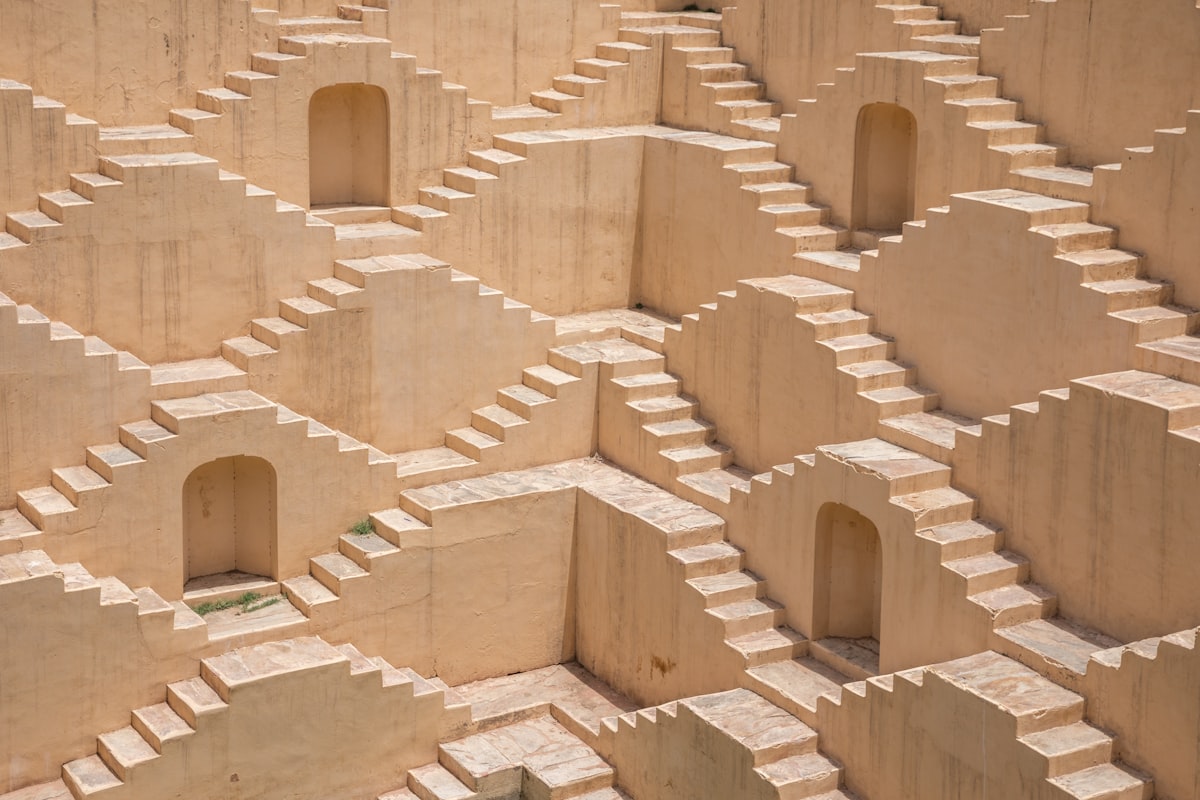
The monsoon transformation of Rajasthan is genuinely spectacular. The Aravalli hills around Jaipur — bare and brown from March to June — become vivid green within 2–3 weeks of the first rains' arrival. Lakes fill, stepwells (the magnificent Panna Meena Ka Kund near Amber) flow with cascading water, and the entire character of the landscape changes.
Worst time to visit
May, June
May temperatures averaging 40°C with peaks of 44–45°C are not hyperbole — they represent a genuine physical risk for visitors unaccustomed to desert heat. The government of Rajasthan issues heat advisories in May, and local hospitals see heat stroke cases among tourists each year. Any outdoor activity must be strictly limited to 6am–9am and 6pm–8pm windows.
Where to stay in Jaipur
All neighbourhoods →Old City (Pink City)
The walled Rajput capital — Amber Fort, Hawa Mahal, bazaars of gems and textiles, all within the rose walls.
10/10
Central
9/10
Walk
6/10
Transit
Bani Park
The heritage-hotel neighbourhood — converted havelis, quiet tree-lined streets, and walking distance to the Old City.
8/10
Central
7/10
Walk
7/10
Transit
Also exploring
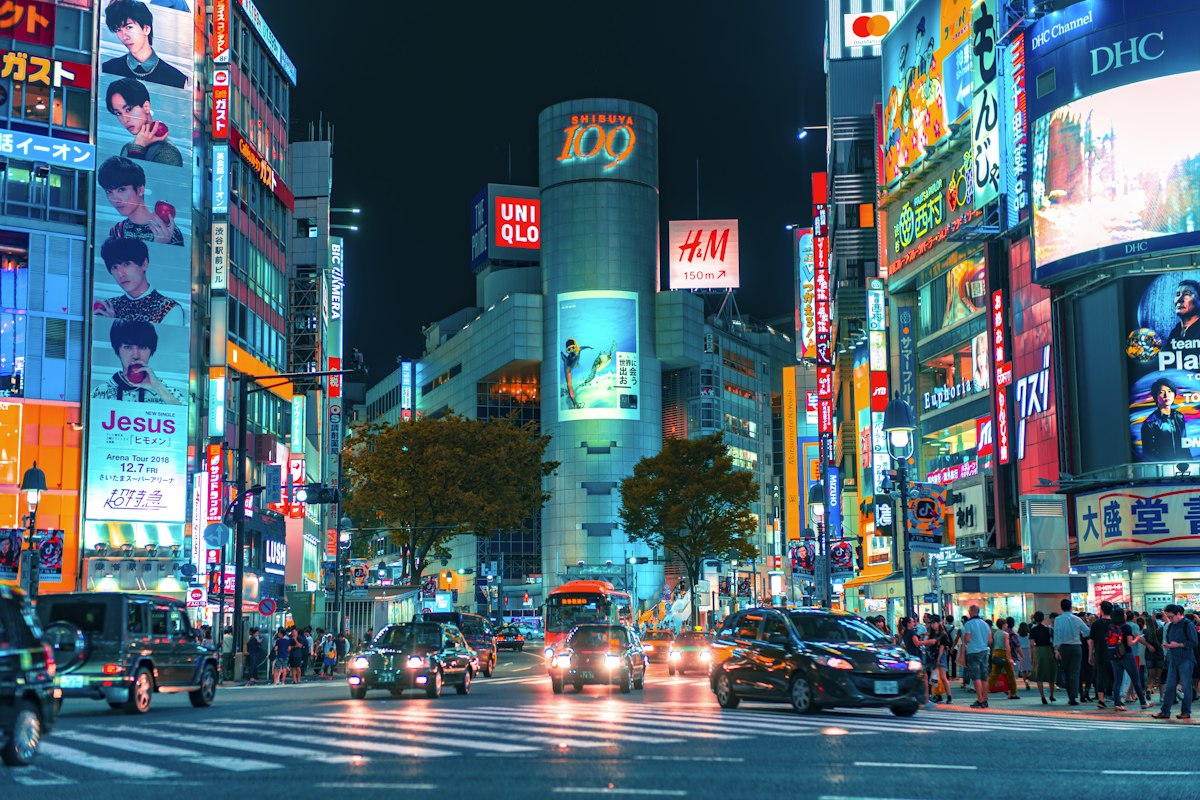
Tokyo
Japan
A city of dramatic seasonal contrasts — cherry blossom crowds, oppressive summer humidity, and golden autumn foliage — where the wrong timing can make or break the trip.
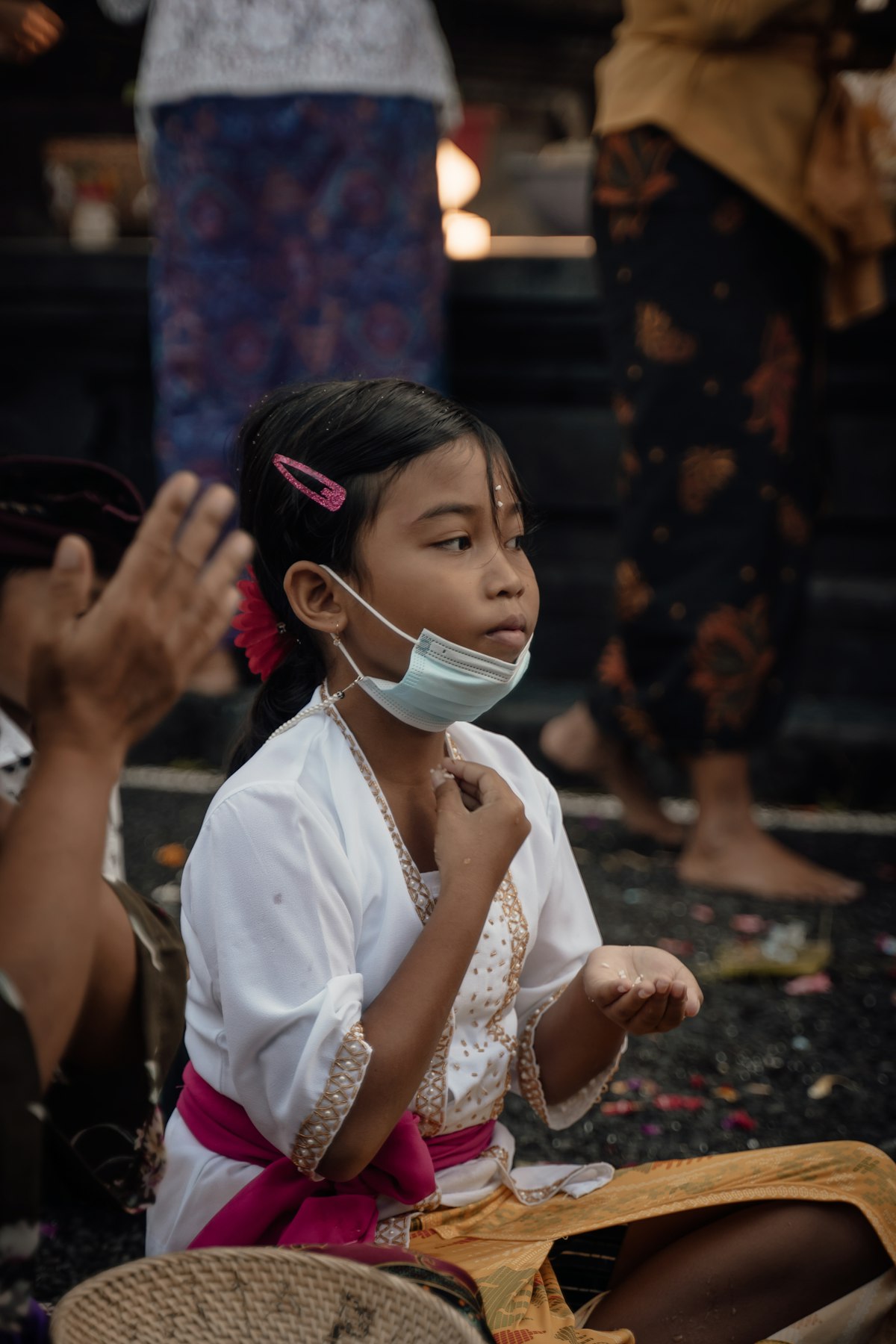
Bali
Indonesia
A Hindu island of rice terraces, temple ceremonies, and surf breaks where the monsoon makes timing genuinely binary — the difference between dry and wet season is not subtle.
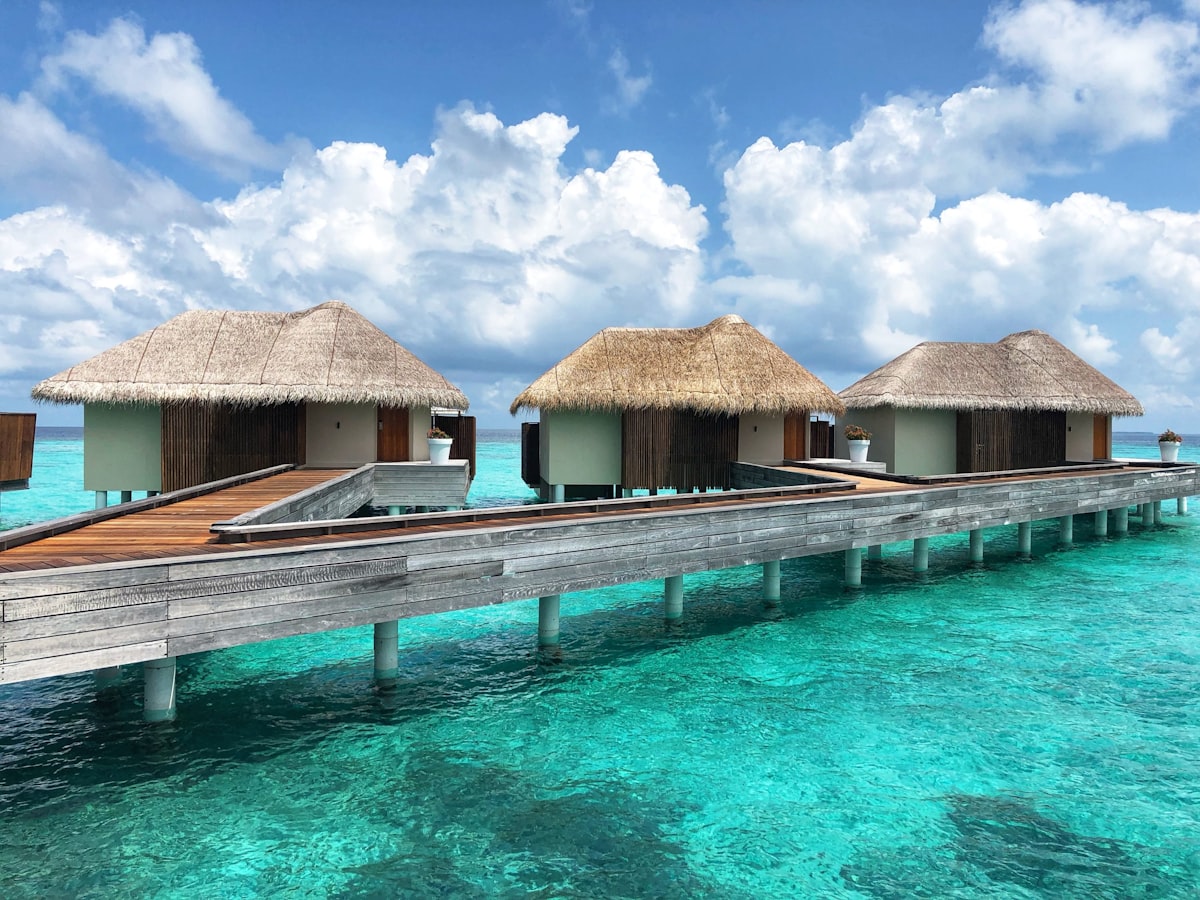
Maldives
Maldives
A destination defined almost entirely by its monsoon calendar — the difference between the NE dry season (November–April) and SW wet season (May–October) is not subtle and shapes every aspect of the experience.
Month by month breakdown
January#4▾
Gains
- ↑The Jaipur Literature Festival (ZEE JLF, typically held in late January over five days at Diggi Palace) is the world's largest free literary festival, drawing 250,000+ attendees annually and featuring 500+ speakers including Nobel laureates, Booker Prize winners, and figures from global politics and culture. The event transforms the city: literary discussions spill from the lawns into the hotel bars of the Rambagh Palace and Jai Mahal Palace, and the combination of India's intelligentsia and global visitors gives Jaipur a uniquely cosmopolitan energy for its duration.
- ↑January delivers Jaipur's finest sightseeing weather. At 22°C highs and 8°C overnight, every major monument is comfortable from sunrise to sunset. Amber Fort — the medieval hilltop fortress 11km north of the city, with its intricate Sheesh Mahal (Hall of Mirrors) and Ganesh Pol gateway — is best visited in January's clear morning light before tour groups arrive at 9am. The fort's elephant corridor remains the most atmospheric approach.
- ↑Jaipur's bazaars are at their most vibrant in January. Johari Bazaar (gemstones and jewellery), Bapu Bazaar (textiles and block-printed fabrics), and the fabric markets of Nehru Bazaar are fully operational, staff are alert and welcoming, and the cool weather makes hours of browsing genuinely pleasant rather than the heat-endurance exercise it becomes in May.
Sacrifices
- ↓January is unambiguously peak season in Jaipur, and the JLF festival in particular drives the city's highest hotel rates of the year. Heritage properties like the Rambagh Palace (formerly the Maharaja of Jaipur's residence, now a Taj hotel) charge ₹35,000–₹80,000/night ($420–$960) during JLF dates. The city's mid-range hotels fill 6–8 weeks in advance for festival dates.
- ↓January nights drop to 8°C — cold by Rajasthani standards — and the mud-walled heritage havelis and older hotels are often poorly heated. Pack a warm layer for evenings. Rickshaw rides after 8pm in the open air can be genuinely chilly.
February#2▾
Gains
- ↑February temperatures are ideal: 24–26°C in the day, cooling to 11–13°C overnight. The January festival crowd has dispersed after JLF, and Jaipur settles into a comfortable rhythm of tourist activity without the peak crush. Amber Fort, City Palace (still the residence of Jaipur's royal family, Maharaja Padmanabh Singh, who continues to preside over the annual Gangaur celebrations), and Jantar Mantar (UNESCO World Heritage astronomical observatory with 19 architectural instruments) are all comfortable full-day visits in February.
- ↑Elephant Festival and Holi preparations build through February (when Holi falls in March) or Holi itself occurs in late February in some years. The Elephant Festival — formerly held on the Chaugan grounds adjacent to City Palace — is the most photographed event in Rajasthan: caparisoned elephants in ornate blankets, painted faces, and silver anklets parading before the Pink City walls.
- ↑Block-printing village visits and craft workshops near Sanganer and Bagru (18–25km from the city) are at their most comfortable in February's cool clarity. These villages supply the global demand for Jaipur's signature hand-block-printed textiles and the workshops are open to visitors year-round but most pleasant in winter.
Sacrifices
- ↓Holi (when it falls in late February) drives a significant crowd surge and can disrupt general sightseeing on the actual festival day. The colour-throwing aspect, while incredible to witness, means wearing white clothes you care about is not recommended on Holi itself.
- ↓Tourism remains at moderate-high levels through February — international tour groups are fully operational and popular sites require early-morning visits for manageable photography conditions. Amber Fort can see 3,000–5,000 visitors on peak winter days.
March#3▾
Gains
- ↑Holi (the Festival of Colours, typically falling in March — the exact date is determined by the lunar calendar) is India's most visually spectacular festival and Jaipur is one of its best places to experience it. The Holi celebration on the Chaugan grounds includes elephant processions, folk music, and coordinated colour-throwing that transforms the pink-walled city into a riot of pigment. The Shilpgram Holi festival just outside the city runs for multiple days with traditional Rajasthani music and craft demonstrations.
- ↑Early March temperatures (28–30°C) are still very comfortable for sightseeing. The pre-Holi atmosphere — the markets filling with gulal colour powder, sweets being prepared, and streets brightening with festive decoration — is part of the experience well before the festival itself.
- ↑The Elephant Festival (held on the day before Holi on the Chaugan, the large grounds in front of the Tripolia Gate of City Palace) is a specifically Jaipur celebration with no equivalent elsewhere in Rajasthan: decorated elephants compete in beauty pageants, races, and tug-of-war events against teams of men.
Sacrifices
- ↓The period of 3–4 days around Holi drives the strongest crowd surge of the non-January season. Indian domestic tourism to Jaipur for Holi is significant — families and groups travel specifically for the festival, and the city's hospitality infrastructure operates at or near capacity. Mid-range hotels book out 3–4 weeks ahead for Holi dates.
- ↓By late March, temperatures are climbing toward 32–33°C and the summer heat trajectory is visible. Afternoon sightseeing (12–4pm) becomes less comfortable and requires adjustment to the early-morning pattern that characterises the April–June heat.
April#10▾
Gains
- ↑April sees tourism drop sharply as temperatures cross 35°C and international visitors retreat. For heat-tolerant travellers, this creates access to Jaipur's heritage sites without crowds. Amber Fort in the golden early morning light at 8am, with perhaps 50 other visitors rather than 2,000, is a profoundly different experience. The elephant stables, the zenana (women's quarters), and the Maota Lake reflection are all best photographed in the low-crowd April morning window.
- ↑Rambagh Palace, the Taj hotel in a 47-acre garden estate, drops to its lowest rack rates in April — around ₹18,000–₹25,000/night versus ₹45,000+ in peak season. The palace's Suvarna Mahal restaurant (one of India's great heritage dining rooms, set in a 19th-century banquet hall with gilded plasterwork) is at its most relaxed and bookable in April.
- ↑The gem markets of Johari Bazaar are worth extended time in April's cooler mornings. Jaipur is the world's largest coloured gemstone trading hub — rubies, emeralds, and sapphires primarily — and the gem merchants are more relaxed and willing to spend time with serious buyers when tourist pressure is lower.
Sacrifices
- ↓April daytime temperatures of 36–38°C make outdoor sightseeing from 11am–5pm a heat-management challenge. Amber Fort's hilltop location, exposed to the sun with minimal shade, is genuinely dangerous in the afternoon at these temperatures. A strict early-morning strategy (7am–11am) followed by an air-conditioned hotel or restaurant break is essential.
- ↓The dry heat at 30% humidity is less oppressive than the humid heat of coastal India, but Jaipur's desert context means no cloud cover, direct sun exposure, and surface temperatures on stone monuments that can reach 55–60°C. Hats, water, and sunscreen are not optional.
May#11▾
Gains
- ↑May reveals a Jaipur that tourists rarely see — a city coping with extreme heat in its own way. The bazaars operate from 6am to 11am with intense activity, then largely close until 5pm. The evening bazaar (5pm–9pm) has a different energy — locals and families out in force, the heat finally bearable, and the social fabric of the city visible in a way that peak-season tourism obscures.
- ↑Budget accommodation is at its annual lowest. Heritage havelis that charge ₹8,000–₹15,000/night in January drop to ₹2,500–₹4,500. Rambagh Palace rates reach their floor. For backpackers and budget travellers who can handle the heat and structure their days accordingly, May offers access to extraordinary heritage properties at radically reduced rates.
Sacrifices
- ↓May temperatures averaging 40°C with peaks of 44–45°C are not hyperbole — they represent a genuine physical risk for visitors unaccustomed to desert heat. The government of Rajasthan issues heat advisories in May, and local hospitals see heat stroke cases among tourists each year. Any outdoor activity must be strictly limited to 6am–9am and 6pm–8pm windows.
- ↓The cultural and tourist infrastructure thins dramatically. Some restaurants and heritage venues reduce to summer-skeleton operations; guided tour availability drops; the atmosphere of the city transforms from the convivial winter season to a population coping mode. The experience is authentic but requires significant visitor adaptation.
June#12▾
Gains
- ↑Pre-monsoon June occasionally brings dramatic dust storms from the Thar Desert that, while disruptive, create extraordinary photography conditions — the famous "wolf moon" sunsets of Rajasthan, where the dust-filtered light turns amber and red, are a genuine spectacle visible from the City Palace ramparts and the Nahargarh Fort viewpoint above the city.
- ↑The anticipation of monsoon creates a palpable shift in the city's energy in late June. Local businesses prepare rain shelters, gardens are readied for the first rains, and the peacocks (India's national bird, semi-wild throughout the Jaipur gardens) begin to display and call — a sound deeply embedded in the Rajasthani cultural identity.
Sacrifices
- ↓June temperatures remain in the 38–40°C range. The first pre-monsoon humidity begins to arrive (40% vs May's 28%), making the heat feel stickier and more oppressive. This is arguably the most unpleasant combination — extreme heat plus building humidity — without the relief of actual monsoon rains.
- ↓Virtually no tourist infrastructure operates at meaningful capacity in June. The combination of extreme heat and the lowest foreign tourist numbers of the year means guides, drivers, and upscale restaurants all operate reduced or limited service. Solo travel is feasible but requires more resourcefulness than in peak season.
July#8▾
Gains
- ↑The monsoon transformation of Rajasthan is genuinely spectacular. The Aravalli hills around Jaipur — bare and brown from March to June — become vivid green within 2–3 weeks of the first rains' arrival. Lakes fill, stepwells (the magnificent Panna Meena Ka Kund near Amber) flow with cascading water, and the entire character of the landscape changes.
- ↑Heritage properties at their monsoon-minimum prices offer access to extraordinary spaces. The Samode Palace (45km from Jaipur, an 18th-century haveli with frescoed dining rooms and a Mughal garden) runs at approximately ₹8,000–₹12,000/night in July versus ₹25,000+ in January.
Sacrifices
- ↓Monsoon rainfall of 200mm in July, concentrated in heavy downpours of 40–60mm over a few hours, can flood the low-lying areas of the old walled city and temporarily make roads impassable. Amber Fort's access road has historically flooded in extreme monsoon events, shutting access for 12–24 hours at a time. Planning any itinerary with built-in flexibility is essential.
- ↓High humidity (70–75%) combined with the residual heat (34°C) creates a genuinely unpleasant sticky atmosphere during rain-free periods. The romantic image of monsoon Rajasthan needs to be balanced against the reality of wet clothing, slippery marble, and the persistent background smell of old stone and damp earth.
August#9▾
Gains
- ↑Teej Festival (typically mid-to-late August, exact date lunar-determined) is one of Jaipur's great local celebrations, not marketed heavily to tourists but open to visitors. Women dress in green saris, sing traditional songs, swing on decorated swings hung from trees, and process through the old city in a celebration of the monsoon rains and the goddess Teej. The procession from the City Palace through the walled city is one of the most atmospheric events in Jaipur's calendar.
- ↑Janmashtami (Krishna's birthday, August/September by lunar calendar) brings all-night temple celebrations across Rajasthan. The Govind Deo Ji Temple inside City Palace — the principal Krishna temple of Jaipur's royal family — holds its most significant celebrations on Janmashtami and is genuinely moving to witness.
Sacrifices
- ↓August rainfall averages 175mm, delivered in tropical downpours of high intensity. The Nahargarh and Jaigarh Fort roads become dangerous in heavy rain; the marble floors of Amber Fort's open courtyards become dangerously slippery; and some sections of the walled city experience flooding around lower-lying bazaars.
- ↓Humidity at 74% in August is the highest of the year. Combined with 32°C temperatures, this creates a heat index that feels significantly hotter than the actual temperature. The dry Rajasthani heat of November and December feels like a different climate entirely.
September#7▾
Gains
- ↑September sees the monsoon begin to withdraw from Rajasthan. Rainfall drops from July–August peaks, sunny windows extend through the morning and increasingly the afternoon, and temperatures begin their gradual descent toward the ideal October–March range. The Aravalli hills remain deeply green — the post-monsoon landscape of Jaipur in late September is its most lush and photogenic.
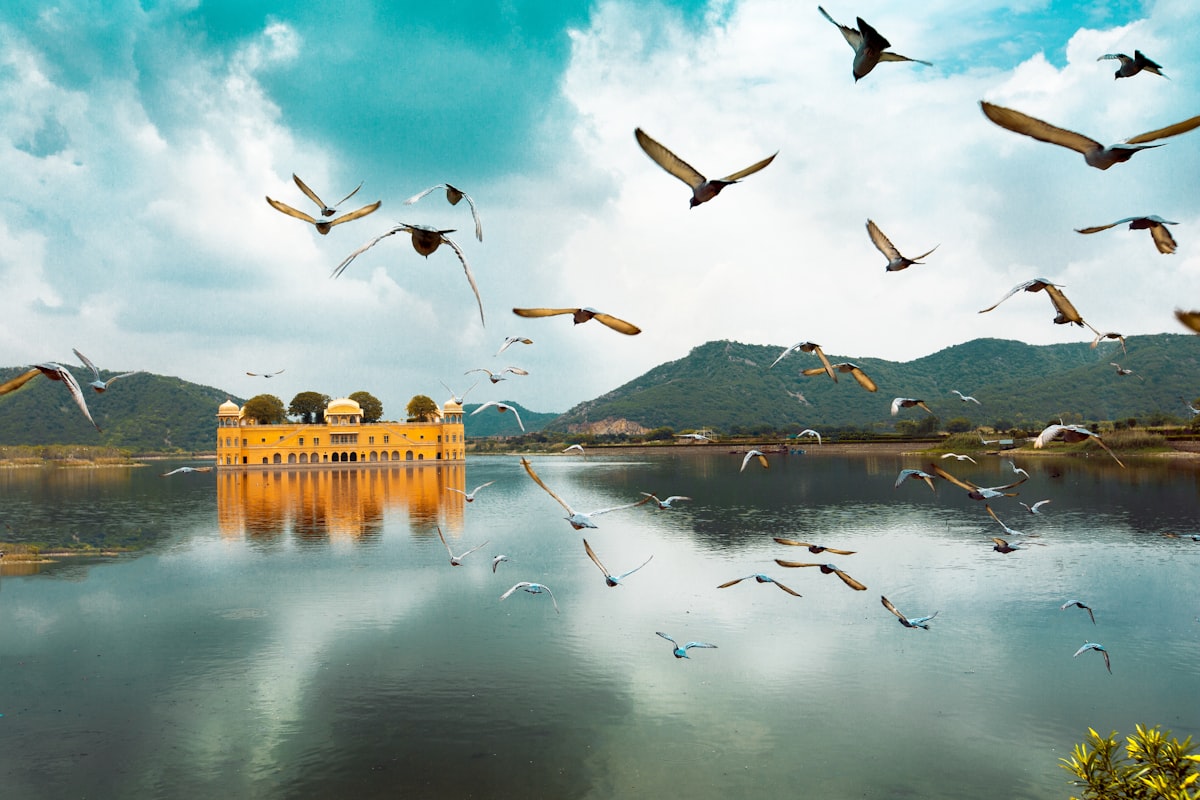
- ↑Jal Mahal (the Water Palace, set in the middle of the monsoon-filled Man Sagar Lake on the road to Amber) is most beautiful in September and October when the lake is full to its steps. The palace exterior — only the rooftop portion is accessible — surrounded by full water on all sides is the iconic Jaipur image that most photography doesn't capture in winter because the lake is lower.
- ↑Early September is the beginning of the shoulder season and hotel prices reflect it. Good heritage havelis and boutique properties in the Bani Park and C-Scheme areas begin to climb back from monsoon lows but are still 30–40% below January peak prices.
Sacrifices
- ↓September still sees regular rainfall, particularly in the first half of the month. The combination of warm temperatures (32°C) and lingering humidity (65–70%) means the experience is distinctly tropical rather than the crisp dry Rajasthan of winter. Monsoon-style downpours can still disrupt afternoon plans in early September.
- ↓Some international tour operators do not include September in their active Jaipur seasons, meaning the concentration of guides, cultural events, and curated visitor experiences is lower than in October–March. Independent travellers do better in September than group-tour visitors.
October#5▾
Gains
- ↑Diwali (Festival of Lights, typically October or early November — lunar-determined) is Jaipur's most spectacular annual event after Holi. The old walled city is illuminated from every window, archway, and rooftop with diyas (clay oil lamps), the markets overflow with sweets, fireworks light the sky over Amber Fort for several consecutive nights, and the atmosphere is one of collective celebration and extraordinary visual beauty. Watching Diwali from the Nahargarh Fort viewpoint above the city — with the illuminated Pink City spread below — is one of India's great experiences.
- ↑October's daytime temperatures of 32–33°C are warm but manageable, and the humidity has dropped sharply from monsoon levels (48% versus 72% in August). The transition from monsoon green to the warm ochre and rose tones of the dry season is visible in October — the landscape retaining some greenery while the air achieves its characteristic Rajasthani clarity.
- ↑Pushkar Camel Fair preparation begins in late October (the fair itself is typically in November). Jaipur serves as the staging city for many visitors, and the pilgrim and trader caravans passing through the surrounding Aravalli road network are already building by late October.
Sacrifices
- ↓Diwali week drives significant price surges — mid-range hotels in the Bani Park area and heritage havelis in the old city charge 40–60% premiums during Diwali peak days. Indian domestic tourism floods Jaipur for Diwali, and the city's roads and markets become extremely congested in the evenings.
- ↓October is still warmer than the November–February ideal — afternoon temperatures above 30°C mean the mid-day sightseeing window at Amber Fort is less comfortable than in December or January. Early morning remains the optimal time for any outdoor monument visit.
November#1▾
Gains
- ↑The Pushkar Camel Fair (Kartik Mela, 5 days in late November determined by the Hindu lunar calendar, held at Pushkar 145km from Jaipur) is one of the world's great spectacles: 50,000+ camels, 200,000 traders and pilgrims, camel races, cattle trading, and the sacred Pushkar Lake ghats with their evening aarti ceremonies. The combination of the trading fair and the religious festival — Pushkar is one of India's holiest cities — makes this an unrepeatable event. Jaipur is the natural base for most visitors attending Pushkar.
- ↑November weather is the pinnacle of Rajasthan travel conditions. At 27–28°C highs and 12°C comfortable evenings, every monument, every bazaar, and every rooftop restaurant is accessible in ideal conditions. The Hawa Mahal in the pink morning light of November, the Amber Fort courtyard in the late afternoon sun — these are the images that define Jaipur photography and November delivers the light quality that makes them.
- ↑The Amber Fort sound-and-light show (evenings, year-round but best in November's clear, cool air) runs in English, Hindi, and French and narrates Rajput history against the illuminated fort façade. At ₹200–₹295 per person, it is extraordinary value and one of the best light shows in India.
Sacrifices
- ↓November is peak season and prices are at or near their January maximums. The Pushkar Fair period specifically creates acute accommodation pressure across Jaipur and Pushkar simultaneously — heritage hotels and boutique properties book out 3–4 months in advance for Pushkar dates. Rates at the Rambagh Palace and Jai Mahal Palace match January's JLF premiums.
- ↓The Pushkar Fair itself is crowded, commercial, and requires navigating significant tourist-focused pricing. The camels are real, the trading is real, but the experience is increasingly packaged for international visitors. Going with realistic expectations about the balance between authentic fair and tourist production is important.
December#6▾
Gains
- ↑December weather is nearly identical to January — 22–23°C days, 8–10°C nights, crystal-clear blue skies, and essentially zero rainfall. The light on the Pink City's signature terracotta-rose buildings is extraordinary in December's low winter sun, particularly in the late afternoon when Hawa Mahal glows rose-gold from approximately 4pm to sunset.
- ↑The pre-JLF period (the festival is in late January) means December avoids the festival premium while delivering virtually identical conditions. Mid-December particularly is an excellent sweet spot: peak-season weather, slightly below-peak prices (15–20% below January rates), and manageable crowds.
- ↑Jaipur's rooftop restaurant culture is at its most pleasant in December. Suvarna Mahal at the Rambagh Palace, Peshwa at the Taj Jai Mahal Palace, and the more casual rooftop at Peacock Rooftop Restaurant on the Johari Bazaar are all best experienced on a clear December evening when temperatures allow outdoor dining without either heat or excessive cold.
Sacrifices
- ↓Christmas and New Year (December 22–January 3) drive price spikes comparable to the JLF period. Heritage hotels charge holiday premiums and the city sees an influx of both domestic Indian families and international travellers. Book all accommodation 8–10 weeks ahead for the holiday fortnight.
- ↓December nights at 8–9°C are cold by the standards of an unheated Indian haveli. The traditional architecture's thick stone walls keep buildings cool in summer (excellent) but slow to warm in winter. Pack a warm layer — even luxury heritage hotels can be cold in the rooms at night in December.
How this is calculated
Climate data
Open Meteo ERA5
30-year normals (1991–2020). Temperature, rainfall, sunshine, humidity.
Price & crowd
Tourism research
Seasonal pricing from tourism authority data. Directional — compares months within a destination only.
Personalisation
Weighted scoring
Your priorities change the weights. Budget-first users get different results than weather-first users.
Share this result
November is the best time to visit Jaipur
Travel timing updates
New destinations and timing guides, when they land.
No spam. Unsubscribe anytime.