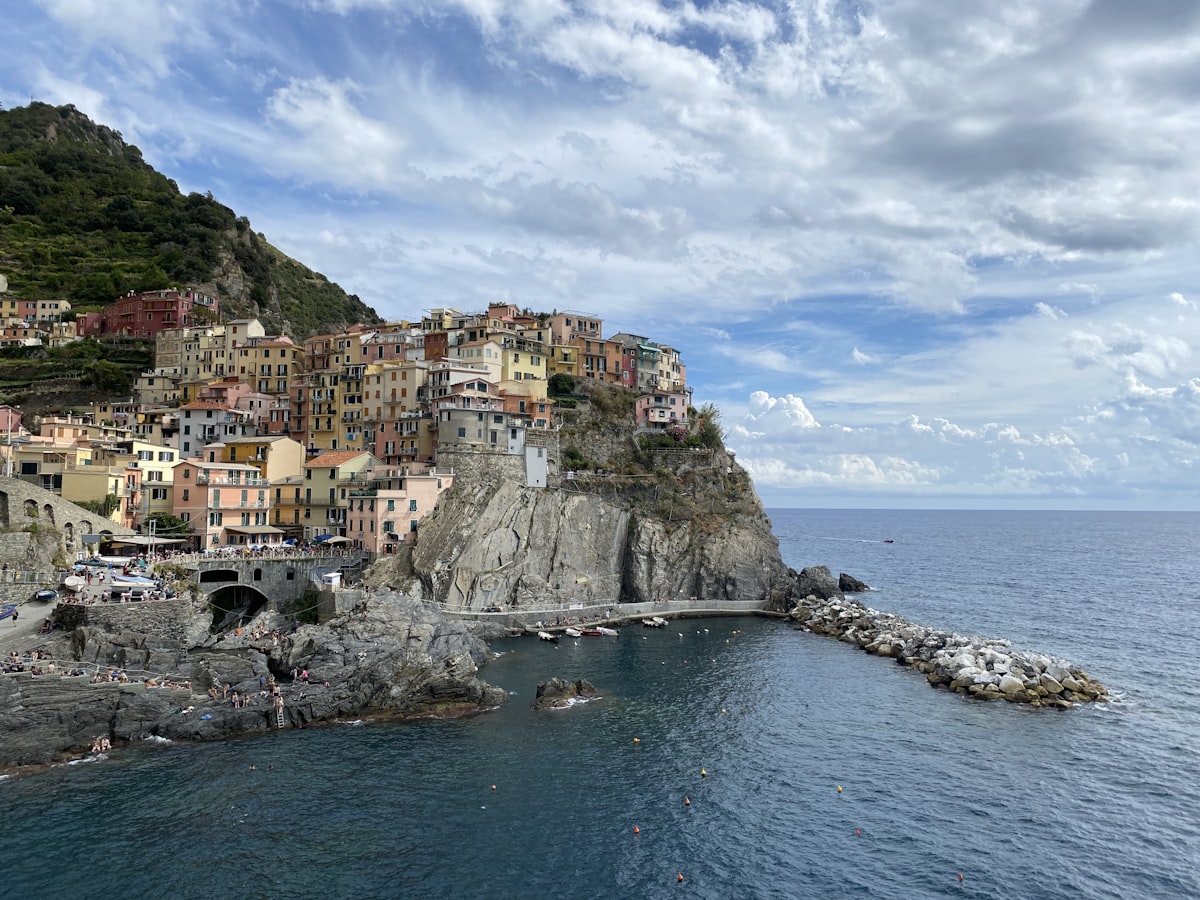
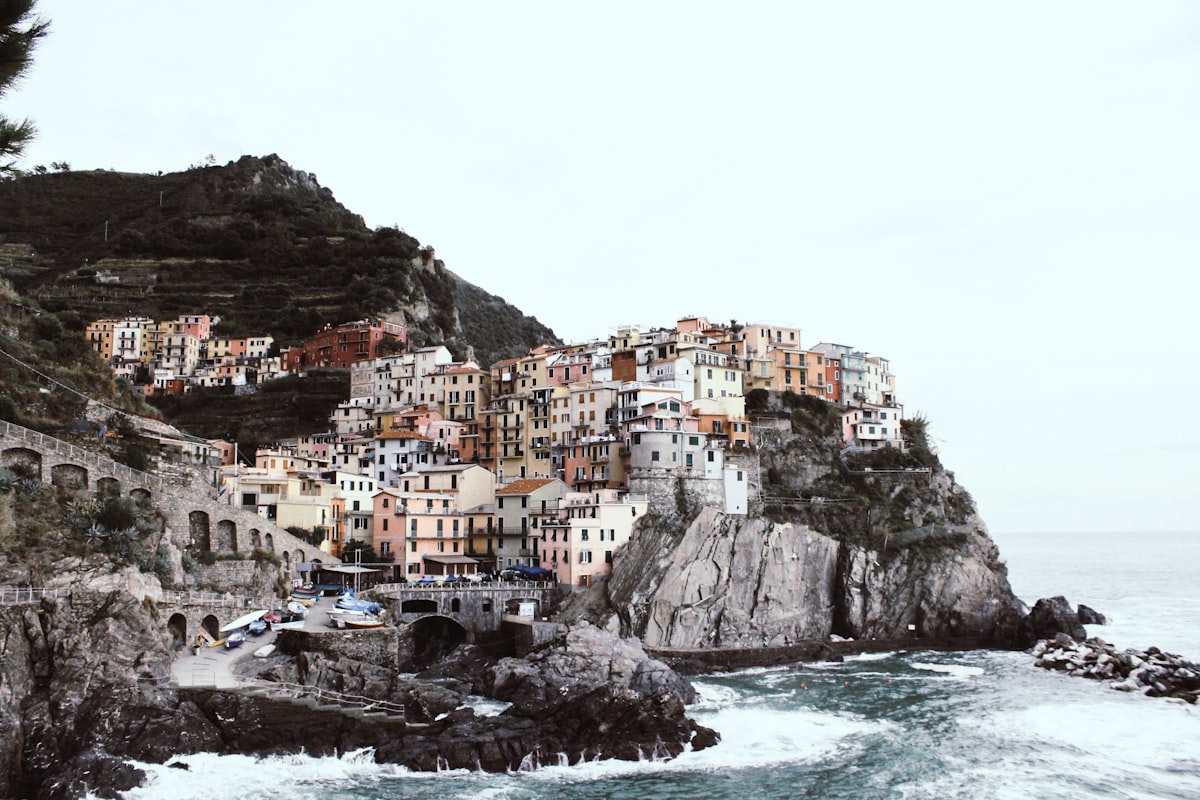
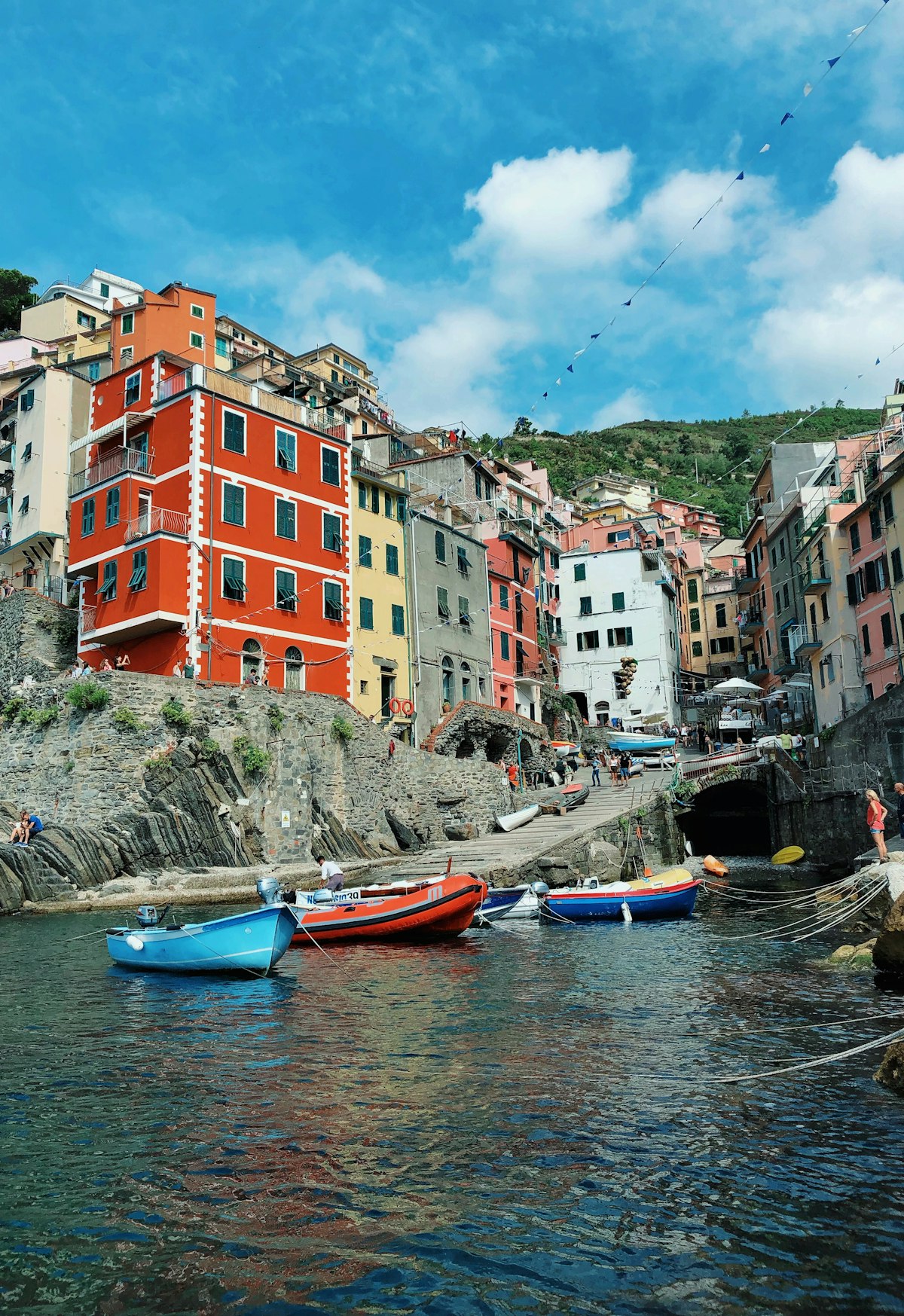
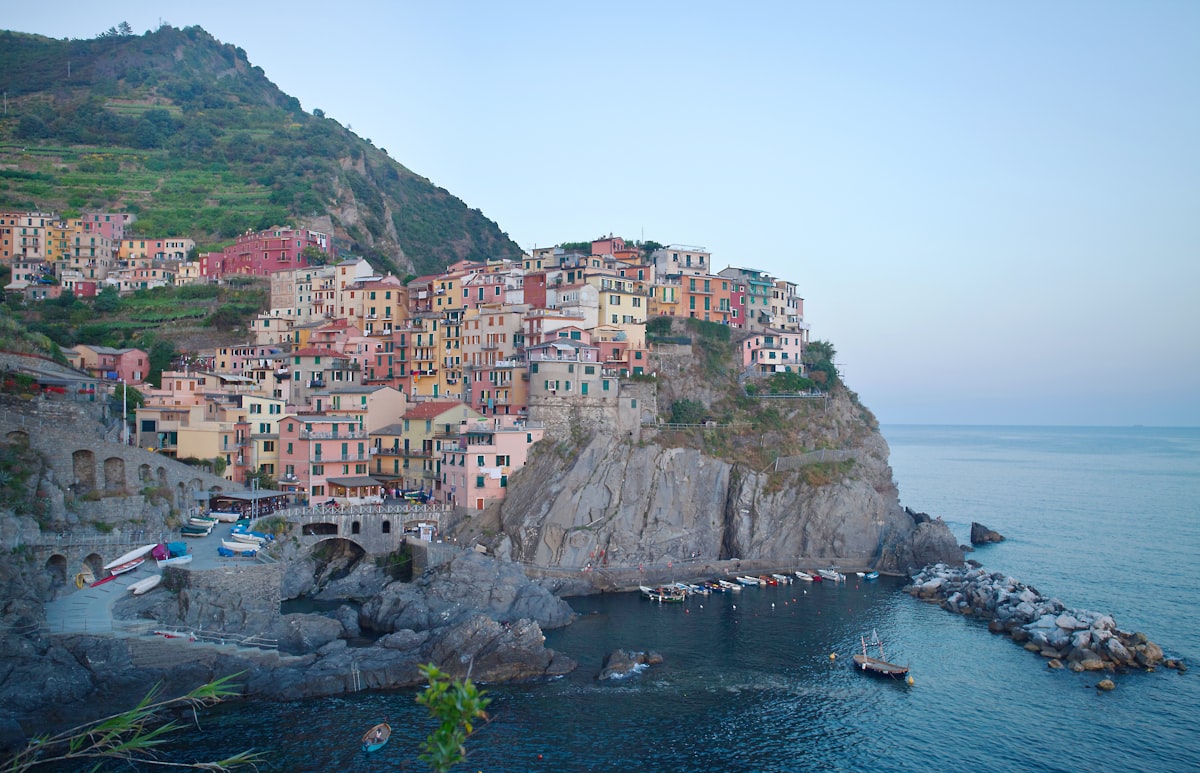
Cinque Terre · Unsplash / Unsplash
Italy · Europe
Best time to visit Cinque Terre
May
May scores highest overall — reliable weather and good value. Set your priorities below to personalise this result.
What matters most to you?
All 12 months — click any to expand
May
Unsplash / Unsplash
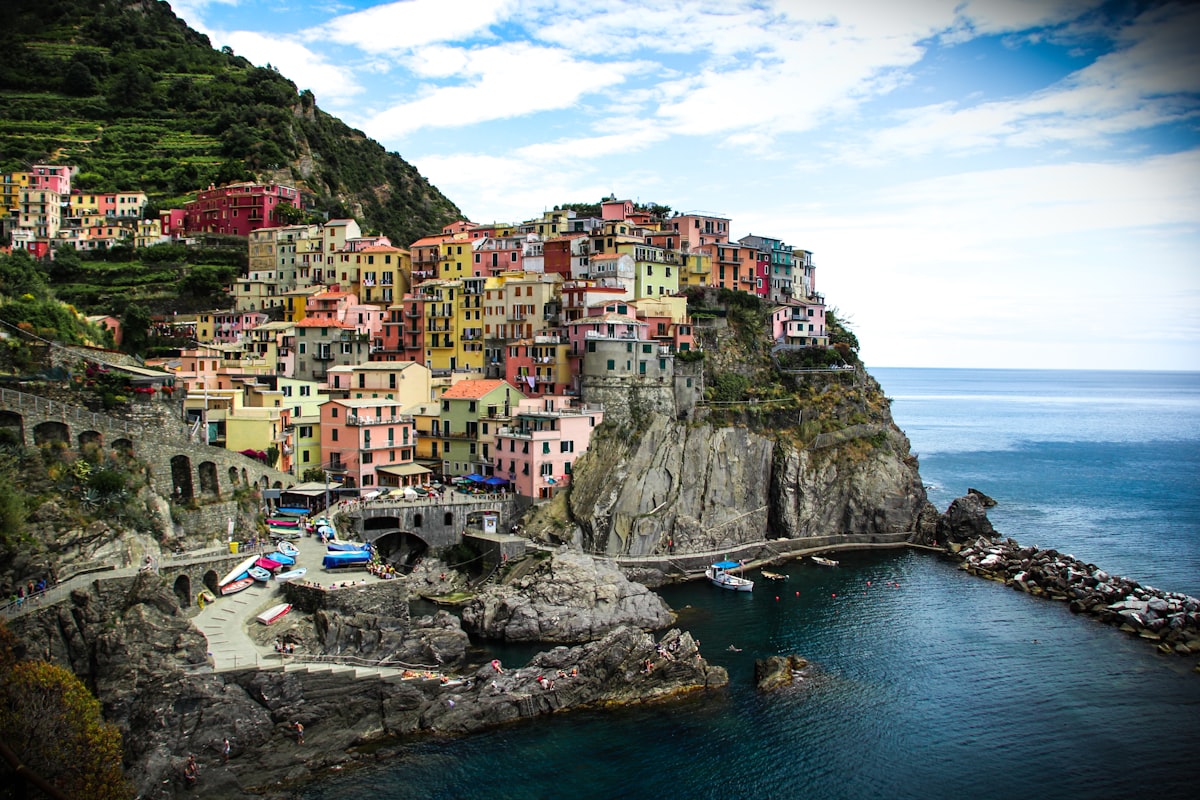
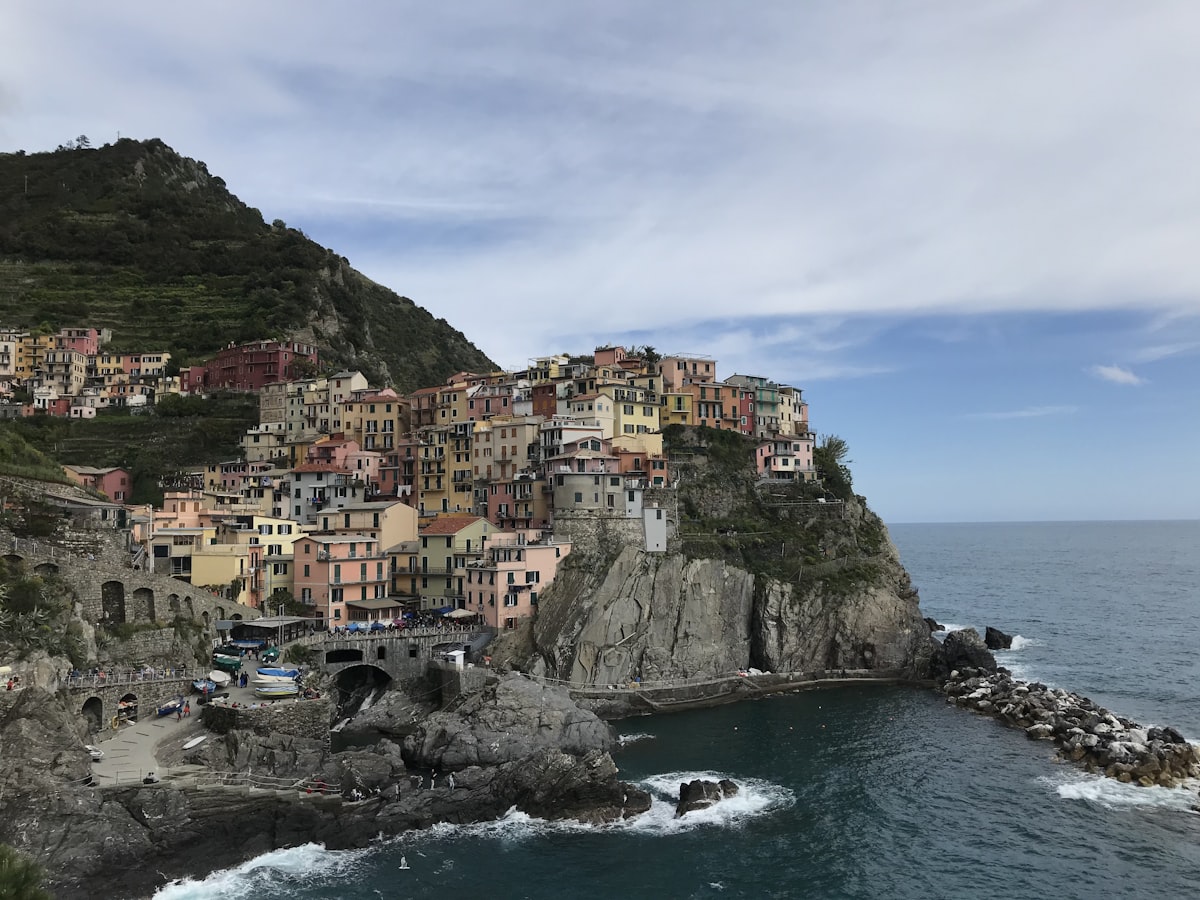
The locals' answer to "when should I visit" — warm, golden, and not yet overwhelmed.
21°C
High
14°C
Low
64mm
Rain
7.8h
Sun/day
What you gain
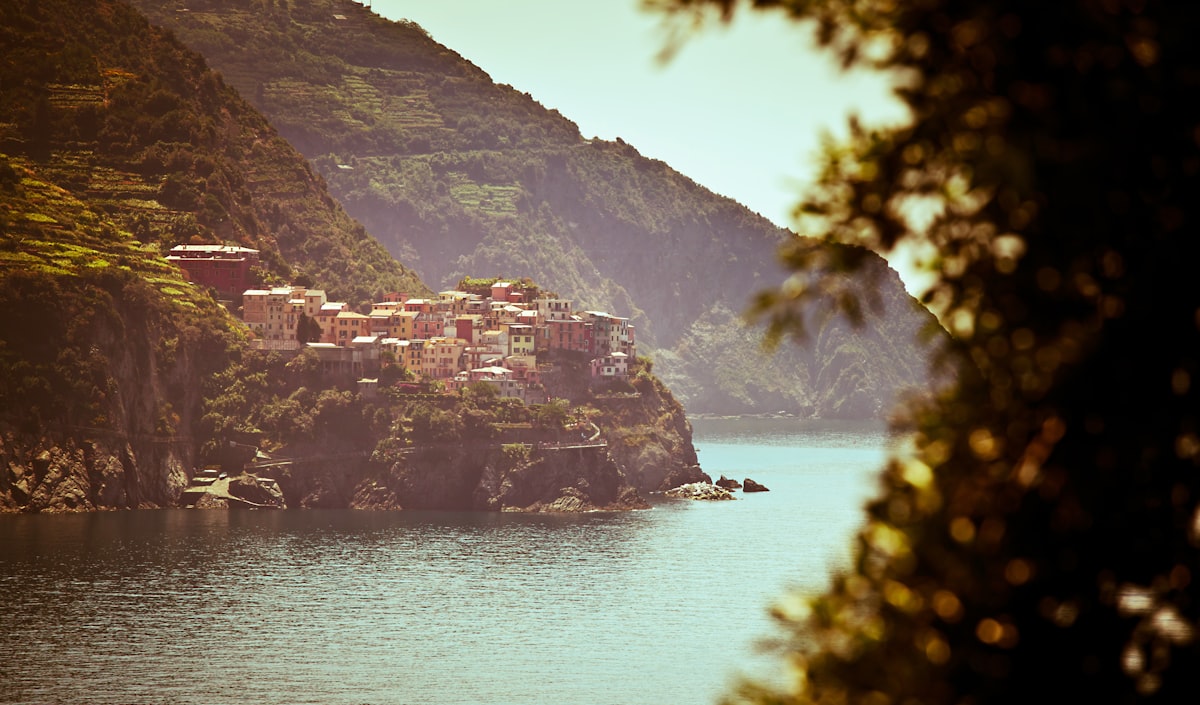
- ↑May is the month that regular Cinque Terre visitors and the Italian tourism industry alike consider the sweet spot. Temperatures hit 21°C in the warmth of the day; the sea turns properly blue and swimmable by late May; the coastal trail between all five villages is fully open for the first time of the year. The light is warm and golden, mornings smell of wildflowers and salt air, and the grape vines are in new leaf on the terraces above.
- ↑Crowds are present but manageable. Vernazza and Manarola fill between 11am and 4pm with day-trippers, but they are navigable in a way that July and August are not. Book restaurants for 8pm rather than 7pm and you will find the villages genuinely pleasant. The Osteria Frantoio in Monterosso and Dau Cila in Riomaggiore can still be walked into without a week's reservation.
- ↑Prices sit roughly 25–30% below the July peak — the same quality of seafront room in Vernazza costs meaningfully less and is bookable with reasonable notice. The Cinque Terre card covering trails and local trains is available without queuing.
What you sacrifice
- ↓Weekend day-tripper trains from Florence and La Spezia already bring volume that can make the villages feel crowded between 11am and 3pm on Saturdays and Sundays. The Sentiero Azzurro at its most popular points (between Vernazza and Monterosso) can see several hundred walkers per hour on clear weekend days.
- ↓Accommodation should ideally be booked 2–3 months ahead — the best rooms in Vernazza and Manarola are sought after. Last-minute May availability is often poor quality or poorly located.
May scores highest overall — reliable weather and good value. Set your priorities below to personalise this result.
May
The locals' answer to "when should I visit" — warm, golden, and not yet overwhelmed.
21°C
High
64mm
Rain
7.8h
Sun
- ↑May is the month that regular Cinque Terre visitors and the Italian tourism industry alike consider the sweet spot. Temperatures hit 21°C in the warmth of the day; the sea turns properly blue and swimmable by late May; the coastal trail between all five villages is fully open for the first time of the year. The light is warm and golden, mornings smell of wildflowers and salt air, and the grape vines are in new leaf on the terraces above.
- ↑Crowds are present but manageable. Vernazza and Manarola fill between 11am and 4pm with day-trippers, but they are navigable in a way that July and August are not. Book restaurants for 8pm rather than 7pm and you will find the villages genuinely pleasant. The Osteria Frantoio in Monterosso and Dau Cila in Riomaggiore can still be walked into without a week's reservation.
- ↑Prices sit roughly 25–30% below the July peak — the same quality of seafront room in Vernazza costs meaningfully less and is bookable with reasonable notice. The Cinque Terre card covering trails and local trains is available without queuing.
- ↓Weekend day-tripper trains from Florence and La Spezia already bring volume that can make the villages feel crowded between 11am and 3pm on Saturdays and Sundays. The Sentiero Azzurro at its most popular points (between Vernazza and Monterosso) can see several hundred walkers per hour on clear weekend days.
- ↓Accommodation should ideally be booked 2–3 months ahead — the best rooms in Vernazza and Manarola are sought after. Last-minute May availability is often poor quality or poorly located.
Top travel windows
★ BestMay
Best overall
Highest combined score
21°C
High
64mm
Rain
7.8h
Sun
February
Best for value
Lowest prices & fees
12°C
High
85mm
Rain
4.2h
Sun
February
Fewest crowds
Quietest month
12°C
High
85mm
Rain
4.2h
Sun
Breakdown by priority
Best for weather
May
21°C high · 64mm rain · 7.8hrs sun/day
Best for budget
February
Hotels in Vernazza and Manarola that would be fully booked nine months in advance in summer are available on short notice. Prices are at their floor — a seafront room in Manarola costs a fraction of its August rate.
Fewest crowds
February
Carnival (Carnevale) in the local towns around La Spezia adds a brief flash of colour and community celebration to an otherwise quiet period. The villages hold small local events with none of the commercial noise of peak season.
Worst time to visit
August
August is by most measures the worst month to visit Cinque Terre if you have any flexibility. Ferragosto (August 15) and the surrounding fortnight coincide with the Italian national holiday — domestic Italian tourists join the international cruise ship crowds. The park authority has discussed (and partially implemented) daily visitor caps and mandatory booking for the Sentiero Azzurro.
Where to stay in Cinque Terre
All neighbourhoods →Riomaggiore
The southernmost village and main entry point — lively, accessible, and the starting point for most visits.
8/10
Central
8/10
Walk
9/10
Transit
Vernazza
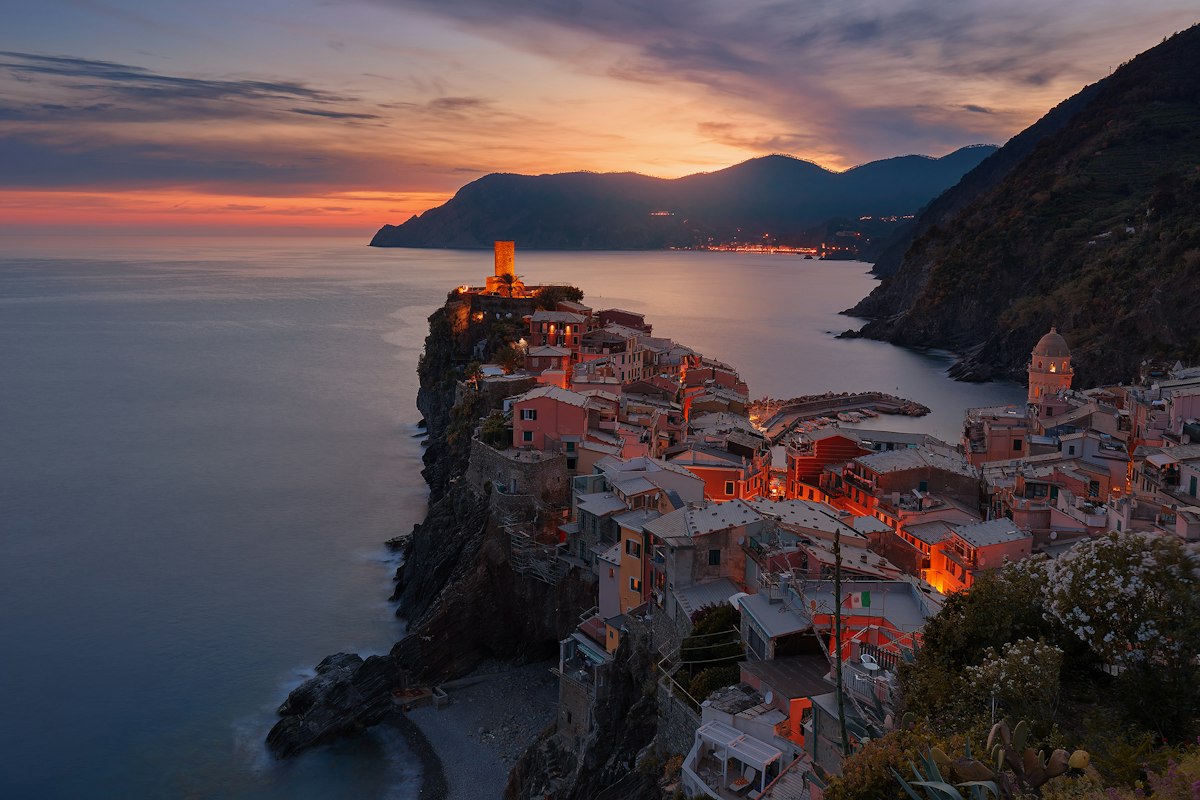
The most photographed harbour in Italy — a tiny fishing port with a natural piazza, castle ruins, and extraordinary light.
7/10
Central
9/10
Walk
9/10
Transit
Also exploring
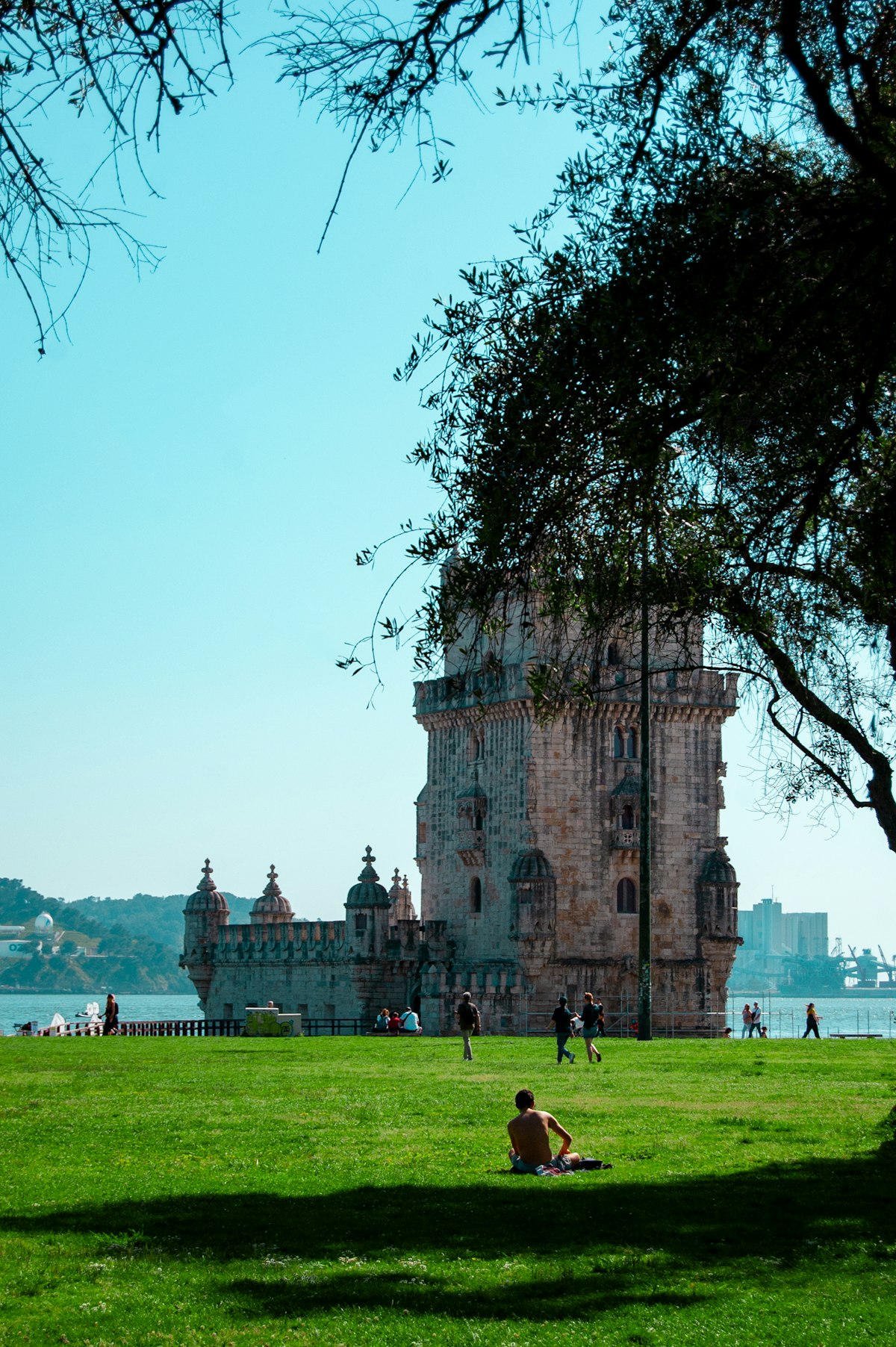
Lisbon
Portugal
A sun-drenched Atlantic capital where tram lines weave through hilltop neighbourhoods and prices stay genuinely affordable by Western European standards.
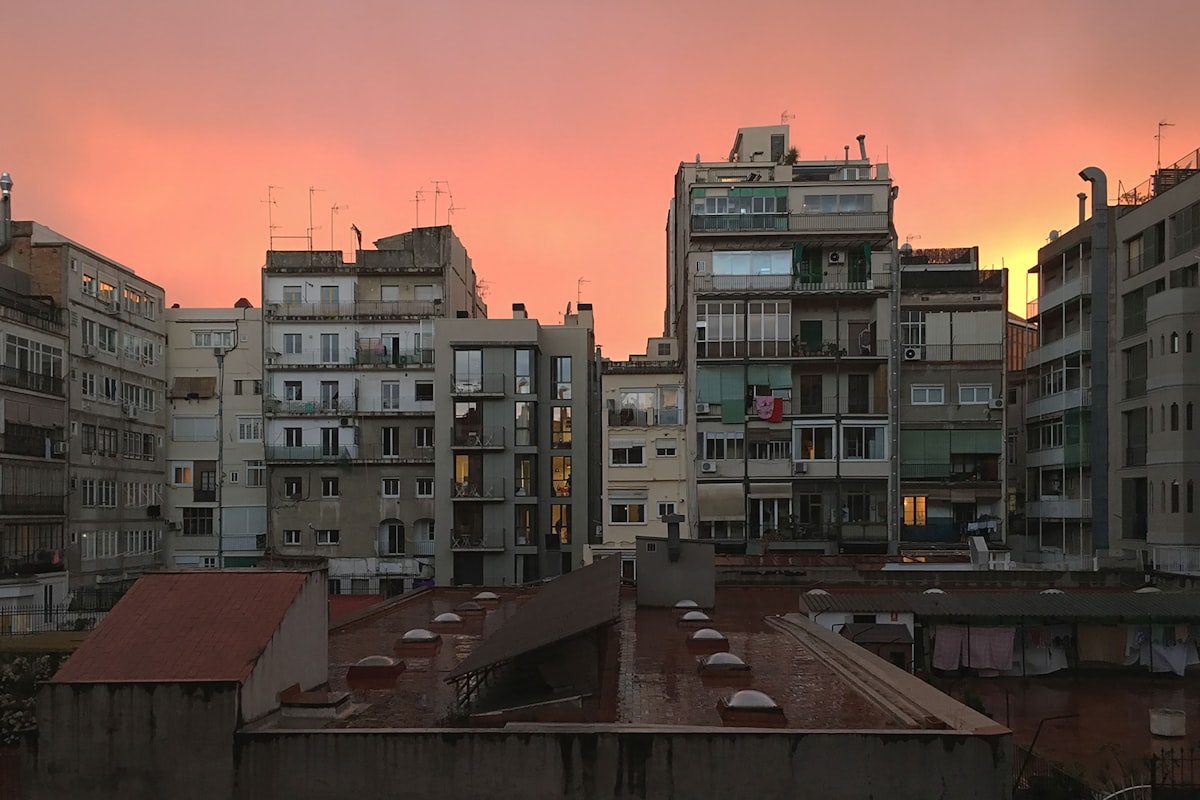
Barcelona
Spain
A Mediterranean city that runs on architecture, food markets, and beach culture — with a tourism problem that makes timing absolutely critical.
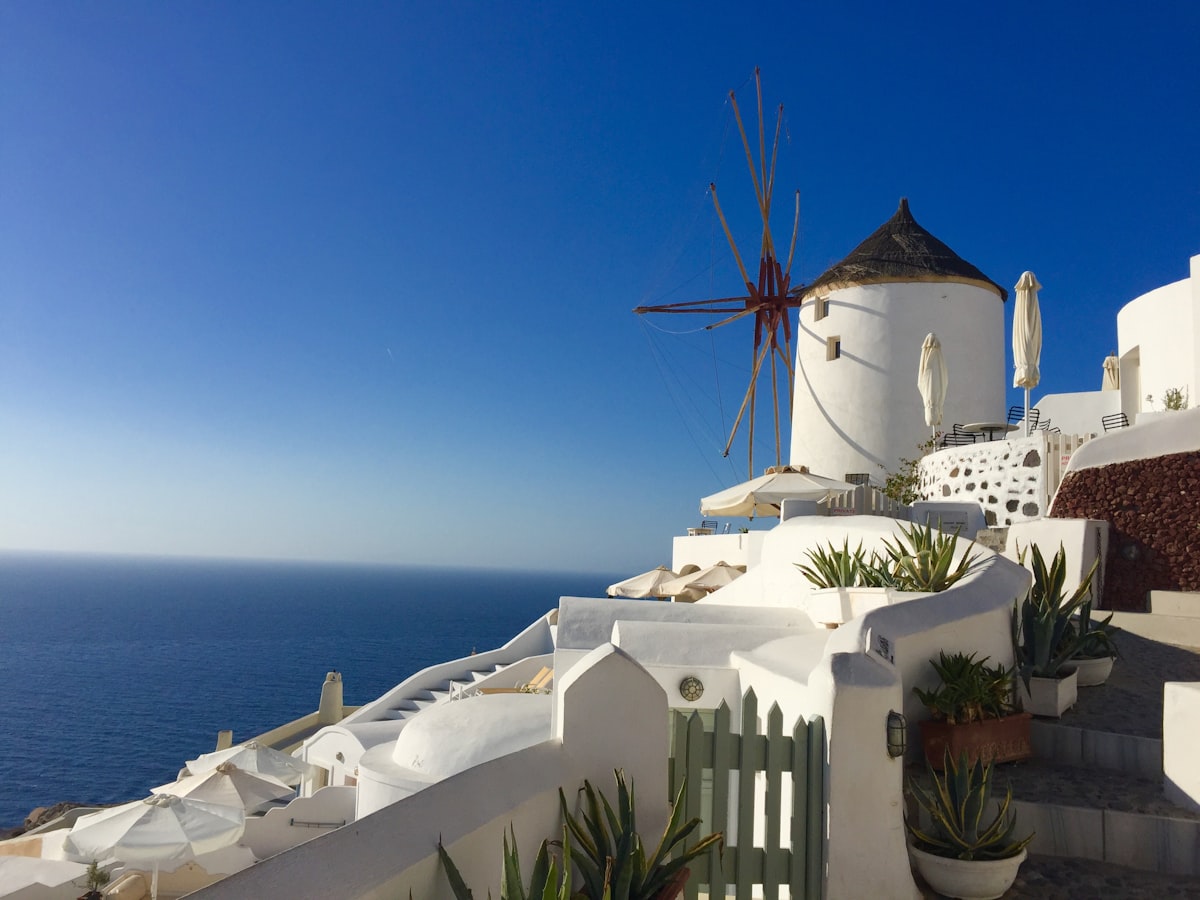
Santorini
Greece
The caldera sunsets and white-washed cliffside villages are real — but so is a tourism infrastructure that was never designed for 3 million annual visitors.
Worth knowing
May scores highest overall. July is the most crowded month — avoid if you can. See crowd-free ranking →
Month by month breakdown
January#8▾
Gains
- ↑Accommodation and restaurants in January are at rock-bottom prices — expect to pay 40–60% less than July for the same room in Vernazza or Manarola. Many agriturismi offer special winter rates and the owners have time to actually talk to you.
- ↑The five villages revert to their fishing-town character. The waterfront bars in Monterosso and the enotecas in Riomaggiore are full of locals, not day-trippers. You can walk the Via dell'Amore and not pass another tourist for an hour.
- ↑Sciacchetrà wine tastings at local cantinas are available by appointment — something nearly impossible to arrange in summer. The vineyards are dormant but the wine is excellent, and producers will take you through the terraced hillsides with no waiting list.
Sacrifices
- ↓The coastal trails — including the famous Sentiero Azzurro between the villages — are frequently closed in winter due to erosion, rock slides, and maintenance. The 2011 floods that devastated Vernazza and Monterosso led to major restrictions; trail closures here are not bureaucratic caution but genuine safety measures.
- ↓Cold, grey, and often wet: 92mm of rain across the month, frequently arriving as persistent drizzle rather than dramatic storms. The Riviera loses its colour.
February#6▾
Gains
- ↑The first signs of spring appear in the terraced vineyards above Vernazza and Corniglia — almond trees blossom in late February against the backdrop of the coastal hills. The landscape is genuinely beautiful and you will share it with almost no one.
- ↑Carnival (Carnevale) in the local towns around La Spezia adds a brief flash of colour and community celebration to an otherwise quiet period. The villages hold small local events with none of the commercial noise of peak season.
- ↑Hotels in Vernazza and Manarola that would be fully booked nine months in advance in summer are available on short notice. Prices are at their floor — a seafront room in Manarola costs a fraction of its August rate.
Sacrifices
- ↓The Sentiero Azzurro trail remains largely closed or restricted in February. The stretch between Monterosso and Vernazza — the most dramatic section — is particularly prone to closures following winter rain.
- ↓The Mediterranean light that makes Cinque Terre photography iconic is largely absent: overcast skies predominate and the sea is grey-green rather than turquoise.
March#5▾
Gains
- ↑The terraced vineyards above all five villages begin to show new growth in March and the lemon and citrus orchards are in blossom. The hillside walks that avoid the coastal trail — notably the routes above Corniglia and Manarola — are fully open and offer the Cinque Terre landscape at its freshest.
- ↑Restaurant owners are happy to see visitors and will recommend dishes and take time with guests in a way that is simply impossible in summer. The focaccia at Frantoio Rolla in Monterosso, the anchovies from Vernazza — this food is always good, but March is when you can actually appreciate it.
- ↑Prices remain very low in early March, rising only slightly by Easter (if it falls late). Early bookers get excellent value for accommodation that will triple or quadruple in price by August.
Sacrifices
- ↓Rainfall is still significant at 88mm and the weather unreliable — a March trip should be planned around hiking and village exploration rather than a beach holiday. The Ligurian coast in early spring does not deliver swimming or sunbathing.
- ↓The main coastal trail (Sentiero Azzurro, Via 2) remains largely closed or restricted depending on the previous winter's erosion. Check the Parco Nazionale delle Cinque Terre website for current trail status before booking.
April#4▾
Gains
- ↑By April the Sentiero Azzurro sections are progressively reopening and the famous blue footpath from Monterosso to Riomaggiore becomes hikeable (check sections, as partial closures remain common). The coastal landscape with new spring growth is at its most photogenic.
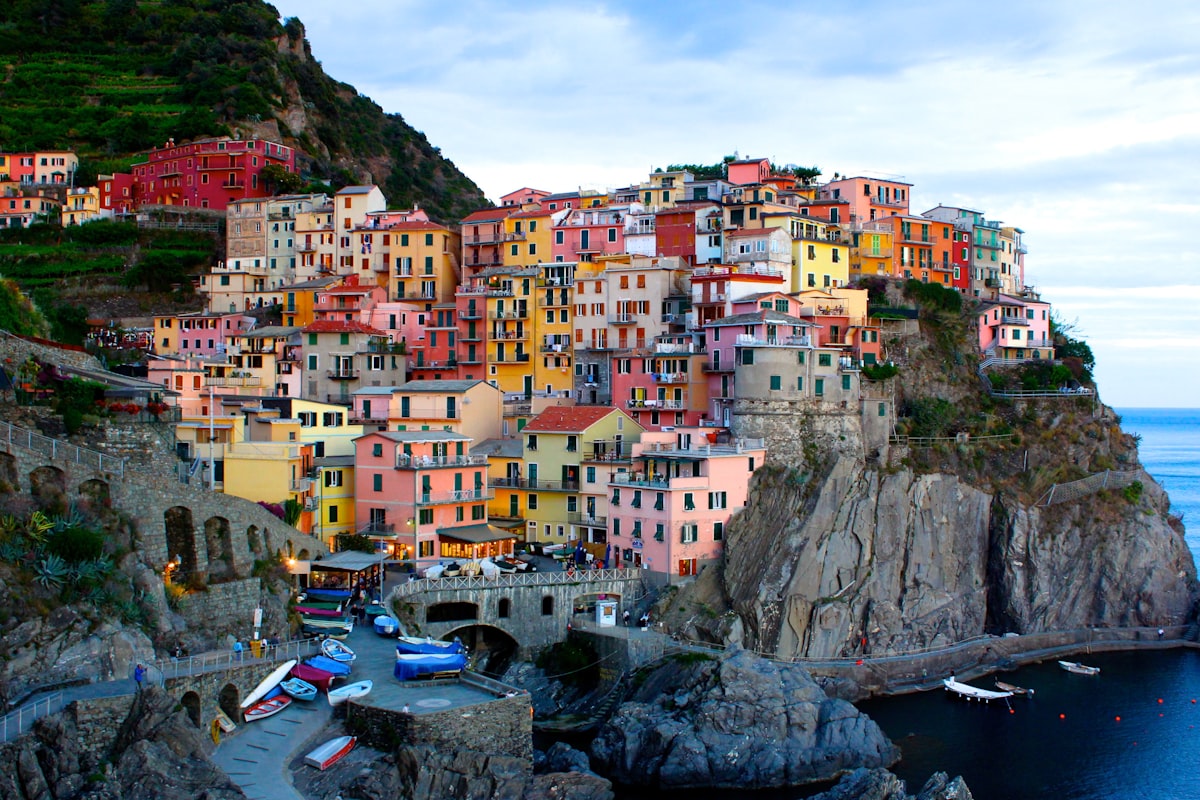
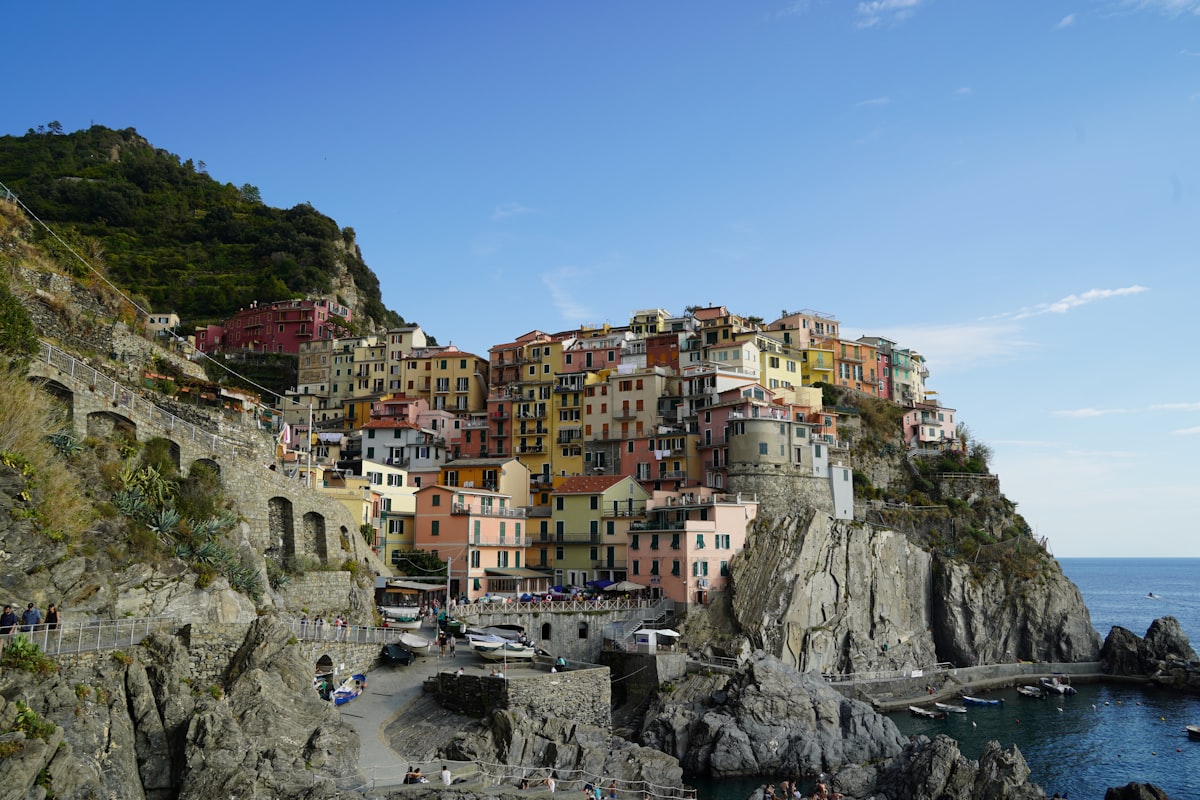
- ↑Sea temperatures are still too cold for swimming but the colour of the water is already the iconic Ligurian blue-green. The late afternoon light on the painted houses in Manarola and Riomaggiore is the postcard image of Cinque Terre.
- ↑Prices are significantly below summer levels. Easter week is the exception — the villages fill sharply between Good Friday and Easter Monday — but outside the holiday, April is still genuinely affordable.
Sacrifices
- ↓Easter is now the first mass-tourist event of the year. The Cinque Terre Nazionale Park reports that Easter weekend can bring crowds that approach (though do not equal) the summer peak. Day-trippers from Florence and Milan arrive by the trainload. If your dates fall on Easter, plan to visit the villages early — before 10am — or late afternoon.
- ↓The weather in April is pleasant but variable: 76mm of rain means multiple disrupted days, and the sea is too cold for more than a brief wade.
May#1▾
Gains
- ↑May is the month that regular Cinque Terre visitors and the Italian tourism industry alike consider the sweet spot. Temperatures hit 21°C in the warmth of the day; the sea turns properly blue and swimmable by late May; the coastal trail between all five villages is fully open for the first time of the year. The light is warm and golden, mornings smell of wildflowers and salt air, and the grape vines are in new leaf on the terraces above.
- ↑Crowds are present but manageable. Vernazza and Manarola fill between 11am and 4pm with day-trippers, but they are navigable in a way that July and August are not. Book restaurants for 8pm rather than 7pm and you will find the villages genuinely pleasant. The Osteria Frantoio in Monterosso and Dau Cila in Riomaggiore can still be walked into without a week's reservation.
- ↑Prices sit roughly 25–30% below the July peak — the same quality of seafront room in Vernazza costs meaningfully less and is bookable with reasonable notice. The Cinque Terre card covering trails and local trains is available without queuing.
Sacrifices
- ↓Weekend day-tripper trains from Florence and La Spezia already bring volume that can make the villages feel crowded between 11am and 3pm on Saturdays and Sundays. The Sentiero Azzurro at its most popular points (between Vernazza and Monterosso) can see several hundred walkers per hour on clear weekend days.
- ↓Accommodation should ideally be booked 2–3 months ahead — the best rooms in Vernazza and Manarola are sought after. Last-minute May availability is often poor quality or poorly located.
June#9▾
Gains
- ↑The weather in June is superb: 25°C highs, almost no rain, and the sea at a genuinely swimmable 22°C. Monterosso's beach — the only proper sandy beach in the five villages — is busy but beautiful, and the snorkelling off the rocks at Punta Mesco is excellent.
- ↑The Festival del Folklore di Monterosso and other small village events bring live music and local food to the piazzas in the evenings. June evenings in Vernazza with a glass of Sciacchetrà and anchovies on the harbour wall are genuinely special.
- ↑The coastal trail is fully open and at its most scenic. The high path between Corniglia and Vernazza (Sentiero 6) offers views over the entire coastline with fewer walkers than the main trail.
Sacrifices
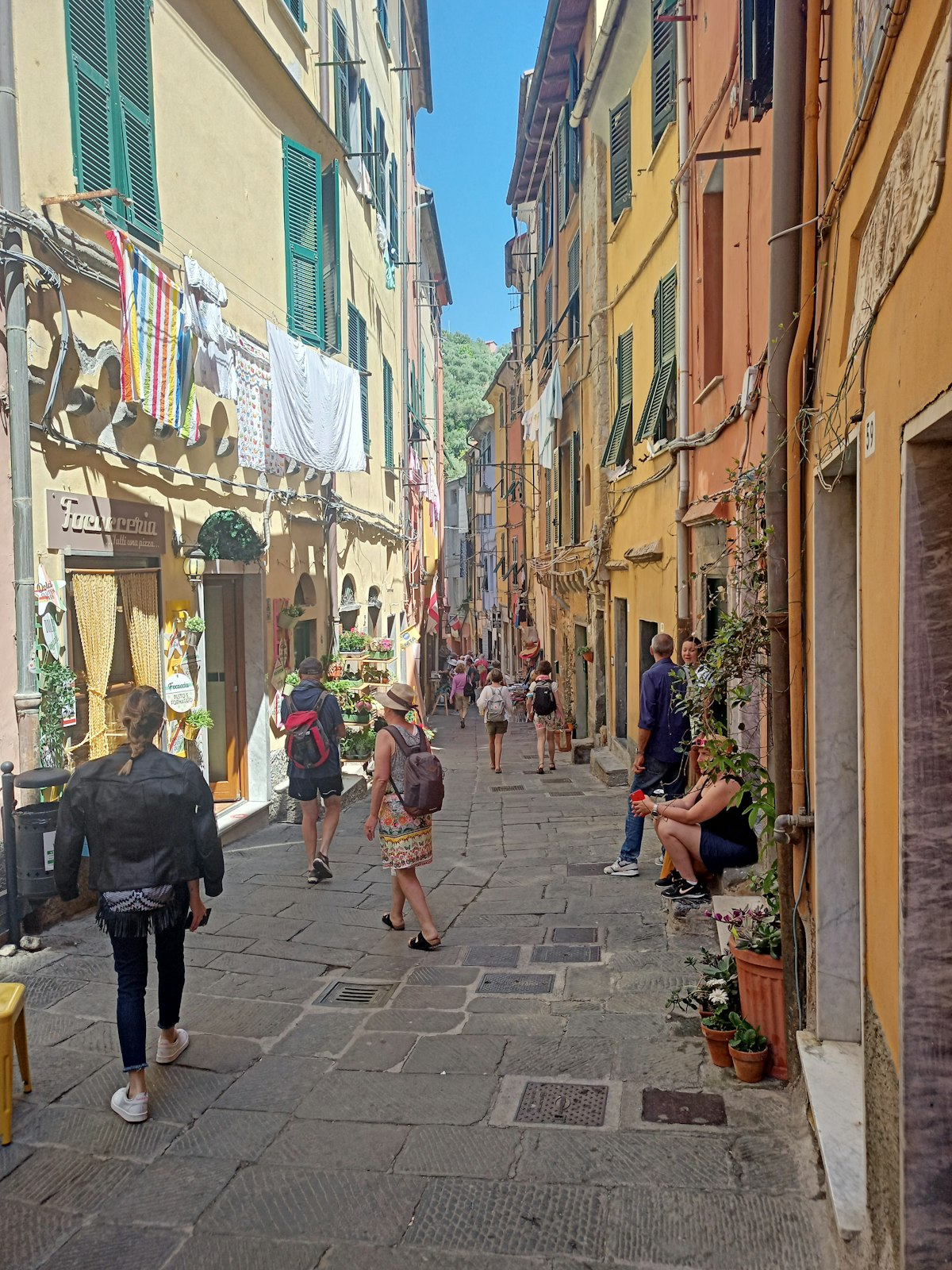
- ↓June marks the beginning of the serious cruise ship season. On days when two or three ships dock in La Spezia simultaneously, several thousand passengers transfer to the villages by Cinque Terre Express trains. The narrow caruggi alleys of Vernazza and Riomaggiore become shoulder-to-shoulder during peak arrival windows (10am–2pm). This is not an exaggeration — the park authority has trialled entry caps.
- ↓Prices in June are substantially above shoulder season. A good room in Vernazza that costs €120 in March costs €200+ in June, and the most sought-after properties are booked solid from the previous autumn.
July#11▾
Gains
- ↑The weather itself is genuinely excellent: 28°C, almost no rain, long evenings, and a warm sea. Arriving in a village at 7am before the day-trip trains from La Spezia is revelatory — the empty caruggi, the fishing boats returning, the bread from the forno still warm. The problem is entirely the hours between 10am and 5pm.
- ↑Monterosso beach at dawn or post-6pm is one of the Riviera's finest — golden sand, clear water, and dramatic rocky headlands. Book an early dinner reservation (6:30pm) before the crowds start to thin.
Sacrifices
- ↓July brings the Cinque Terre crowd problem to its peak. The national park has recorded over 3,000 visitors per hour on the Monterosso–Vernazza trail section in July. The villages of Vernazza (population: 800) and Manarola (population: 350) can see 10,000+ day-trippers on a single Saturday. The atmosphere in the core villages between 11am and 4pm is that of a crowded theme park exit: queues for gelato, traffic jams on the walking path, and restaurants under enormous pressure.
- ↓Accommodation prices are at their peak and availability is minimal unless booked many months ahead. Even modest rooms cost top-season prices. The quality-to-price ratio is the worst of the year.
- ↓The heat in July — 28°C on the exposed coastal trail — combined with the crowds makes the walk between villages genuinely unpleasant and occasionally dangerous for those not accustomed to hiking in heat.
August#12▾
Gains
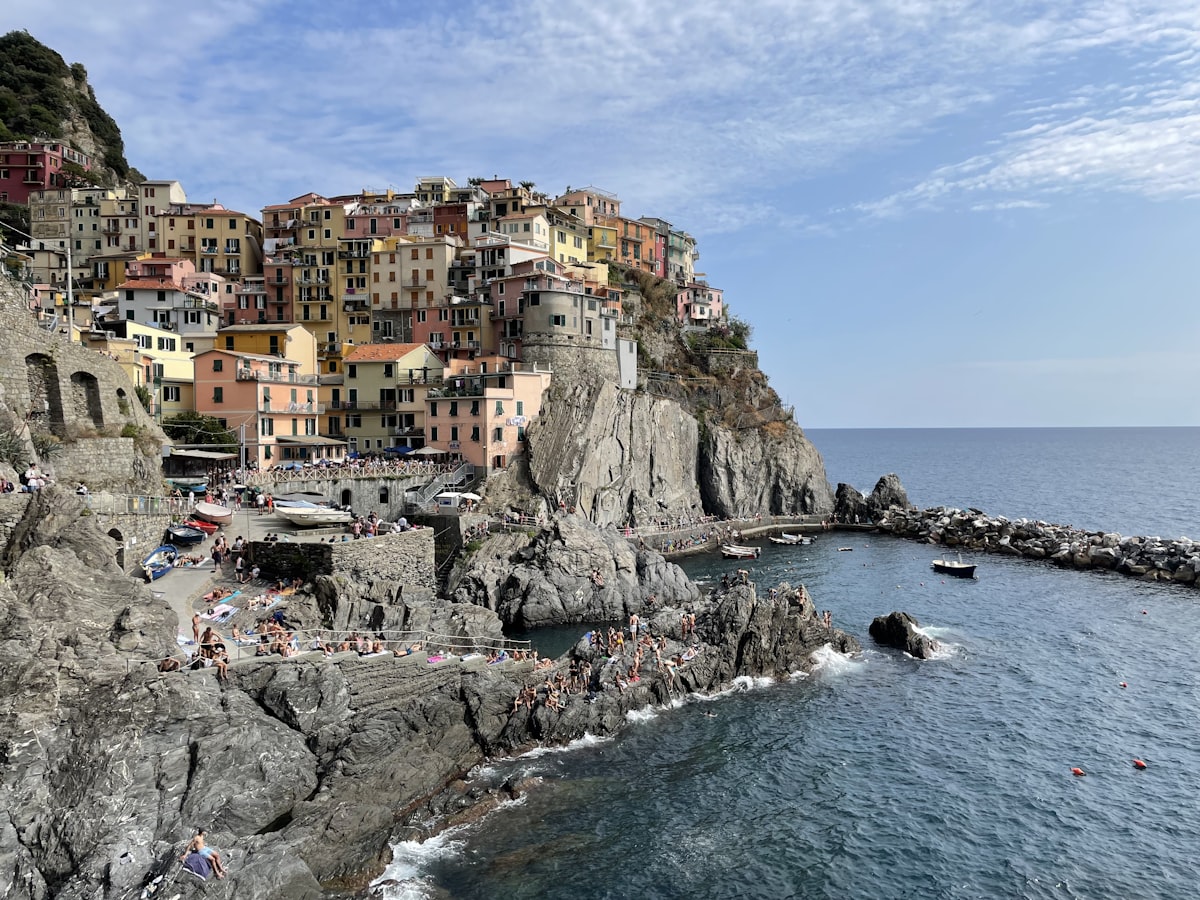
- ↑The sea temperature in August peaks at around 25°C — warm enough for long swims without wetsuits, and the water clarity off the rocks at Manarola for snorkelling is at its best. If you are staying in the villages themselves (not day-tripping) and are willing to be out before 9am and after 6pm, the early morning and evening atmosphere can still be magical.
- ↑August 15th Ferragosto brings local processions and celebrations in all five villages — a rare moment when local tradition cuts through the tourist noise.
Sacrifices
- ↓August is by most measures the worst month to visit Cinque Terre if you have any flexibility. Ferragosto (August 15) and the surrounding fortnight coincide with the Italian national holiday — domestic Italian tourists join the international cruise ship crowds. The park authority has discussed (and partially implemented) daily visitor caps and mandatory booking for the Sentiero Azzurro.
- ↓Accommodation must be booked six months or more in advance for any room of quality. Many hotels in Vernazza and Manarola are fully committed by November of the previous year. Prices are at their peak — a room that costs €100 in winter costs €280+ in August.
- ↓The heat is significant: 29°C on exposed cliff trails with the reflected heat from the stone walls of the caruggi creates genuine discomfort. Heatstroke among day-trippers who underestimate the trail is reported annually.
September#2▾
Gains
- ↑September is the second of Cinque Terre's two recommended windows (alongside May) and arguably the more atmospheric. The vendemmia — grape harvest — begins in the steeply terraced vineyards above all five villages from mid-September. This is a working landscape with a 2,000-year history, and watching the funicular carts hauling grapes down the cliff-face paths above Manarola is one of the most genuinely distinctive sights in Italy.
- ↑The day-tripper crowds thin meaningfully after the first weekend of September as European school holidays end. The villages return to something approaching normality — Vernazza's piazza has space to breathe, the restaurants take walk-in tables again, and the trail has room to pass without queuing. It is not empty, but the difference from August is dramatic.
- ↑The sea is at its warmest (24–25°C) and is swimmable well into late September. The light on the painted houses in the late afternoon is warmer and more golden than in summer. Prices drop 20–30% from peak levels while the quality of the experience increases substantially.
Sacrifices
- ↓Early September — particularly the first two weekends — can still see heavy day-tripper volumes as the summer tail extends. The real relief comes from around September 10th when schools reopen across Europe.
- ↓Rainfall returns in September (62mm) and can arrive as brief but dramatic afternoon thunderstorms. A single heavy storm can temporarily close sections of the coastal trail. Keep evening plans flexible.
October#3▾
Gains
- ↑October in Cinque Terre has a strong local following for good reason. The crowds are at their lowest since May, the villages are genuinely themselves again, and the autumn colours on the vine-covered terraces give the landscape a different but equally compelling beauty. The Sagra del Limone and local harvest festivals bring genuine community life to the piazzas.
- ↑October is the best month for food. The anchovies that define Ligurian cooking are at peak season — acciughe al limone, pasta al pesto from local basil, farinata from the wood-fired ovens in La Spezia. Restaurant owners have time and enthusiasm again. Prices are very reasonable: 30–40% below summer peak.
- ↑The sea is still swimmable in early October (22°C) and the coastal trail is open. Morning light with autumn mist over the bay is one of the most dramatic photographic conditions of the year.
Sacrifices
- ↓October's 105mm of rainfall is the primary concern — it typically comes in concentrated multi-day events rather than daily showers, so you can have a wonderful stretch and then three wet days in a row. The coastal trail can close temporarily after heavy rain due to erosion and mud. Check conditions daily.
- ↓The sea cools quickly in October and swimming is becoming marginal by the end of the month. The evenings are noticeably cooler — bring a proper layer for after dark.
November#10▾
Gains
- ↑Prices plummet in November — some of the best accommodation in Vernazza and Manarola offers winter rates that represent extraordinary value. Many guesthouses close, but those that remain are genuinely welcoming and unhurried.
- ↑The fishing village character of the five communities reasserts itself completely. The bar in Riomaggiore's harbour, the olive oil pressing in November and December, the cats on the steps — this is the life the place was built around, not the tourist economy. If the authentic character of an Italian coastal village is your goal, November delivers it.
Sacrifices
- ↓November is the wettest month of the year: 140mm of rain, frequently arriving as prolonged heavy downpours. The Cinque Terre region's notorious vulnerability to flooding — most dramatically demonstrated by the October 2011 catastrophe that killed 13 people and buried Vernazza in three metres of mud — means that heavy November rain triggers legitimate concern. The main coastal trail is closed for most of the month.
- ↓Many restaurants, bars, and hotels close for the off-season. The villages are not ghost towns, but visitors should research what is open before booking. The experience requires genuine flexibility.
December#7▾
Gains
- ↑December in Cinque Terre has a loyal niche following based on the presepe (nativity scene) traditions. Manarola's hillside presepe is one of the most photographed in Italy — hundreds of illuminated figures arranged across the cliff face above the village. It runs from early December through Epiphany (January 6) and is genuinely beautiful, especially on clear nights.
- ↑Outside the Christmas week, the villages are extraordinarily quiet. Prices are among the lowest of the year. The quality of winter light on clear days — when it appears — is remarkable: low angle, warm, and exceptional for photography.
- ↑A small number of local restaurants and enoteche remain open and make time for lingering meals of Ligurian winter cooking: stockfish, trofie al pesto with the season's olive oil, and Sciacchetrà with local cheese.
Sacrifices
- ↓The weather in December is cold and grey for most of the month. Coastal trails remain largely closed. Swimming is out of the question. The experience is entirely about the villages themselves, not the landscape or outdoor activities.
- ↓Christmas week brings a brief, concentrated surge of Italian day-trippers (similar to Easter) to see the Manarola presepe. The period December 23–27 can be surprisingly busy for what is otherwise an empty month.
How this is calculated
Climate data
Open Meteo ERA5
30-year normals (1991–2020). Temperature, rainfall, sunshine, humidity.
Price & crowd
Tourism research
Seasonal pricing from tourism authority data. Directional — compares months within a destination only.
Personalisation
Weighted scoring
Your priorities change the weights. Budget-first users get different results than weather-first users.
Share this result
May is the best time to visit Cinque Terre
Travel timing updates
New destinations and timing guides, when they land.
No spam. Unsubscribe anytime.