Showing: Dec · Unsplash / Unsplash
India · Asia Pacific
Best time to visit Kerala
December
Dec scores highest overall — reliable weather and strong local atmosphere. Set your priorities below to personalise this result.
What matters most to you?
All 12 months — click any to expand
Dec
Unsplash / Unsplash
The Kochi-Muziris Biennale opens and peak season begins — Kerala's most vibrant month.
31°C
High
22°C
Low
36mm
Rain
8h
Sun/day
What you gain
- ↑The Kochi-Muziris Biennale opens in December — its opening weeks draw the international art world to Fort Kochi, creating an atmosphere unlike any other event in India. The installations occupy the Aspinwall House heritage compound, Baker's Bungalow, and Pepper House; the quality of international participation has grown each edition since 2012.
- ↑December's weather is essentially perfect: 31°C days, cool evenings at 22°C, virtually no rain, low humidity, and the backwaters glassy and still. Christmas celebrations in Kerala — a state with one of India's largest Christian populations — are genuinely festive, particularly in Kottayam and Fort Kochi's Santa Cruz Cathedral.
- ↑The full menu of Kerala experiences is available simultaneously: houseboats, beach resorts, hill stations, wildlife, and the cultural calendar are all operating at peak quality and reliability.
What you sacrifice
- ↓December is expensive and fills fast. The Biennale opening, Christmas week, and New Year's Eve command premium pricing: a mid-range houseboat that costs ₹8,000 in September costs ₹22,000 in December. New Year's Eve in particular triggers surge pricing across all properties.
- ↓Popular itinerary combinations — Fort Kochi plus Alleppey houseboat plus Munnar — require booking 6–8 weeks in advance for December travel. Last-minute travel in December can result in a truncated, expensive experience.
Dec scores highest overall — reliable weather and strong local atmosphere. Set your priorities below to personalise this result.
Dec
The Kochi-Muziris Biennale opens and peak season begins — Kerala's most vibrant month.
31°C
High
36mm
Rain
8h
Sun
- ↑The Kochi-Muziris Biennale opens in December — its opening weeks draw the international art world to Fort Kochi, creating an atmosphere unlike any other event in India. The installations occupy the Aspinwall House heritage compound, Baker's Bungalow, and Pepper House; the quality of international participation has grown each edition since 2012.
- ↑December's weather is essentially perfect: 31°C days, cool evenings at 22°C, virtually no rain, low humidity, and the backwaters glassy and still. Christmas celebrations in Kerala — a state with one of India's largest Christian populations — are genuinely festive, particularly in Kottayam and Fort Kochi's Santa Cruz Cathedral.
- ↑The full menu of Kerala experiences is available simultaneously: houseboats, beach resorts, hill stations, wildlife, and the cultural calendar are all operating at peak quality and reliability.
- ↓December is expensive and fills fast. The Biennale opening, Christmas week, and New Year's Eve command premium pricing: a mid-range houseboat that costs ₹8,000 in September costs ₹22,000 in December. New Year's Eve in particular triggers surge pricing across all properties.
- ↓Popular itinerary combinations — Fort Kochi plus Alleppey houseboat plus Munnar — require booking 6–8 weeks in advance for December travel. Last-minute travel in December can result in a truncated, expensive experience.
Top travel windows
★ BestDecember
Best overall
Highest combined score
31°C
High
36mm
Rain
8h
Sun
July
Best for value
Lowest prices & fees
29°C
High
580mm
Rain
2.2h
Sun
July
Fewest crowds
Quietest month
29°C
High
580mm
Rain
2.2h
Sun
Breakdown by priority
Best for weather
December
31°C high · 36mm rain · 8hrs sun/day
Best for budget
July
The backwaters of Alleppey are transformed in July: hyacinth blooms cover stretches of the canals, the rice fields on either side turn a vivid monsoon green, and the entire landscape achieves an otherworldly saturated beauty that no other season can replicate. For photographers and writers specifically seeking the monsoon, this is the month.
Fewest crowds
July
Kochi's Fort Kochi and Mattancherry neighbourhoods function normally through rain — the Portuguese-era houses, the Jewish synagogue (India's oldest), and the Kerala Folklore Museum are all accessible and essentially empty of foreign tourists.
Worst time to visit
July, June
July's rainfall average of 580mm makes outdoor movement challenging. Road conditions in the Western Ghats deteriorate significantly, with landslides an annual occurrence on routes to Munnar and Thekkady. The Kerala State Disaster Management Authority issues regular advisories.
Where to base yourself in Kerala
All regions →Fort Kochi
Kerala's colonial masterpiece — Portuguese churches, Chinese fishing nets, and the Kochi-Muziris Biennale.
6/10
Central
9/10
Walk
5/10
Transit
Alleppey (Alappuzha)
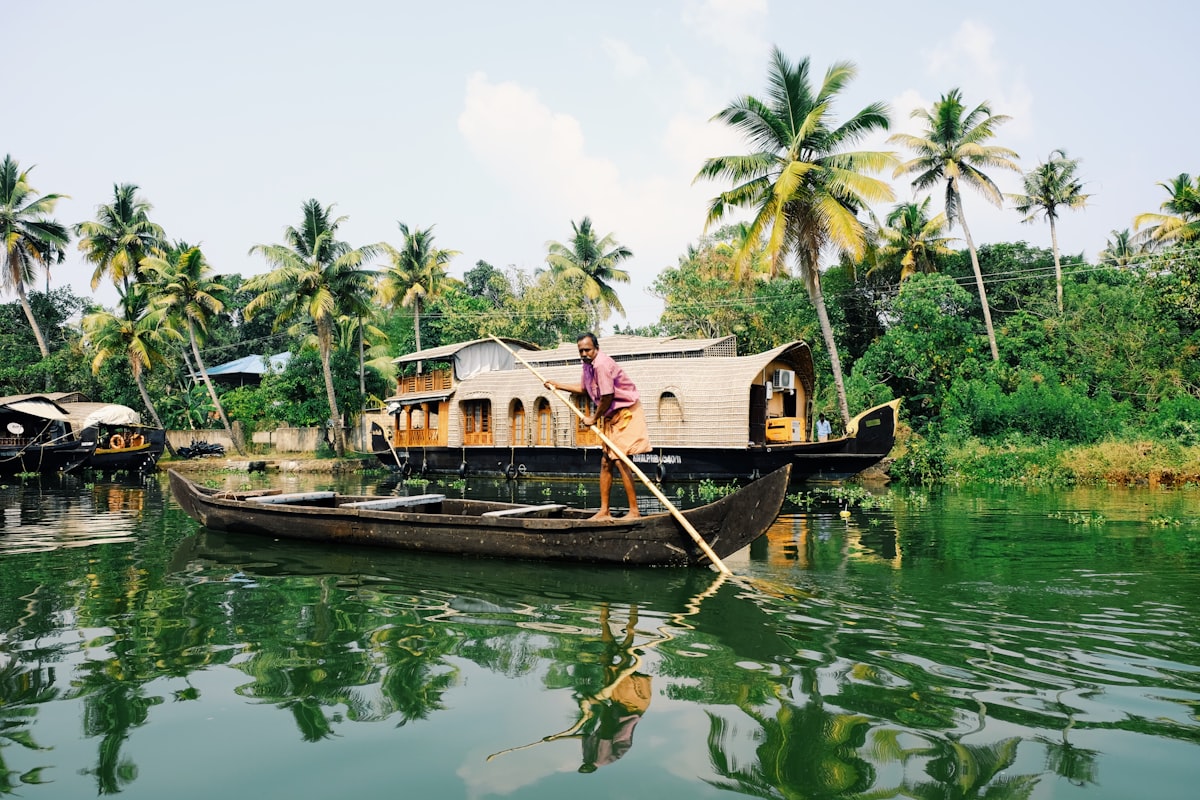
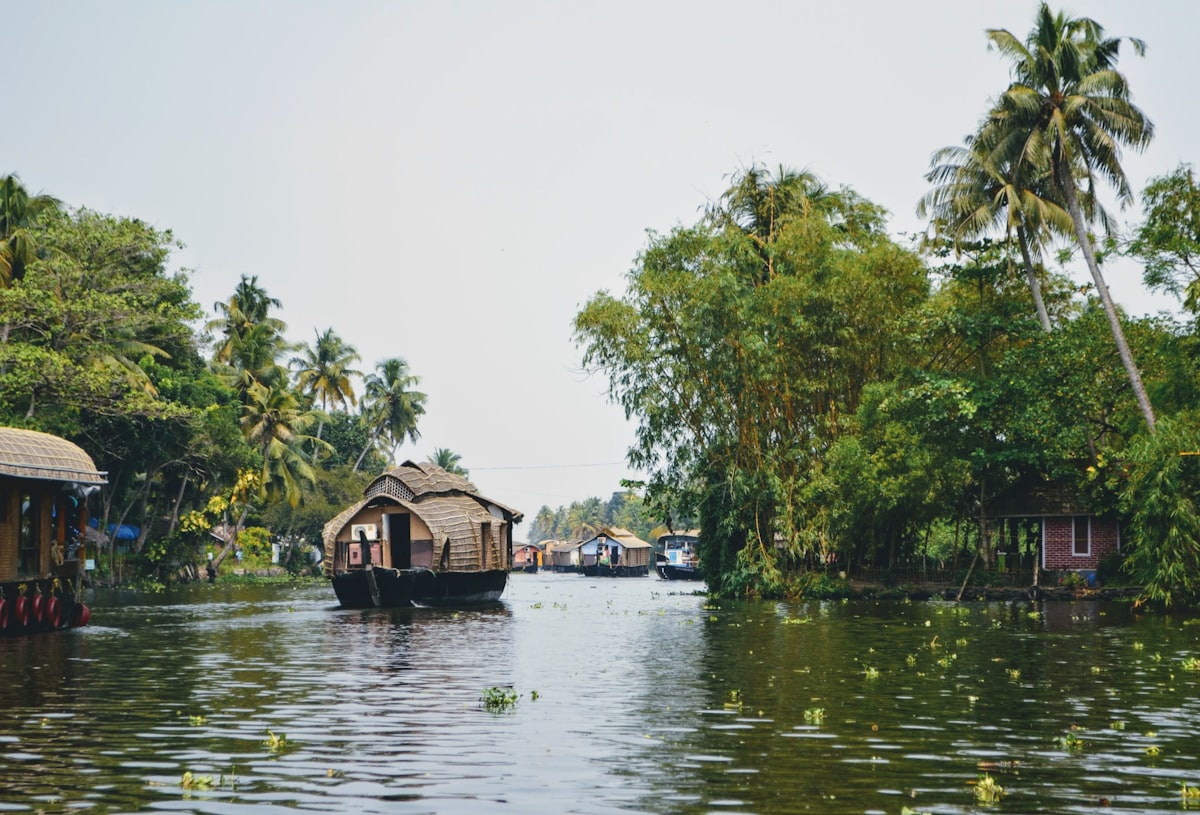
The houseboat capital of India — 1,900km of interconnected backwaters accessible from one town.
4/10
Central
6/10
Walk
5/10
Transit
Also exploring

Tokyo
Japan
A city of dramatic seasonal contrasts — cherry blossom crowds, oppressive summer humidity, and golden autumn foliage — where the wrong timing can make or break the trip.
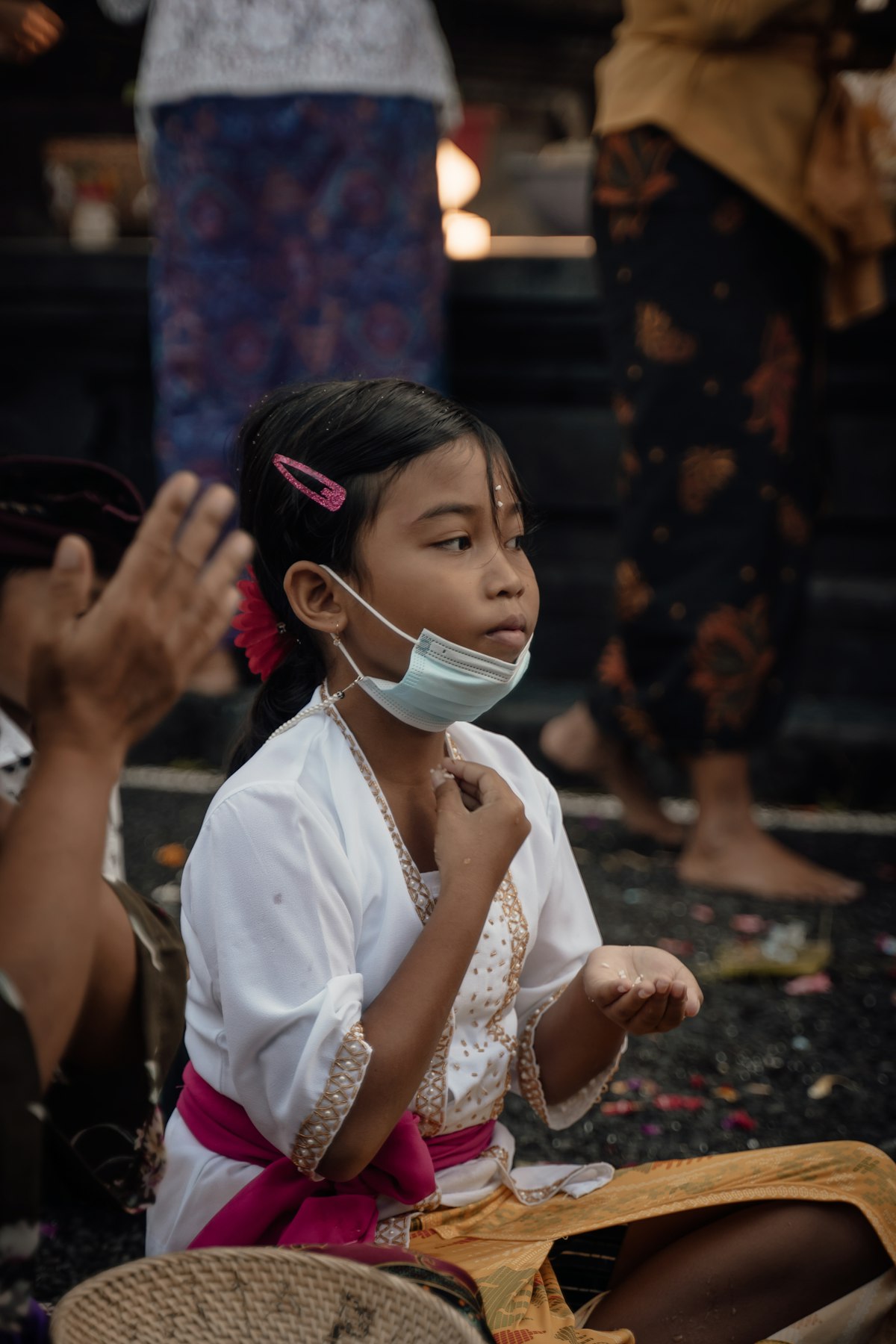
Bali
Indonesia
A Hindu island of rice terraces, temple ceremonies, and surf breaks where the monsoon makes timing genuinely binary — the difference between dry and wet season is not subtle.

Maldives
Maldives
A destination defined almost entirely by its monsoon calendar — the difference between the NE dry season (November–April) and SW wet season (May–October) is not subtle and shapes every aspect of the experience.
Month by month breakdown
January#3▾
Gains
- ↑January is Kerala's finest month for weather: 31°C days with a cool 22°C at night, virtually no rain, and low humidity by Kerala standards. The backwaters of Alleppey are at their most navigable, and the Western Ghats tea roads through Munnar are clear and luminous.
- ↑The Kochi-Muziris Biennale — Asia's largest contemporary art festival — runs December through March in the colonial streets of Fort Kochi. The installations spread across Portuguese-era warehouses, churches, and pavilions; entry is free and the quality rivals major European biennales.
- ↑Houseboat rates are high but availability is at its best organised peak: operators are reliable, routes are optimised, and the backwater canal network from Alleppey to Kumarakom is at its photogenic best.
Sacrifices
- ↓January is Kerala's most expensive month. Houseboat charters run ₹12,000–25,000 per night for a standard two-bedroom vessel; Ayurveda resort rates in Kovalam and Varkala peak alongside. Budget accommodation in Fort Kochi books out weeks in advance.
- ↓The crowds at Fort Kochi's Biennale and at the Alleppey backwater jetties can be significant. Popular beach resorts at Kovalam and Varkala fill with European winter-sun seekers.
February#4▾
Gains
- ↑February continues Kerala's golden season with minimal rainfall and excellent beach conditions at Kovalam and Varkala. The Arabian Sea is calm for catamaran rides and kayaking through the coastal lagoons south of Thiruvananthapuram.
- ↑The Kochi-Muziris Biennale runs through early March — February visitors catch the final weeks when some site-specific works are fully installed and school holiday crowds from January have eased slightly.
- ↑Munnar's tea estates are at their clearest: the mountain roads through Rajamala and Top Station offer views across the Western Ghats with no monsoon mist obscuring the valley panoramas.
Sacrifices
- ↓Prices remain at peak across all categories — this is Kerala's high season. Ayurveda resort packages (Somatheeram and Nikki's Nest near Kovalam) require 2–3 weeks advance booking for any quality property.
- ↓February is growing hotter than January: 32°C in the afternoon with coastal humidity that can feel oppressive in direct sun. Midday is better spent indoors or on the water.
March#5▾
Gains
- ↑March marks the end of peak season and the beginning of a genuine value window. Hotels start offering 20–30% discounts from February rates while the weather remains largely excellent — dry, sunny, and navigable across all regions.
- ↑The Biennale closes in early March but Fort Kochi retains its creative energy: the gallery spaces established during the festival remain open, and the streets of Mattancherry have a quieter, more explorable quality once tourist numbers ease.
- ↑March is ideal for wildlife at Periyar Tiger Reserve in Thekkady: the dry conditions bring animals closer to the lake shore, and jeep safaris through the buffer zone offer good visibility into the spice plantations.
Sacrifices
- ↓Temperatures are climbing fast: 33°C by afternoon with rising humidity as the pre-monsoon period approaches. Outdoor activities in Munnar and hill-station areas remain pleasant but the coast feels increasingly sticky.
- ↓A few light rain showers can arrive from mid-March — nothing significant but enough to remind travellers the monsoon cycle is on its way.
April#6▾
Gains
- ↑April's Vishu festival (Kerala New Year, mid-April) offers a glimpse of authentic local celebration rarely observed by tourists. Temples across the state host elaborate rituals, and the festival spread (vishukkaineettam, kani flowers) is a genuine cultural experience in smaller towns away from the tourist circuit.
- ↑Accommodation prices are 40–50% below January peaks with wide availability. Ayurveda retreats that are booked solid in January offer walk-in availability; the therapeutic Panchakarma programmes benefit from the transitional seasonal timing endorsed by traditional practitioners.
- ↑Late April sees preparations building for the Thrissur Pooram — the world's most spectacular elephant festival — creating an electric atmosphere around Thrissur city as caparisoned elephants are assembled and percussion orchestras rehearse.
Sacrifices
- ↓April is hot and increasingly humid: the pre-monsoon air feels thick, especially in the coastal lowlands. Outdoor exploration of Fort Kochi and Alleppey requires early morning starts and afternoon rest.
- ↓Rainfall picks up significantly through the month — not yet the monsoon, but April showers can disrupt houseboat trips and beach time on the Arabian Sea coast.
May#2▾
Gains
- ↑The Thrissur Pooram (typically late April to mid-May) is one of the most extraordinary spectacles on Earth: 30 caparisoned elephants face off in two processions at Vadakkunnathan Temple, accompanied by percussion orchestras (melam) of over 100 musicians, elaborate parasol displays, and fireworks that begin at 3am and continue until dawn. No other festival in India — or possibly the world — produces this combination of scale and spectacle.
- ↑Outside Thrissur, Kerala's off-season means lowest prices across the board. Houseboat operators drop rates by 50–60%, Ayurveda retreats offer multi-week package discounts, and hotel inventory is plentiful. This is the month to experience luxury properties at budget prices.
- ↑Kathakali dance performances — Kerala's 500-year-old classical dance-drama tradition — run most evenings in Kochi at Kerala Kathakali Centre near Fort Kochi for ₹400–600; in high season they sell out, but May offers walk-up availability.
Sacrifices
- ↓May is hot, humid, and increasingly wet as the southwest monsoon approaches Kerala's coast — Thiruvananthapuram typically receives the monsoon's first assault around June 1, meaning late May can deliver heavy preliminary rains. Outdoor beach time is essentially over.
- ↓The Thrissur Pooram aside, this is not an ideal sightseeing month. Munnar roads can become slippery as early rains begin, and the backwaters lose some of their scenic clarity under pre-monsoon cloud cover.
June#12▾
Gains
- ↑The Kerala monsoon is not simply bad weather — it is a natural phenomenon of extraordinary power. The smell of earth after the first rains, the sound of monsoon on tin roofs and coconut palms, the way the backwaters rise and fill: experienced travellers who have come specifically for the monsoon describe it as one of the most intense natural experiences in Asia. Marari Beach Resort and other boutique properties offer deep monsoon discounts.
- ↑Ayurveda practitioners consider monsoon the optimal season for Panchakarma treatments — the humidity opens pores and enhances oil absorption. High-quality retreats like CGH Earth's Kalari Kovilakom and SwaSwara offer the longest and deepest programmes during June–August at their lowest annual rates.
Sacrifices
- ↓June brings 628mm of rainfall — not consistently, but in dramatic, sustained deluges that can flood roads, close tourist sites, and make movement around the state genuinely difficult. Several backwater sections become impassable, and the Arabian Sea is too rough for beach use.
- ↓Tourist infrastructure operates at minimal capacity: some guesthouses close entirely, houseboat operators reduce their fleet, and Munnar roads can be blocked by landslides in severe years. This is not a month to plan a conventional sightseeing itinerary.
July#11▾
Gains
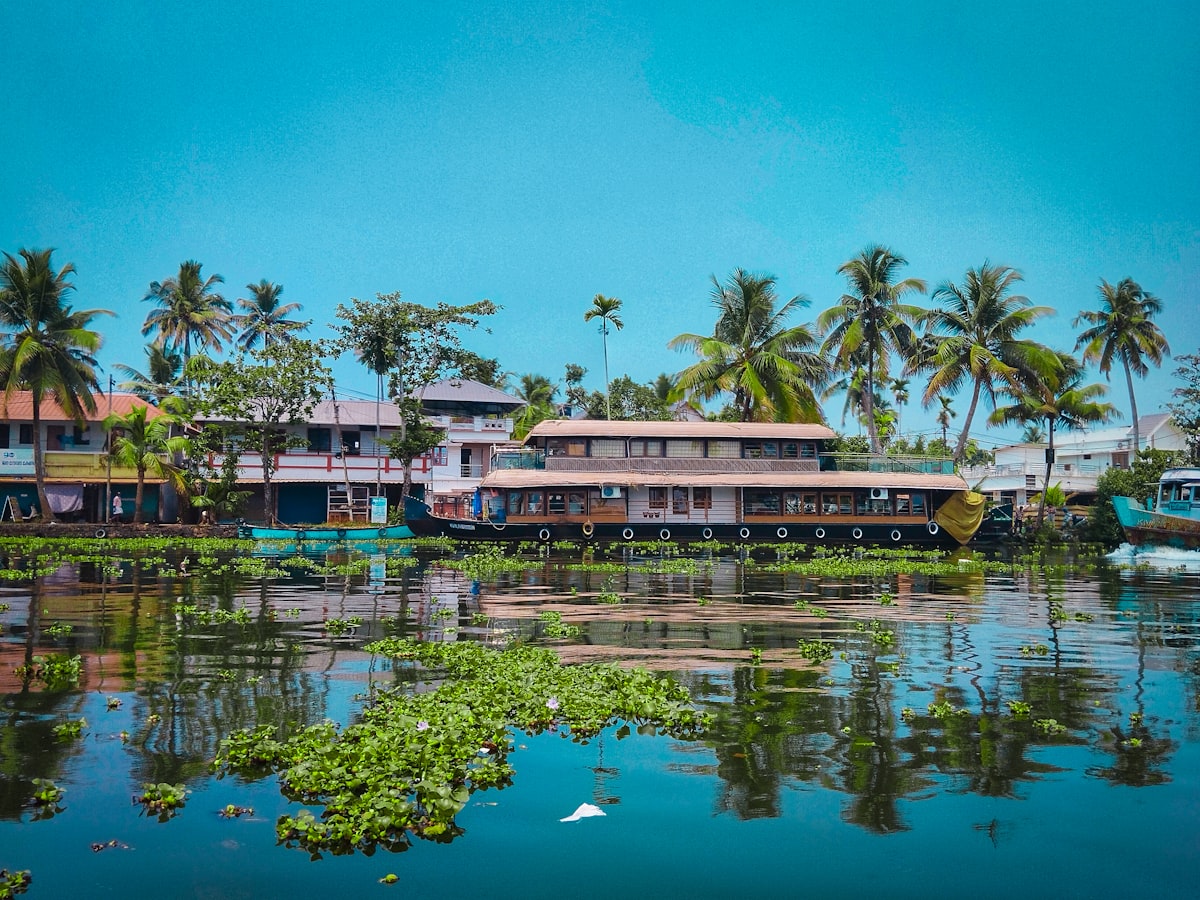
- ↑The backwaters of Alleppey are transformed in July: hyacinth blooms cover stretches of the canals, the rice fields on either side turn a vivid monsoon green, and the entire landscape achieves an otherworldly saturated beauty that no other season can replicate. For photographers and writers specifically seeking the monsoon, this is the month.
- ↑Kochi's Fort Kochi and Mattancherry neighbourhoods function normally through rain — the Portuguese-era houses, the Jewish synagogue (India's oldest), and the Kerala Folklore Museum are all accessible and essentially empty of foreign tourists.
Sacrifices
- ↓July's rainfall average of 580mm makes outdoor movement challenging. Road conditions in the Western Ghats deteriorate significantly, with landslides an annual occurrence on routes to Munnar and Thekkady. The Kerala State Disaster Management Authority issues regular advisories.
- ↓Houseboat operations are severely curtailed: most operators anchor their vessels during peak monsoon months rather than risk damage. The experience available in July is a fraction of the peak-season backwater circuit.
August#8▾
Gains
- ↑The Nehru Trophy Snake Boat Race on Punnamada Lake near Alleppey (second Saturday of August) is one of India's most spectacular sporting events: 100-oar snake boats (chundan vallam) powered by 100 rowers apiece race through cheering crowds lining the lakeshore. Tickets sell out months in advance but the atmosphere on the shores and bridges is free and electric.
- ↑Onam — Kerala's harvest festival — falls in August or September depending on the Malayalam calendar. The festival brings the state's entire cultural vocabulary together: elaborate pookalam flower carpets, the 26-course Onam Sadya feast served on banana leaves, Thiruvathira dance, and Pulikali (tiger dance) in Thrissur. It is the single best festival through which to understand Kerala's identity.
- ↑August sees the monsoon beginning to ease — 430mm compared to July's 580mm — and brief sunny windows open. The landscape is at its lushest possible state.
Sacrifices
- ↓Rain remains heavy and disruptive through August. Outdoor sightseeing is restricted to weather windows, and the Onam festival week (which drives enormous domestic tourism) fills buses and trains.
- ↓Flood risk remains real in low-lying areas around Alleppey and the backwater region — the 2018 Kerala floods occurred in August and caused catastrophic disruption. Modern flood-management has improved but the risk is structural, not historical.
September#9▾
Gains
- ↑The southwest monsoon begins retreating from Kerala in September, with the second half of the month offering increasingly clear days and the backwaters returning to navigable condition. September is a genuine transition month — not the full dry-season experience, but a foretaste of it.
- ↑In years when Onam falls in September, the state-wide festivities offer the same cultural richness as August. The 26-course Onam Sadya at traditional restaurants (Malabar Junction in Fort Kochi, Grand Hotel in Thiruvananthapuram) is available throughout the festival period.
- ↑Prices are still deeply discounted from peak season — September offers the best ratio of improving conditions to low cost.
Sacrifices
- ↓September's early weeks remain heavily affected by the tail of the southwest monsoon: 262mm of rain with unpredictable daily patterns. Houseboat operators begin cautiously resuming services, but availability and reliability are lower than October onwards.
- ↓The northeast monsoon can also begin arriving in October, creating a window in September that is actually shorter than it appears on paper. Planning flexibility is essential.
October#10▾
Gains
- ↑October marks the start of Kerala's tourist season recovery: houseboat operators return to full operations, Ayurveda retreats resume their peak programmes, and Fort Kochi's galleries and restaurants reopen fully after the monsoon lull. The backwaters are at their highest water level — the canals are full and lush.
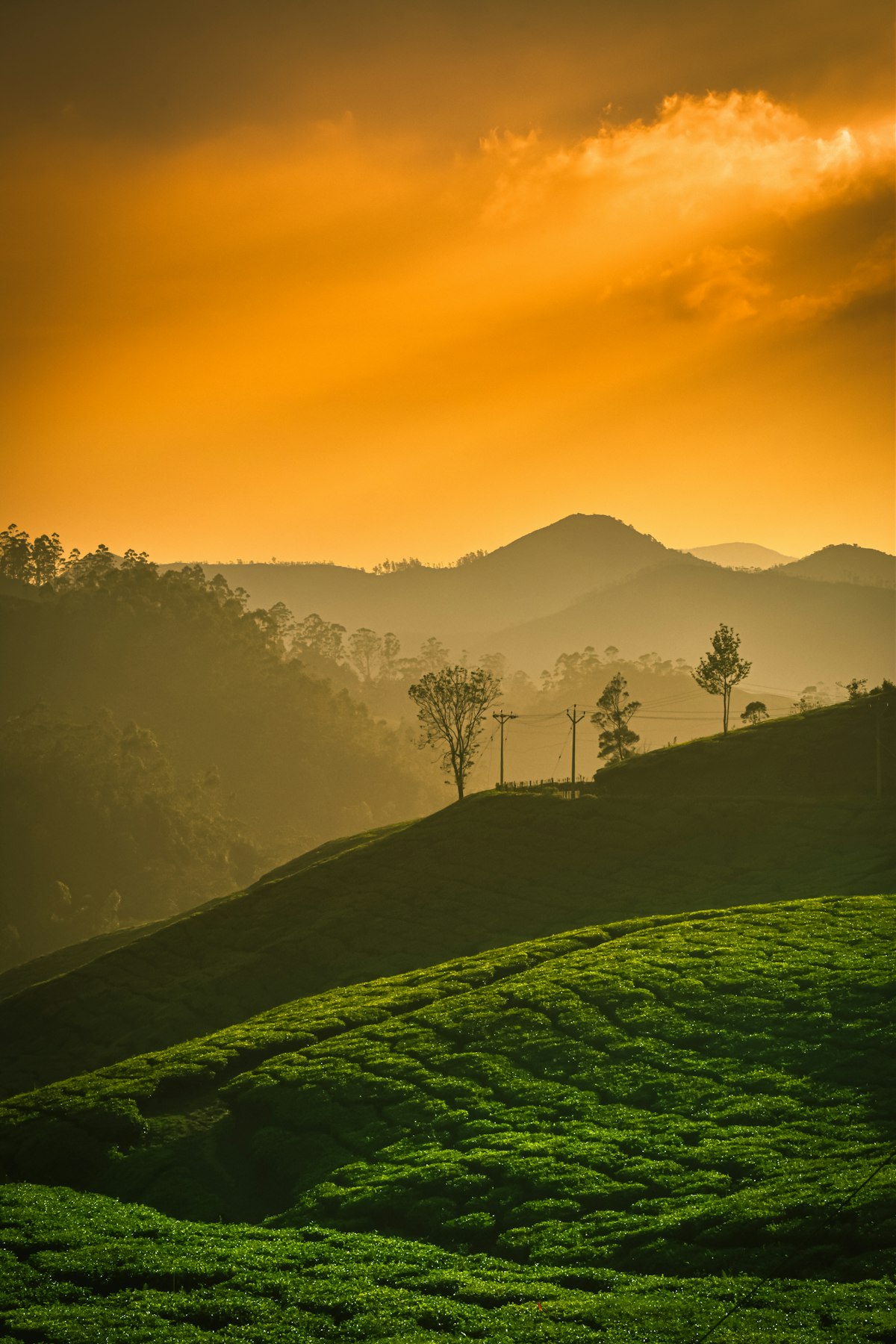
- ↑Munnar's tea estates are at their most spectacular after monsoon irrigation: the terraced gardens descend from the cloud line in intense greens that photography cannot quite capture. The elephant corridor around Rajamala is active.
Sacrifices
- ↓The northeast monsoon (affecting primarily north Kerala and the Malabar Coast) brings its own rainfall cycle through October and November. Kochi and the coast south of Thrissur can receive significant rain — not as dramatic as the southwest monsoon, but enough to disrupt outdoor plans.
- ↓This is not the clear-sky Kerala of January and February. Cloud cover persists and beach conditions at Kovalam and Varkala are unreliable.
November#7▾
Gains
- ↑November is Kerala's most underrated month: the northeast monsoon eases through the second half, leaving increasingly clear days with a washed, vivid quality to the landscape that Jan-Feb visitors never see. Hotel prices are still 25–35% below December peaks.
- ↑The Biennale preparations are underway in Fort Kochi — scaffolding goes up in the colonial warehouses, artists are in residence, and the pre-opening energy of the art community makes Mattancherry an unusually creative place to be.
- ↑Wildlife viewing at Periyar Tiger Reserve and Wayanad Wildlife Sanctuary is excellent: the animals are concentrated around water sources as the monsoon retreats, and visibility through the vegetation is improving.
Sacrifices
- ↓The northeast monsoon can linger into mid-November, particularly in north Kerala around Kozhikode and Wayanad. Build flexibility into itineraries covering multiple regions.
- ↓Some Ayurveda retreats raise prices in November as they prepare for the December season; late November bookings may already face December rates.
December#1▾
Gains
- ↑The Kochi-Muziris Biennale opens in December — its opening weeks draw the international art world to Fort Kochi, creating an atmosphere unlike any other event in India. The installations occupy the Aspinwall House heritage compound, Baker's Bungalow, and Pepper House; the quality of international participation has grown each edition since 2012.
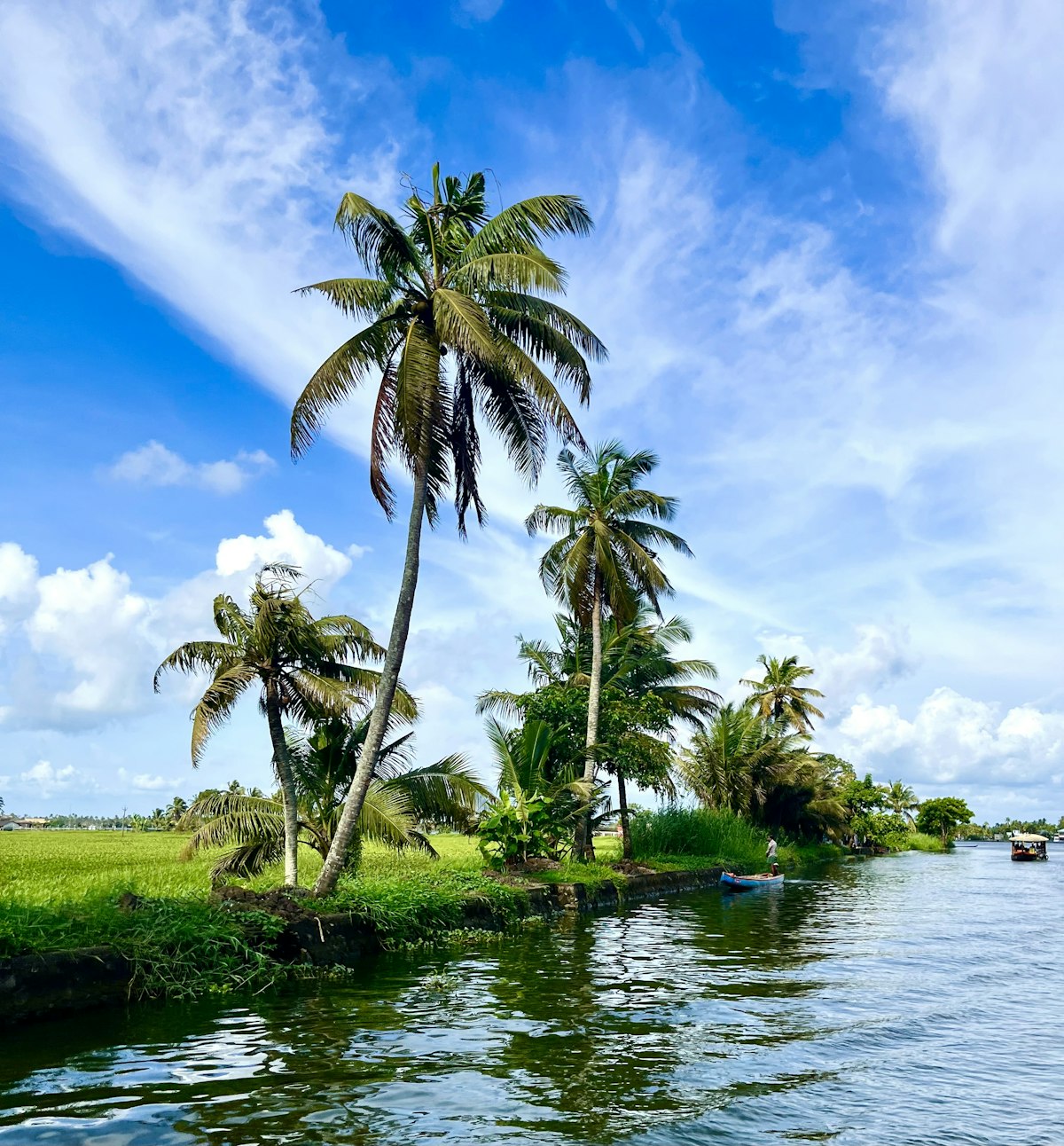
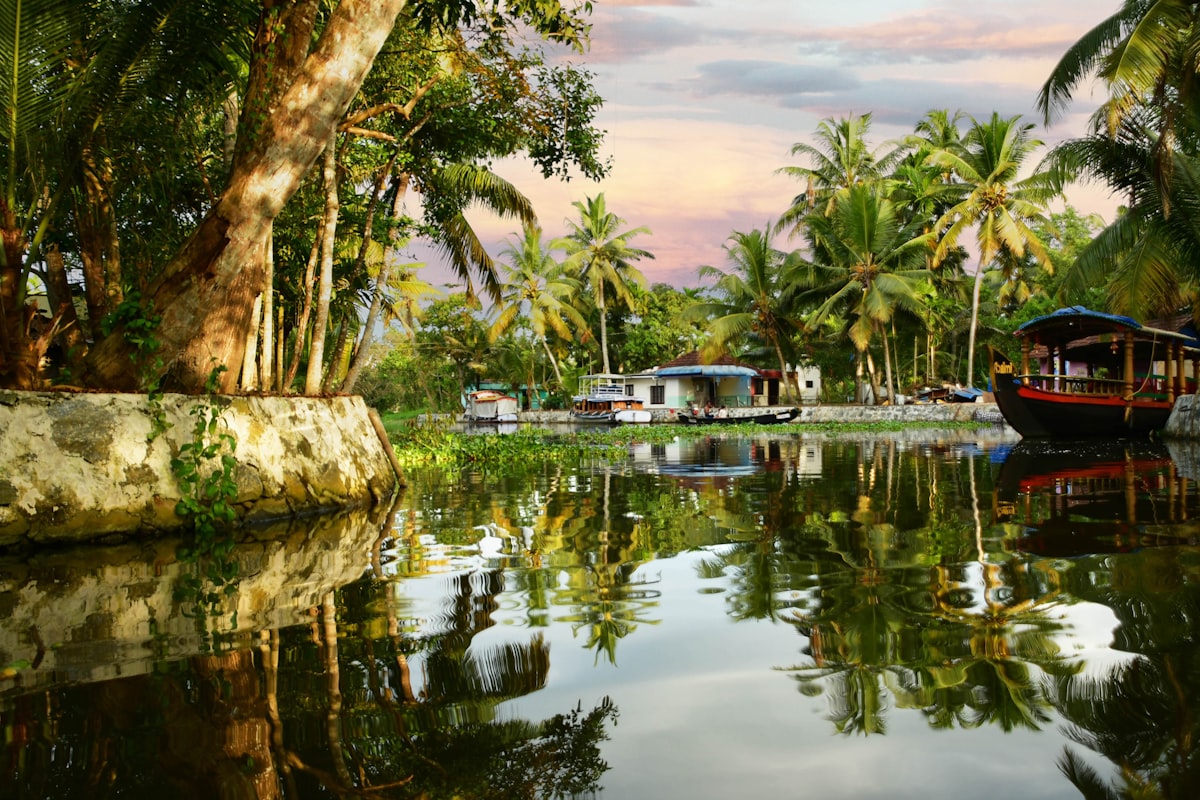
- ↑December's weather is essentially perfect: 31°C days, cool evenings at 22°C, virtually no rain, low humidity, and the backwaters glassy and still. Christmas celebrations in Kerala — a state with one of India's largest Christian populations — are genuinely festive, particularly in Kottayam and Fort Kochi's Santa Cruz Cathedral.
- ↑The full menu of Kerala experiences is available simultaneously: houseboats, beach resorts, hill stations, wildlife, and the cultural calendar are all operating at peak quality and reliability.
Sacrifices
- ↓December is expensive and fills fast. The Biennale opening, Christmas week, and New Year's Eve command premium pricing: a mid-range houseboat that costs ₹8,000 in September costs ₹22,000 in December. New Year's Eve in particular triggers surge pricing across all properties.
- ↓Popular itinerary combinations — Fort Kochi plus Alleppey houseboat plus Munnar — require booking 6–8 weeks in advance for December travel. Last-minute travel in December can result in a truncated, expensive experience.
How this is calculated
Climate data
Open Meteo ERA5
30-year normals (1991–2020). Temperature, rainfall, sunshine, humidity.
Price & crowd
Tourism research
Seasonal pricing from tourism authority data. Directional — compares months within a destination only.
Personalisation
Weighted scoring
Your priorities change the weights. Budget-first users get different results than weather-first users.
Share this result
December is the best time to visit Kerala
Travel timing updates
New destinations and timing guides, when they land.
No spam. Unsubscribe anytime.