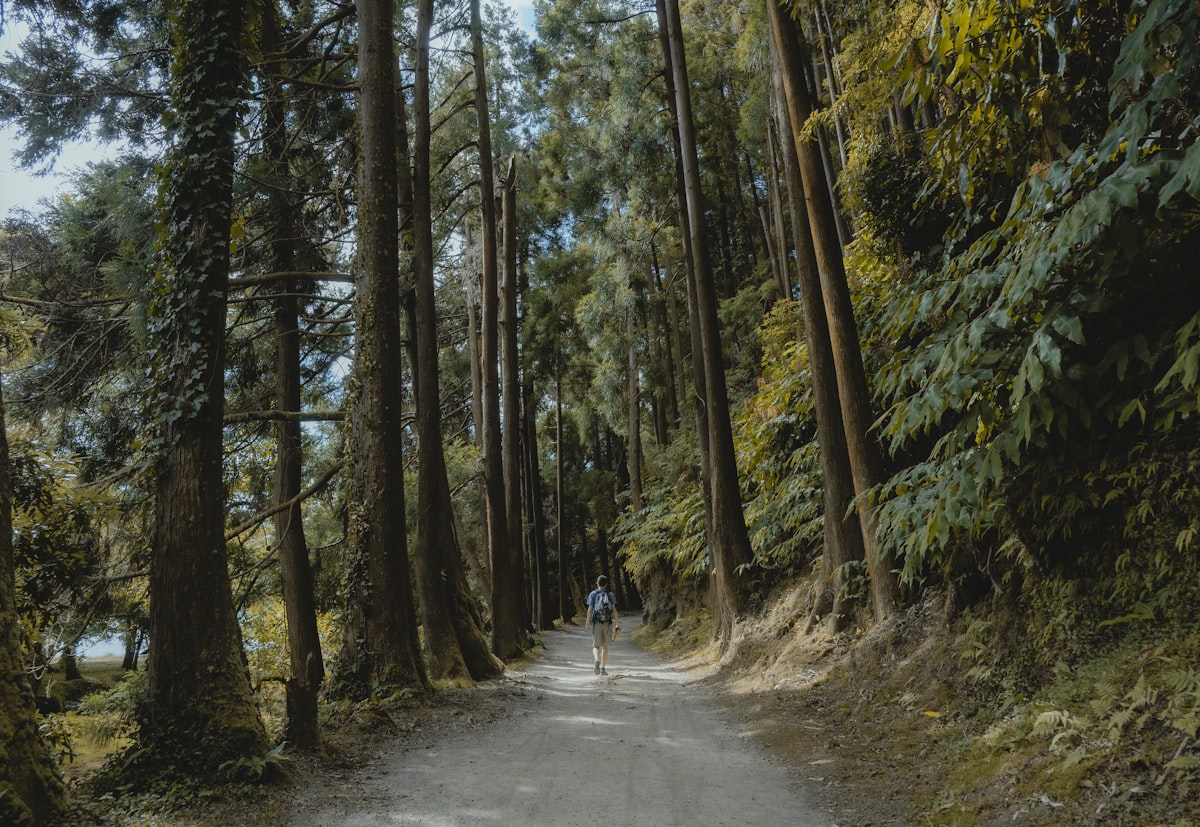
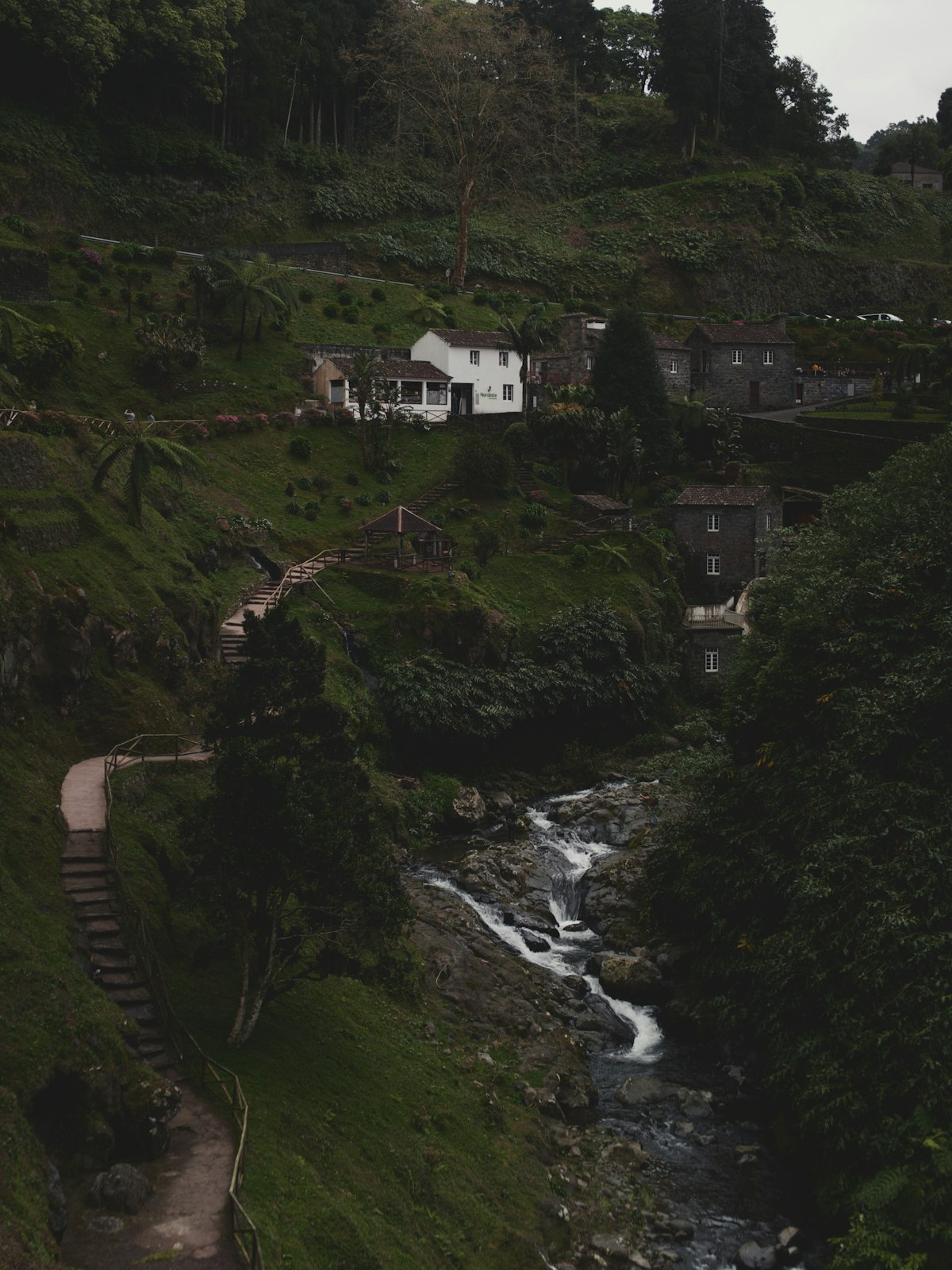
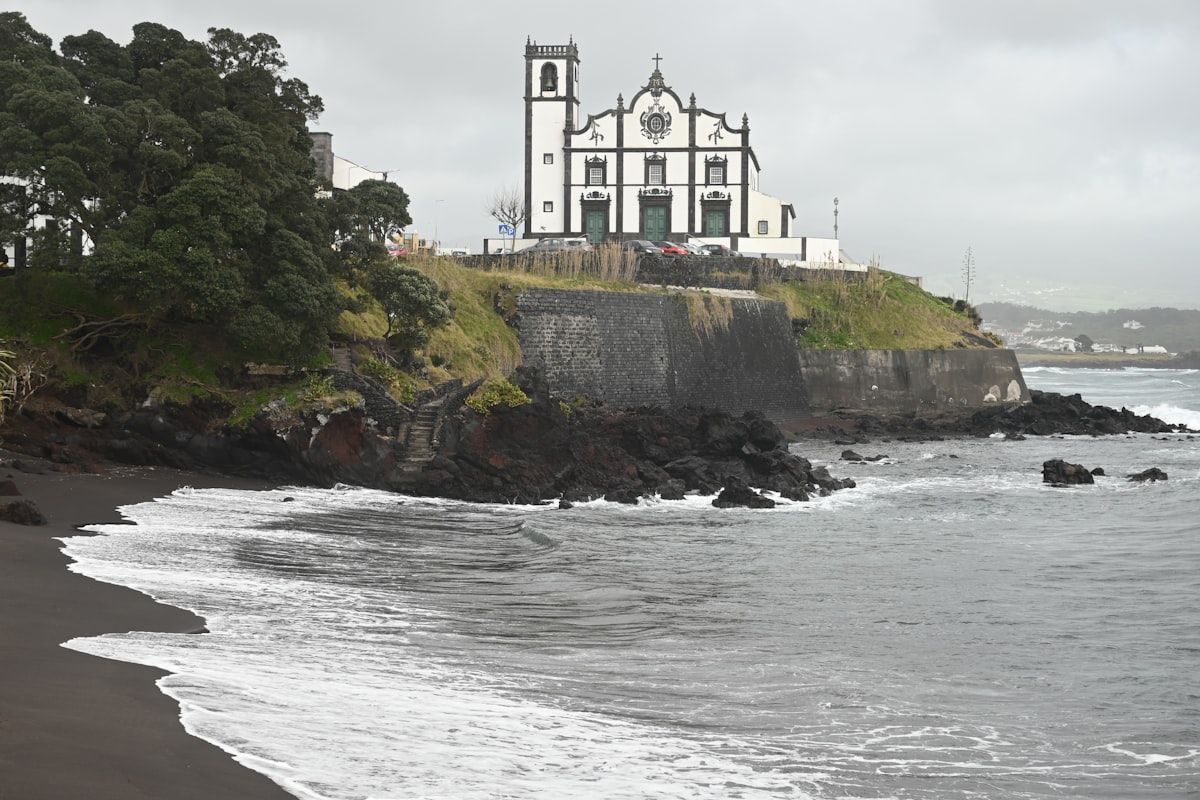
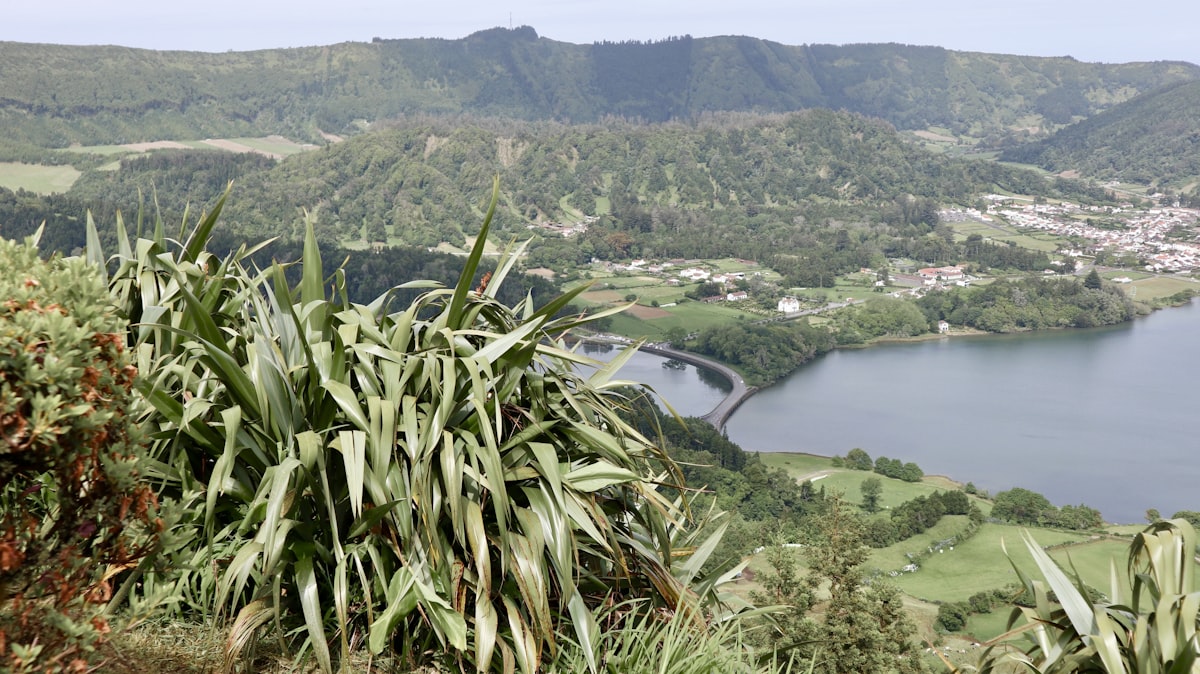
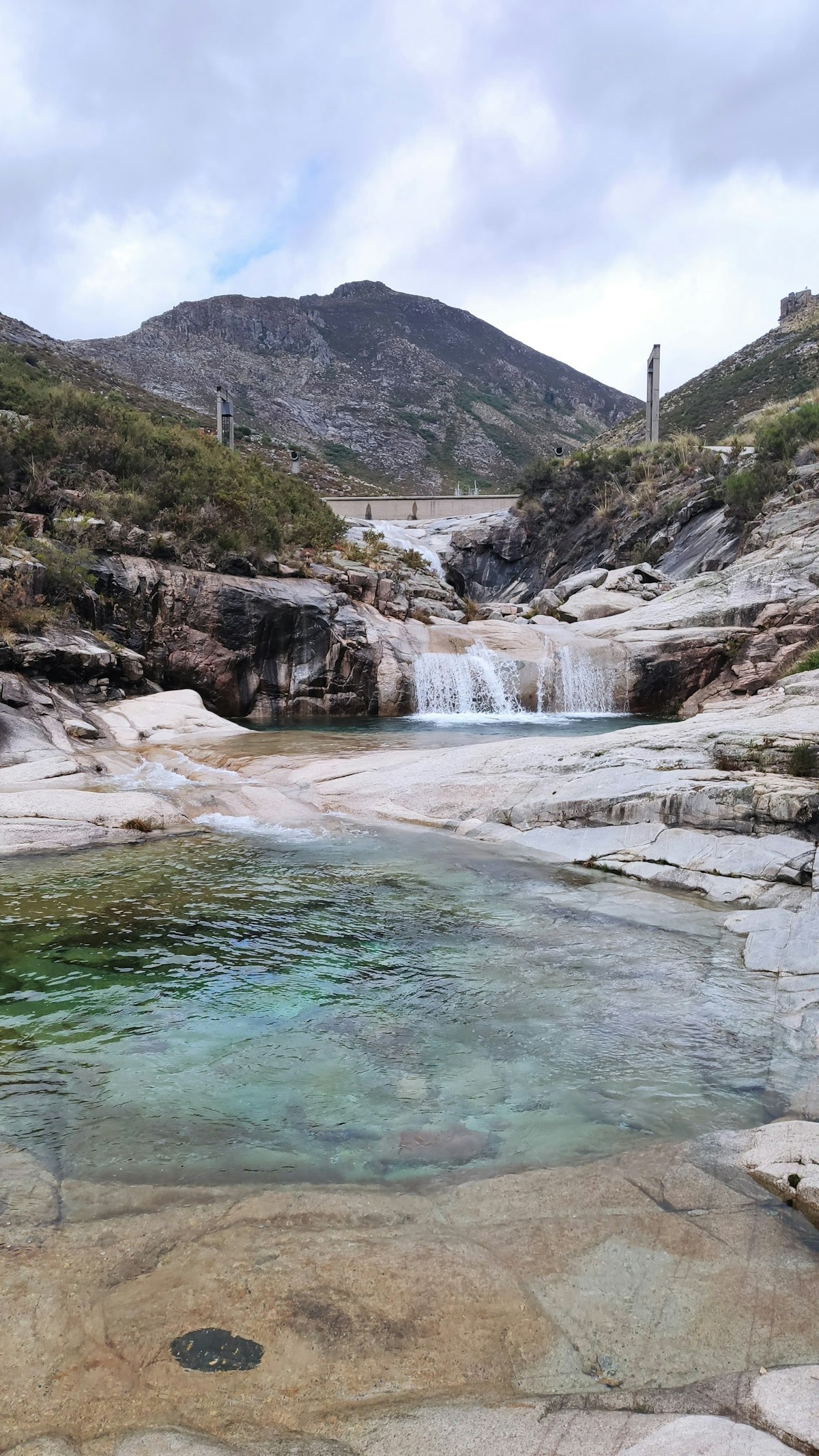
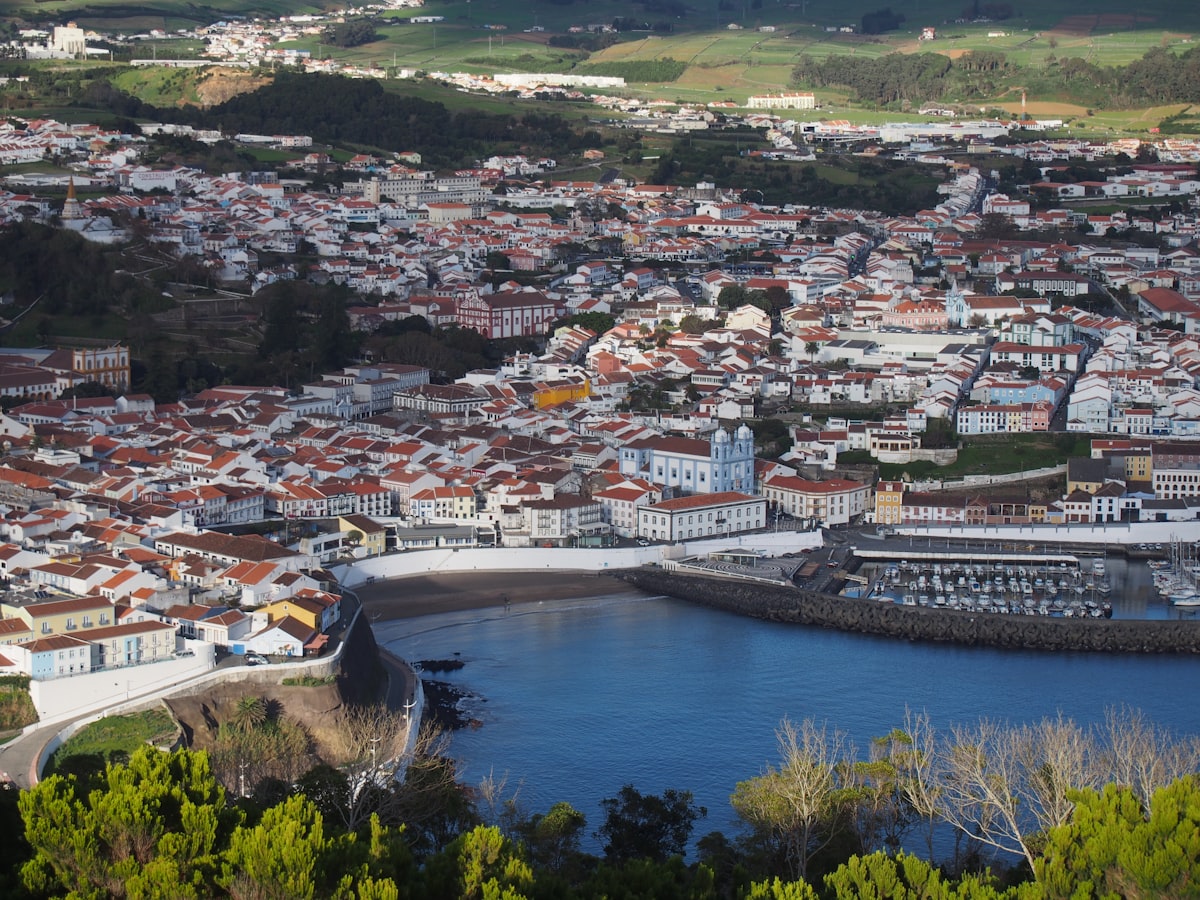
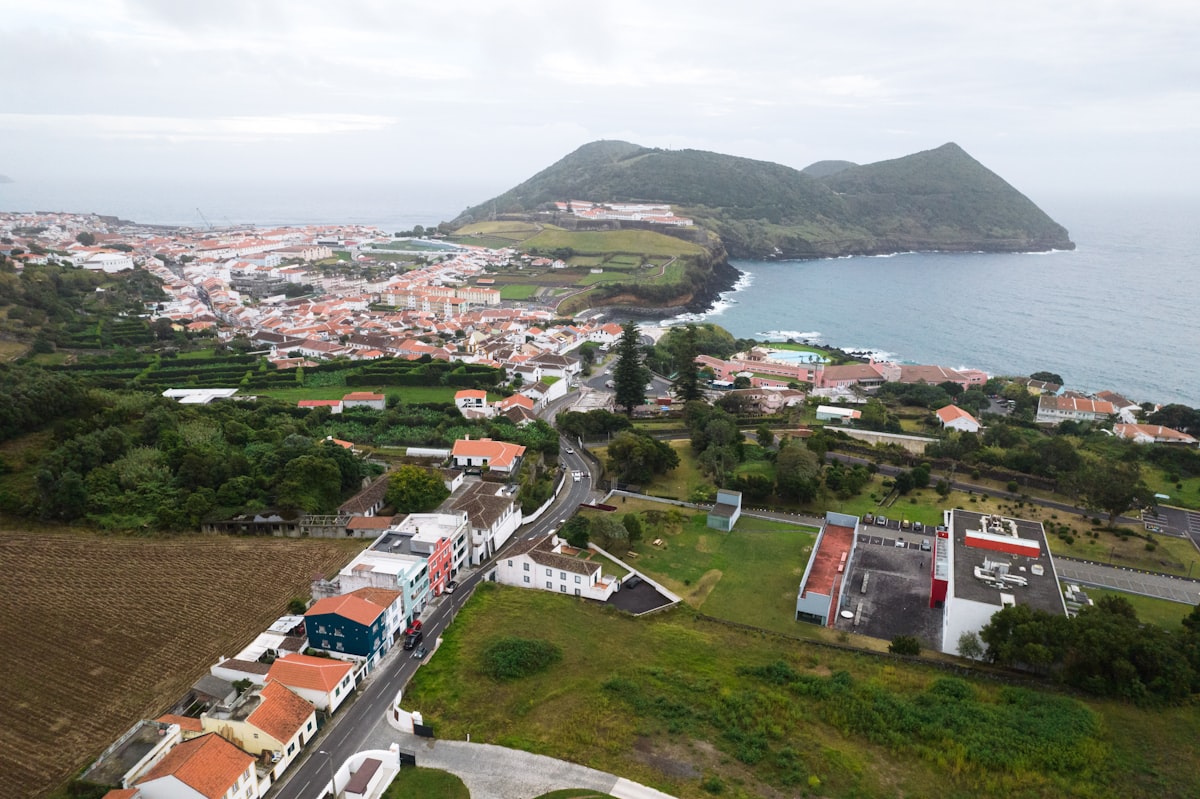
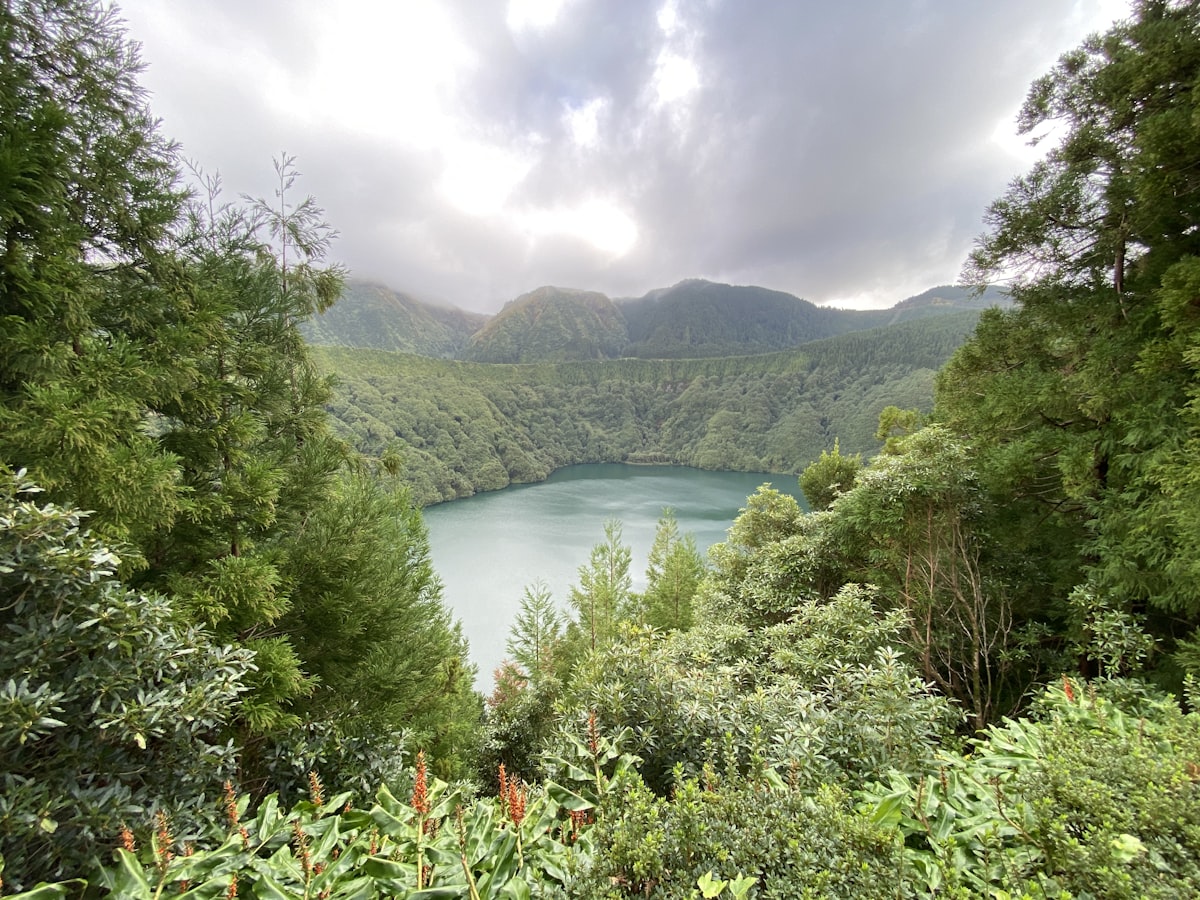
Azores · Unsplash / Unsplash
Portugal · Atlantic Ocean
Best time to visit Azores
May
May scores highest overall — reliable weather and good value. Set your priorities below to personalise this result.
What matters most to you?
All 12 months — click any to expand
May
Unsplash / Unsplash
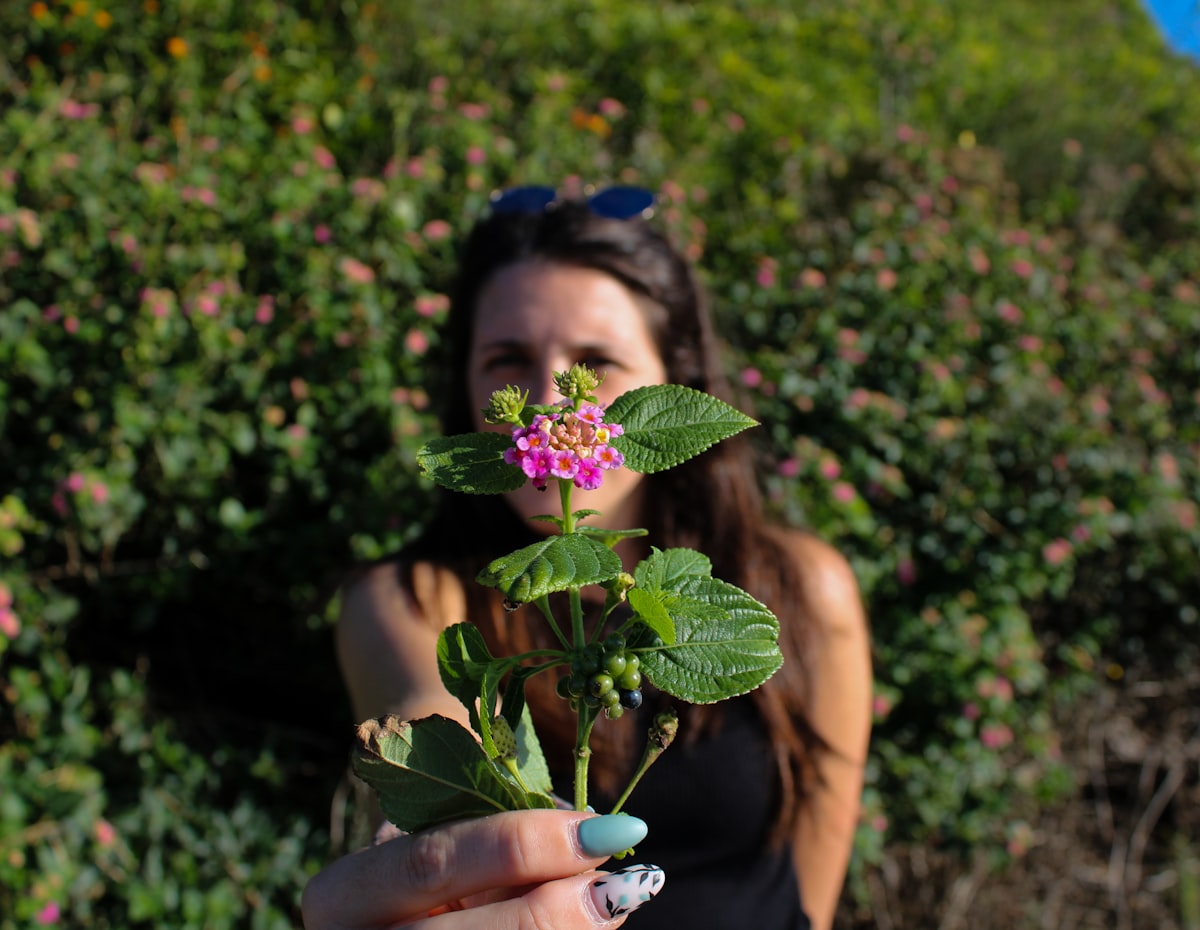
The hydrangea season begins — the Azores in full flower, whale diversity at its peak, and conditions at their most photogenic.
21°C
High
15°C
Low
50mm
Rain
7.5h
Sun/day
What you gain
- ↑Hydrangea peak season begins in late May on São Miguel and Faial: the volcanic roads disappear between walls of blue, pink, and white Hortensia so dense that the landscape is defined by them; the Sete Cidades crater lake rim road and the Faial cliffs above Capelo are the most spectacular; the combination of vivid blue flowers, black lava stone, and the turquoise lake surface below is the defining Azorean landscape image
- ↑May whale watching is outstanding — blue whales and fin whales are reliably present before they depart for northern feeding grounds, sperm whales remain year-round, and bottlenose and common dolphins are visible on nearly every trip; the Azores Whale Watch operators in Lajes do Pico and Madalena use traditional land-based whale spotting techniques inherited from the whaling era
- ↑Pico mountain summit hiking in May: the weather window for a clear summit ascent (2,351m, the highest point in Portugal) is at its widest in May–June; a 4–5 hour round trip from the base station requires no technical equipment and delivers a volcanic summit view above the clouds with the remaining islands visible 50–100km in every direction
What you sacrifice
- ↓May is the beginning of the European tourist season — Ponta Delgada on São Miguel sees a meaningful increase in visitors from Lisbon and Northern Europe; the best guided whale watch operators, the most popular trailheads (Sete Cidades, Lagoa do Fogo), and the standout accommodation start booking out at the short end
- ↓Rainfall is still possible (50mm) — the Azores Atlantic location means even the best months can deliver a wet day or two; the Furnas caldeira valley and the Lagoa do Fogo crater lake are sometimes in cloud even in May
- ↓Senhor Santo Cristo festival crowds in Ponta Delgada (if falling in May) can temporarily pack the city's infrastructure beyond capacity — accommodation within 5km of the city centre is essentially unavailable at any price during the festival weekend
May scores highest overall — reliable weather and good value. Set your priorities below to personalise this result.
May
The hydrangea season begins — the Azores in full flower, whale diversity at its peak, and conditions at their most photogenic.
21°C
High
50mm
Rain
7.5h
Sun
- ↑Hydrangea peak season begins in late May on São Miguel and Faial: the volcanic roads disappear between walls of blue, pink, and white Hortensia so dense that the landscape is defined by them; the Sete Cidades crater lake rim road and the Faial cliffs above Capelo are the most spectacular; the combination of vivid blue flowers, black lava stone, and the turquoise lake surface below is the defining Azorean landscape image
- ↑May whale watching is outstanding — blue whales and fin whales are reliably present before they depart for northern feeding grounds, sperm whales remain year-round, and bottlenose and common dolphins are visible on nearly every trip; the Azores Whale Watch operators in Lajes do Pico and Madalena use traditional land-based whale spotting techniques inherited from the whaling era
- ↑Pico mountain summit hiking in May: the weather window for a clear summit ascent (2,351m, the highest point in Portugal) is at its widest in May–June; a 4–5 hour round trip from the base station requires no technical equipment and delivers a volcanic summit view above the clouds with the remaining islands visible 50–100km in every direction
- ↓May is the beginning of the European tourist season — Ponta Delgada on São Miguel sees a meaningful increase in visitors from Lisbon and Northern Europe; the best guided whale watch operators, the most popular trailheads (Sete Cidades, Lagoa do Fogo), and the standout accommodation start booking out at the short end
- ↓Rainfall is still possible (50mm) — the Azores Atlantic location means even the best months can deliver a wet day or two; the Furnas caldeira valley and the Lagoa do Fogo crater lake are sometimes in cloud even in May
- ↓Senhor Santo Cristo festival crowds in Ponta Delgada (if falling in May) can temporarily pack the city's infrastructure beyond capacity — accommodation within 5km of the city centre is essentially unavailable at any price during the festival weekend
Top travel windows
★ BestMay
Best overall
Highest combined score
21°C
High
50mm
Rain
7.5h
Sun
November
Best for value
Lowest prices & fees
19°C
High
100mm
Rain
4.5h
Sun
November
Fewest crowds
Quietest month
19°C
High
100mm
Rain
4.5h
Sun
Breakdown by priority
Best for weather
July
26°C high · 18mm rain · 9.5hrs sun/day
Best for budget
November
Surfing season reaches its peak in November: world-class big wave conditions develop at Praia do Norte (Faial), Santa Barbara (São Miguel), and the reef breaks around São Jorge; November is when the Azores serious surf community is most active
Fewest crowds
November
Surfing season reaches its peak in November: world-class big wave conditions develop at Praia do Norte (Faial), Santa Barbara (São Miguel), and the reef breaks around São Jorge; November is when the Azores serious surf community is most active
Where to base yourself in Azores
All regions →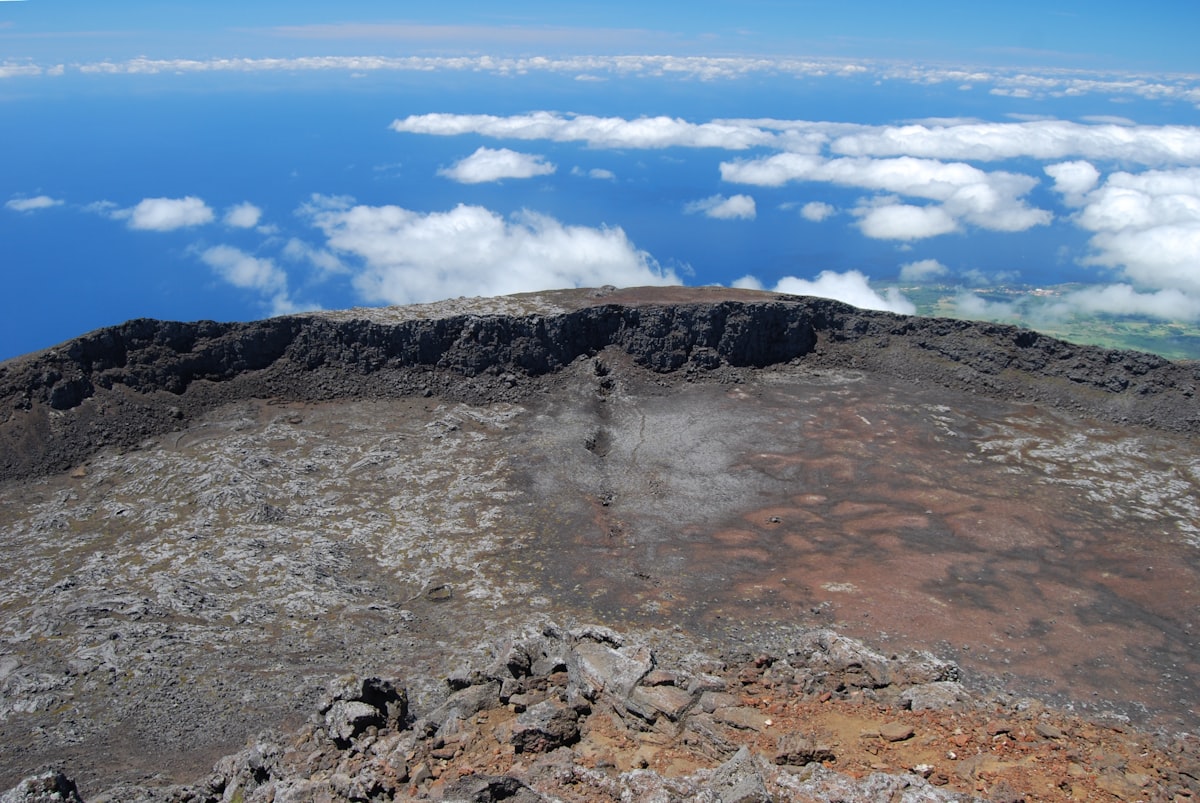
Terceira
The cultural capital — the UNESCO baroque city of Angra do Heroísmo, the Algar do Carvão lava tube, and the Sanjoaninas bull festival.
7/10
Central
7/10
Walk
6/10
Transit
São Miguel
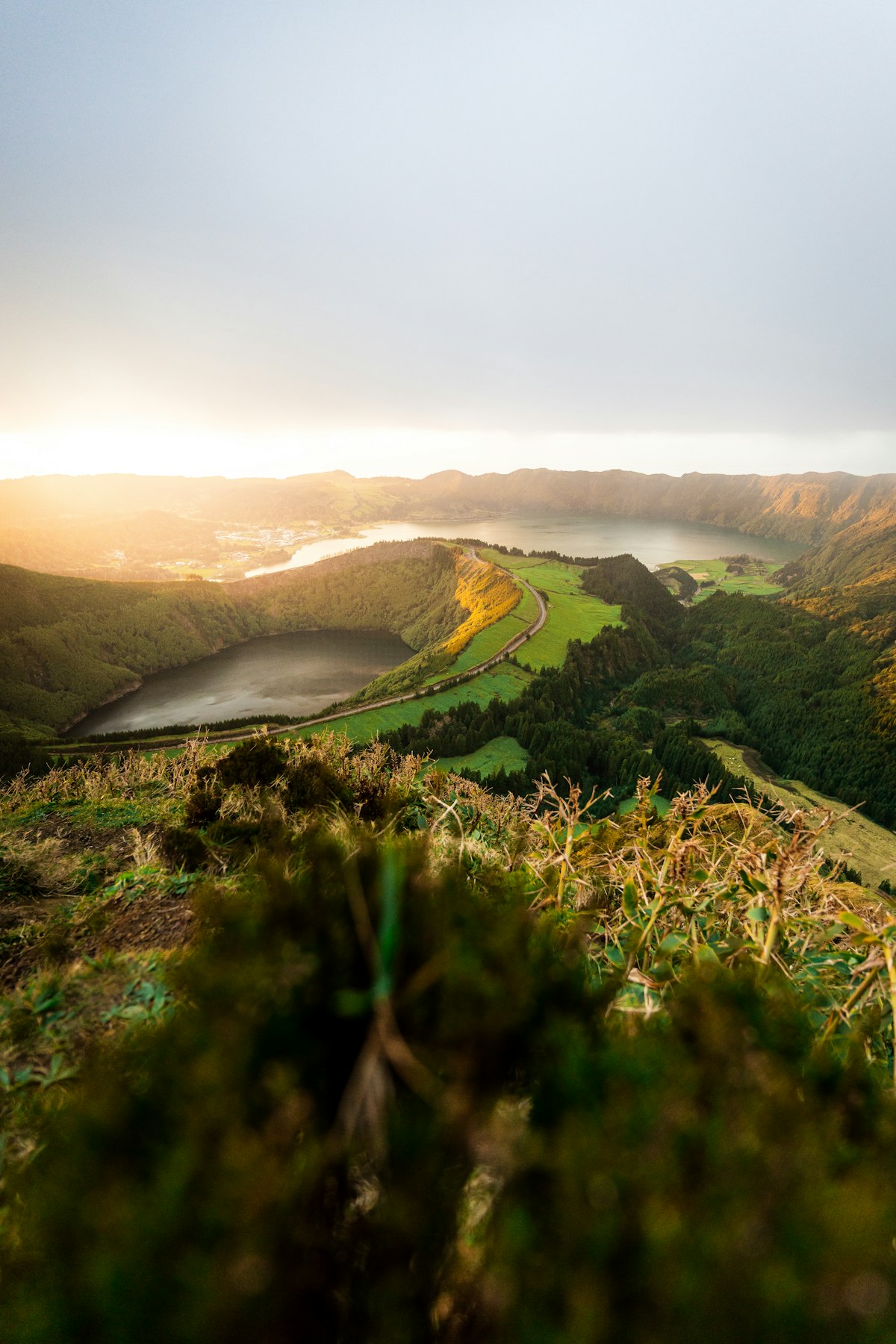
The biggest and most visited island — twin crater lakes at Sete Cidades, the steaming Furnas caldera valley, and the gateway airport for the whole archipelago.
10/10
Central
5/10
Walk
6/10
Transit
Also exploring
Lisbon
Portugal
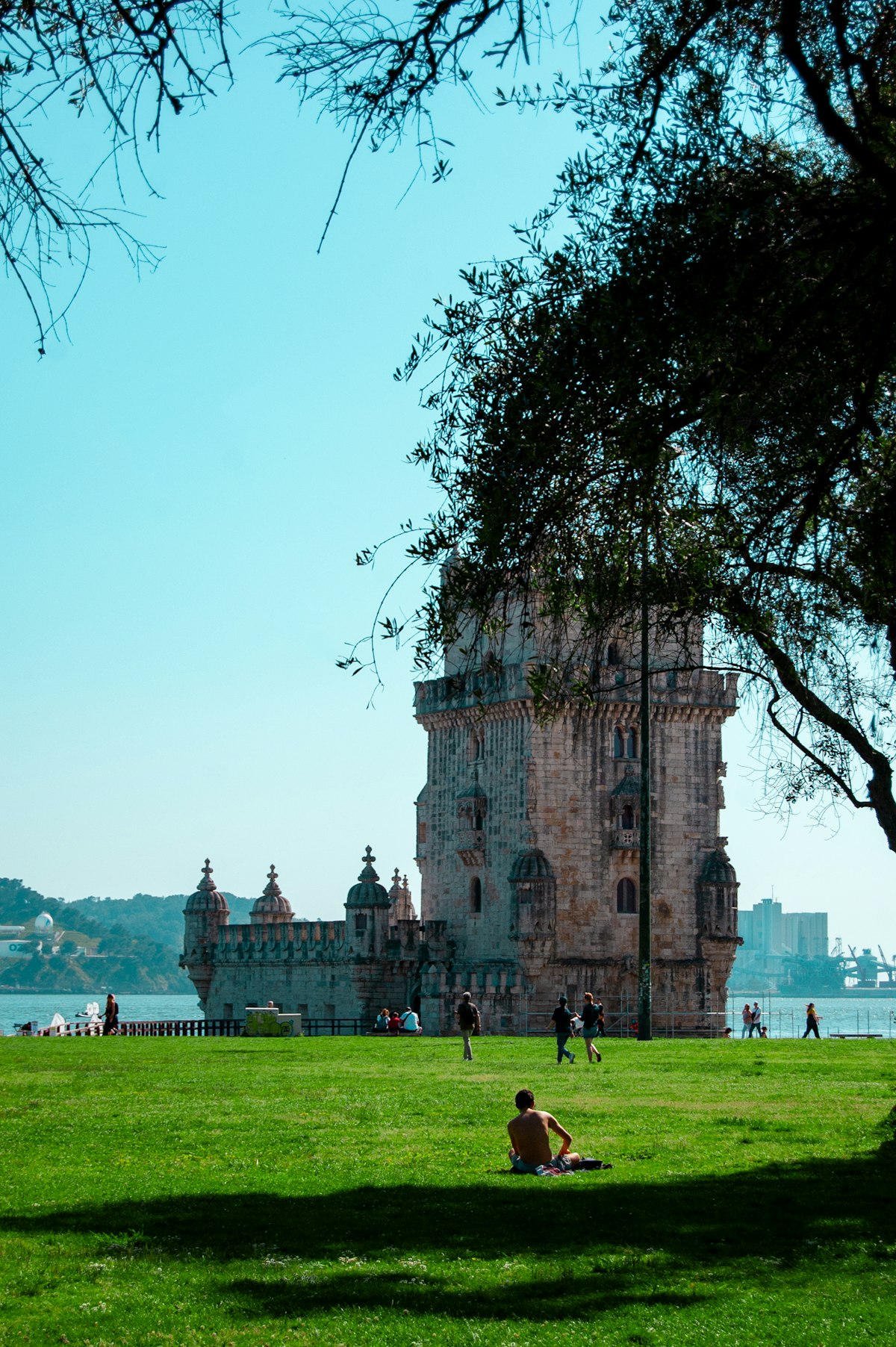
A sun-drenched Atlantic capital where tram lines weave through hilltop neighbourhoods and prices stay genuinely affordable by Western European standards.
Barcelona
Spain
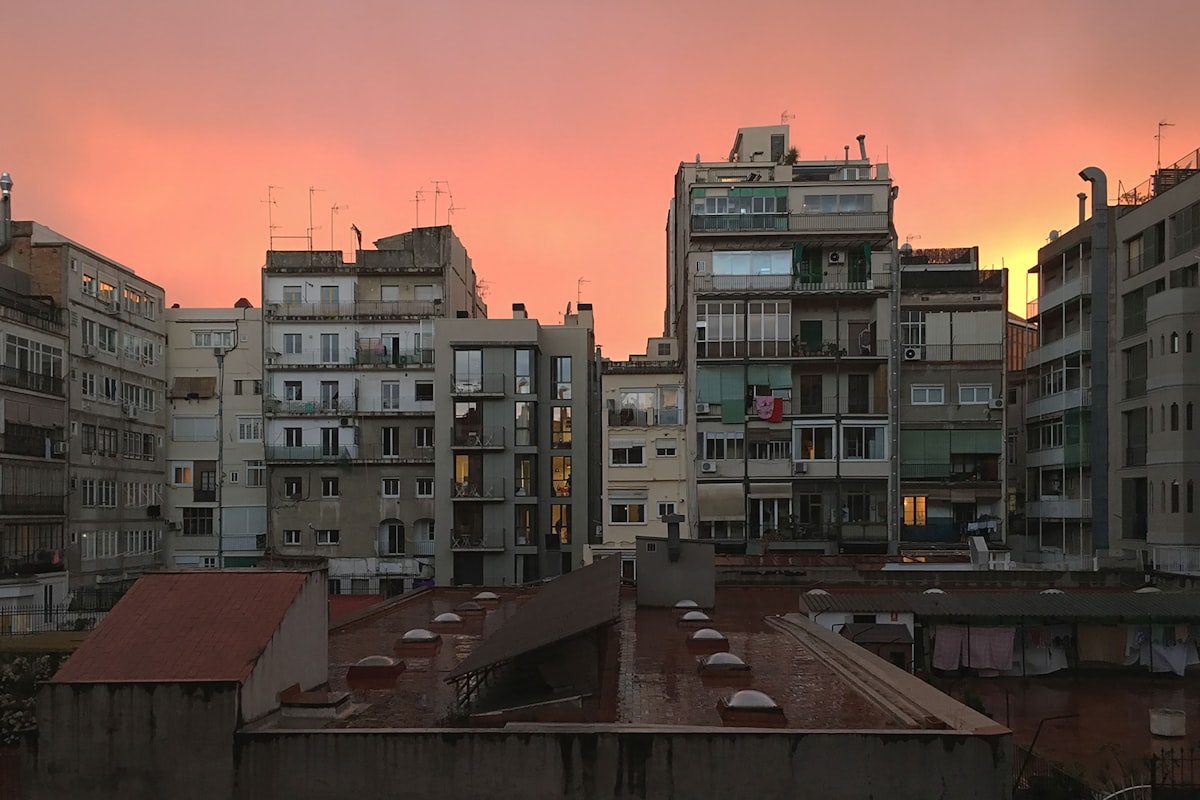
A Mediterranean city that runs on architecture, food markets, and beach culture — with a tourism problem that makes timing absolutely critical.
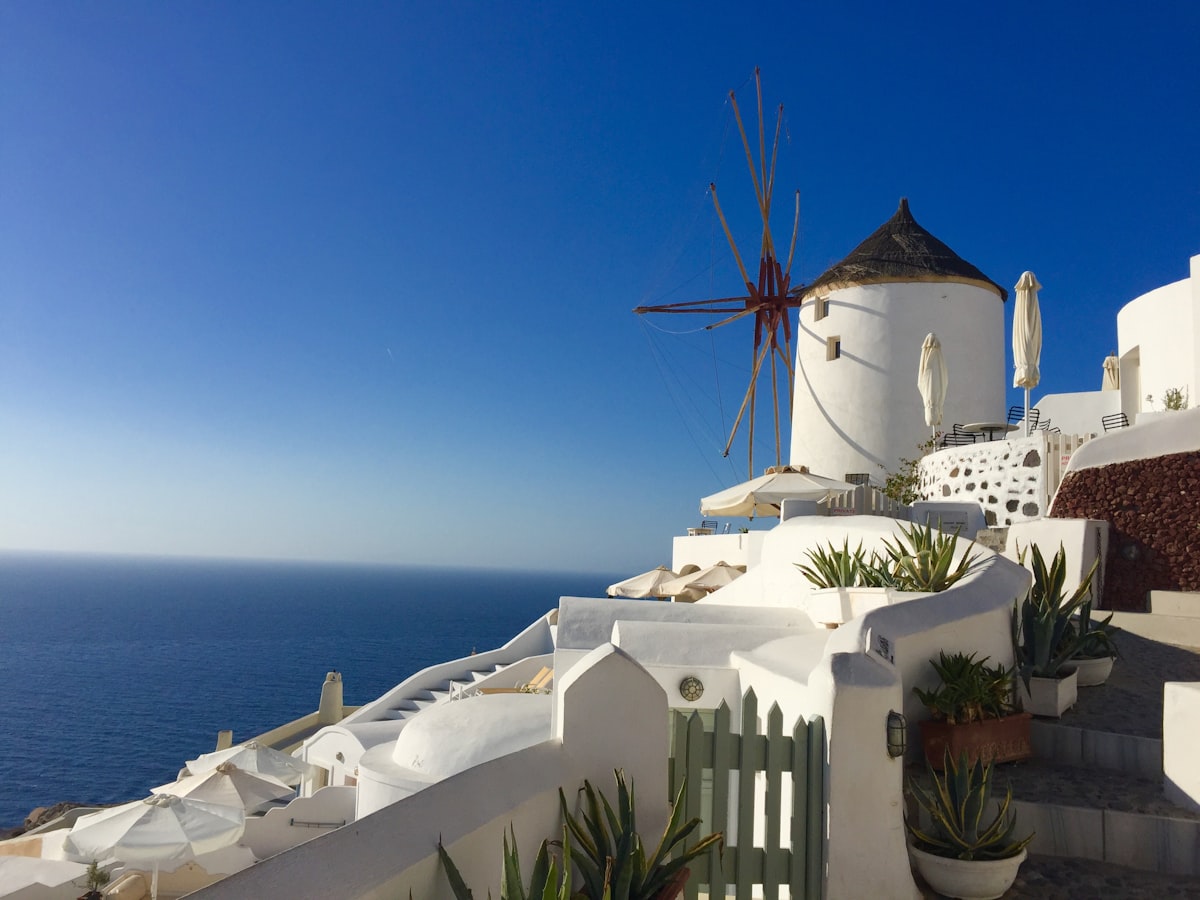
Santorini
Greece
The caldera sunsets and white-washed cliffside villages are real — but so is a tourism infrastructure that was never designed for 3 million annual visitors.
Worth knowing
May scores highest overall. July is the most crowded month — avoid if you can. See crowd-free ranking →
Month by month breakdown
January#10▾
Gains
- ↑January sees virtually no mass tourism — the Azores in winter is the exclusive domain of surfers, birdwatchers, and those seeking genuinely uncrowded Atlantic wilderness; the trails around Sete Cidades, the Caldeira on Faial, and the Furnas geothermal valley on São Miguel are completely empty
- ↑Sperm whales are year-round residents of the Azores deep water — January whale watch departures have smaller groups, more attentive guides, and the Atlantic swell creates a drama around the whale encounters that flat summer seas cannot replicate
- ↑Accommodation prices drop to their annual minimum — 3-star hotels on São Miguel and Terceira cost €40–60 per night in January versus €120–180 in July; the same rural quintas and restored manor houses are available at 40% of their summer pricing
Sacrifices
- ↓January is the wettest month in the Azores — 115mm of rainfall with only 3.5 hours of daily sunshine; Atlantic depressions bring genuine storms, and the inter-island ferries and small aircraft connections between islands can be suspended for 1–2 days at a time; build schedule flexibility into any multi-island itinerary
- ↓Hiking conditions are compromised by wet trails and cloud cover that obscures the crater lake views that justify the main Azorean routes; the Sete Cidades circuit and the Pico summit route are frequently socked in for entire days
- ↓Some seasonal businesses (kayak operators, diving centres, tourist restaurants in smaller villages) close entirely in January–February; service infrastructure on the smaller islands (Flores, Corvo, Graciosa) is minimal in winter
February#11▾
Gains
- ↑The Azores' subtropical laurel forest starts showing the first signs of life in February — the endemic Azores laurel (Laurus azorica) keeps the valleys green year-round, and February sees the first camellia blooms and wildflowers along the protected valley trails
- ↑Surfing peaks in winter and early spring: the Atlantic groundswells that create challenging ferry crossings also create the best surf conditions at Santa Barbara beach on São Miguel, the left-hand point breaks at São Roque, and the consistently world-class waves at Praia do Norte on Faial
- ↑February carnival (Carnaval) in Terceira's Angra do Heroísmo is the most celebrated in the Azores — the baroque UNESCO-listed capital city comes alive for four days of processions, live music, and traditional food that give a genuine insight into Azorean culture rarely visible in summer when tourism dominates
Sacrifices
- ↓Rainfall remains high at 100mm and sunshine limited to 4 hours per day — the crater lake views, the key hiking trails, and the mountain roads to the calderas are frequently obscured by cloud; patience and a flexible schedule are essential
- ↓Ferry crossings between islands are the most disrupted of the year — the Faial–Pico channel crossing (15 minutes, the most beautiful in the archipelago) can be suspended for 2–3 days during Atlantic storms; if island hopping, allow extra nights on each island as a buffer
- ↓Water temperatures (17°C) are comfortable for wetsuits but cold for casual swimming; the Azores geothermal pools (Termas da Ferraria on São Miguel, the Caldas da Ribeira Grande hot springs) are the appropriate winter bathing experience
March#8▾
Gains
- ↑The whale watching season intensifies in March as migrating blue whales, sei whales, and fin whales join the resident sperm whales in the deep-water channels between islands; the Azores is the best whale watching destination in Europe and March marks the beginning of the peak season for cetacean diversity
- ↑Spring light in the Azores has a clarity that the summer humidity obscures: the first clear days of March reveal the full scale of the islands — Pico's 2,351m volcano (the highest point in Portugal) visible from Faial across 8km of cobalt Atlantic, the Corvo caldera lake from the air, the Sete Cidades twin lakes in the morning light
- ↑Walking the hydrangea-lined roads of Faial and Flores: the blue hydrangeas (Hortensia) that line every Azorean roadside begin blooming in March; by May they are so dense that the field boundaries disappear into walls of blue, but March offers the first glimpse of the colour combination — black volcanic lava walls, green grass, and vivid blue hydrangea heads — that defines the Azorean aesthetic
Sacrifices
- ↓March remains within the wet season — 90mm of rain and variable cloud cover still compromise the crater lake views; the same flexibility needed in winter applies to early spring
- ↓Pico mountain summit hiking (the primary bucket-list activity on the volcanic island) is still unreliable in March; the summit is frequently in cloud and the trail requires good visibility for safe descent
- ↓International flight availability to Ponta Delgada airport begins increasing in March but direct routes from outside Lisbon are still limited; connections via TAP from Lisbon are reliable but add to journey time
April#4▾
Gains
- ↑April marks the genuine beginning of the Azores travel season: the crater lake views are reliably clear by late April, the hydrangeas are building toward full bloom, and the whale diversity peaks with blue and sei whales reliably present in addition to the resident sperm whales
- ↑Easter in the Azores is a significant cultural event: the Senhor Santo Cristo dos Milagres festival in Ponta Delgada (held on the fifth Sunday after Easter) is the most important religious celebration in the Atlantic islands, drawing thousands of Azorean diaspora from the US and Canada who return specifically for the festival
- ↑Sea kayaking and coasteering conditions begin to improve in April: the sea temperature (18°C) requires a wetsuit but the calmer April seas make the volcanic cave and arch exploration around São Miguel's north coast and the Faial cliffs more accessible than winter
Sacrifices
- ↓April can still deliver 2–3 consecutive wet days from passing Atlantic fronts — the shoulder season weather in the Azores is defined by changeability rather than consistency; a 4-day window of good weather between fronts is the norm, not a week of guaranteed sunshine
- ↓Crowds build toward the Easter holiday weeks — April in Europe coincides with a tourism surge that is less pronounced in the Azores than in Mediterranean destinations but still increases accommodation pressure in the best properties on São Miguel
- ↓Not all summer facilities are yet open in April — some diving centres, sea tour operators, and rural guesthouses begin operations only in May
May#1▾
Gains
- ↑Hydrangea peak season begins in late May on São Miguel and Faial: the volcanic roads disappear between walls of blue, pink, and white Hortensia so dense that the landscape is defined by them; the Sete Cidades crater lake rim road and the Faial cliffs above Capelo are the most spectacular; the combination of vivid blue flowers, black lava stone, and the turquoise lake surface below is the defining Azorean landscape image
- ↑May whale watching is outstanding — blue whales and fin whales are reliably present before they depart for northern feeding grounds, sperm whales remain year-round, and bottlenose and common dolphins are visible on nearly every trip; the Azores Whale Watch operators in Lajes do Pico and Madalena use traditional land-based whale spotting techniques inherited from the whaling era
- ↑Pico mountain summit hiking in May: the weather window for a clear summit ascent (2,351m, the highest point in Portugal) is at its widest in May–June; a 4–5 hour round trip from the base station requires no technical equipment and delivers a volcanic summit view above the clouds with the remaining islands visible 50–100km in every direction
Sacrifices
- ↓May is the beginning of the European tourist season — Ponta Delgada on São Miguel sees a meaningful increase in visitors from Lisbon and Northern Europe; the best guided whale watch operators, the most popular trailheads (Sete Cidades, Lagoa do Fogo), and the standout accommodation start booking out at the short end
- ↓Rainfall is still possible (50mm) — the Azores Atlantic location means even the best months can deliver a wet day or two; the Furnas caldeira valley and the Lagoa do Fogo crater lake are sometimes in cloud even in May
- ↓Senhor Santo Cristo festival crowds in Ponta Delgada (if falling in May) can temporarily pack the city's infrastructure beyond capacity — accommodation within 5km of the city centre is essentially unavailable at any price during the festival weekend
June#3▾
Gains
- ↑Hydrangeas at absolute peak in June — the roadside and field boundaries on São Miguel, Faial, and Flores are essentially solid blue-pink walls; the Sete Cidades circuit, the Caldeira rim trail on Faial, and the Flores waterfalls with hydrangea framing are all at their maximum visual impact
- ↑Diving in the Azores reaches peak season: water temperature 22°C, visibility 20–30m, and the Princess Alice Bank seamount (90 minutes by boat from Faial) at its most reliably accessible for mobula ray aggregations, blue shark encounters, and hammerhead sightings; the underwater world of the Azores is among the most diverse in the Atlantic
- ↑Festa da Sanjoaninas in Terceira (June 17–30) is the biggest traditional festival in the Azores calendar — Angra do Heroísmo fills with traditional bullfights (tourada à corda, where the bull is held on a rope by eight men and not harmed), folk music, horse parades, and communal feasting; it is the finest expression of Azorean culture available to a visitor
Sacrifices
- ↓Tourist numbers build significantly in June as direct flights from European cities begin increasing frequency; São Miguel's Sete Cidades viewpoint and the Furnas geothermal area see their first genuine crowding of the year
- ↓Accommodation prices rise to summer levels in June — the best rural quintas and boutique hotels on São Miguel and Faial are typically fully booked; book 6–8 weeks ahead for June stays
- ↓Blue and sei whales depart for northern feeding grounds in June — the whale watching remains excellent (sperm whales year-round, dolphin species numerous) but the spectacular baleen whale diversity of April–May is reduced
July#6▾
Gains
- ↑July is the sunniest and warmest month in the Azores — 9.5 hours of daily sunshine, 26°C days, and sea temperatures reaching 23°C make swimming at volcanic beach pools (Mosteiros on São Miguel, Porto Pim on Faial, Biscoitos on Terceira) genuinely comfortable without a wetsuit
- ↑Sperm whale watching in July has the longest, most stable sea conditions of the year — 4–6 hour whale watch trips venture 20–40km offshore in flat-calm water, and encounters with resident sperm whale family units (females and calves) are at their most prolonged
- ↑Inter-island travel is easiest in July: SATA Air Açores flights between islands are at maximum frequency, Atlânticoline ferries run daily between all central group islands, and the logistics of visiting 3–4 islands in a week become genuinely feasible without the weather disruptions that constrain winter multi-island circuits
Sacrifices
- ↓July is the most crowded month in the Azores — Ponta Delgada has a cruise ship terminal that receives vessels weekly in July–August, and the combined effect of cruise visitors, Azorean diaspora returning for summer, and the European tourism peak creates genuine pressure at the main sites; Sete Cidades viewpoints at 11am have 50+ vehicles
- ↓Accommodation reaches peak pricing in July — good hotels on São Miguel are fully booked weeks in advance; last-minute July bookings in the Azores require either significant overpayment or accepting a distant or inferior property
- ↓Hydrangeas are past their peak by mid-July — the June bloom is more vibrant; July visitors see the tail of the hydrangea season before the flowers fade
August#7▾
Gains
- ↑August sea temperatures peak at 24°C — the warmest water of the year for swimming at the volcanic pools; Biscoitos on Terceira (a series of natural lava rock pools in the Atlantic fringe) and the Mosteiros beach pools on São Miguel's west coast are at their most comfortable
- ↑Sunset paddleboarding on the Lagoa das Furnas: the caldera lake on São Miguel at sunset in August — with steam rising from the geothermal vents on the far shore and the surrounding mountains catching the gold light — is one of the most distinctive experiences the Azores offers; rental equipment is available at the lake shore
- ↑The Atlantic summer high-pressure system creates the longest reliable clear window of the year for Pico summit hiking — a 7–8 week window (mid-July to mid-September) in which the summit is frequently in clear air; experienced hikers attempting the summit should target August as the highest probability month for a cloud-free view
Sacrifices
- ↓August is the busiest month in the Azores — the combination of Portuguese national holidays, Azorean diaspora family returns, and European school holidays makes it the most crowded and least authentic month; the Azores' appeal as a wild, empty Atlantic destination is most compromised in August
- ↓Prices are at absolute maximum — hotel and flight costs are 60–80% above their winter equivalents; Airbnb and guesthouse options in Ponta Delgada and Horta reach prices comparable to Lisbon or Porto
- ↓The Princess Alice Bank diving trips (the signature deep-water experience for manta rays and hammerheads) are often overbooked in August; book at least 6 weeks in advance for a July–August departure
September#2▾
Gains
- ↑September is the optimal month for the Azores: the August peak crowds have gone, the sea is at its warmest (24°C), accommodation prices drop 25–30%, and the weather remains mostly excellent with only the beginning of autumn fronts arriving in the final week; the combination of summer conditions and shoulder-season crowds makes September the most balanced month
- ↑Whale watching in September transitions to the autumn migration period: northern bottlenose whales and false killer whales appear on the deeper Atlantic passages, and the permanent sperm whale population is joined by autumn migratory species that make the species diversity the second most interesting period of the year (after April–May)
- ↑Grape harvest on Pico: the UNESCO-listed Pico wine landscape (the only Atlantic island wine classified by UNESCO) hosts its grape harvest (vindima) in September — small-scale family wine cooperatives harvest the Verdelho grapes from the distinctive lava field vineyards on the island's southern shore; visitor participation in the harvest is arranged through the Museu do Vinho in Madalena
Sacrifices
- ↓Autumn fronts begin in late September — the first Atlantic depressions arrive in the final 10 days of September; a September visit should plan activities and hiking for the first 3 weeks and use the final days for indoor cultural activities
- ↓Some seasonal operators (particularly on smaller islands like Flores, Corvo, and Graciosa) begin winding down in September; activities that require minimum group sizes become harder to book as visitor numbers fall
- ↓Pico summit hiking window closes in mid-September — by the last week of September the summit is frequently in cloud again; September 1–15 is the final reliable window for a clear summit ascent
October#5▾
Gains
- ↑October whale watching recovers as autumn migration peaks — sei whales return on their southward journey and sperm whale activity is excellent in the rough-water upwellings; the whale watch experience in October's heavier seas is more physically demanding but more dramatic than summer
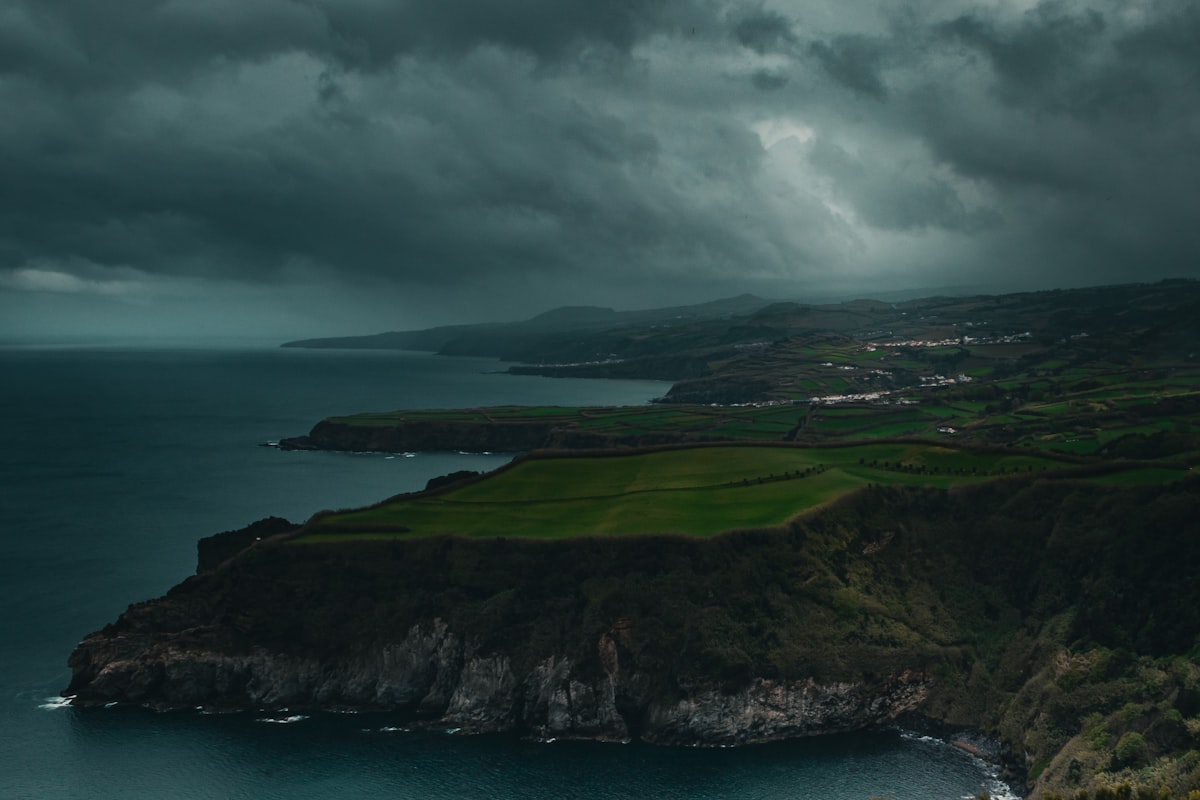
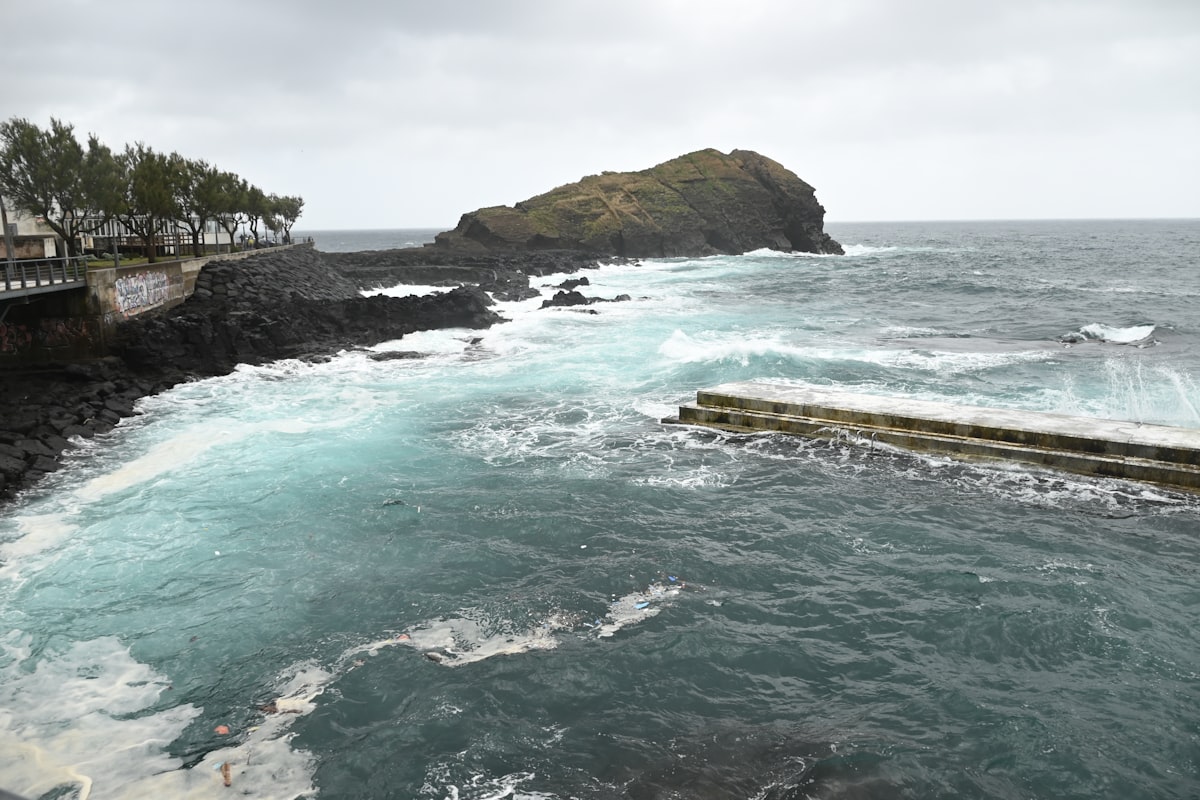
- ↑Autumn storms create the most spectacular version of the Azorean volcanic coast: the Atlantic swell hitting the lava cliffs at Ponta da Ferraria and the Mosteiros stacks on São Miguel generates spray photographs that do not exist in the summer flat-calm; storm watchers and seascape photographers specifically target October–November
- ↑Prices and availability return to accessible levels — September's remaining price premium disappears in October; direct flights from Northern Europe reduce in frequency but the longer stay available (no August crowds to book around) compensates
Sacrifices
- ↓October rainfall at 80mm is significantly higher than summer — expect several rainy days per week and be ready to adapt plans; the crater lake views are frequently obscured by cloud in October
- ↓Inter-island ferry and flight disruptions increase with autumn storm frequency; buffer days between island departures are essential from October onwards
- ↓Swimming and sea activities cool off — 21°C water requires a 5mm wetsuit for comfortable dive sessions; the casual volcanic pool swimming of summer is uncomfortable without a wetsuit
November#9▾
Gains
- ↑Surfing season reaches its peak in November: world-class big wave conditions develop at Praia do Norte (Faial), Santa Barbara (São Miguel), and the reef breaks around São Jorge; November is when the Azores serious surf community is most active
- ↑The Azores endemic forest comes alive in November rain: the laurissilva vegetation (the same ancient laurel forest that covers Madeira's Levada trails) is at its most lushly green in the wet months; the Caldeira do Faial trail, the Parque Florestal das Sete Fontes on São Jorge, and the caldeira trails on Flores are extraordinary in the November mist
- ↑Complete solitude at the main viewpoints: Miradouro da Boca do Inferno on São Miguel, the Pico caldera view, and the Flores waterfalls see virtually no visitors in November; the experience of having the most dramatic landscapes in the Atlantic entirely to yourself is available only in the off-season
Sacrifices
- ↓November is wet and often grey — 100mm of rainfall and only 4.5 hours of sunshine; a November trip to the Azores can deliver 4–5 consecutive overcast days with limited outdoor visibility; it is a trip for those who find dramatic atmospheric weather appealing rather than those seeking sun
- ↓Most tourist infrastructure on smaller islands reduces to minimum service in November — some restaurants close entirely, whale watch operators run reduced schedules, and the cultural attractions (the Museu dos Baleeiros on Pico, the museums in Angra) become the primary indoor activities
- ↓Inter-island travel disruptions are frequent — the November storm season brings regular ferry suspension and small aircraft delays
December#12▾
Gains
- ↑Christmas and New Year in the Azores is a local celebration rather than a tourist event — the Angra do Heroísmo Christmas market in the UNESCO baroque city centre, the midnight Christmas Mass at the historic São Salvador cathedral, and the São Silvestre (New Year's Eve) run through the cobbled streets give a festive experience entirely different from mainland European Christmas tourism
- ↑Sperm whale encounters in December have an unusual quality: the winter sea state creates natural upwellings that concentrate squid (the sperm whale's primary food source) in the deeper channels; whale watching in rough December seas is not for the faint-hearted but delivers more dramatic and less photographed encounters
- ↑The Azores in December costs 40–50% less than July across all accommodation and activity categories — for a family or couple looking for an unusual European Christmas break in genuine volcanic landscape, December represents the best cost/experience ratio in the Azores calendar
Sacrifices
- ↓December is the wettest month alongside January — 110mm of rain and only 4 hours of sunshine; extended periods of grey wet weather are the baseline expectation and the Azores should be chosen in December specifically because the moody Atlantic character appeals
- ↓International flight connections reduce to minimum winter schedules in December — TAP Portugal connections via Lisbon are reliable but direct routes from Northern European cities largely cease until spring
- ↓All the caveats of January apply: some seasonal businesses closed, inter-island travel disrupted by storms, crater lake views frequently obscured
How this is calculated
Climate data
Open Meteo ERA5
30-year normals (1991–2020). Temperature, rainfall, sunshine, humidity.
Price & crowd
Tourism research
Seasonal pricing from tourism authority data. Directional — compares months within a destination only.
Personalisation
Weighted scoring
Your priorities change the weights. Budget-first users get different results than weather-first users.
Share this result
May is the best time to visit Azores
Travel timing updates
New destinations and timing guides, when they land.
No spam. Unsubscribe anytime.