Azores
São Miguel
Unsplash / Unsplash
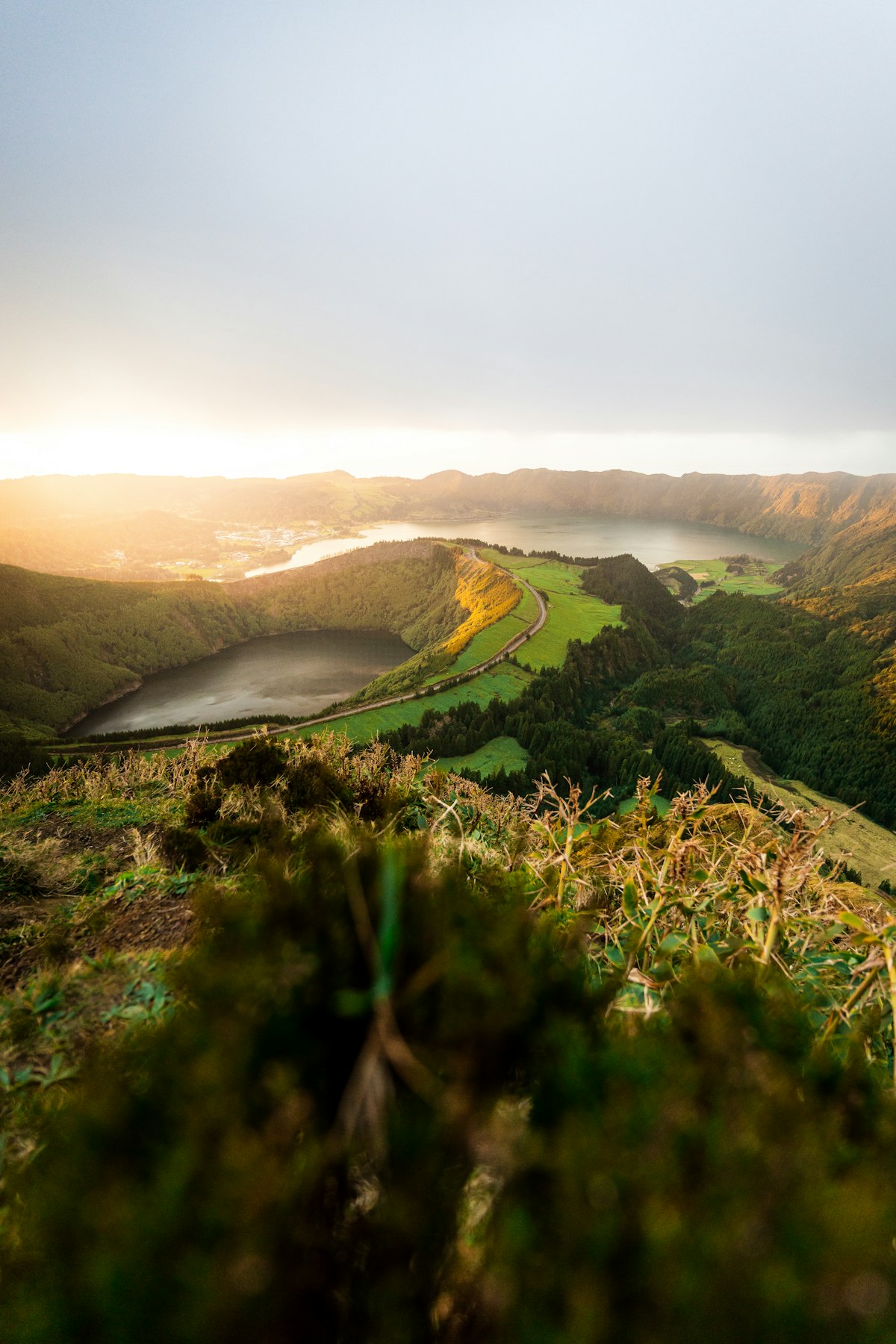
The biggest and most visited island — twin crater lakes at Sete Cidades, the steaming Furnas caldera valley, and the gateway airport for the whole archipelago.
São Miguel is the largest island in the Azores (65km long) and the one through which almost all international visitors arrive, via João Paulo II Airport in Ponta Delgada. The island concentrates the most famous Azorean landscapes in a single accessible day-trip circuit: the Sete Cidades caldera in the west (two lakes — one blue, one green — filling the crater of an extinct volcano, their colours reputedly reflecting the eye colour of the lovers in the local legend), the Lagoa do Fogo in the centre (a pristine crater lake at 590m altitude in a protected nature reserve), and the Furnas valley in the east (a caldera floor with steaming fumaroles, a geothermal lake, and the traditional cozido das Furnas — a meat and vegetable stew cooked underground in the volcanic heat for 8 hours and served at noon). Ponta Delgada is a functional and pleasant city with a baroque 18th-century centre, good restaurants, and ferry connections to the central group islands.
Scores
Walkability
Transit
Price
Local feel
Nightlife
Family-friendly
Centrality
What you gain
- ↑Sete Cidades at dawn: arriving at the Miradouro da Boca do Inferno viewpoint before 8am means the crater is often below the cloud level with the twin lakes (one blue, one green) visible in near-perfect silence; by 9am tour coaches arrive and the view frequently clouds over; the dawn window on a clear day is one of the great European landscape experiences
- ↑Cozido das Furnas: eating the traditional volcanic stew in the Furnas valley — pork, blood sausage, chicken, black pudding, chouriço, and root vegetables cooked in sealed pots underground in the geothermal volcanic heat since 7am and served at noon in the restaurants above the steam vents — is the most distinctive culinary experience in the Azores and one of the most unusual food traditions in Portugal
- ↑Termas da Ferraria hot springs: a natural pool where geothermal hot water (35–40°C) meets the Atlantic Ocean directly on the island's northwest coast — the pool is cut into the volcanic lava shelf and filled by the tide, creating a warm seawater bath with the full Atlantic horizon in front; a 30-minute drive from Ponta Delgada and free to use
What you sacrifice
- ↓São Miguel receives 80%+ of the Azores' international visitors and the main attraction circuit is consequently the most crowded in the archipelago — the Sete Cidades viewpoints, the Furnas geothermal area, and the Lagoa do Fogo are all on tour bus itineraries and see peak visitor volume from 10am–4pm in summer; early morning access is the essential tactic
- ↓Ponta Delgada is a working city, not a charming village — the tourism infrastructure is solid but the city centre has the slightly anonymous quality of a mid-sized Portuguese regional city; those expecting the charm of Horta (Faial) or Angra (Terceira) will find Ponta Delgada functional rather than beautiful
Best for
Avoid if
Other Azores neighbourhoods
The cultural capital — the UNESCO baroque city of Angra do Heroísmo, the Algar do Carvão lava tube, and the Sanjoaninas bull festival.
The two islands facing each other across 8km of Atlantic — Faial's perfect caldera, Pico's UNESCO vineyards, and Portugal's highest summit.
The most remote and beautiful island — waterfalls, blue hydrangea valleys, calderas ringed by ancient laurel forest, and almost no other tourists.
Know where to stay — now find when to go.
Best time to visit Azores →