Azores
Faial & Pico
Unsplash / Unsplash
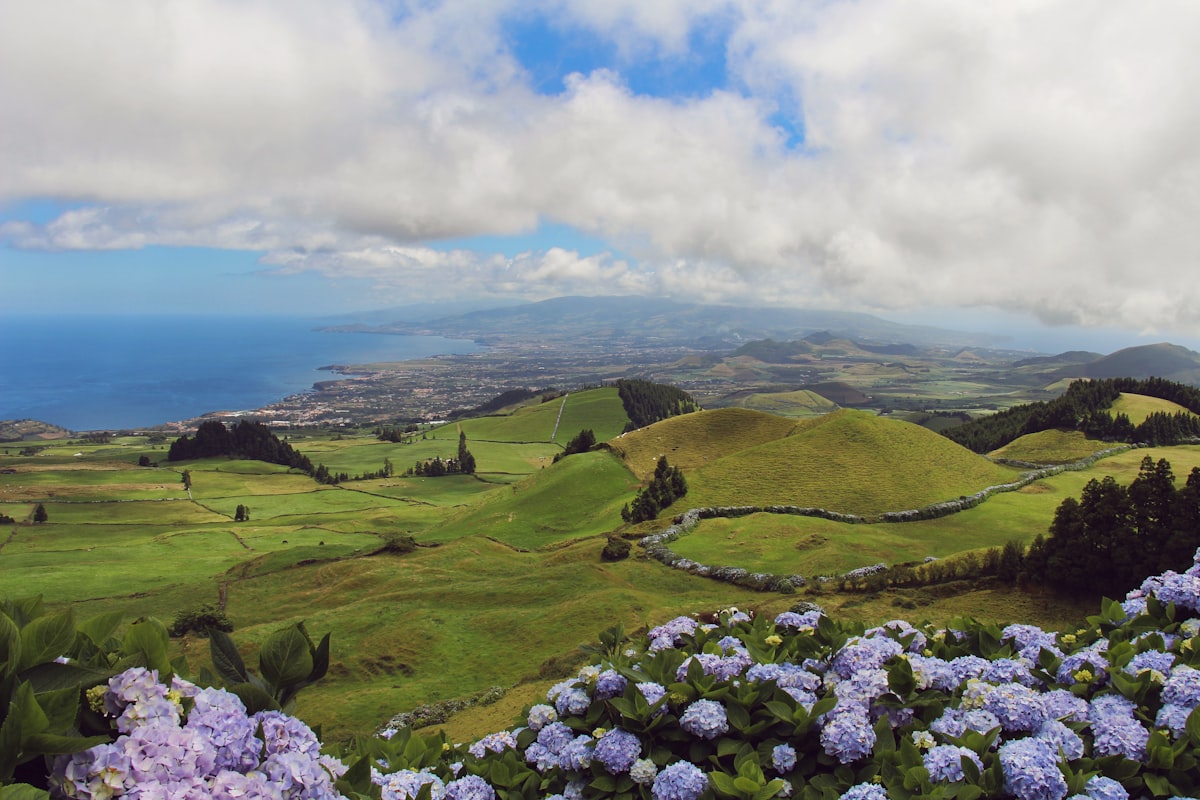
The two islands facing each other across 8km of Atlantic — Faial's perfect caldera, Pico's UNESCO vineyards, and Portugal's highest summit.
Faial and Pico are often treated as a single destination because they are separated by only 8km of the Faial-Pico channel (15 minutes by ferry), and together they create the most visually dramatic island pair in the Azores: Faial has a near-perfect circular caldera (Caldeira do Faial, 400m deep, 2km wide, walkable around the rim in 90 minutes) and the charming yachting town of Horta, whose Peter Café Sport is the most famous mid-Atlantic bar for transatlantic sailors; Pico has the volcano itself — 2,351m, the highest point in Portugal, dominating every view from Faial across the channel — and the UNESCO-listed wine landscape of the southern shore, where Verdelho grapes grow in rectangular plots carved from black lava in a basalt-walled patchwork that extends for 20km along the coast. Pico's sperm whale watching (Lajes do Pico) is operated by descendants of the island's former whale hunters, using the same land-based spotting techniques as the whaling era.
Scores
Walkability
Transit
Price
Local feel
Nightlife
Family-friendly
Centrality
What you gain
- ↑Climbing Pico volcano: the 4–5 hour round trip to the summit of Portugal (2,351m, through cloud forest, alpine scrub, and finally bare volcanic lava fields to the Piquinho peak above the summit crater) is the finest mountain day in the Azores — the view from the summit on a clear day encompasses all nine Azores islands visible simultaneously; the trail is waymarked, requires no technical equipment, and the base station provides compulsory guide assignment above 1,800m
- ↑Watching sperm whales from Lajes do Pico with the descendants of whalers: the vigia (lookout posts) on Pico's hillsides where whale hunters once spotted sperm whales are still used by the whale watch operators' land-based spotters to direct boats by radio to the whale positions; the connection between the island's whaling past and its conservation present is made explicit on every trip — the guides' grandfathers hunted the same whale family units they now protect
- ↑Horta marina at dusk: the Peter Café Sport on Horta marina is the single most famous waypoint for transatlantic yacht crews — the walls inside are covered floor-to-ceiling with painted boat names and crew logos from every ocean crossing since 1934; sitting on the terrace watching the evening light on Pico volcano across the channel with a Faial gin tonic is among the most atmospheric bar experiences in the Atlantic
What you sacrifice
- ↓The Pico summit is weather-dependent — cloud sits on the summit for an average of 200 days per year; the window of reliable summit-clear weather is roughly July 15 to September 15, and even within that period an early start (gate at 7am) is required to summit before the cloud builds; a failed summit attempt due to cloud is a common and disappointing outcome
- ↓Faial and Pico have fewer restaurants, bars, and evening activities than São Miguel — the two islands together have perhaps 15–20 restaurants of note; those wanting a varied dining scene should plan accordingly or combine with São Miguel
Best for
Avoid if
Other Azores neighbourhoods
The cultural capital — the UNESCO baroque city of Angra do Heroísmo, the Algar do Carvão lava tube, and the Sanjoaninas bull festival.
The biggest and most visited island — twin crater lakes at Sete Cidades, the steaming Furnas caldera valley, and the gateway airport for the whole archipelago.
The most remote and beautiful island — waterfalls, blue hydrangea valleys, calderas ringed by ancient laurel forest, and almost no other tourists.
Know where to stay — now find when to go.
Best time to visit Azores →