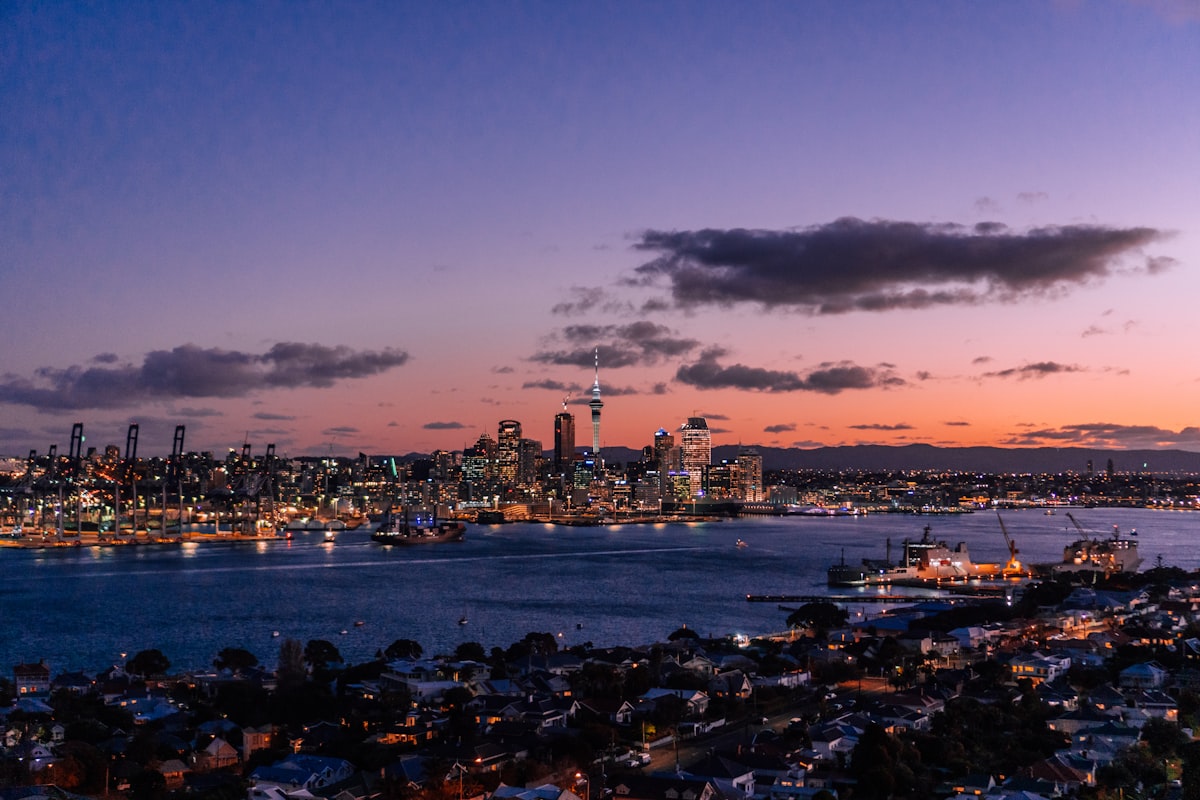
Showing: Oct · Unsplash / Unsplash
New Zealand · Asia Pacific
Best time to visit Auckland
October
Oct scores highest overall — reliable weather and strong local atmosphere. Set your priorities below to personalise this result.
What matters most to you?
All 12 months — click any to expand
Oct
Unsplash / Unsplash
The sweet spot — spring warmth, Diwali festival, and Waiheke wine season re-opening.
18°C
High
12°C
Low
90mm
Rain
6.1h
Sun/day
What you gain
- ↑October is the underrated Auckland month: 18°C, 6.1 sunshine hours, and the city's outdoor culture re-emerging. Waiheke Island wineries resume their full terrace service in October — Stonyridge Vineyard's terrace among the olive trees is one of the Pacific's great outdoor lunch settings, and in October it's accessible without summer competition for tables.
- ↑Auckland's Diwali Festival (typically late October at Aotea Square) is one of the Southern Hemisphere's largest Diwali celebrations — reflecting the significant South Asian population in Auckland's west Auckland suburbs. The free public event brings traditional food, music, dance, and the city's multicultural identity into a single spectacular weekend.
- ↑The Ponsonby and Grey Lynn café and restaurant strips are at their most pleasant in October: outdoor seating returns, the area's Victorian villas glow in the spring light, and the walking circuit from Ponsonby Road to Karangahape Road is a beautiful 90-minute introduction to Auckland's creative neighbourhoods.
What you sacrifice
- ↓October rainfall (90mm) is still real — spring showers are frequent and can be intense. But Auckland spring showers pass quickly: the city's maritime climate means weather changes are rapid rather than sustained.
- ↓Hotel prices begin rising as October signals the approach of the summer season: rates are already 10–15% above the August–September trough.
Oct scores highest overall — reliable weather and strong local atmosphere. Set your priorities below to personalise this result.
Oct
The sweet spot — spring warmth, Diwali festival, and Waiheke wine season re-opening.
18°C
High
90mm
Rain
6.1h
Sun
- ↑October is the underrated Auckland month: 18°C, 6.1 sunshine hours, and the city's outdoor culture re-emerging. Waiheke Island wineries resume their full terrace service in October — Stonyridge Vineyard's terrace among the olive trees is one of the Pacific's great outdoor lunch settings, and in October it's accessible without summer competition for tables.
- ↑Auckland's Diwali Festival (typically late October at Aotea Square) is one of the Southern Hemisphere's largest Diwali celebrations — reflecting the significant South Asian population in Auckland's west Auckland suburbs. The free public event brings traditional food, music, dance, and the city's multicultural identity into a single spectacular weekend.
- ↑The Ponsonby and Grey Lynn café and restaurant strips are at their most pleasant in October: outdoor seating returns, the area's Victorian villas glow in the spring light, and the walking circuit from Ponsonby Road to Karangahape Road is a beautiful 90-minute introduction to Auckland's creative neighbourhoods.
- ↓October rainfall (90mm) is still real — spring showers are frequent and can be intense. But Auckland spring showers pass quickly: the city's maritime climate means weather changes are rapid rather than sustained.
- ↓Hotel prices begin rising as October signals the approach of the summer season: rates are already 10–15% above the August–September trough.
Top travel windows
★ BestOctober
Best overall
Highest combined score
18°C
High
90mm
Rain
6.1h
Sun
June
Best for value
Lowest prices & fees
14°C
High
145mm
Rain
3.7h
Sun
June
Fewest crowds
Quietest month
14°C
High
145mm
Rain
3.7h
Sun
Breakdown by priority
Best for weather
January
24°C high · 79mm rain · 7.8hrs sun/day
Best for budget
June
June delivers the year's lowest accommodation prices across central Auckland and the North Shore. The Sky Tower observation deck and Auckland Museum on the Domain are empty of the summer tourism pressure — the Great Barrier collection and Pacific Cultures galleries are extraordinary at any pace.
Fewest crowds
June
Auckland's winter is genuinely mild compared to European or American equivalents: 14°C days, rarely below 9°C at night, and no frost or snow in the city. For travellers coming from colder climates, "Auckland winter" is merely a cooler, wetter version of European spring. The city functions fully and hiking the Auckland volcanic cones in June light has a dramatic, uncrowded character.
Where to stay in Auckland
All neighbourhoods →Viaduct Harbour & CBD
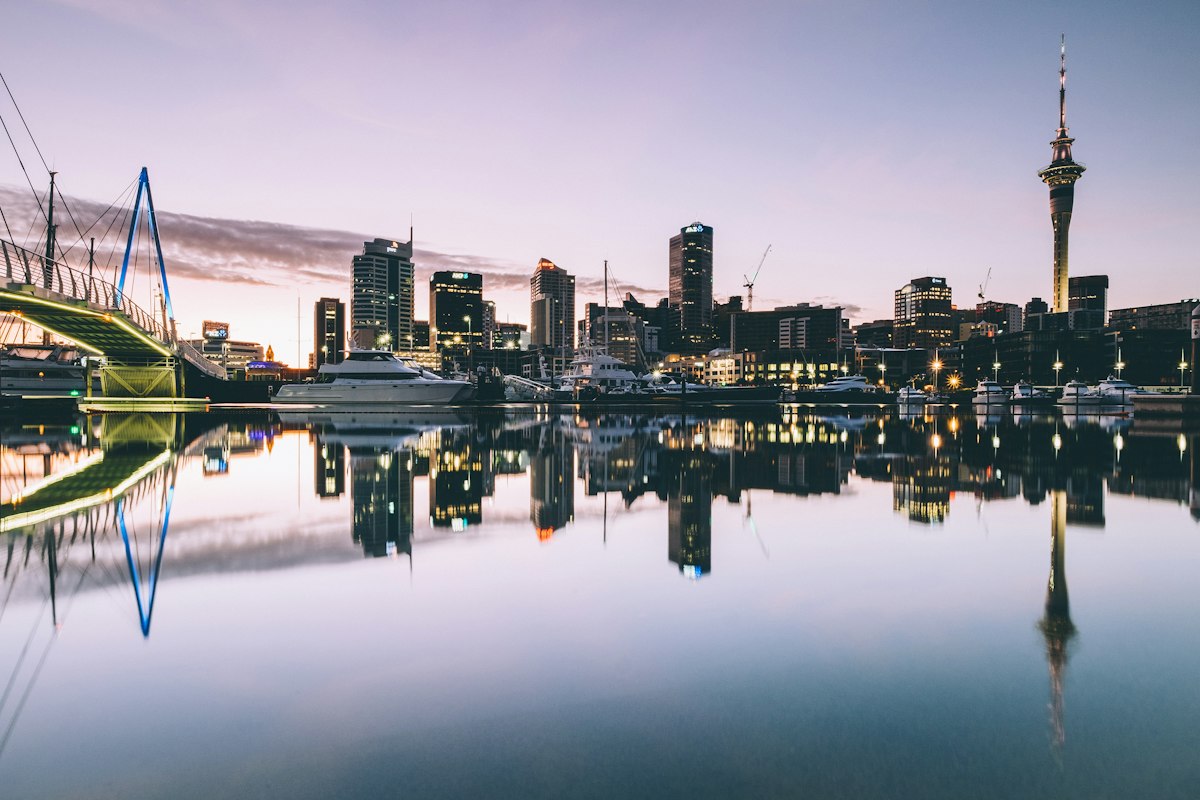
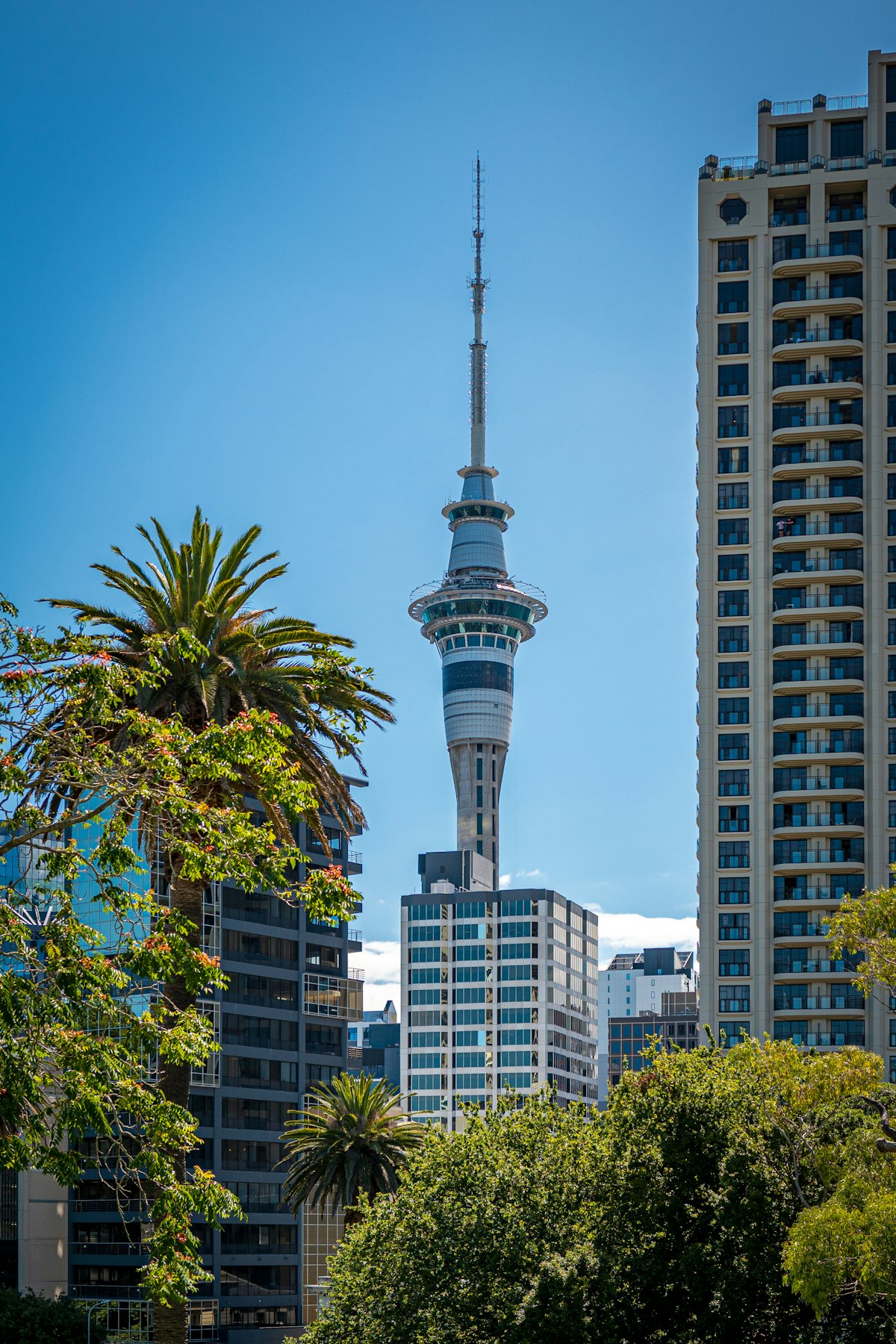
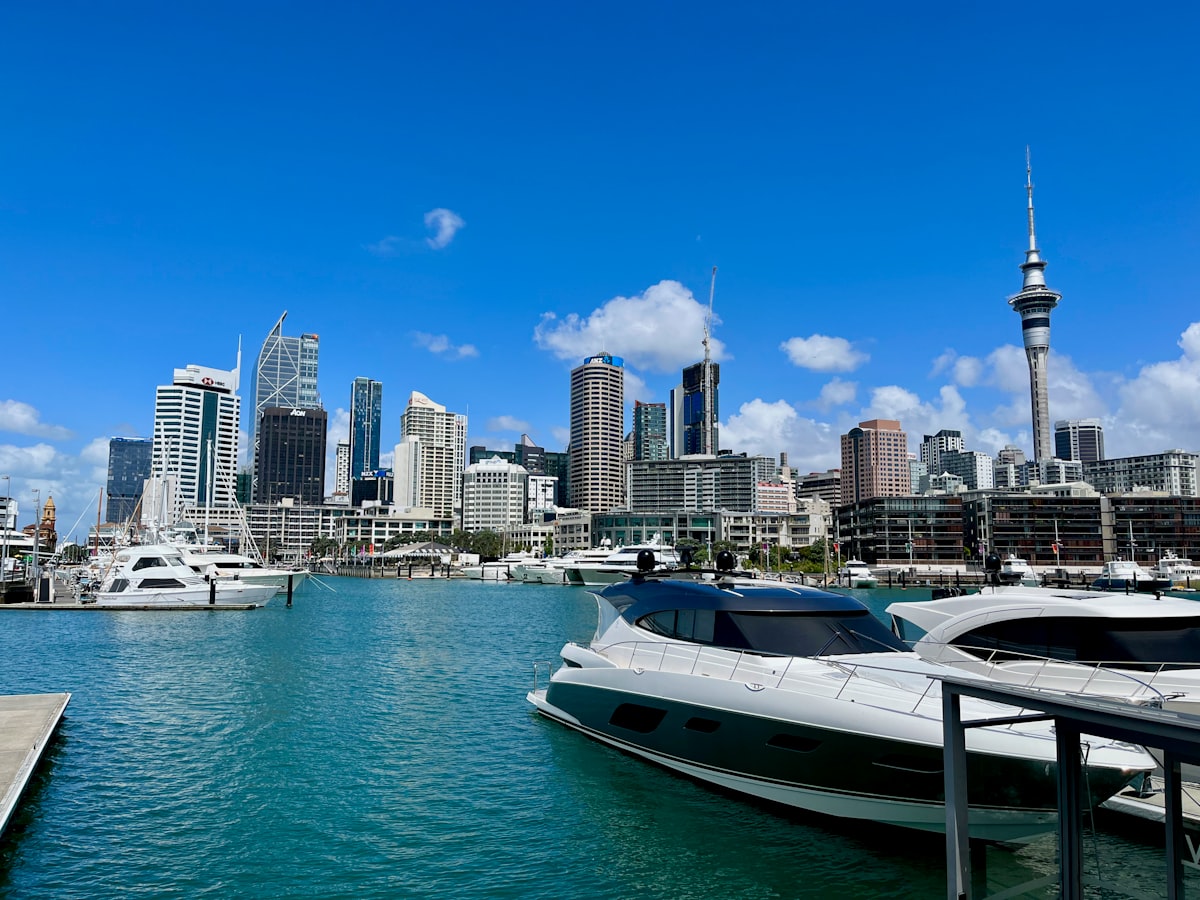
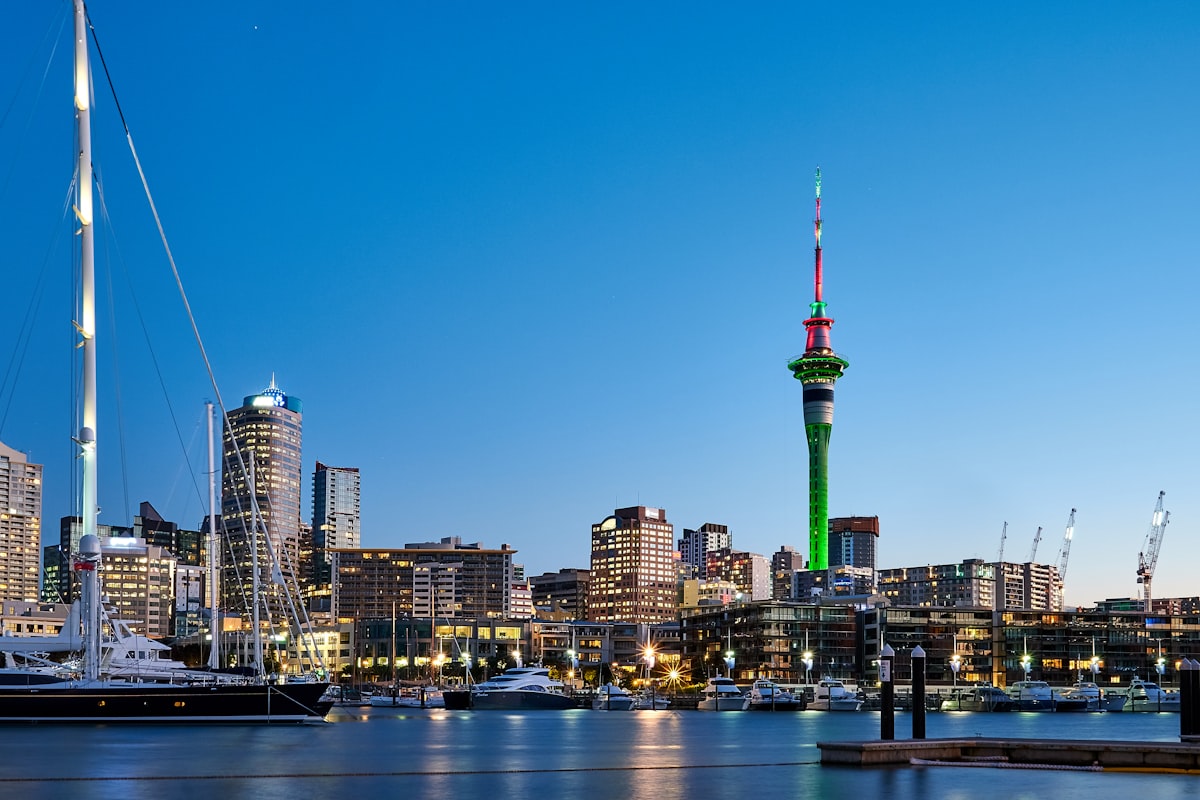
Auckland's nautical heart — the America's Cup precinct, Sky Tower, and the city's best waterfront dining.
10/10
Central
9/10
Walk
9/10
Transit
Ponsonby & Grey Lynn
Auckland's café and restaurant strip — Victorian villas, the best food scene outside the CBD.
7/10
Central
9/10
Walk
7/10
Transit
Also exploring
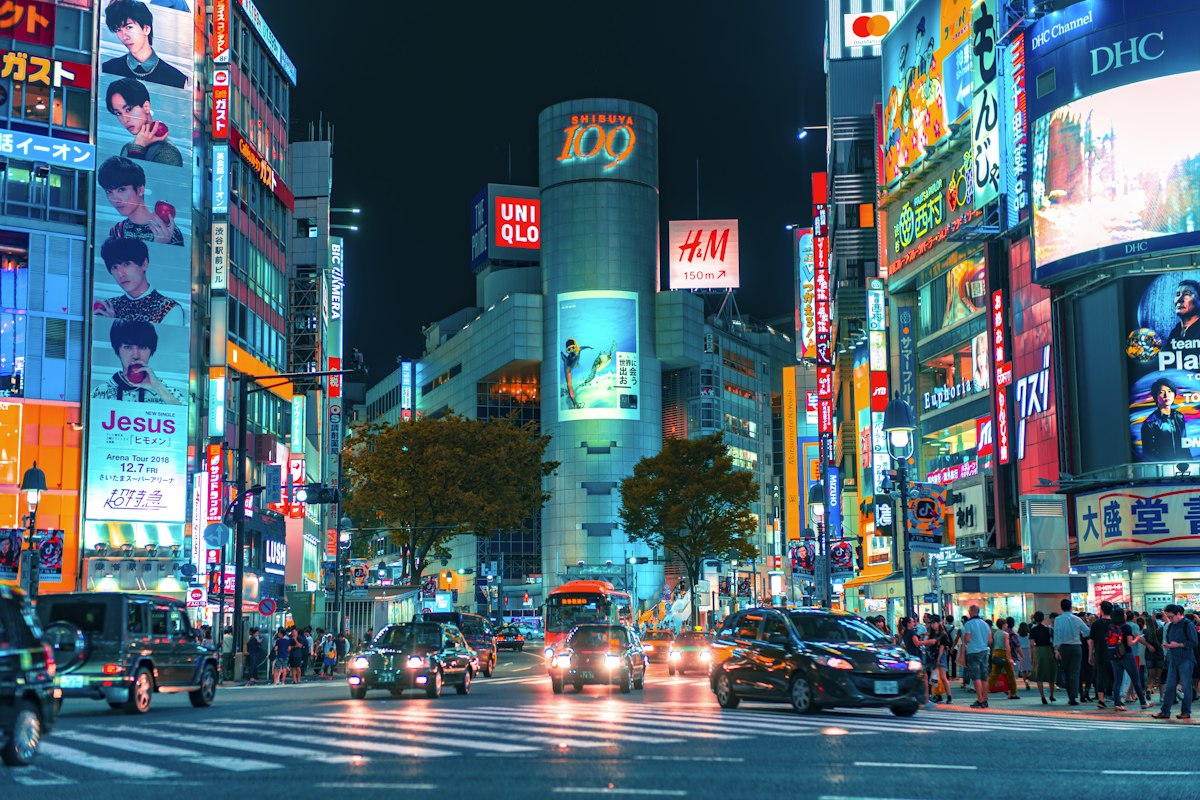
Tokyo
Japan
A city of dramatic seasonal contrasts — cherry blossom crowds, oppressive summer humidity, and golden autumn foliage — where the wrong timing can make or break the trip.
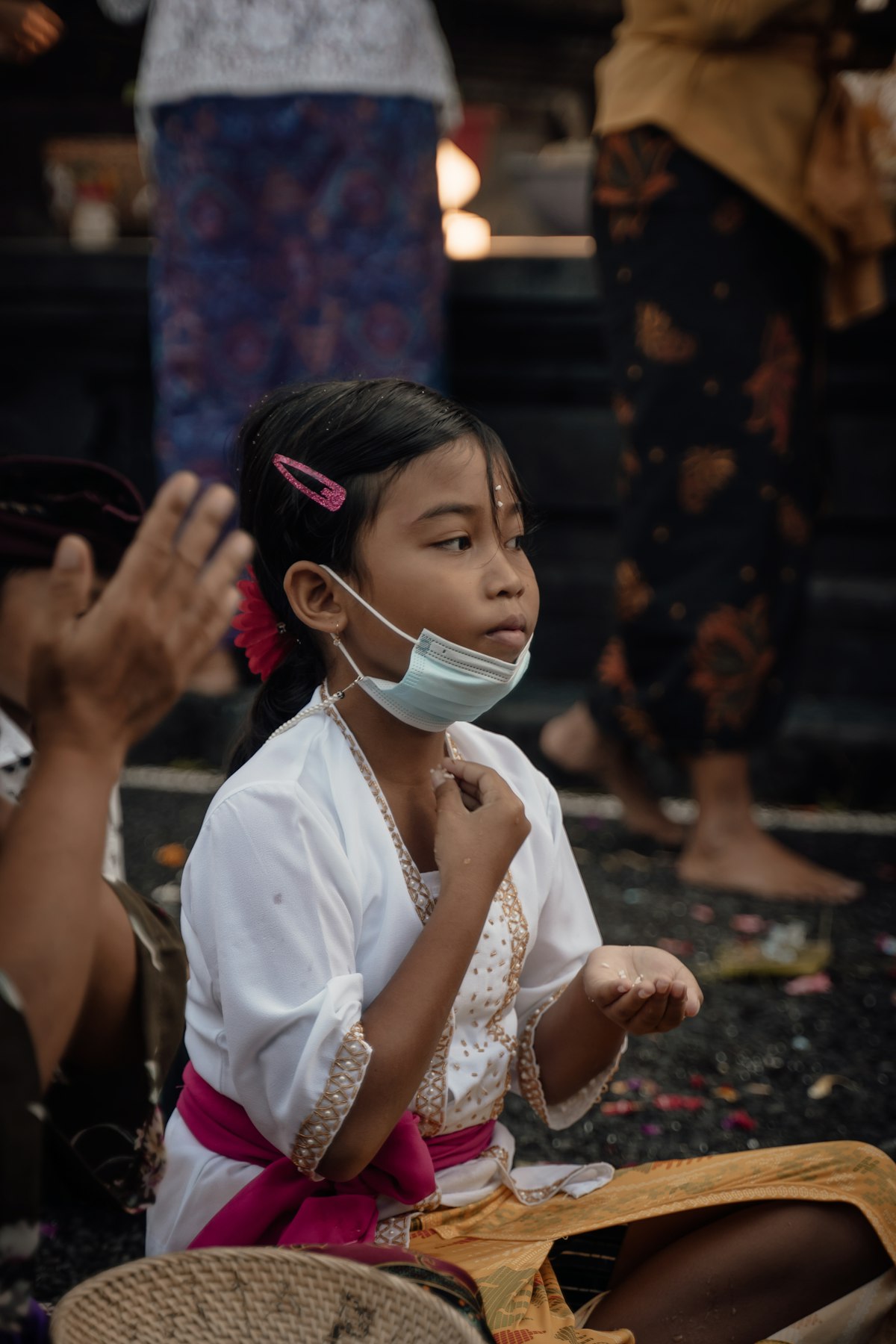
Bali
Indonesia
A Hindu island of rice terraces, temple ceremonies, and surf breaks where the monsoon makes timing genuinely binary — the difference between dry and wet season is not subtle.
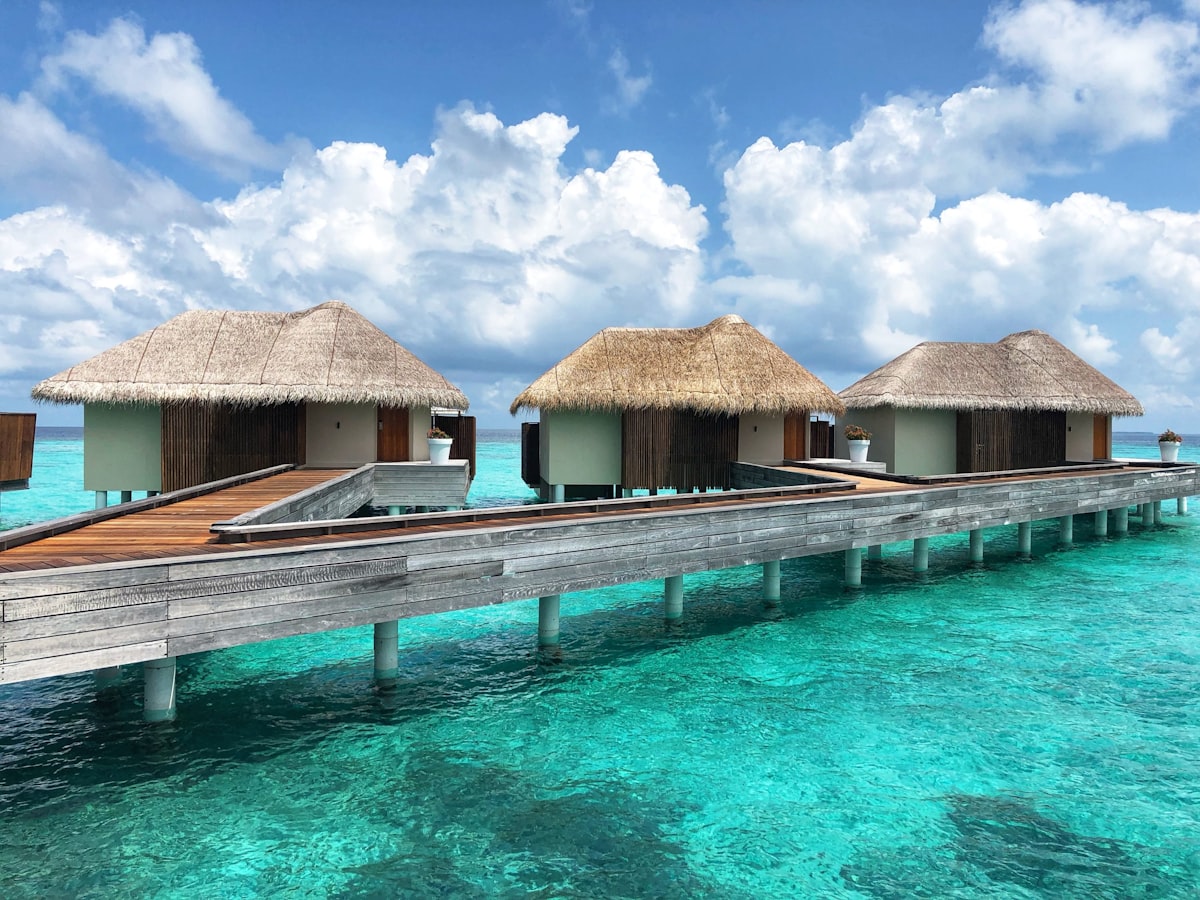
Maldives
Maldives
A destination defined almost entirely by its monsoon calendar — the difference between the NE dry season (November–April) and SW wet season (May–October) is not subtle and shapes every aspect of the experience.
Worth knowing
October scores highest overall. January is the most crowded month — avoid if you can. See crowd-free ranking →
Month by month breakdown
January#3▾
Gains
- ↑January is Auckland's finest month: 24°C days, reliable sunshine at 7.8 hours per day, and the city fully alive around the Waitemata Harbour. The Auckland Anniversary Day Regatta (last Monday of January) fills the harbour with over 1,000 sailing vessels — the world's largest one-day sailing event — and the waterfront energy from Viaduct Harbour to Mission Bay is extraordinary.
- ↑Waiheke Island is 20 minutes by Fullers Ferry from the Downtown Ferry Terminal and in January it is at its best: the boutique wineries (Stonyridge, Mudbrick, Cable Bay) are pouring their summer releases, the olive groves are lush, and the white sand of Onetangi Beach rivals anything in the Mediterranean. A day trip to Waiheke is the single most distinctive Auckland experience.
- ↑The Viaduct Harbour America's Cup precinct atmosphere — Auckland has won the Cup four times — is embedded in the city's identity, and summer brings racing events, yacht club open days, and a harbour sailing culture that makes the waterfront feel genuinely nautical rather than purely decorative.
Sacrifices
- ↓January is New Zealand's summer holiday peak: domestic tourists from Wellington and Christchurch join international visitors, driving accommodation prices to annual highs. Waiheke Island ferries sell out on weekends — book the 9am sailing online the day before.
- ↓Auckland in January can be humid: the 74% average humidity combined with 24°C creates a subtropical warmth that some visitors find more intense than expected for a temperate city. The volcanic black sand beaches at Piha (west coast) absorb heat intensely.
February#4▾
Gains
- ↑February is typically Auckland's driest summer month: 73mm of rainfall, 24°C, and 7.3 sunshine hours. The Waitakere Ranges hiking trails (Piha, Karekare, Bethells Beach — all 45 minutes from the CBD) are at their clearest, and the west coast black sand surf beaches are warm enough for extended swimming despite the dramatic wave conditions.
- ↑Homegrown music festival (March) preparations begin — the Auckland live music scene activates in February with pre-festival warm-up events and the Powerstation and Tuning Fork venues in Kingsland running full summer programmes.
- ↑Waiheke's vineyards are harvesting in February: the grape harvest season means cellar doors are particularly engaged and some wineries host harvest events accessible to day visitors from Auckland.
Sacrifices
- ↓February retains peak-season pricing across the board. Waiheke Island accommodation requires 4–8 weeks advance booking for quality properties. The island's narrow roads and limited bus network make getting around without planning frustrating on busy summer weekends.
- ↓Auckland's summer can include heat waves: temperatures above 27°C with high humidity produce conditions that the city's relatively modest air-conditioning infrastructure (compared to Australian cities) doesn't fully address in older buildings.
March#2▾
Gains
- ↑Homegrown music festival (early March at Queens Wharf) is New Zealand's premier domestic music event — a 12-hour, all-New Zealand lineup on the Auckland waterfront that draws 20,000+ attendees. The setting, with the Sky Tower visible and Waitemata Harbour as backdrop, is among the world's more attractive music festival environments. Tickets typically sell out months in advance.
- ↑March temperatures remain excellent at 22°C while the summer tourist peak subsides: accommodation prices drop noticeably from February, Waiheke Island ferries have available seats, and the general pace of the city eases into the pleasant Auckland autumn.
- ↑The Hauraki Gulf sailing conditions are at their best for day sailors: consistent autumn winds without the January crowds on the water. Sailing charter operators (including NZL Sailing Team experiences) offer good availability in March.
Sacrifices
- ↓Rainfall increases from February: 93mm with occasional multi-day rain events that can affect hiking plans in the Waitakere Ranges. The Piha surf beach rip currents require particular caution.
- ↓International school holiday patterns (specifically Australian and British Easter visitors) can create a secondary March–April accommodation pressure that drives prices back up.
April#8▾
Gains
- ↑April is Auckland's quietest decent-weather month: 19°C days, good hiking conditions in the Waitakere Ranges and on the volcanic cones (One Tree Hill / Maungakiekie, Mount Eden / Maungawhau), and significantly reduced tourist volumes from summer peaks. One Tree Hill Domain in autumn light is beautiful and rarely photographed.
- ↑ANZAC Day (April 25) is one of New Zealand's most important commemorations. The Auckland War Memorial Museum on the Domain hosts the city's main ceremony; the dawn service draws large crowds of locals. For international visitors interested in the Pacific dimension of the First World War, this is a moving and accessible experience.
- ↑Waiheke Island visits in April combine the vineyards' post-harvest character (some produce new-vintage tastings) with almost-empty ferry crossings compared to summer — the 35-minute scenic crossing is its own pleasure.
Sacrifices
- ↓April's rainfall at 104mm is real: overcast periods of 2–3 days are common, and the Waitakere Ranges trails can become muddy after rain. The Piha black sand beach swimming season is effectively over.
- ↓Some Waiheke Island restaurants reduce days of opening from April through August — the island's seasonal economy means less choice than summer, and advance checking of opening hours is recommended.
May#9▾
Gains
- ↑The Auckland Writers Festival (typically mid-May) at the Aotea Centre is one of the Southern Hemisphere's finest literary events: international authors including Booker Prize winners, New Zealand and Pacific voices, and the most engaged general public of any comparable festival in the region. Sessions sell out quickly; book through the festival website.
- ↑May hotel rates are among the year's most affordable. Budget airline capacity on the Auckland–Sydney and Auckland–Melbourne routes dips and fares are competitive. This is the most cost-effective month for an Auckland stopover en route to the wider Pacific or Southeast Asia.
Sacrifices
- ↓May's 128mm of rainfall and declining sunshine hours (4.5) signal the approach of the Auckland winter. The city is pleasant but requires warm layers and a waterproof — the subtropical warmth of January feels distant.
- ↓Waiheke Island day trips in May are less reliable: fewer ferry services, shorter daylight, and the possibility of rain curtailing outdoor vineyard exploration.
June#10▾
Gains
- ↑Auckland's winter is genuinely mild compared to European or American equivalents: 14°C days, rarely below 9°C at night, and no frost or snow in the city. For travellers coming from colder climates, "Auckland winter" is merely a cooler, wetter version of European spring. The city functions fully and hiking the Auckland volcanic cones in June light has a dramatic, uncrowded character.
- ↑June delivers the year's lowest accommodation prices across central Auckland and the North Shore. The Sky Tower observation deck and Auckland Museum on the Domain are empty of the summer tourism pressure — the Great Barrier collection and Pacific Cultures galleries are extraordinary at any pace.
Sacrifices
- ↓June is Auckland's wettest month: 145mm with the lowest sunshine hours of the year (3.7). Multi-day grey, overcast spells are the Auckland winter norm. Waiheke Island in June requires accepting that the scenery looks quite different from its summer travel brochure version.
- ↓The outdoor Auckland — Waiheke, the beaches, the harbour sailing culture — is essentially paused. The city pivots indoors, which is still good, but the distinctive coastal dimension of Auckland is muted.
July#11▾
Gains
- ↑July is Auckland's school holiday month (New Zealand's two-week winter break falls in July), which brings some domestic visitors but keeps international tourism minimal. The result is a paradox: busier than the June–August norm, but still far quieter than summer — and hotel prices remain low.
- ↑The Auckland Art Gallery Toi o Tāmaki (free entry) and the Museum of Transport and Technology (MOTAT) in Western Springs are excellent winter-day destinations. The art gallery's permanent Māori and Pacific collections are some of the most significant in the Southern Hemisphere.
- ↑Day trips to Rotorua (2.5 hours by SkyBus direct shuttle) are particularly appealing in winter: the geothermal fields (Te Puia, Wai-O-Tapu) produce more dramatic steam formations in cold air, and Māori cultural performances at Tamaki Māori Village are easier to book.
Sacrifices
- ↓July is Auckland's coldest month: 8°C nights with persistent grey overcast and 142mm of rain. The subtropical greenery is still present but the city lacks the harbour and outdoor energy that defines Auckland's appeal to most visitors.
- ↓Many outdoor tourist experiences — including sailing charters, Waiheke day trips with confidence of fine weather, and west coast beach visits — are weather-dependent in July in a way that makes advance planning difficult.
August#12▾
Gains
- ↑August is the turning point of Auckland's winter: sunshine hours begin recovering (4.4, up from July's 3.9), temperatures edge upward, and the sense of spring approaching is real. The Waitakere Ranges forest paths are still muddy but the rewards include ancient kauri tree groves and the dramatic black sand coast at Karekare (where The Piano was filmed) accessible year-round.
- ↑Prices remain in the affordable bracket — August hotel rates are closer to July than to September, offering a cost-effective window with modestly better weather and the knowledge that spring is imminent.
Sacrifices
- ↓August is still genuinely winter: 117mm of rainfall, 14°C days, and the outdoor harbour culture that defines Auckland's summer character is still largely absent. Visitors expecting a sunny Pacific city in August should recalibrate expectations.
- ↓The Hauraki Gulf sailing and Waiheke wine culture requires waiting for September onwards. August visits are better built around the city's indoor cultural assets.
September#6▾
Gains
- ↑September is Auckland's spring opening: sunshine returns to 5.3 hours per day, 16°C days become reliably pleasant for outdoor activities, and the Waitakere Ranges trails dry out enough for comfortable hiking. The Arataki Visitor Centre in the Waitakere Ranges is the gateway to over 250km of trails including the iconic Piha and Karekare beach walks.
- ↑The volcanic cones — particularly Mount Eden (Maungawhau) and the restored One Tree Hill Domain — are at their best in spring: the grass is green from winter rain, pohutukawa trees begin their spring growth, and the 360-degree harbour views from either summit are exceptional in the clear spring air.
- ↑September accommodation rates are still well below summer peaks — the last month before October sees prices start climbing toward the summer season.
Sacrifices
- ↓September remains unpredictable: 97mm of rainfall distributed unevenly means outdoor plans require flexibility. A September hike to the Waitakere summit trails can be perfect or can turn into a muddy rain-jacket exercise.
- ↓The Waiheke wine and beach season is not quite there: while the island is accessible and beautiful in September, full outdoor winery terrace season starts in October.
October#1▾
Gains
- ↑October is the underrated Auckland month: 18°C, 6.1 sunshine hours, and the city's outdoor culture re-emerging. Waiheke Island wineries resume their full terrace service in October — Stonyridge Vineyard's terrace among the olive trees is one of the Pacific's great outdoor lunch settings, and in October it's accessible without summer competition for tables.
- ↑Auckland's Diwali Festival (typically late October at Aotea Square) is one of the Southern Hemisphere's largest Diwali celebrations — reflecting the significant South Asian population in Auckland's west Auckland suburbs. The free public event brings traditional food, music, dance, and the city's multicultural identity into a single spectacular weekend.
- ↑The Ponsonby and Grey Lynn café and restaurant strips are at their most pleasant in October: outdoor seating returns, the area's Victorian villas glow in the spring light, and the walking circuit from Ponsonby Road to Karangahape Road is a beautiful 90-minute introduction to Auckland's creative neighbourhoods.
Sacrifices
- ↓October rainfall (90mm) is still real — spring showers are frequent and can be intense. But Auckland spring showers pass quickly: the city's maritime climate means weather changes are rapid rather than sustained.
- ↓Hotel prices begin rising as October signals the approach of the summer season: rates are already 10–15% above the August–September trough.
November#7▾
Gains
- ↑November is the best month to hike the Waitakere Ranges: 20°C temperatures, 6.8 hours of sunshine, and the trails fully dried out from winter. The Piha surf beach access road leads to one of the world's most dramatic surf scenes — the black sand, the Lion Rock sea stack, and the Waitakere Ranges green backdrop create a landscape unlike any other accessible from a major city in 45 minutes.
- ↑The Auckland Harbour Bridge Bungy and Auckland Bridge Climb operate at full capacity in November without the January queue times. The Sky Tower SkyWalk (216m circumference walk around the exterior) is best experienced in the clear November air with views extending to the Waitakere Ranges, Waiheke, and the Coromandel Peninsula on a clear day.
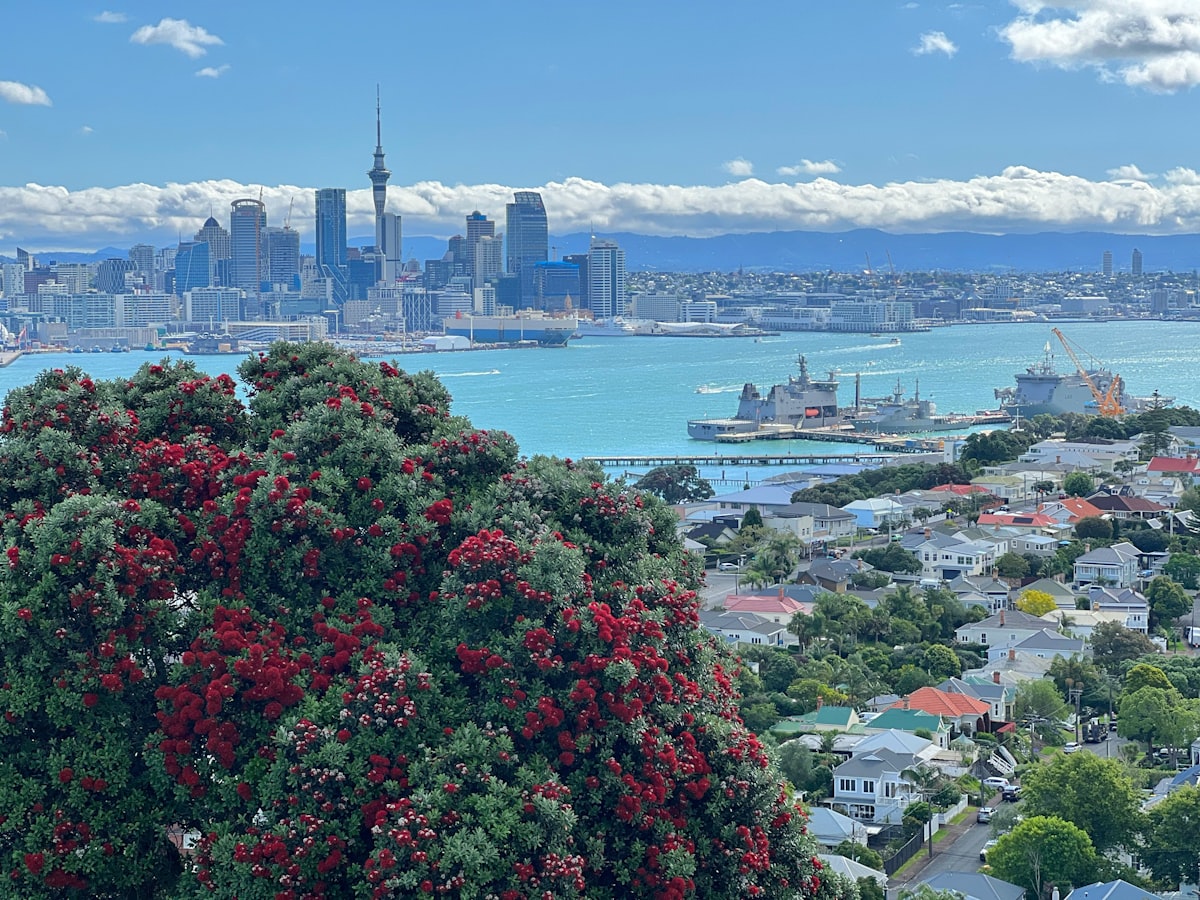
- ↑November pohutukawa trees begin their iconic crimson blooming — the New Zealand Christmas tree lines the coastal roads of the North Shore and Devonport in late November, an image entirely specific to this part of the Pacific.
Sacrifices
- ↓Accommodation prices are rising toward the summer peak: November is noticeably more expensive than September. The annual rugby test matches (New Zealand vs incoming international squads) can fill Auckland's hotels mid-month.
- ↓Spring weather variability persists — 82mm of rainfall and the possibility of multi-day overcast periods remain real. November is better than summer in terms of crowd pressure but the trade-off is weather reliability.
December#5▾
Gains
- ↑December is Auckland at its most visually distinctive: pohutukawa trees — the New Zealand Christmas tree — line the coastal roads, bays, and volcanic hillsides in full crimson bloom from mid-December through January. The red flowers against the blue Waitemata Harbour and green volcanic hills is the defining image of summer in New Zealand's largest city.
- ↑The full summer outdoor culture opens in December: Waiheke Island day trips resume at full service, Hauraki Gulf sailing conditions are excellent, and Mission Bay and Kohimarama beaches fill with locals. Waterfront dining at Viaduct Harbour — Ortolana, Soul Bar & Bistro, the Huami dim sum at SkyCity — is fully operational and animated.
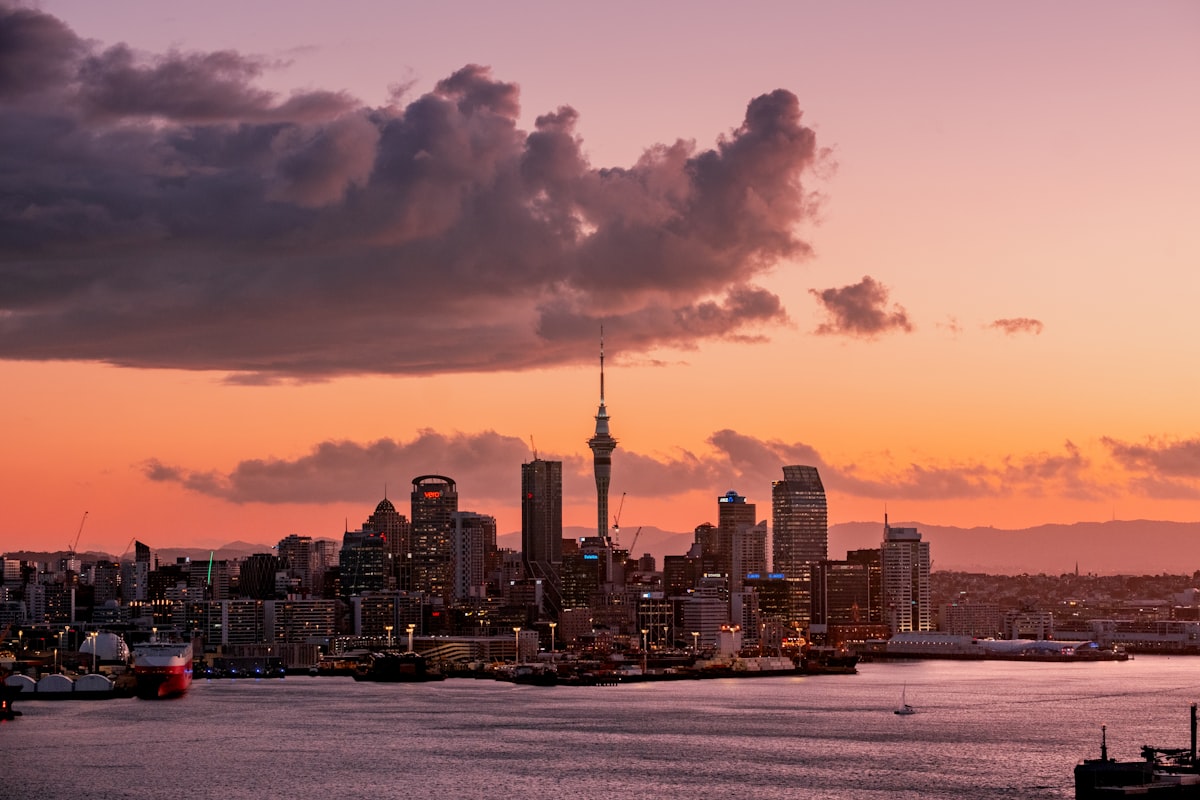
- ↑December daylight extends to nearly 15 hours: the Waitemata Harbour at 9pm in December is still a pale golden dusk, and the sailing culture of the City of Sails makes the most of every hour of light.
Sacrifices
- ↓December is increasingly expensive as Christmas approaches — accommodation prices surge from December 20, and New Year's Eve drives Viaduct Harbour hotel rates to their annual maximum. Summer holiday bookings require 6–8 weeks advance notice for any quality property.
- ↓December's 87mm of rainfall is concentrated in fewer but more intense summer rain events: Auckland's subtropical weather patterns mean clear weeks can break into heavy afternoon downpours that clear equally fast. Flexible daily planning is needed.
How this is calculated
Climate data
Open Meteo ERA5
30-year normals (1991–2020). Temperature, rainfall, sunshine, humidity.
Price & crowd
Tourism research
Seasonal pricing from tourism authority data. Directional — compares months within a destination only.
Personalisation
Weighted scoring
Your priorities change the weights. Budget-first users get different results than weather-first users.
Share this result
October is the best time to visit Auckland
Travel timing updates
New destinations and timing guides, when they land.
No spam. Unsubscribe anytime.