Showing: Apr · Unsplash / Unsplash
Israel · Middle East
Best time to visit Tel Aviv
April
Apr scores highest overall — reliable weather and good value. Set your priorities below to personalise this result.
What matters most to you?
All 12 months — click any to expand
Apr
Unsplash / Unsplash
The best month — perfect temperatures, almost no rain, and the beach season properly underway.
24°C
High
15°C
Low
22mm
Rain
8.9h
Sun/day
What you gain
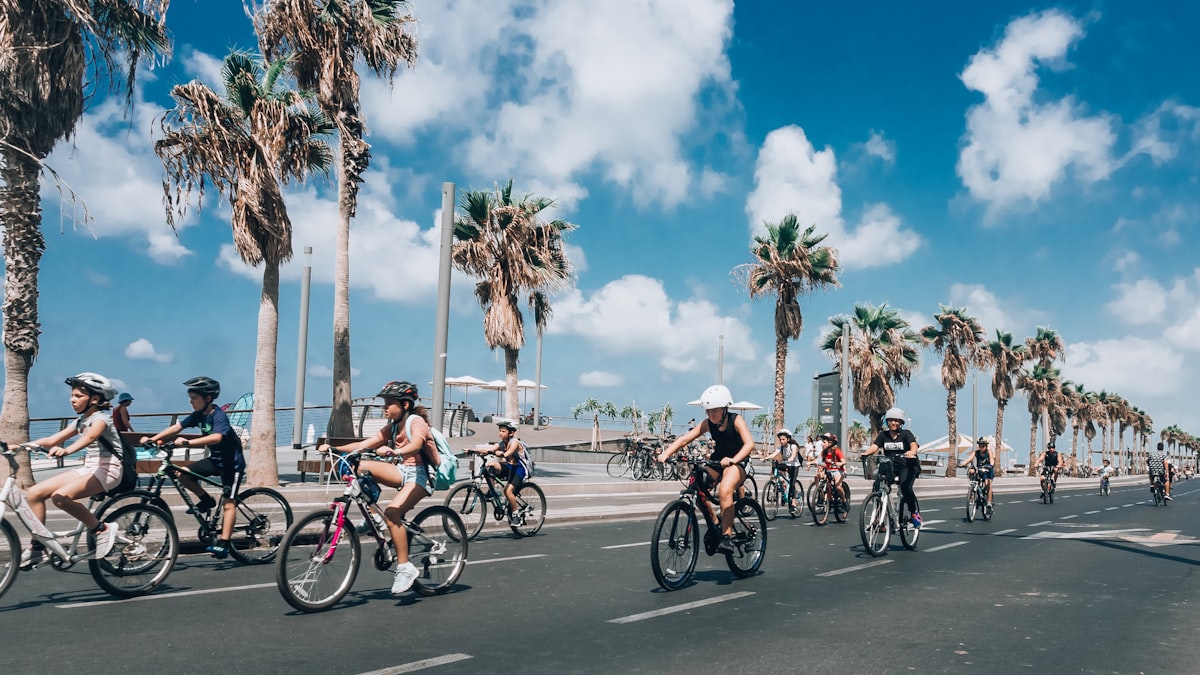
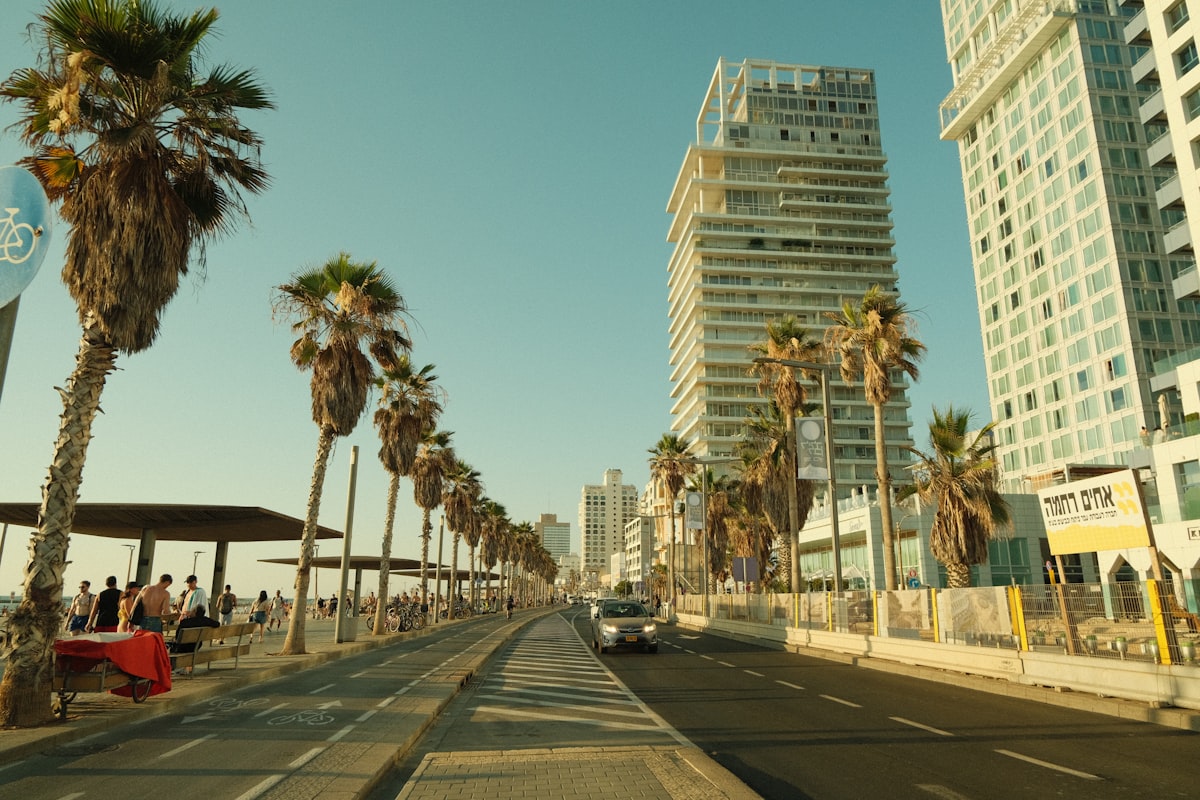
- ↑April is widely considered Tel Aviv's single best month. Temperatures hit 24°C with almost no humidity, the sea reaches 20°C and is swimmable for most visitors, and the 14km tayelet is in full spring operation — the morning run culture, the beachfront cafés, the pickup volleyball and beach tennis. The city operates at maximum energy without the crushing summer heat.
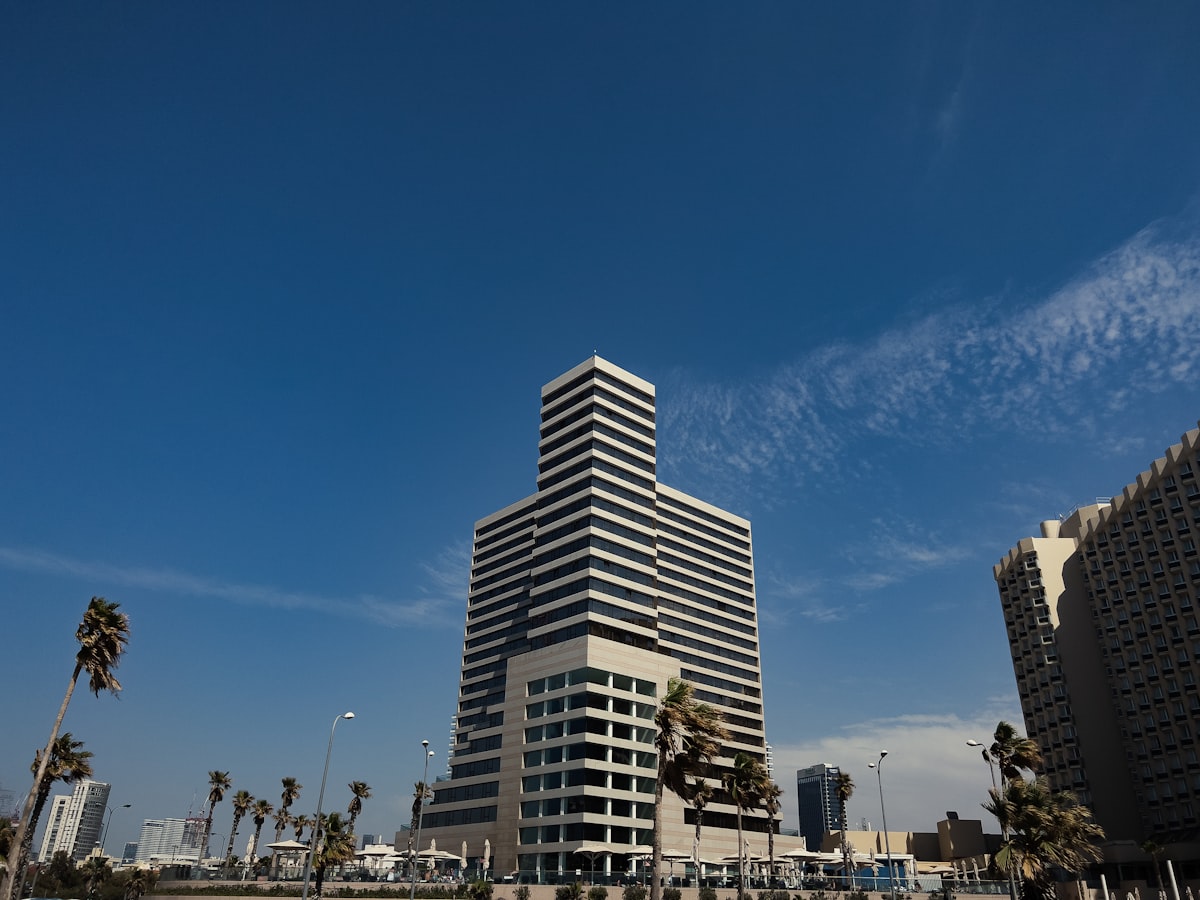
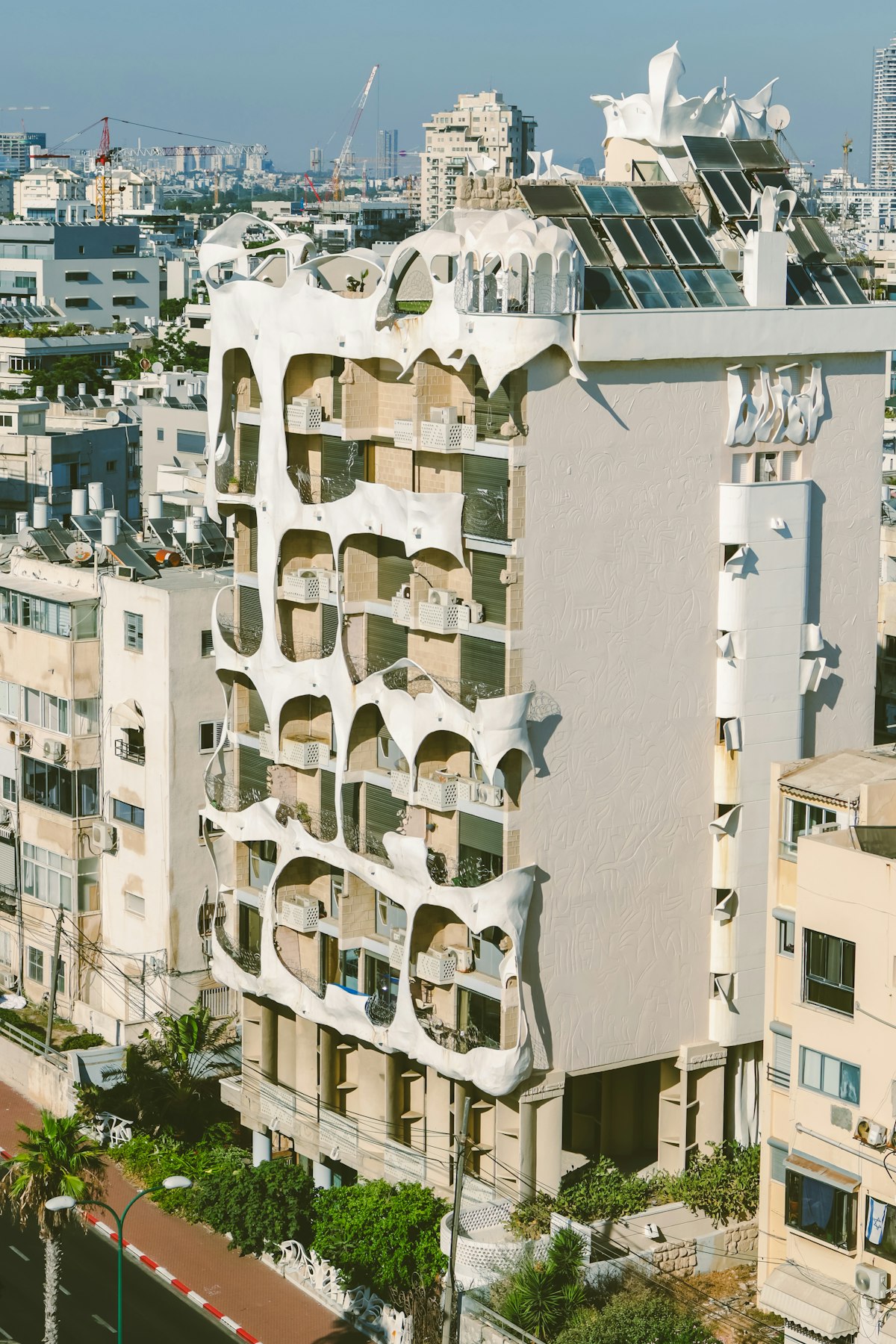
- ↑The White City architecture — the UNESCO-listed concentration of International Style buildings built by German Jewish immigrants in the 1930s and 1940s — is best explored in April's comfortable temperatures. The White City Center at 45 Bialik Street offers excellent guided tours and the Bauhaus walking maps cover the finest examples across Rothschild, Dizengoff, and Bialik squares.
- ↑Passover falls in March or April — the week before Passover brings the entire country into a cleaning and preparation frenzy, with enormous food markets, special festival menus at restaurants (many adapt their entire menu for kosher Passover), and a domestic tourism surge. The week after Passover is one of the quietest of the year as Israelis recover.
What you sacrifice
- ↓Passover week (Pesach) brings significant disruption: many restaurants adjust menus, some close entirely, and the city can feel at times as if it is pausing for a religious event that non-Jewish visitors are watching from outside. Hametz (leavened bread) is legally difficult to obtain in many areas — croissants and baguettes disappear from most bakeries. Worth understanding before visiting.
- ↓Hotel prices rise around the Passover holiday, particularly during the intermediate days (Chol HaMoed) when domestic Israeli travel peaks.
Apr scores highest overall — reliable weather and good value. Set your priorities below to personalise this result.
Apr
The best month — perfect temperatures, almost no rain, and the beach season properly underway.
24°C
High
22mm
Rain
8.9h
Sun
- ↑April is widely considered Tel Aviv's single best month. Temperatures hit 24°C with almost no humidity, the sea reaches 20°C and is swimmable for most visitors, and the 14km tayelet is in full spring operation — the morning run culture, the beachfront cafés, the pickup volleyball and beach tennis. The city operates at maximum energy without the crushing summer heat.
- ↑The White City architecture — the UNESCO-listed concentration of International Style buildings built by German Jewish immigrants in the 1930s and 1940s — is best explored in April's comfortable temperatures. The White City Center at 45 Bialik Street offers excellent guided tours and the Bauhaus walking maps cover the finest examples across Rothschild, Dizengoff, and Bialik squares.
- ↑Passover falls in March or April — the week before Passover brings the entire country into a cleaning and preparation frenzy, with enormous food markets, special festival menus at restaurants (many adapt their entire menu for kosher Passover), and a domestic tourism surge. The week after Passover is one of the quietest of the year as Israelis recover.
- ↓Passover week (Pesach) brings significant disruption: many restaurants adjust menus, some close entirely, and the city can feel at times as if it is pausing for a religious event that non-Jewish visitors are watching from outside. Hametz (leavened bread) is legally difficult to obtain in many areas — croissants and baguettes disappear from most bakeries. Worth understanding before visiting.
- ↓Hotel prices rise around the Passover holiday, particularly during the intermediate days (Chol HaMoed) when domestic Israeli travel peaks.
Top travel windows
★ BestApril
Best overall
Highest combined score
24°C
High
22mm
Rain
8.9h
Sun
February
Best for value
Lowest prices & fees
18°C
High
108mm
Rain
6.3h
Sun
February
Fewest crowds
Quietest month
18°C
High
108mm
Rain
6.3h
Sun
Breakdown by priority
Best for weather
April
24°C high · 22mm rain · 8.9hrs sun/day
Best for budget
February
The almond trees in Yarkon Park and the coastal boulevard are in blossom in February — Israel's version of cherry blossom season, quieter and less celebrated but genuinely beautiful. The wildflowers in the Yarkon riverbanks and the parks are at peak bloom.
Fewest crowds
February
The almond trees in Yarkon Park and the coastal boulevard are in blossom in February — Israel's version of cherry blossom season, quieter and less celebrated but genuinely beautiful. The wildflowers in the Yarkon riverbanks and the parks are at peak bloom.
Where to stay in Tel Aviv
All neighbourhoods →The White City (Centre)
The UNESCO Bauhaus heart of Tel Aviv — International Style architecture on every block, Rothschild Boulevard, and the Carmel Market.
9/10
Central
10/10
Walk
9/10
Transit
Rothschild Boulevard & Surrounds
The social spine of Tel Aviv — the boulevard's café tables, Independence Hall, and the best hotel strip in the city.
10/10
Central
10/10
Walk
9/10
Transit
Also exploring
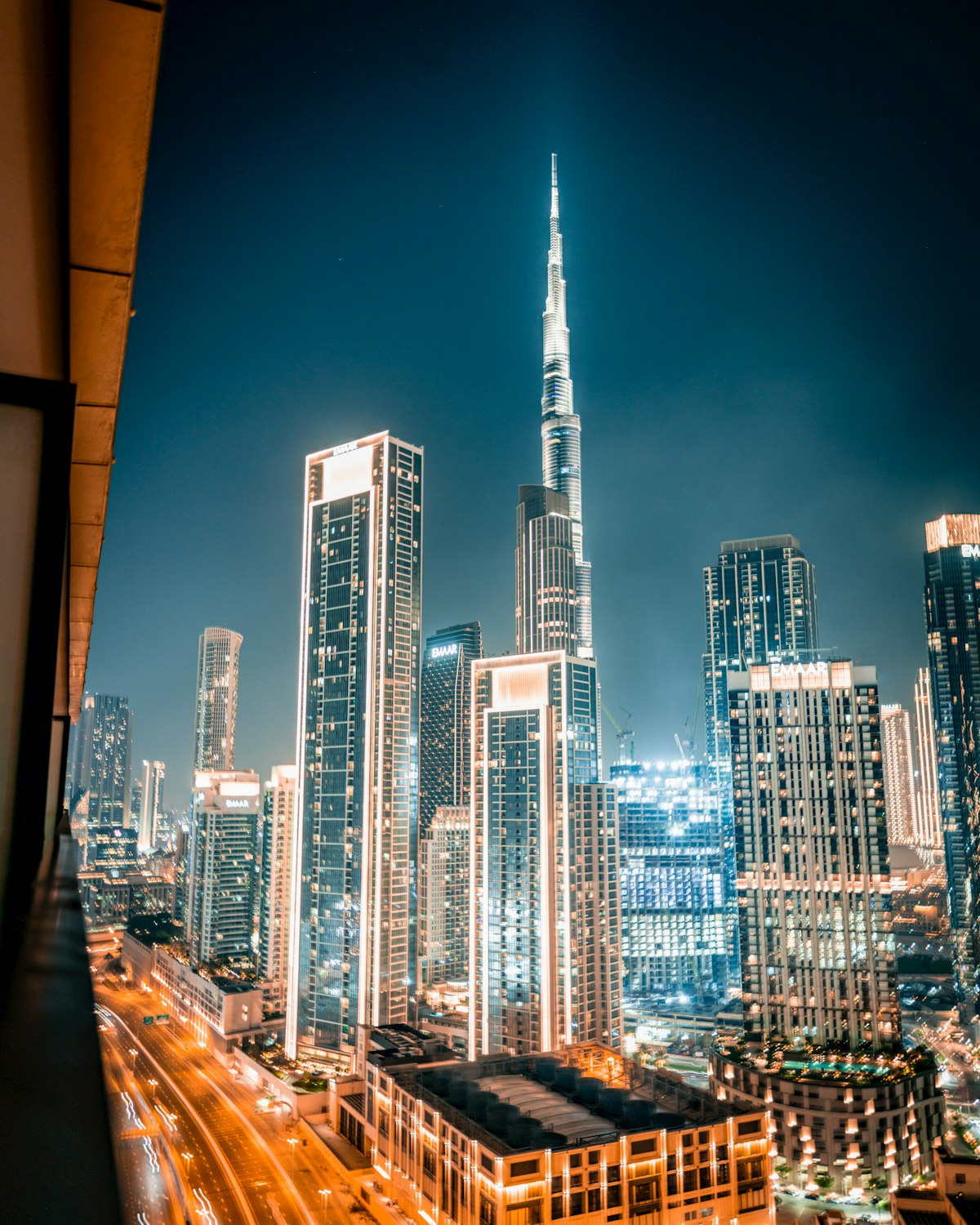
Dubai
United Arab Emirates
A city where timing is everything — the difference between October (perfect beach weather, outdoor dining, world-class events) and July (45°C, functionally unbearable outdoors) is the same destination with opposite verdicts.
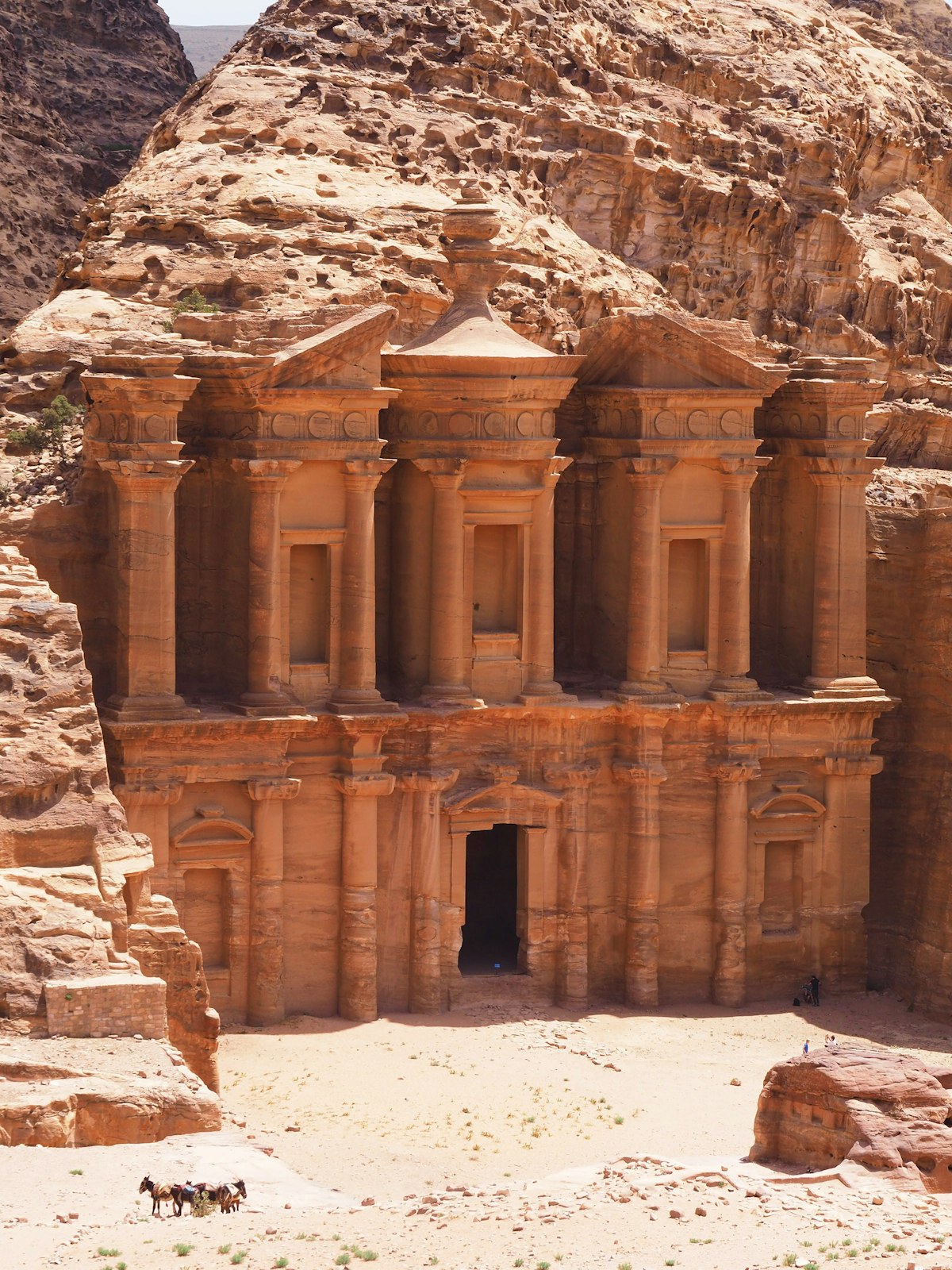
Jordan
Jordan
A desert kingdom of extraordinary depth — the rose-red city of Petra carved by the Nabataeans, the silence of Wadi Rum's vast sandstone desert, the lowest point on Earth at the Dead Sea, and the Islamic architecture of Amman; Jordan is the Middle East at its most accessible and most magnificent.

Muscat
Oman
Arabia's most beautiful secret — turquoise fjords, dramatic wadis, the Sultan Qaboos Grand Mosque, frankincense souqs, and a hospitality culture more open and gracious than any other Gulf state.
Worth knowing
April scores highest overall. August is the most crowded month — avoid if you can. See crowd-free ranking →
Month by month breakdown
January#8▾
Gains
- ↑January's 18°C highs make Tel Aviv genuinely pleasant for city exploration in a way that the 32°C summer does not — the Bauhaus White City neighbourhood, the Carmel Market (Shuk HaCarmel), the rooftop bars on Allenby Street are all better experienced without sweating. The city is functioning at full capacity with none of the beach tourism pressure.
- ↑Prices are meaningfully lower in January — flights from Europe and North America are at their cheapest, and hotel rates in the hotels along the promenade or in Neve Tzedek drop significantly. The Tel Aviv Marathon takes place in February and January brings a small community of international runners for preparation events.
- ↑The restaurant scene operates at its most local rhythm in January. Tables at Miznon (the pita institution on King George), HaBasta near the old port's wholesale market, and Claro in Rothschild are bookable without the weeks-ahead lead time required in summer.
Sacrifices
- ↓January is Tel Aviv's main rainy season: 130mm is significant, and the rain arrives in prolonged winter storms rather than tropical afternoon showers. The beach promenade (the 14km tayelet) and the beachfront café culture that defines Tel Aviv's personality are limited in January weather.
- ↓Some Jewish holiday closures affect businesses and transport (Shabbat brings quiet from Friday evening through Saturday night every week, year-round). Planning around Shabbat is necessary in any month but requires particular attention in winter when options are more limited.
February#5▾
Gains
- ↑The Tel Aviv Marathon (typically the last Friday of February) brings 40,000+ runners to the city and a festive atmosphere to the streets along the beachfront route. It is one of the largest mass-participation events in the Middle East and the city embraces it with food festivals and waterfront events in the surrounding days.
- ↑The almond trees in Yarkon Park and the coastal boulevard are in blossom in February — Israel's version of cherry blossom season, quieter and less celebrated but genuinely beautiful. The wildflowers in the Yarkon riverbanks and the parks are at peak bloom.
- ↑Rainfall is easing from January's heaviest levels and clear spells are longer. The Bauhaus walking tours organised by the White City Center and independent guides are excellent in February's cool temperatures.
Sacrifices
- ↓Marathon weekend (Friday–Saturday) sees hotels raise prices and availability drop sharply. Book well ahead if visiting in late February. The marathon route also closes roads in the south and centre of the city from Friday morning through Saturday afternoon.
- ↓The rainy season is not yet over — 108mm in February still represents meaningful precipitation. The beach experience that most people associate with Tel Aviv is still months away.
March#6▾
Gains
- ↑March is a significant improvement over winter: 21°C, dramatically more sunshine, and the beach promenade coming alive again. The Carmel Market is at its most vibrant in spring — pomelos, strawberries, fresh herbs, and the smell of burekas from the bakeries on the Nahalat Binyamin pedestrian market (which runs parallel on Tuesdays and Fridays with craft stalls).
- ↑Prices remain below peak levels while the weather is already significantly better than winter. March is one of the best value months in the Tel Aviv calendar — the combination of good weather and relatively low demand.
- ↑Purim (the Jewish carnival holiday, typically in March) transforms Tel Aviv into a citywide fancy-dress party. Costume shops open everywhere, bars and clubs run elaborate theme nights, and the streets fill with costumed revellers. For nightlife and atmosphere it is one of the best events of the year.
Sacrifices
- ↓March still sees 58mm of rain and some genuinely cold-feeling days, particularly in early March. The sea temperature (17–18°C) is too cold for comfortable swimming for most visitors.
- ↓Purim can cause some closures and schedule disruptions — much of the city pauses for the holiday itself, and the preceding days' carnival atmosphere, while fun, can be disorienting for visitors expecting a normal city experience.
April#1▾
Gains
- ↑April is widely considered Tel Aviv's single best month. Temperatures hit 24°C with almost no humidity, the sea reaches 20°C and is swimmable for most visitors, and the 14km tayelet is in full spring operation — the morning run culture, the beachfront cafés, the pickup volleyball and beach tennis. The city operates at maximum energy without the crushing summer heat.
- ↑The White City architecture — the UNESCO-listed concentration of International Style buildings built by German Jewish immigrants in the 1930s and 1940s — is best explored in April's comfortable temperatures. The White City Center at 45 Bialik Street offers excellent guided tours and the Bauhaus walking maps cover the finest examples across Rothschild, Dizengoff, and Bialik squares.
- ↑Passover falls in March or April — the week before Passover brings the entire country into a cleaning and preparation frenzy, with enormous food markets, special festival menus at restaurants (many adapt their entire menu for kosher Passover), and a domestic tourism surge. The week after Passover is one of the quietest of the year as Israelis recover.
Sacrifices
- ↓Passover week (Pesach) brings significant disruption: many restaurants adjust menus, some close entirely, and the city can feel at times as if it is pausing for a religious event that non-Jewish visitors are watching from outside. Hametz (leavened bread) is legally difficult to obtain in many areas — croissants and baguettes disappear from most bakeries. Worth understanding before visiting.
- ↓Hotel prices rise around the Passover holiday, particularly during the intermediate days (Chol HaMoed) when domestic Israeli travel peaks.
May#3▾
Gains
- ↑May is effectively the last month before the summer humidity arrives in force. Temperatures are warm (27°C) and the sea (22°C) is fully swimmable. The beaches at Gordon, Frishman, and the quieter Metzitzim beach near the old port are genuinely excellent in May. The famous Tel Aviv beach volleyball courts on Gordon Beach operate at full capacity.
- ↑Independence Day (Yom Ha'atzmaut, typically late April–early May) brings a nationwide street party atmosphere to Tel Aviv — outdoor concerts, fireworks over the tayelet, and a citywide celebration that is inclusive and exuberant. The preceding day (Yom HaZikaron, Memorial Day) is observed quietly with public ceremonies.
- ↑The food scene is at peak activity in May — outdoor dining is possible across the city and the rooftop bars on King George, the seafront restaurants in Jaffa, and the nightlife axis of Allenby and Dizengoff are all operating at full capacity in perfect weather.
Sacrifices
- ↓Prices are rising toward summer levels in May — accommodation is more expensive than April and flight availability from Europe tightens. International visitors begin arriving in volume.
- ↓The khamsin (sharav) — a hot, dry desert wind from the east — can bring sudden temperature spikes of 35–40°C in May. These last 1–3 days and transform the pleasant spring into something resembling summer in advance. They are uncomfortable but temporary.
June#4▾
Gains
- ↑June contains Tel Aviv's two most celebrated events. Tel Aviv Pride (typically second or third week of June) brings 250,000+ people to the city for what has become the largest Pride event in the Middle East and one of the most inclusive in the world. The parade runs from Rabin Square down the tayelet to the beach; the evening beach party is enormous. The city's acceptance, the beachfront setting, and the scale make this a genuinely remarkable event.
- ↑White Night (Layla Lavan) — typically late June — is Tel Aviv's all-night cultural festival: 300+ events across one night in galleries, streets, rooftops, and public spaces, all free and running until dawn. Museums open, bands play in parks, installation artists take over the street. It is one of the most original city festivals in the world and worth a trip in itself.
- ↑The weather in June is superb: 29°C, zero rain, long evenings, and the sea at 24°C. The beach culture is at its peak. The rooftop bars of the Norman Hotel and the Jaffa Hotel are at their most atmospheric.
Sacrifices
- ↓June is among the most expensive months — Pride week in particular sees hotel prices double or triple and availability become very tight. Book 3–6 months ahead for Pride weekend accommodation.
- ↓The Mediterranean humidity (65%) arrives in earnest in June and the combination with heat makes midday outdoor activity uncomfortable. The city shifts its rhythm to early morning and evening, with the middle of the day less pleasant than spring.
July#11▾
Gains
- ↑The beach culture that Tel Aviv is built around is at maximum intensity in July. The beach clubs (like Banana Beach and the Gordon beach strip), the morning surfers on the northern breaks, the evening beach volleyball, and the tayelet night running scene are all operating at full capacity. If you have come to Tel Aviv specifically for the beach-city lifestyle, July delivers it completely.
- ↑The 24°C sea temperature and zero rain make every beach day weather-guaranteed. For those staying in beach-adjacent hotels (the Carlton, the Dan, the Hilton), the combination of pool, sea, and air-conditioned respite is a perfectly functional holiday.
Sacrifices
- ↓July's 31°C with 68% humidity makes midday in the city genuinely oppressive — the White City architecture walk, the Carmel Market, or exploring Florentin on foot from noon to 4pm is a sweaty and unpleasant experience. The city operates on a summer schedule: late lunch, extended afternoon rest, late dinner.
- ↓Prices are high and accommodation is expensive across all categories. The summer influx of American Jewish families, European tourists, and the Israeli domestic travel season all converge.
- ↓Check the regional security situation before travelling to Israel in any month. The Foreign Office and State Department travel advisories should be consulted: access and flight routes can change rapidly.
August#12▾
Gains
- ↑August is the peak of Tel Aviv's beach season in terms of atmosphere. The beach clubs between Frishman and Gordon are packed with an international crowd. The outdoor dining scene — the restaurants along HaYarkon, the seafront places in Jaffa's flea market area — is at its most lively.
- ↑The sea (26°C) is the warmest of the year and perfectly calm for long swims from the designated swimming beaches. The night market at the port (Namal Tel Aviv) runs late and the night economy of Florentin and the HaTachana complex are at full operation.
Sacrifices
- ↓August is Tel Aviv's hottest and most humid month: 32°C with 70% humidity. The combination produces a heat index that makes outdoor midday activity from about 11am to 5pm uncomfortable for most visitors. The city adapts: everything starts later, siestas are real, and the real life of the city happens after 6pm. Build your days around this.
- ↓The most crowded and expensive month — the Israeli school summer holiday, combined with international visitors, makes accommodation scarce and expensive. Restaurants at peak desirable spots require advance booking of several weeks.
September#10▾
Gains
- ↑September's temperatures (30°C) are virtually identical to August but the humidity begins to ease and the city feels slightly more comfortable. The beach is still excellent and the sea remains warm (25°C). International tourist numbers start dropping from late September and the city begins to feel more local again.
- ↑The Jewish High Holidays (Rosh Hashanah and Yom Kippur) fall in September or October and provide one of Tel Aviv's most distinctive annual experiences. On Yom Kippur — the Day of Atonement — the city completely stops: roads empty, all business closes, and for 25 hours Tel Aviv is a pedestrian and bicycle city. Children cycle on the highways. It is deeply unusual and worth experiencing if you approach it with respectful awareness.
- ↑Sukkot (the harvest festival, following Yom Kippur) brings decorated wooden huts (sukkot) onto balconies and rooftops across the city — a uniquely urban-pastoral sight.
Sacrifices
- ↓High Holiday timing affects business hours significantly. Yom Kippur brings total closure — no restaurants, no transport, no shops. Visitors who are not fasting should bring food and water to their hotel the day before. Rosh Hashanah also brings extended closures.
- ↓September remains expensive as the summer pricing structure holds until early October. Regional travel around the High Holidays creates a domestic surge.
October#2▾
Gains
- ↑October is arguably Tel Aviv's second-best month (after April) and many visitors prefer it. Temperatures drop to a perfect 26°C with declining humidity, the sea is still warm (23°C) and swimmable, and the city is at its most functional. The tourist pressure eases significantly after the summer peak and the city returns to its own rhythm — the Carmel Market is better, the Florentin café scene has room, and the best restaurants are accessible again.
- ↑The combination of warm weather and post-summer calm makes October ideal for the full Tel Aviv experience: morning beach run, White City architecture walk, Jaffa flea market (Shuk HaPishpeshim) on a Saturday, dinner in Neve Tzedek. The light in October is golden and lower-angle, ideal for photography along the tayelet and around the Bauhaus buildings.
- ↑Prices drop meaningfully in October — 20–30% below summer levels — while the weather is still genuinely excellent. Flight availability improves and the sense of the city operating for residents rather than tourists is restored.
Sacrifices
- ↓The first rains of the autumn (typically mid-October) arrive after five months of complete drought. They usually come as dramatic, heavy downpours rather than sustained rain — 20mm across the month is not significant but the individual events can be intense.
- ↓The Jewish holiday calendar can still affect October depending on the year — Sukkot and Simchat Torah may fall in early October, extending the High Holiday disruption pattern from September.
November#7▾
Gains
- ↑November offers a genuine value window: accommodation prices are at their shoulder-season floor, the weather is still comfortable at 22°C, and the city is operating without tourist pressure. The restaurant scene is accessible and the Carmel Market, the Nachalat Binyamin craft market, and the galleries in the Florentin neighbourhood are all easy to enjoy.
- ↑The sea is cooling (21°C) but still swimmable for hardy visitors in early November. The beach has its autumn character — fewer people, different quality of light, occasional dramatic storm skies.
Sacrifices
- ↓November brings meaningful rainfall (68mm) and the pattern of winter storms begins to establish itself — not as consistent as January at its worst, but multi-day rain events are possible. The beach lifestyle that defines Tel Aviv largely recedes from November.
- ↓Fewer evening events and less nightlife energy than the summer season — the city's outdoor party culture is weather-constrained.
December#9▾
Gains
- ↑December in Tel Aviv is mild enough (19°C) to sit at an outdoor café without a coat on many days — an experience most European visitors find remarkably pleasant in what is technically "winter." The city is fully operational, the Christmas week brings some international visitors but nothing approaching the summer scale.
- ↑Hanukkah (typically December) brings menorahs and sufganiyot (deep-fried doughnuts) to every bakery and café in the city — a festive street atmosphere that is entirely different from anything else in the calendar.
- ↑Prices are at shoulder-to-low season levels: accommodation is cheaper than any month from April through October and flights are at their most affordable outside the January–February period.
Sacrifices
- ↓December's 115mm of rainfall is the second-heaviest month (after January) and the Mediterranean winter storms can be persistent. The beach and outdoor café culture that defines Tel Aviv's appeal is largely on hold during the rainy season.
- ↓Shabbat is particularly impactful in winter months when the reduced frequency of open businesses makes Friday evening through Saturday night navigation more challenging for visitors without local knowledge.
How this is calculated
Climate data
Open Meteo ERA5
30-year normals (1991–2020). Temperature, rainfall, sunshine, humidity.
Price & crowd
Tourism research
Seasonal pricing from tourism authority data. Directional — compares months within a destination only.
Personalisation
Weighted scoring
Your priorities change the weights. Budget-first users get different results than weather-first users.
Share this result
April is the best time to visit Tel Aviv
Travel timing updates
New destinations and timing guides, when they land.
No spam. Unsubscribe anytime.