Showing: Apr · Unsplash / Unsplash
Seychelles · Indian Ocean
Best time to visit Seychelles
April
Apr scores highest overall — reliable weather and strong local atmosphere. Set your priorities below to personalise this result.
What matters most to you?
All 12 months — click any to expand
Apr
Unsplash / Unsplash
The finest month — transitional calm between the monsoons, maximum sunshine, and every beach accessible.
30°C
High
25°C
Low
105mm
Rain
8h
Sun/day
What you gain
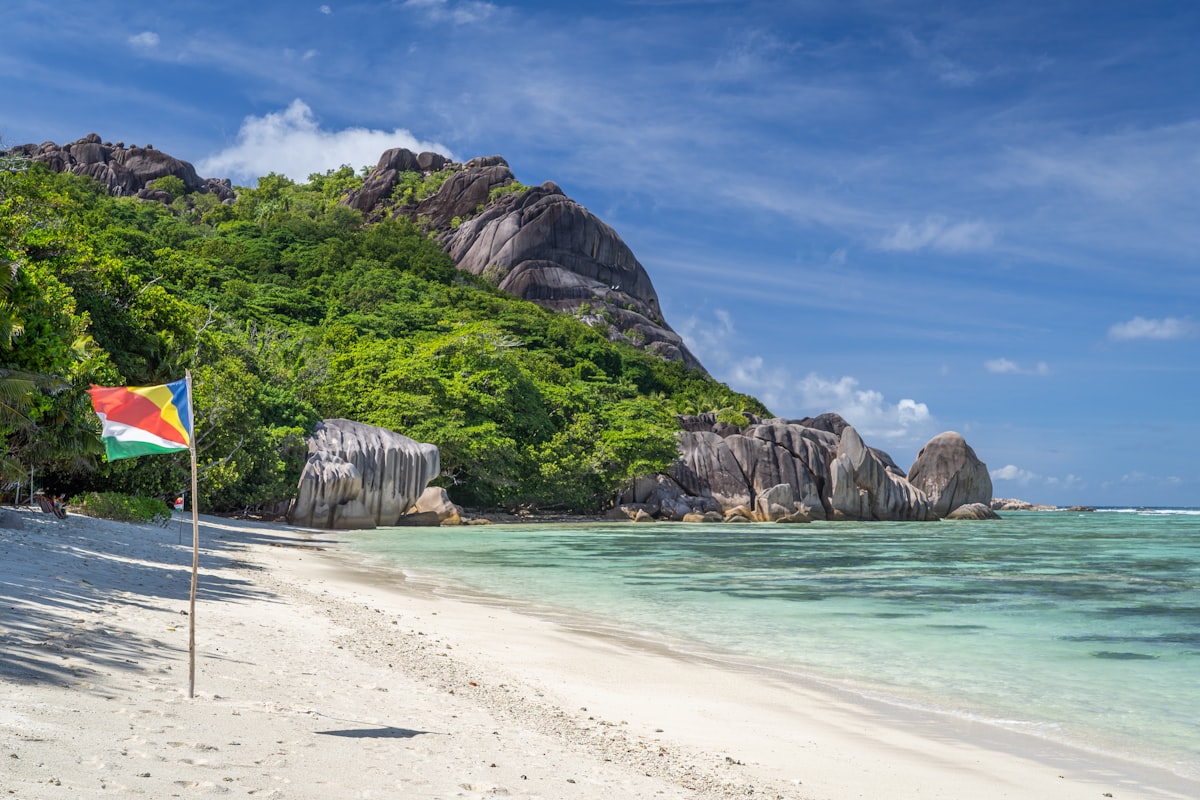
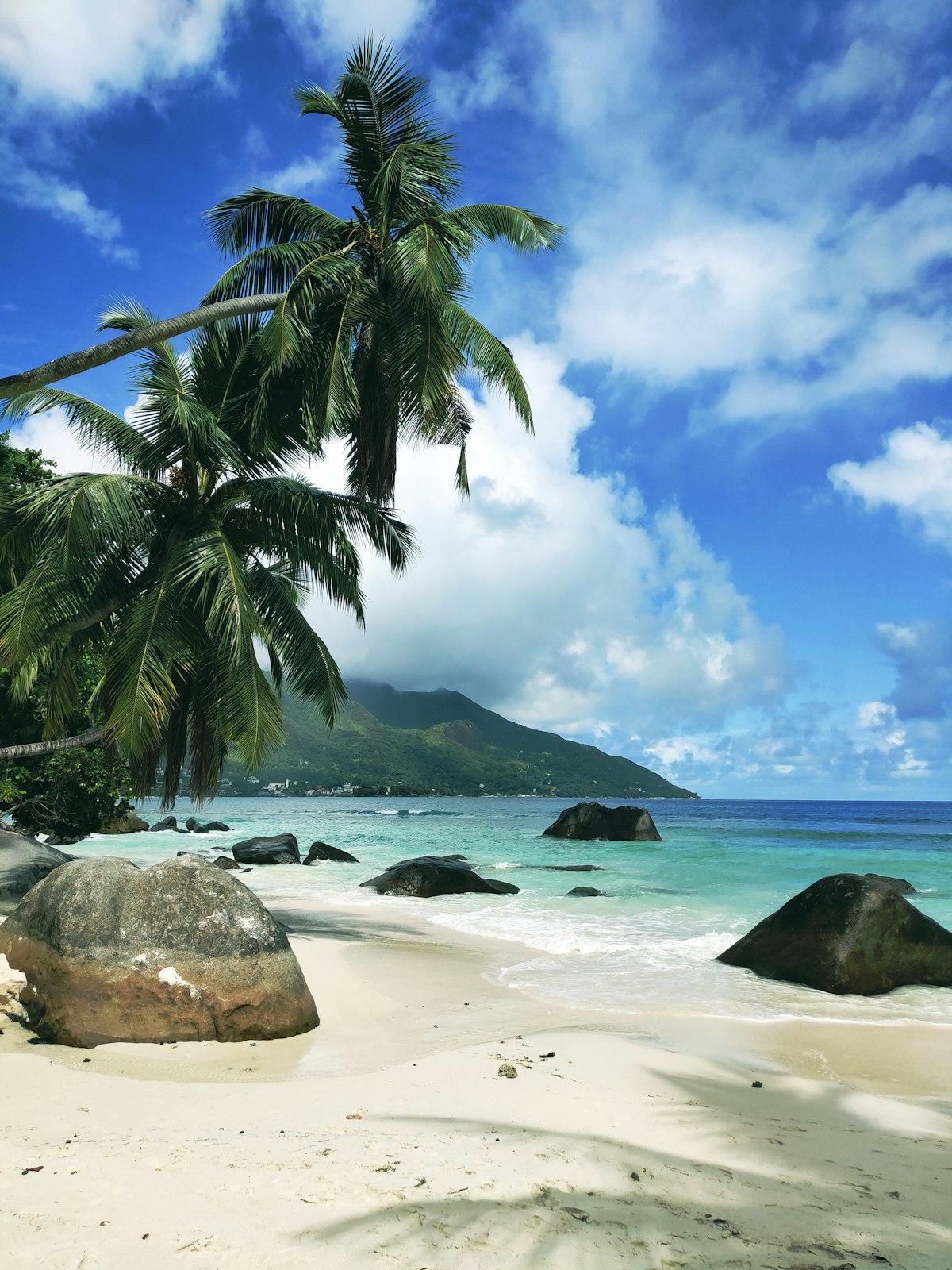
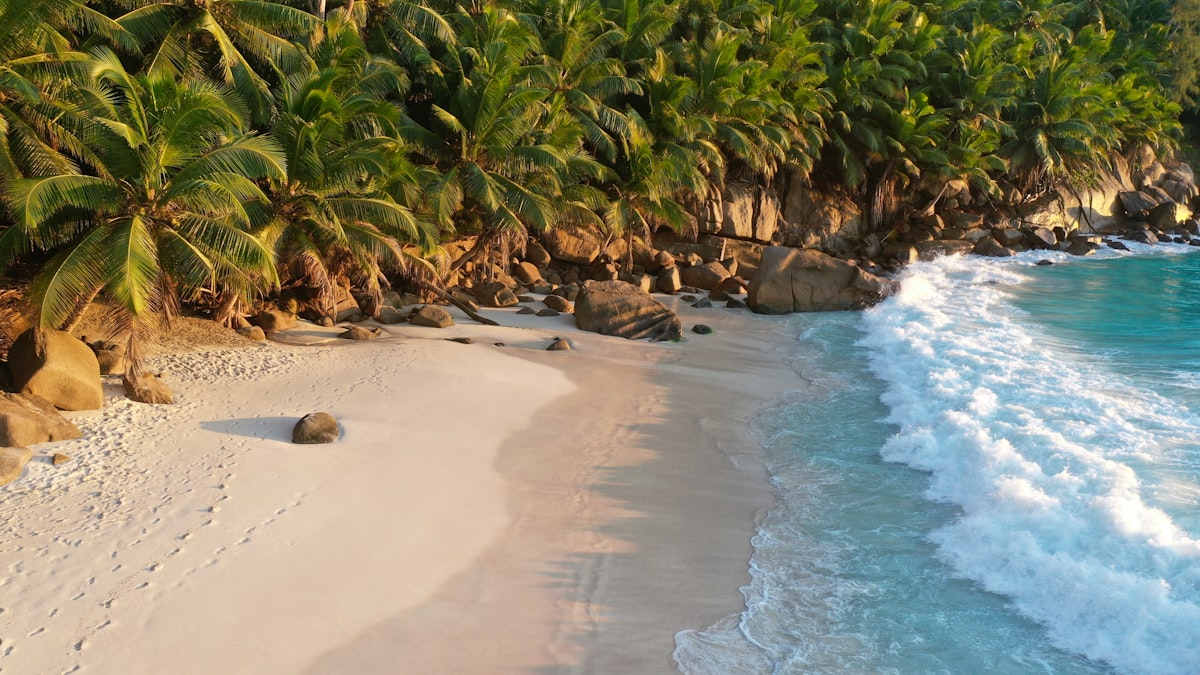
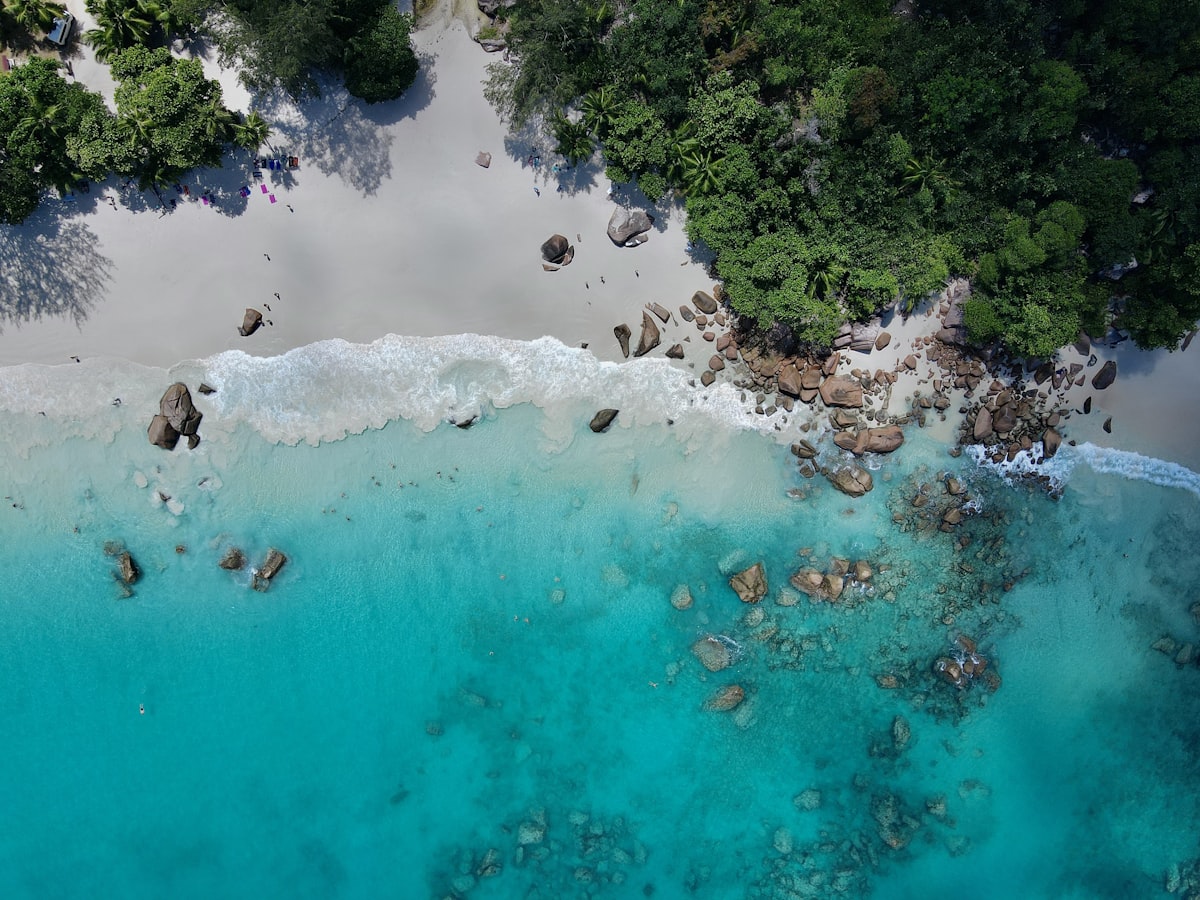
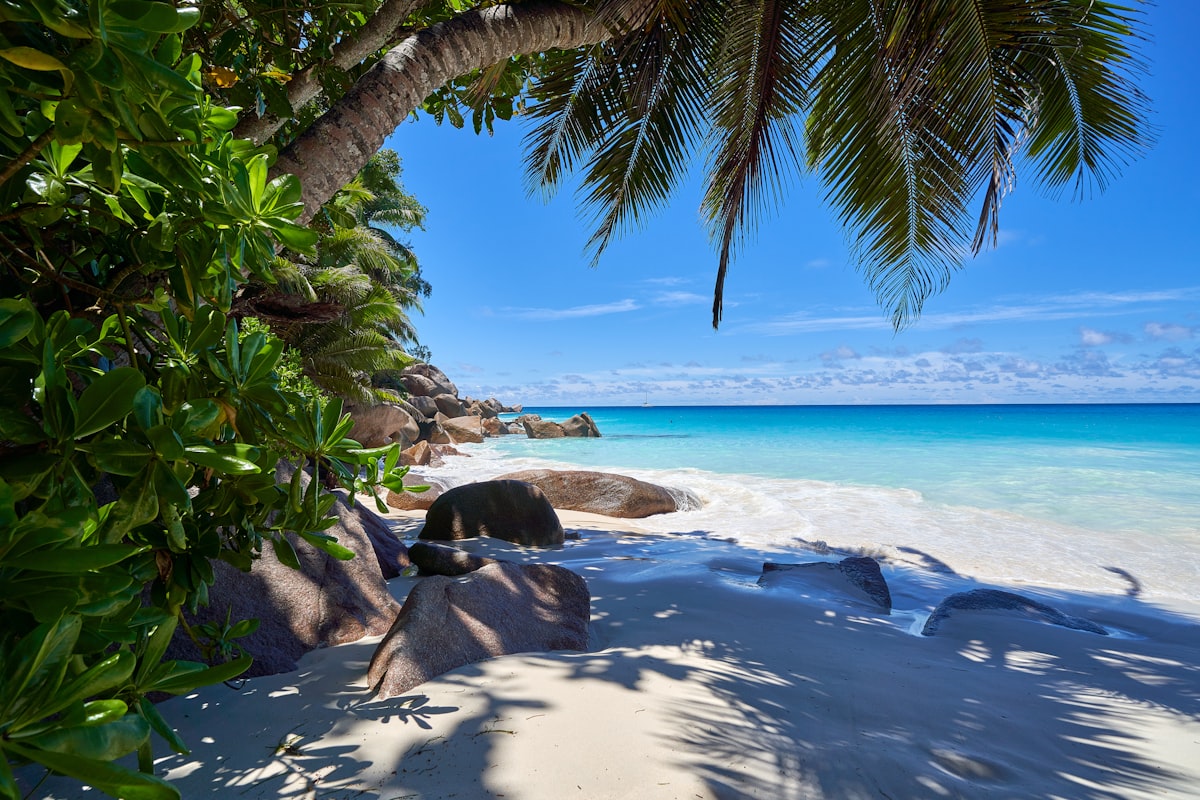
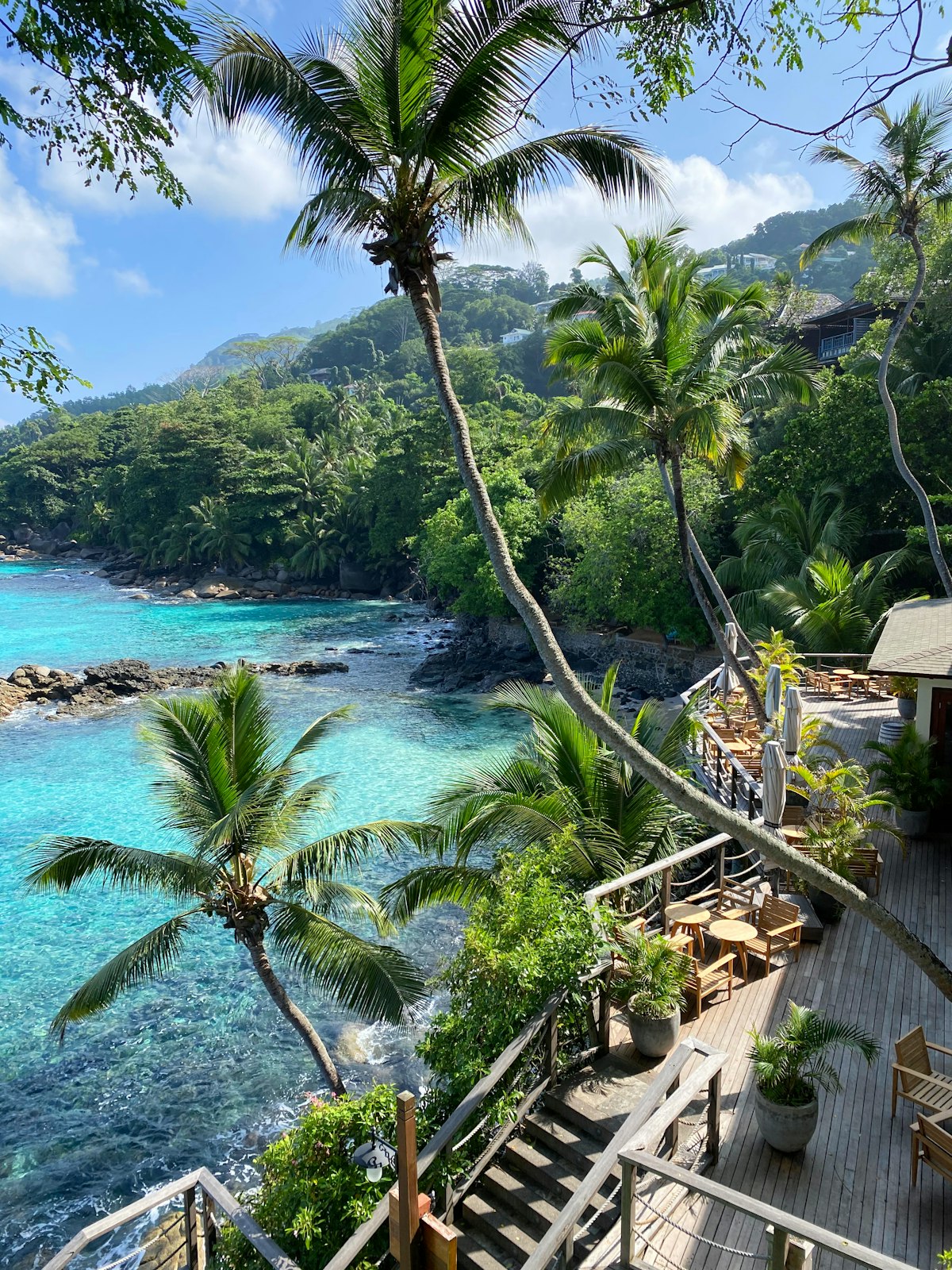
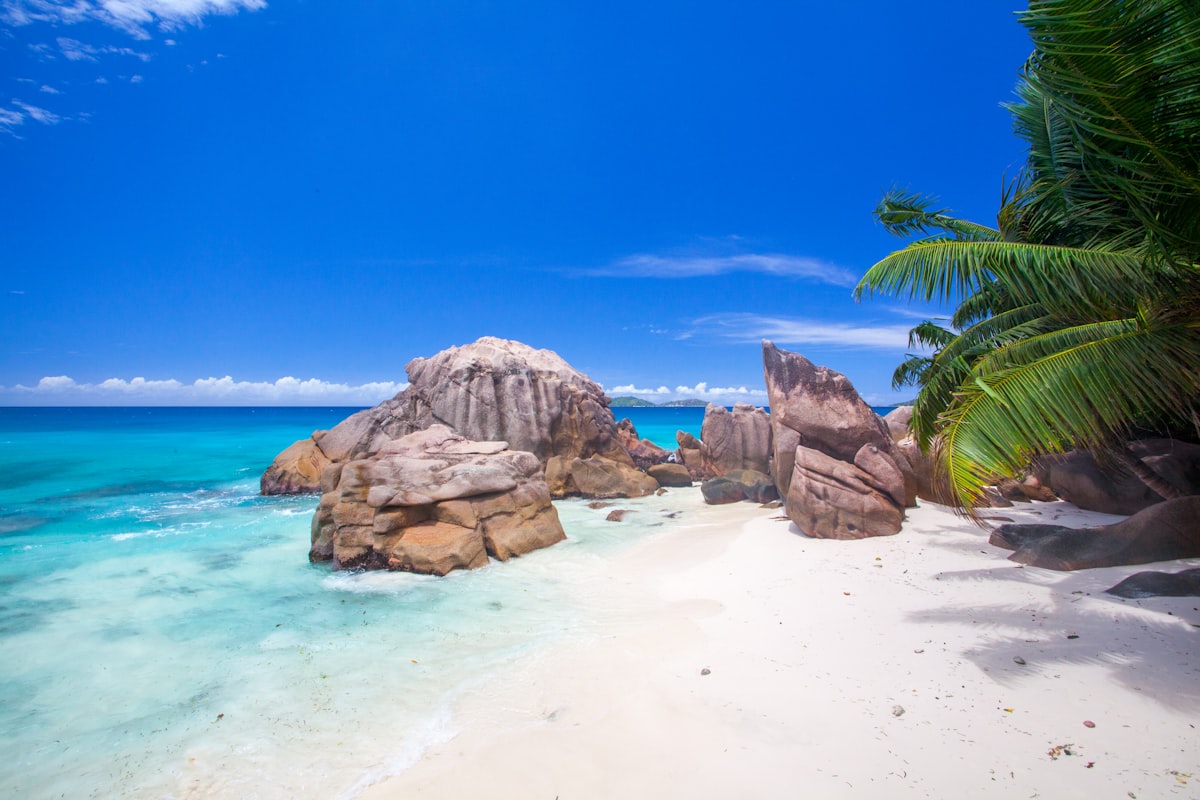
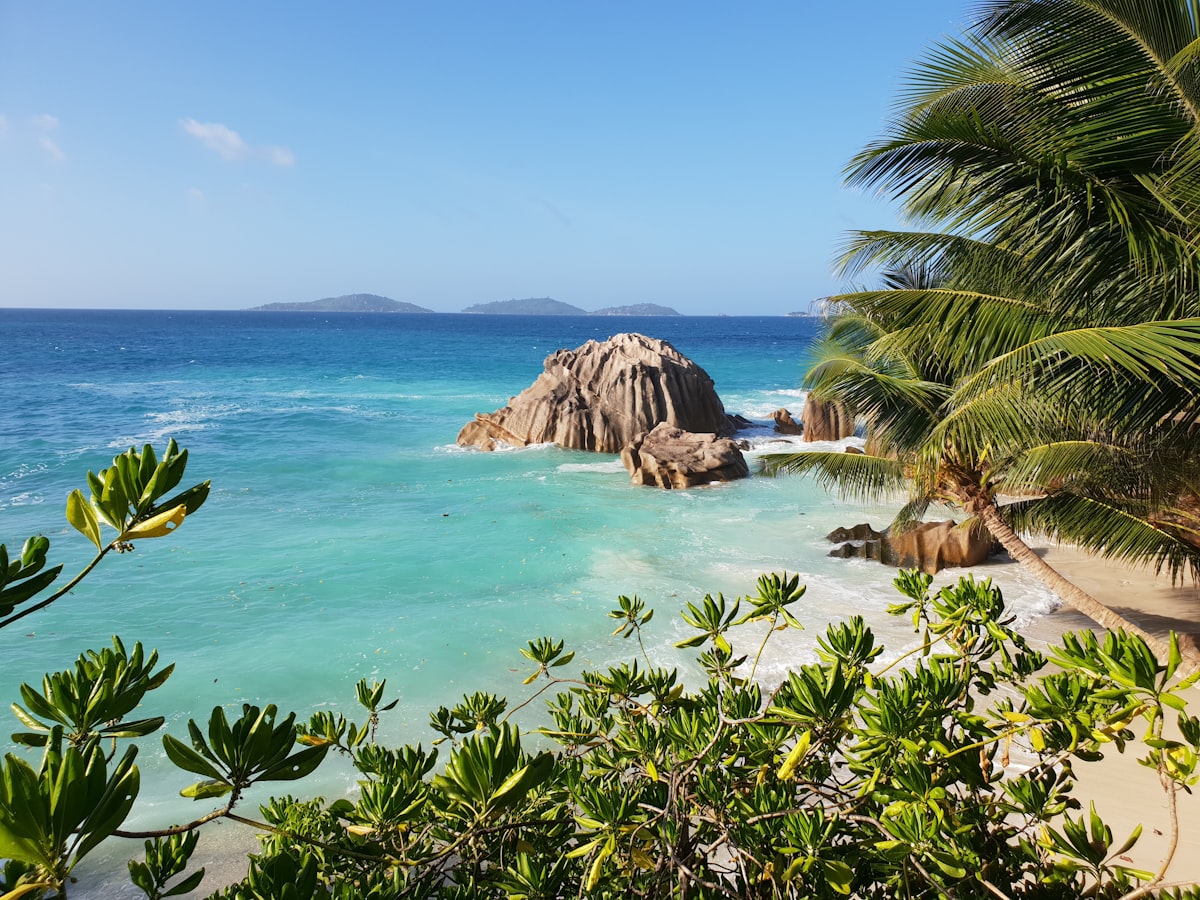
- ↑April is the first of Seychelles' two perfect months: the northwest monsoon has ended and the southeast trades have not yet established, creating a period of near-complete calm across all island coasts; every beach on every island is accessible — Anse Lazio and Anse Intendance on Praslin, Anse Source d'Argent and Anse Cocos on La Digue, and the full spectrum of Mahé's 60+ beaches are all swimmable in conditions that do not exist at any other time of year
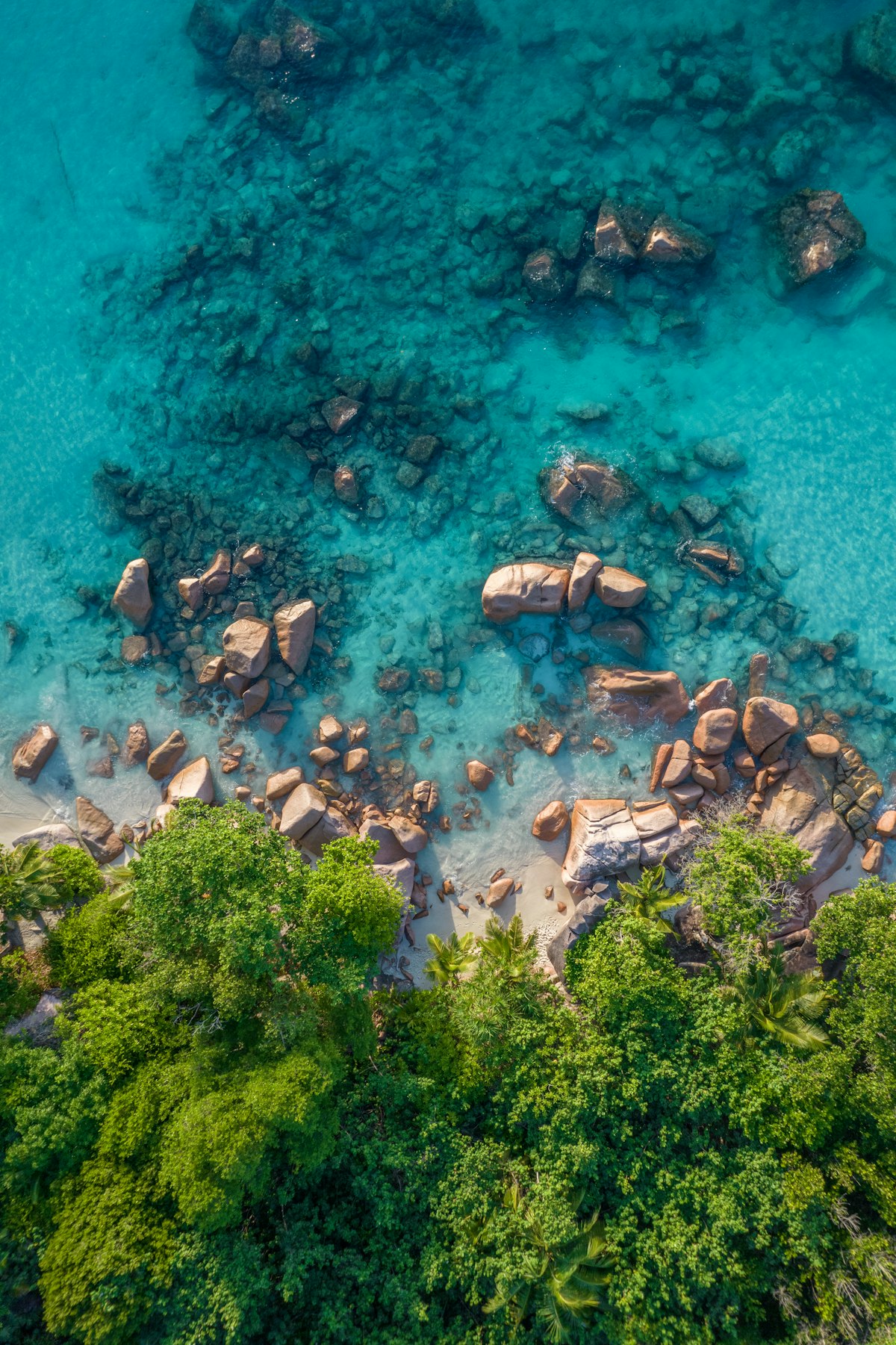
- ↑Water clarity is at its best in April: the absence of monsoon runoff and minimal wind-driven surface chop create the highest underwater visibility of the year — the Sainte Anne Marine Park, the Cousin Island snorkel reef, and the dive sites at Shark Bank and Brissare Rock (accessible from Mahé) offer visibility of 20–30 metres and encounters with hawksbill turtles, nurse sharks, and Napoleon wrasse
- ↑The transitional calm means both halves of each island are accessible simultaneously: visitors can spend morning on the sheltered west coast and afternoon on the wilder east coast without weather complications; the opportunity to see the full geography of each island in a single day is unique to April and October
What you sacrifice
- ↓April's outstanding reputation drives demand: the month is the best-known of the two sweet spots and accommodation at top properties requires booking 3–4 months ahead; the combination of school Easter holidays (if April) and perfect weather creates a pricing spike that moves the month from moderate toward expensive in peak years
- ↓April can occasionally see the tail of the northwest monsoon lingering in the first week — some years the transition takes longer, and early April can still see days of rain before the calm fully establishes; mid-to-late April is the most reliably calm window
- ↓The Seychelles national parks (Vallée de Mai, Cousin Island) begin pre-season maintenance and guide reallocation in early April; confirm specific tour availability for the first week
Apr scores highest overall — reliable weather and strong local atmosphere. Set your priorities below to personalise this result.
Apr
The finest month — transitional calm between the monsoons, maximum sunshine, and every beach accessible.
30°C
High
105mm
Rain
8h
Sun
- ↑April is the first of Seychelles' two perfect months: the northwest monsoon has ended and the southeast trades have not yet established, creating a period of near-complete calm across all island coasts; every beach on every island is accessible — Anse Lazio and Anse Intendance on Praslin, Anse Source d'Argent and Anse Cocos on La Digue, and the full spectrum of Mahé's 60+ beaches are all swimmable in conditions that do not exist at any other time of year
- ↑Water clarity is at its best in April: the absence of monsoon runoff and minimal wind-driven surface chop create the highest underwater visibility of the year — the Sainte Anne Marine Park, the Cousin Island snorkel reef, and the dive sites at Shark Bank and Brissare Rock (accessible from Mahé) offer visibility of 20–30 metres and encounters with hawksbill turtles, nurse sharks, and Napoleon wrasse
- ↑The transitional calm means both halves of each island are accessible simultaneously: visitors can spend morning on the sheltered west coast and afternoon on the wilder east coast without weather complications; the opportunity to see the full geography of each island in a single day is unique to April and October
- ↓April's outstanding reputation drives demand: the month is the best-known of the two sweet spots and accommodation at top properties requires booking 3–4 months ahead; the combination of school Easter holidays (if April) and perfect weather creates a pricing spike that moves the month from moderate toward expensive in peak years
- ↓April can occasionally see the tail of the northwest monsoon lingering in the first week — some years the transition takes longer, and early April can still see days of rain before the calm fully establishes; mid-to-late April is the most reliably calm window
- ↓The Seychelles national parks (Vallée de Mai, Cousin Island) begin pre-season maintenance and guide reallocation in early April; confirm specific tour availability for the first week
Top travel windows
★ BestApril
Best overall
Highest combined score
30°C
High
105mm
Rain
8h
Sun
June
Best for value
Lowest prices & fees
27°C
High
75mm
Rain
7h
Sun
June
Fewest crowds
Quietest month
27°C
High
75mm
Rain
7h
Sun
Breakdown by priority
Best for weather
April
30°C high · 105mm rain · 8hrs sun/day
Best for budget
June
June is the first genuinely affordable month in Seychelles: prices drop below the moderate range for the first time since October, and some properties offer off-season rates that are remarkable relative to the January peaks; the beaches are as good as ever on the east coasts
Fewest crowds
June
La Digue in June: the island's most famous beach, Anse Source d'Argent (consistently ranked among the world's best), is on the west coast and partially sheltered year-round by an offshore reef; even in the trade wind season the beach retains swimmable conditions at low tide, and La Digue in June is less busy than at any other time
Where to base yourself in Seychelles
All regions →La Digue
Car-free island paradise — Anse Source d'Argent's sculpted granite, bicycles as transport, and the most intimate island in the Seychelles.
7/10
Central
9/10
Walk
4/10
Transit
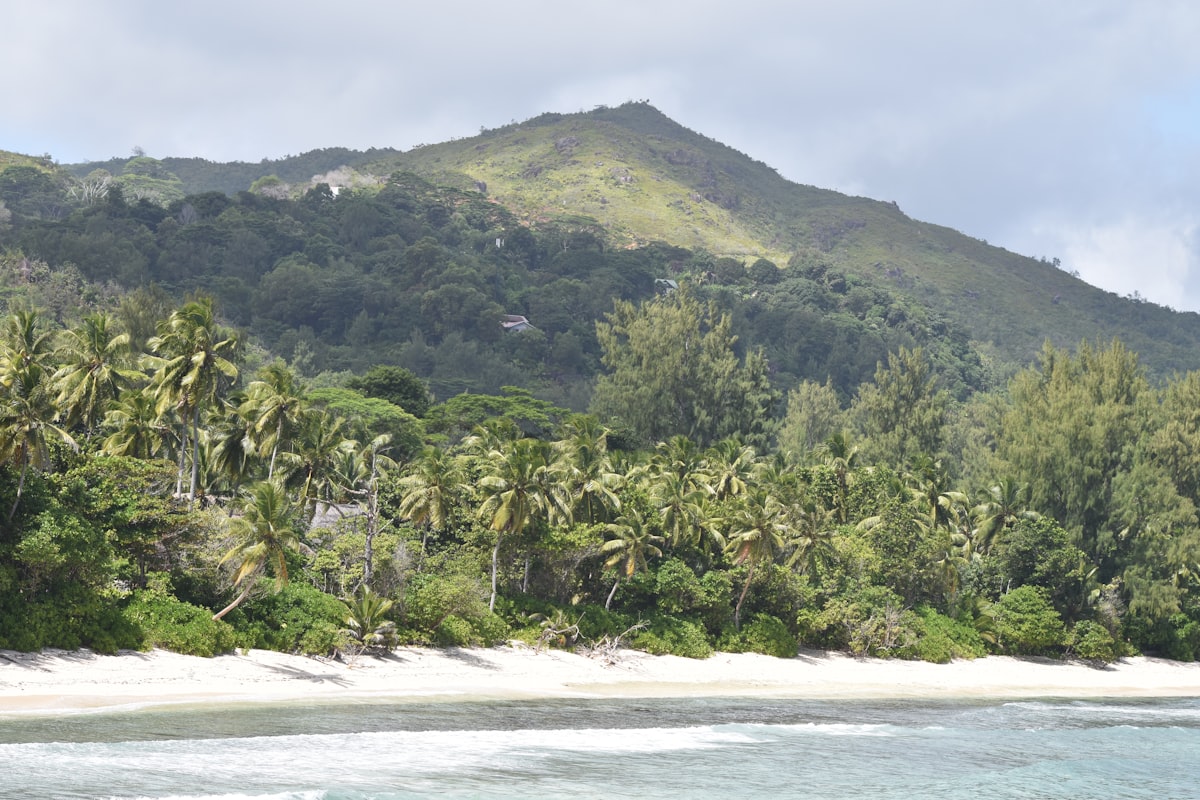
Mahé
The main island — the international gateway, 60+ beaches, the national park rainforest, and the Creole capital of Victoria.
10/10
Central
5/10
Walk
7/10
Transit
Also exploring
Marrakech
Morocco
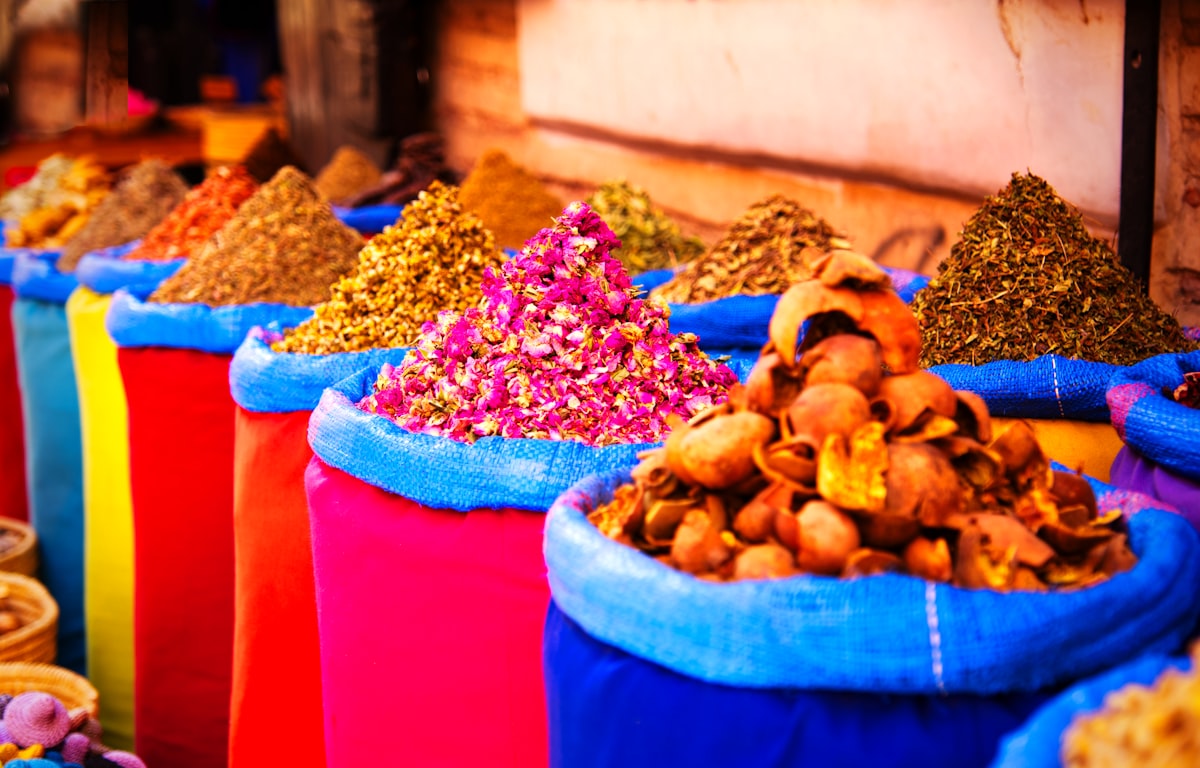
A city of medieval medina markets, orange groves, and Atlas Mountain views where summer heat is genuinely dangerous and spring timing is everything.
Cape Town
South Africa
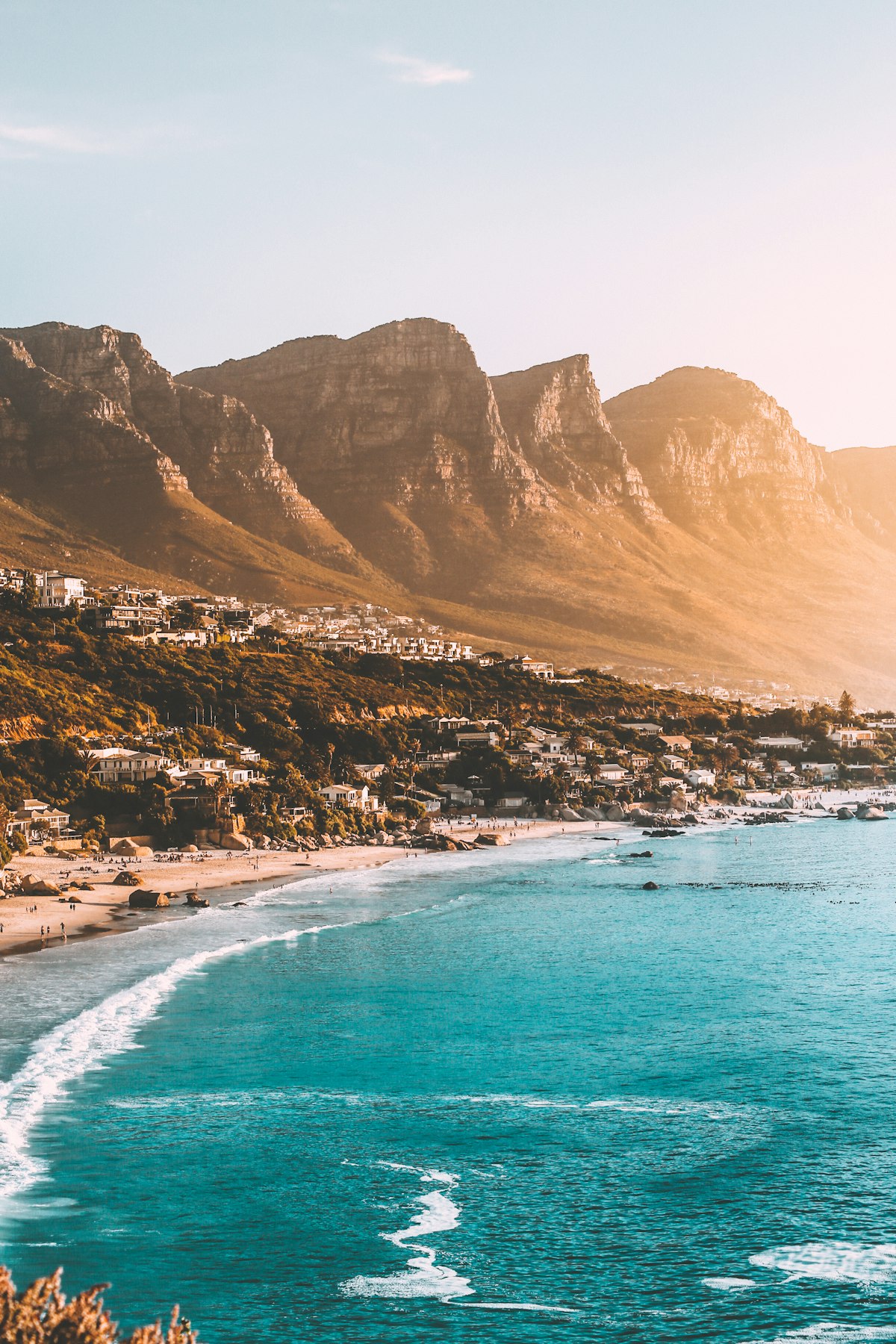
Africa's most dramatic city — where timing means choosing between the dry, sunny austral summer (November–March) for beaches and hiking, and the cooler winter months when southern right whales arrive in False Bay and the wildflowers transform the West Coast.
Zanzibar
Tanzania
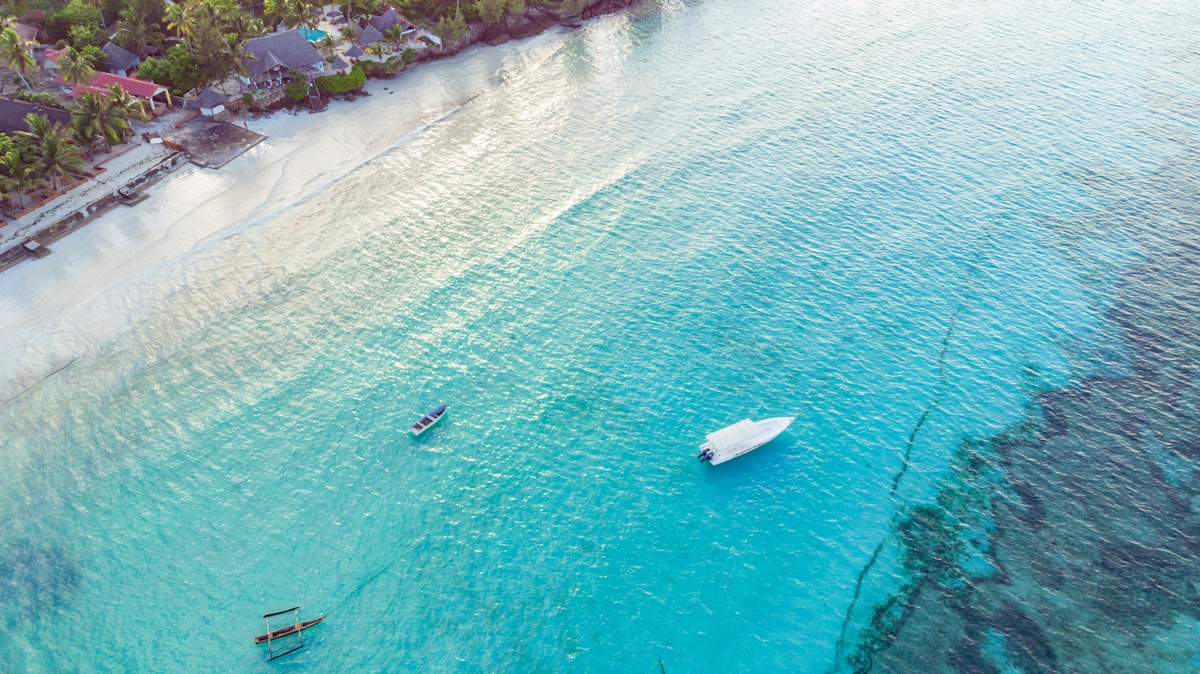
A UNESCO-listed Swahili trading city, world-class kite surfing, whale shark encounters, and Indian Ocean beaches — Tanzania's island extension is one of Africa's most compelling destinations, shaped by two distinct rainy seasons that divide the year sharply into when to go and when not to.
Worth knowing
April scores highest overall. January is the most crowded month — avoid if you can. See crowd-free ranking →
Month by month breakdown
January#11▾
Gains
- ↑The northwest monsoon creates calm, protected conditions on the west-facing beaches of all islands: Beau Vallon (Mahé), Anse Lazio (Praslin), and Anse Cocos (La Digue) face west or north-west and are fully sheltered in January — the flat, clear water makes snorkelling and kayaking ideal even in the rainier months
- ↑January is the best month for pelagic fish diving in Seychelles: the NW monsoon brings warm water and nutrients that attract whale sharks, manta rays, and giant trevally to the outer reef systems; the dive sites around Mahé's southern coast and the Sainte Anne Marine Park are accessible despite the rain
- ↑The Christmas/New Year season extends into early January and the energy of the island resorts is at its most festive — live Sega music (the traditional Creole music of the Indian Ocean islands), beach barbecues, and the full operation of all resort facilities creates the most socially active atmosphere of the year
Sacrifices
- ↓January is the wettest month of the northwest monsoon: 250mm is the highest rainfall of the year, and the showers — while often short — can be intense; extended beach days are possible but require accepting the rain as part of the tropical experience rather than a failure of planning
- ↓Peak season pricing makes January the most expensive month in Seychelles: the luxury resorts on Mahé, Praslin, and the private island retreats are at their annual rate ceiling, and the combination of New Year demand and NW monsoon means the highest prices coincide with the wettest weather — a poor trade for the cost
- ↓Flights from Europe fill quickly for the holiday-into-January period, and the islands are operating at maximum capacity; day-trippers between islands, boat excursions, and popular snorkelling sites are all at their busiest
February#9▾
Gains
- ↑Rainfall drops significantly from January's 250mm to 185mm in February — sunshine improves to 7.0 hours daily and the monsoon begins its transition toward the calmer conditions of April; February visitors experience the tail of peak season with better weather than January at slightly lower (still high) prices
- ↑February is among the best months for whale shark encounters at the outer banks — the warmest Indian Ocean water temperatures and the nutrient-rich northwest monsoon current bring whale sharks to the feeding grounds accessible from Mahé's south coast and around Desroches Island
- ↑Valentine's Day creates specific romance-focused demand among European couples: the Seychelles luxury resort properties run the most elaborate Valentine's packages of any Indian Ocean destination, and the private island resorts (Fregate, North Island, Silhouette) create bespoke multi-day experiences worth the premium
Sacrifices
- ↓The northwest monsoon's heavy rain continues: 185mm is still heavy, and while the pattern shifts toward shorter, more intense showers rather than sustained rain, February is not a reliably sunny month by any measure
- ↓Valentine's week (February 11–17) creates the most significant accommodation demand spike of the month: top-tier private island resorts book out entirely for Valentine's week months in advance, and the remaining quality options command meaningful premiums
- ↓The eastern coasts of all islands — Anse Intendance and Anse Takamaka on Mahé, Grand Anse on Praslin — are exposed to the northwest monsoon and can see rough swells in January–March; these beaches are best visited in the southeast trade wind season (May–September) when the east coast is sheltered
March#8▾
Gains
- ↑March continues the gradual transition toward the April–May sweet spot: rainfall is down to 175mm from February's 185mm, and the sunshine hours hold at 7.0 — beach days are more common than in January, and the warm water temperature (around 29°C) is at its Indian Ocean maximum
- ↑The Seychelles Festival Kreol (dates can vary, sometimes March) celebrates Creole culture across the islands — traditional food (grilled job fish, coconut curry), Sega music, craft markets, and cultural events represent the islands at their most authentic; the festival is more attended by islanders than tourists and gives a genuine insight into Seychellois culture
- ↑March pricing is in the moderate range: below the January–February peaks but above the cheapest June–August rates; the combination of improving weather and reasonable prices makes March one of the more sensible months for a first Seychelles visit with European spring break budgets
Sacrifices
- ↓175mm of rain with 78% humidity means March is still a wet month — the northwest monsoon hasn't fully dissipated, and the west-coast protected beaches can experience heavy showers without warning; the lush vegetation that the rains create is beautiful but beach plans need flexibility
- ↓Some dive operations note that March can have reduced visibility on the inner reef sites compared to the calmer April–May window — the rain runoff and surface chop from the monsoon can reduce transparency on snorkel sites near river mouths; outer reef diving is less affected
- ↓Easter week (if in March) creates a demand and pricing spike: European travellers use the school holidays for Indian Ocean escapes and Seychelles accommodation around Easter requires advance booking
April#1▾
Gains
- ↑April is the first of Seychelles' two perfect months: the northwest monsoon has ended and the southeast trades have not yet established, creating a period of near-complete calm across all island coasts; every beach on every island is accessible — Anse Lazio and Anse Intendance on Praslin, Anse Source d'Argent and Anse Cocos on La Digue, and the full spectrum of Mahé's 60+ beaches are all swimmable in conditions that do not exist at any other time of year
- ↑Water clarity is at its best in April: the absence of monsoon runoff and minimal wind-driven surface chop create the highest underwater visibility of the year — the Sainte Anne Marine Park, the Cousin Island snorkel reef, and the dive sites at Shark Bank and Brissare Rock (accessible from Mahé) offer visibility of 20–30 metres and encounters with hawksbill turtles, nurse sharks, and Napoleon wrasse
- ↑The transitional calm means both halves of each island are accessible simultaneously: visitors can spend morning on the sheltered west coast and afternoon on the wilder east coast without weather complications; the opportunity to see the full geography of each island in a single day is unique to April and October
Sacrifices
- ↓April's outstanding reputation drives demand: the month is the best-known of the two sweet spots and accommodation at top properties requires booking 3–4 months ahead; the combination of school Easter holidays (if April) and perfect weather creates a pricing spike that moves the month from moderate toward expensive in peak years
- ↓April can occasionally see the tail of the northwest monsoon lingering in the first week — some years the transition takes longer, and early April can still see days of rain before the calm fully establishes; mid-to-late April is the most reliably calm window
- ↓The Seychelles national parks (Vallée de Mai, Cousin Island) begin pre-season maintenance and guide reallocation in early April; confirm specific tour availability for the first week
May#4▾
Gains
- ↑May shares April's transitional quality before the southeast trades fully establish: 7.5 sunshine hours, 95mm of rain, and temperatures dropping slightly to a more comfortable 28°C make May the most pleasant for outdoor activity and hiking — the Morne Seychellois National Park trails on Mahé are at their coolest and most accessible
- ↑Vallée de Mai (Praslin) is at its most photogenic in May: the UNESCO-listed primeval palm forest where the coco de mer produces the world's largest seed (25kg) is perfectly lit by the May sunshine filtering through the canopy; morning guided visits before the tour boats from the cruise ships arrive are the finest way to experience the forest
- ↑May presents the best value of any quality beach month: prices are below April's spring-break-influenced rates, the beaches remain excellent, and the crowds of the January–March peak season have fully dissipated; boutique guesthouses on La Digue and Praslin are bookable at rates that the Christmas season visitor would not recognise
Sacrifices
- ↓The southeast trades begin to arrive in late May on the eastern coasts — Anse Intendance on Mahé and Grand Anse on Praslin become progressively rougher as the month progresses; the west-facing beaches remain calm but the full inter-island symmetry of April begins to narrow
- ↓95mm of rain is still moderate — May showers are typically brief and afternoon-concentrated, but the month is not reliably dry; visitors who need guaranteed sunshine every day will find May less certain than June–August on the now-sheltered east coasts
- ↓Inter-island ferry schedules can be affected by the building southeast swells in late May — the Cat Cocos ferry between Mahé and Praslin/La Digue can experience 30-minute delays or cancellations in heavy swell conditions; allow buffer time on ferry days
June#5▾
Gains
- ↑The southeast trades establish fully in June, and the east-facing beaches — Anse Intendance and Anse Takamaka on Mahé, Grand Anse on Praslin — are now calm and sheltered; these beaches, inaccessible and rough in January–March, are at their finest from June through September
- ↑June is the first genuinely affordable month in Seychelles: prices drop below the moderate range for the first time since October, and some properties offer off-season rates that are remarkable relative to the January peaks; the beaches are as good as ever on the east coasts
- ↑La Digue in June: the island's most famous beach, Anse Source d'Argent (consistently ranked among the world's best), is on the west coast and partially sheltered year-round by an offshore reef; even in the trade wind season the beach retains swimmable conditions at low tide, and La Digue in June is less busy than at any other time
Sacrifices
- ↓The west-coast beaches that define the classic Seychelles postcard image — Anse Lazio, Beau Vallon, Anse Georgette — are exposed to the southeast trades and experience rough swell and wind from June through September; swimming at these beaches in June is possible in sheltered sections but the conditions are not the flat, glassy calm of the monsoon season
- ↓Water temperature drops slightly to 27°C in the trade wind season — still warm by any European standard but cooler than the 29–30°C of the northwest monsoon period; snorkelling is still comfortable but the warmest-water experiences are in January–April
- ↓Trade winds in the Seychelles are consistent but can be strong — June can see 20–25 knot sustained winds that make kayaking and paddleboard activities physically demanding; boat trips to outer islands can be bumpy in the inter-island channels
July#6▾
Gains
- ↑The southeast trades peak in July and create the most dramatic conditions of the year on the west coasts — Beau Vallon's surf and the waves breaking against the granite boulders of La Digue's western shore are visually spectacular even if not swimmable; landscape photographers specifically target July for the combination of dramatic swell and the iconic granite rock formations
- ↑Hawksbill turtle nesting season: July–September is the peak of hawksbill turtle nesting on Cousin Island and the remote beaches of some outer atolls; guided night walks with the Seychelles Island Foundation to watch females laying eggs, or dawn walks to see hatchlings emerging, are available through accredited eco-tourism operators
- ↑Prices remain at their low-season floor in July — hotels across all islands are at their most affordable, and the combination of guaranteed sunshine on east coast beaches with affordable rates and the wildlife activity makes July an underrated month for Seychelles visits
Sacrifices
- ↓July is the windiest month of the year: the southeast trades are at their most persistent, and any activity on the west-facing coasts (including the Cat Cocos ferry inter-island route) is affected; the ferry can be cancelled on the most severe swell days, and trips from Mahé to Praslin/La Digue should include a buffer night on departure islands
- ↓Sunshine hours at 6.5 per day are at their annual low — cloud cover driven by the trade winds creates days where direct sunshine is intermittent; beach days are rarely entirely overcast but the Seychelles' famous blue-sky clarity is less common in July than in April
- ↓Water visibility on the west coast snorkel sites is reduced by the trade-wind swell — particles suspended by the wave action reduce clarity on the inner reef systems; east coast sites (Shark Bank, Brissare) remain accessible from Mahé but require an exposed inter-island channel crossing to reach
August#7▾
Gains
- ↑August maintains July's trade wind pattern: east coast beaches sheltered, affordable rates, and turtle nesting season at its peak — the Seychelles Islands Foundation's eco-tourism programmes on Cousin Island and Aride Island offer guided turtle and seabird experiences that are genuinely world-class and most active in August
- ↑Aride Island nature reserve, the Seychelles' most important seabird nesting site, is accessible on day trips from Praslin in August: sooty terns, frigatebirds, red-tailed tropicbirds, and the world's largest colony of lesser noddy terns nest here; guided visits are small-group and conservation-funded
- ↑European summer holidays bring demand to Seychelles from August, making it slightly busier than June–July — the east coast beaches are the right choice for August and the combination of reasonable prices and wildlife activity makes August one of the most rewarding months for nature-focused visitors
Sacrifices
- ↓Trade winds persist through August at near-July intensity: the classic west-coast beaches and the catamaran day trips that use the sheltered west-coast anchorages are still operating at reduced capacity; the itinerary for an August visit must be built around east-coast positioning
- ↓Water temperature at 26°C is at its annual minimum — comfortable for snorkelling but meaningfully cooler than the January–April warm-water season; those specifically visiting for reef fish snorkelling may find August's cooler, more tide-affected reef conditions less ideal than April
- ↓Some outer island charters are suspended or significantly reduced in the trade wind peak due to rough channel conditions between the granitic inner islands and the outer atolls; confirm charter availability before booking outer island excursions for August
September#3▾
Gains
- ↑September marks the beginning of the second transitional period: the southeast trades ease, both coasts begin to calm, and by mid-September the west-facing beaches start to recover their sheltered character; visiting in late September catches this transition and accesses both island coasts for the first time since April
- ↑Hawksbill turtle nesting season continues into September: both nesting and hatching can be observed in the same period on Cousin Island, and September is specifically the peak of hatchling emergence — watching dozens of hatchlings navigate from nest to sea on a moonlit beach is among the most moving wildlife moments in the Indian Ocean
- ↑September pricing begins to edge up from the low-season floor as the second sweet spot approaches, but it remains meaningfully more affordable than October–November; September is the best month for combining good weather with modest pricing before the October peak demand
Sacrifices
- ↓Early September still carries trade wind weather on the west coasts — the transition is gradual, and the first two weeks may see west-coast beaches still rough; the easing happens progressively through the month rather than on a specific date
- ↓September's 88mm of rain is similar to August — the transition between the two seasons doesn't significantly reduce rainfall, and afternoon showers remain part of the daily pattern; the improvement from August is primarily in sunshine hours (7.5 vs 7.0) and wind reduction rather than dryness
- ↓Demand from European autumn half-terms begins building in late September — accommodation in quality properties starts to fill for October, and September late bookings may find the best rooms unavailable
October#2▾
Gains
- ↑October replicates April's inter-monsoon calm: both coasts of every island are simultaneously accessible, sunshine hours reach 8.0, and the water clarity is at its best — the combination of warm temperatures (28°C), calm seas, and peak snorkelling visibility makes October arguably the finest single month for an Indian Ocean holiday
- ↑Whale shark encounters in October: the outer atolls (accessible from Mahé by charter flight or boat) see the first whale shark aggregations as the northwest monsoon current begins to develop — October is the start of the whale shark season that peaks in January, and early-season encounters can be less crowded than the peak months
- ↑October pricing is moderate — significantly below the January–February peaks but above the June–August floor; the quality of the October experience (near-perfect weather, excellent snorkelling, full accessibility) arguably represents the best value-per-experience ratio of any month in Seychelles
Sacrifices
- ↓October demand has been building since September and the best rooms at sought-after properties on La Digue and Praslin book out for the October peak; planning a spontaneous October Seychelles trip is difficult, and the quality accommodation requires 2–3 months advance booking
- ↓102mm of rain reflects the beginning of the northwest monsoon building for November: October showers are typically brief and afternoon, but the transitional weather means a small number of days with extended cloud cover are possible
- ↓Prices edge toward the higher end of "moderate" in October — the sweet spot quality pushes demand, and the gap between October and January pricing at top properties is narrower than the gap in weather quality might suggest
November#10▾
Gains
- ↑November begins the northwest monsoon and the beach conditions on the west-facing coasts improve again after the trade wind season — Beau Vallon, Anse Lazio, and Anse Source d'Argent are all sheltered and calm again, and the Christmas season infrastructure (full resort staffing, evening cultural programmes) begins to establish
- ↑Sea turtle hatching continues into November on some of the protected beaches and the outer atolls — the tail of the nesting season overlaps with the start of the peak tourist season, creating a window in November where both wildlife and resort experiences are accessible
- ↑November is the last affordable month before the December–January peak: prices are edging toward expensive but have not yet reached the Christmas ceiling; the combination of improving west-coast beach conditions and pre-peak pricing makes November a reasonable window for those who want northwest monsoon beach quality without Christmas costs
Sacrifices
- ↓Rainfall jumps sharply in November: 162mm is heavy, and the northwest monsoon showers can be more sustained than the brief trade wind showers of June–September; the lush tropical vegetation is at its most intense, but multi-day rain periods are possible and beach plans require flexibility
- ↓November pre-Christmas demand is already building: the private island resorts begin filling for December and November, and quality Praslin and La Digue properties need 2–3 months advance booking for the November season
- ↓The northwest monsoon can occasionally generate tropical cyclone activity in the southern Indian Ocean in November — while direct Seychelles strikes are historically rare, the monsoon weather patterns can bring extended periods of unsettled weather; travel insurance is advisable
December#12▾
Gains
- ↑West-facing beaches are at their calmest and most sheltered in December: the northwest monsoon protects the coastlines that define the Seychelles' postcard imagery, and in clear windows between the rain Beau Vallon, Anse Lazio, and Anse Source d'Argent deliver the flat, warm, gin-clear water that the Seychelles is famous for
- ↑Christmas and New Year in the Seychelles is a genuinely extraordinary experience for those with the budget: private island dinners under the stars, lagoon kayaking at dawn, and the sound of Sega music drifting from the beach bar create a festive experience with no European equivalent; the resort atmosphere in December is the most celebratory of the year
- ↑Seychelles New Year's Eve celebrations at the major resorts and on the Victoria waterfront (Mahé's capital) draw Seychellois and tourists alike; the fireworks over the harbour and the outdoor concerts at the Quay represent the island's annual social peak
Sacrifices
- ↓December is the wettest month: 238mm is very heavy, second only to January, and sustained rain periods lasting 2–3 days are possible; the famous turquoise water and blue sky images of Seychelles are difficult to reproduce in December without significant luck
- ↓December is also the most expensive month: Christmas week accommodation at the best Seychelles properties (Fregate Island, North Island, Raffles Praslin) is extraordinary in cost and requires booking 6–12 months in advance; budget and mid-range travellers visiting in December will find the accommodation premium severe
- ↓The combination of northwest monsoon rain and Christmas crowds means December has both the worst weather and the most visitors of any month — the ratio of cost-to-experience is at its least favourable for any rational traveller who has a choice of month
How this is calculated
Climate data
Open Meteo ERA5
30-year normals (1991–2020). Temperature, rainfall, sunshine, humidity.
Price & crowd
Tourism research
Seasonal pricing from tourism authority data. Directional — compares months within a destination only.
Personalisation
Weighted scoring
Your priorities change the weights. Budget-first users get different results than weather-first users.
Share this result
April is the best time to visit Seychelles
Travel timing updates
New destinations and timing guides, when they land.
No spam. Unsubscribe anytime.