Oslo · Unsplash / Unsplash
Norway · Europe
Best time to visit Oslo
May
May scores highest overall — reliable weather and strong local atmosphere. Set your priorities below to personalise this result.
What matters most to you?
All 12 months — click any to expand
May
Unsplash / Unsplash
Norwegian Constitution Day, May 17 — the best day to be anywhere in Norway.
17°C
High
7°C
Low
53mm
Rain
8.2h
Sun/day
What you gain
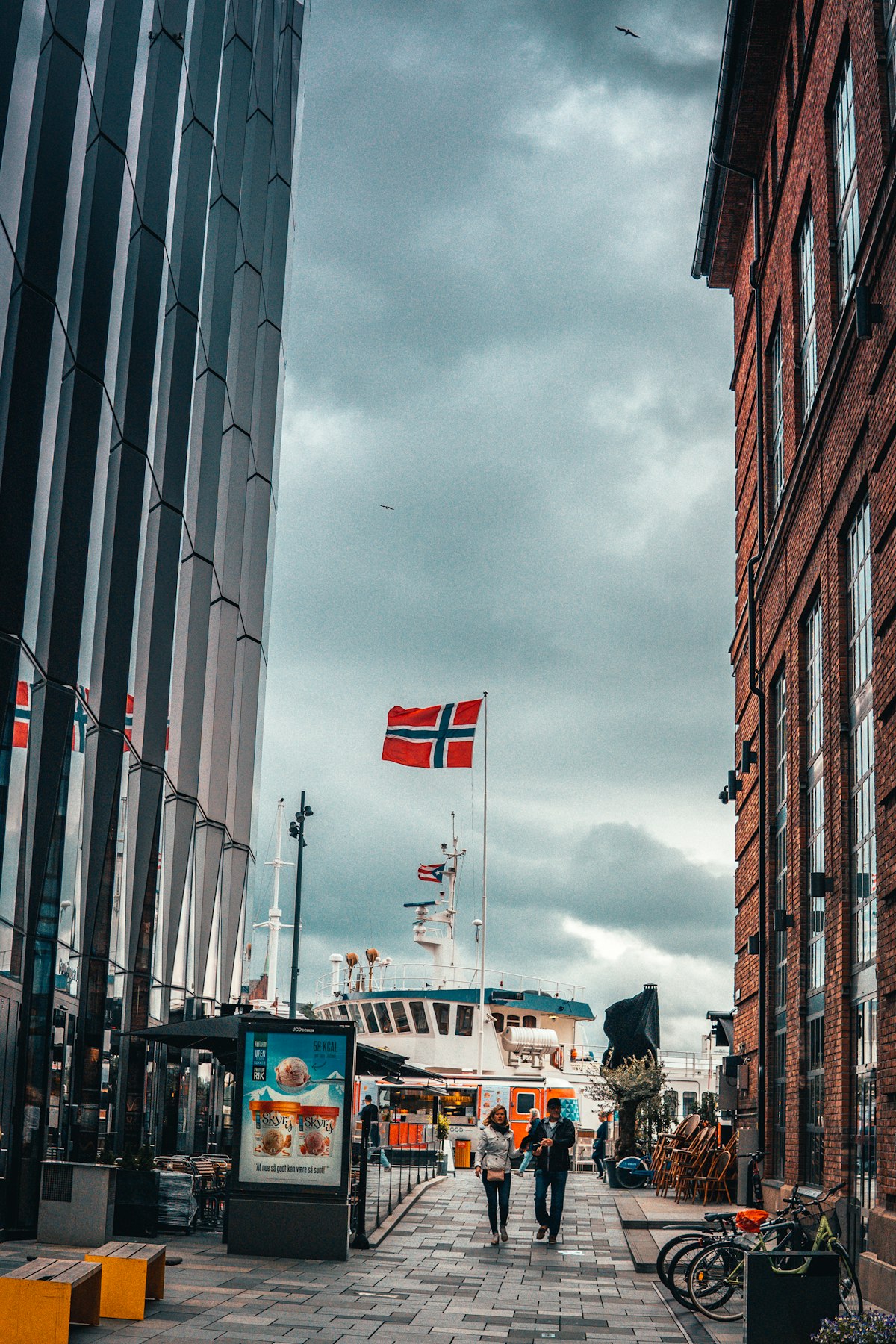
- ↑May 17 is Norway's National Day — Syttende Mai — and it is the best day to be in Oslo. Karl Johans Gate fills with the world's longest children's parade: thousands of schoolchildren in bunad (traditional regional dress) march to the Royal Palace where the King and Royal Family wave from the balcony for hours. The city is a sea of Norwegian flags, the air smells of hotdogs and ice cream, and the joy is completely unperformed. No other European capital delivers this quality of national celebration with this level of access.
- ↑May's rapidly extending daylight (over 17 hours by month's end) transforms outdoor Oslo: Vigeland Sculpture Park fills with Norwegians having their first picnics of the year, the Akerselva river walk from Vulkan to the fjord becomes a genuine outdoor living room, and the mood shift from winter to summer is palpable.
- ↑May is the last month before international tourist volumes increase — hotel prices are still moderate and major attractions like the Munch Museum (one of the world's great purpose-built art museum buildings, opened 2021) are less crowded than summer.
What you sacrifice
- ↓May 17 itself — while unmissable — makes Oslo effectively impossible for non-festive purposes: all shops are closed, transport is disrupted, and the city centre is a dense celebratory crowd from morning until evening. Plan around it rather than through it.
- ↓Late May can bring Ascension Day and Whitsun public holidays (moveable feasts) that further disrupt planning. Check the Norwegian public holiday calendar for your specific travel dates.
May scores highest overall — reliable weather and strong local atmosphere. Set your priorities below to personalise this result.
May
Norwegian Constitution Day, May 17 — the best day to be anywhere in Norway.
17°C
High
53mm
Rain
8.2h
Sun
- ↑May 17 is Norway's National Day — Syttende Mai — and it is the best day to be in Oslo. Karl Johans Gate fills with the world's longest children's parade: thousands of schoolchildren in bunad (traditional regional dress) march to the Royal Palace where the King and Royal Family wave from the balcony for hours. The city is a sea of Norwegian flags, the air smells of hotdogs and ice cream, and the joy is completely unperformed. No other European capital delivers this quality of national celebration with this level of access.
- ↑May's rapidly extending daylight (over 17 hours by month's end) transforms outdoor Oslo: Vigeland Sculpture Park fills with Norwegians having their first picnics of the year, the Akerselva river walk from Vulkan to the fjord becomes a genuine outdoor living room, and the mood shift from winter to summer is palpable.
- ↑May is the last month before international tourist volumes increase — hotel prices are still moderate and major attractions like the Munch Museum (one of the world's great purpose-built art museum buildings, opened 2021) are less crowded than summer.
- ↓May 17 itself — while unmissable — makes Oslo effectively impossible for non-festive purposes: all shops are closed, transport is disrupted, and the city centre is a dense celebratory crowd from morning until evening. Plan around it rather than through it.
- ↓Late May can bring Ascension Day and Whitsun public holidays (moveable feasts) that further disrupt planning. Check the Norwegian public holiday calendar for your specific travel dates.
Top travel windows
★ BestMay
Best overall
Highest combined score
17°C
High
53mm
Rain
8.2h
Sun
November
Best for value
Lowest prices & fees
5°C
High
82mm
Rain
2h
Sun
November
Fewest crowds
Quietest month
5°C
High
82mm
Rain
2h
Sun
Breakdown by priority
Best for weather
June
22°C high · 67mm rain · 9.6hrs sun/day
Best for budget
November
November is genuinely Oslo's weakest month, but value is real: hotel rates at many properties drop to their annual lowest before December's Christmas surge. If a specific museum visit or business reason brings you to Oslo in November, the cost per night at quality hotels near Aker Brygge or Tjuvholmen can be 50% below July rates.
Fewest crowds
November
November is genuinely Oslo's weakest month, but value is real: hotel rates at many properties drop to their annual lowest before December's Christmas surge. If a specific museum visit or business reason brings you to Oslo in November, the cost per night at quality hotels near Aker Brygge or Tjuvholmen can be 50% below July rates.
Worst time to visit
November
November is the one month in Oslo that offers little to compensate for the cold and darkness: just 2 hours of pale, grey light per day, no snow yet for winter sports, no Christmas atmosphere (which arrives properly only in December), and no summer outdoor culture. The city is between seasons in the least pleasant way possible.
Where to stay in Oslo
All neighbourhoods →Grønland
Oslo's multicultural quarter — the Grønland Basar, Middle Eastern food, and the city's most affordable dining.
8/10
Central
8/10
Walk
9/10
Transit
Grünerløkka
Oslo's creative heartland — the Akerselva river, vintage shops, and the city's best café culture.
7/10
Central
9/10
Walk
7/10
Transit
Also exploring
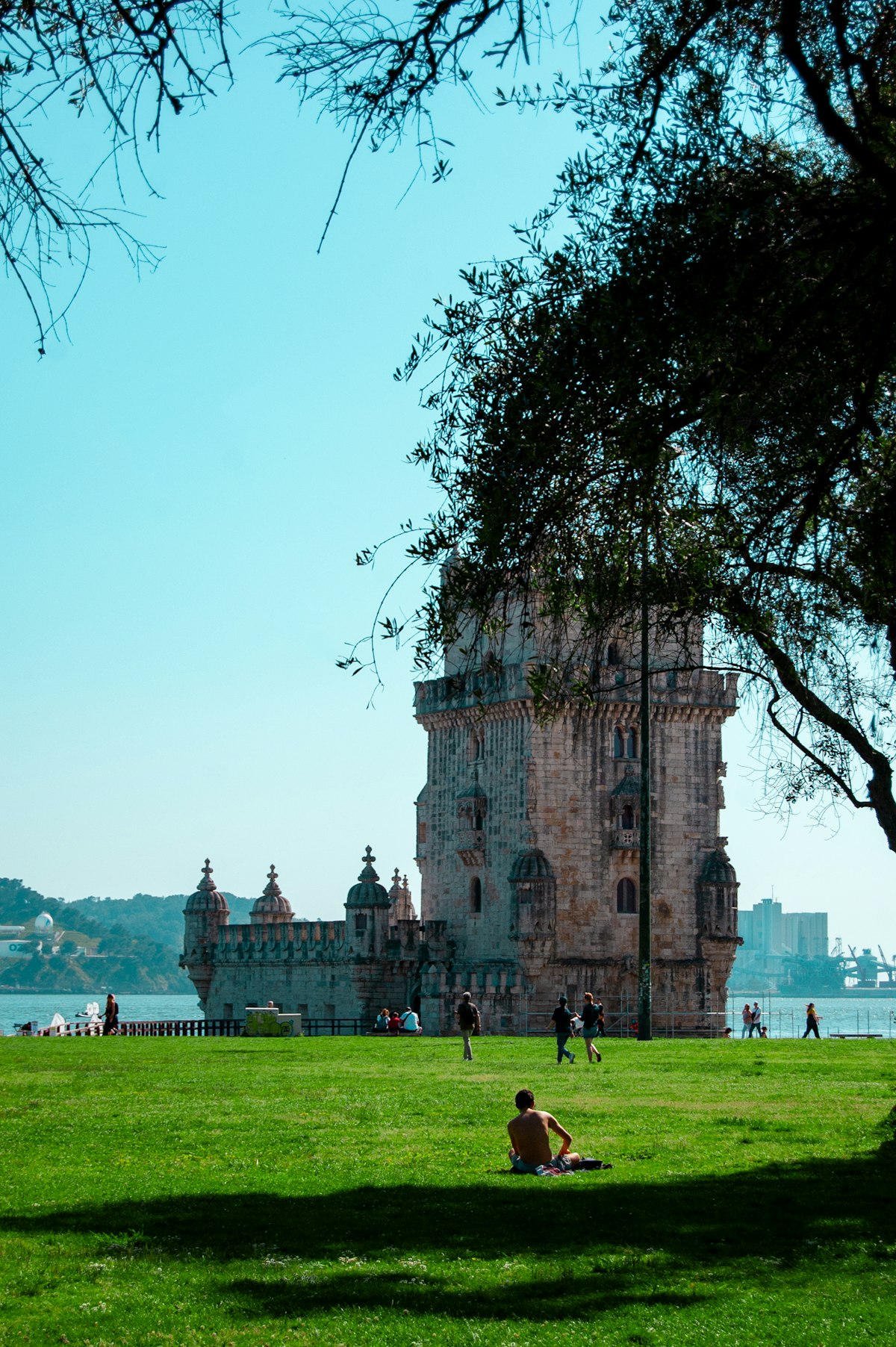
Lisbon
Portugal
A sun-drenched Atlantic capital where tram lines weave through hilltop neighbourhoods and prices stay genuinely affordable by Western European standards.
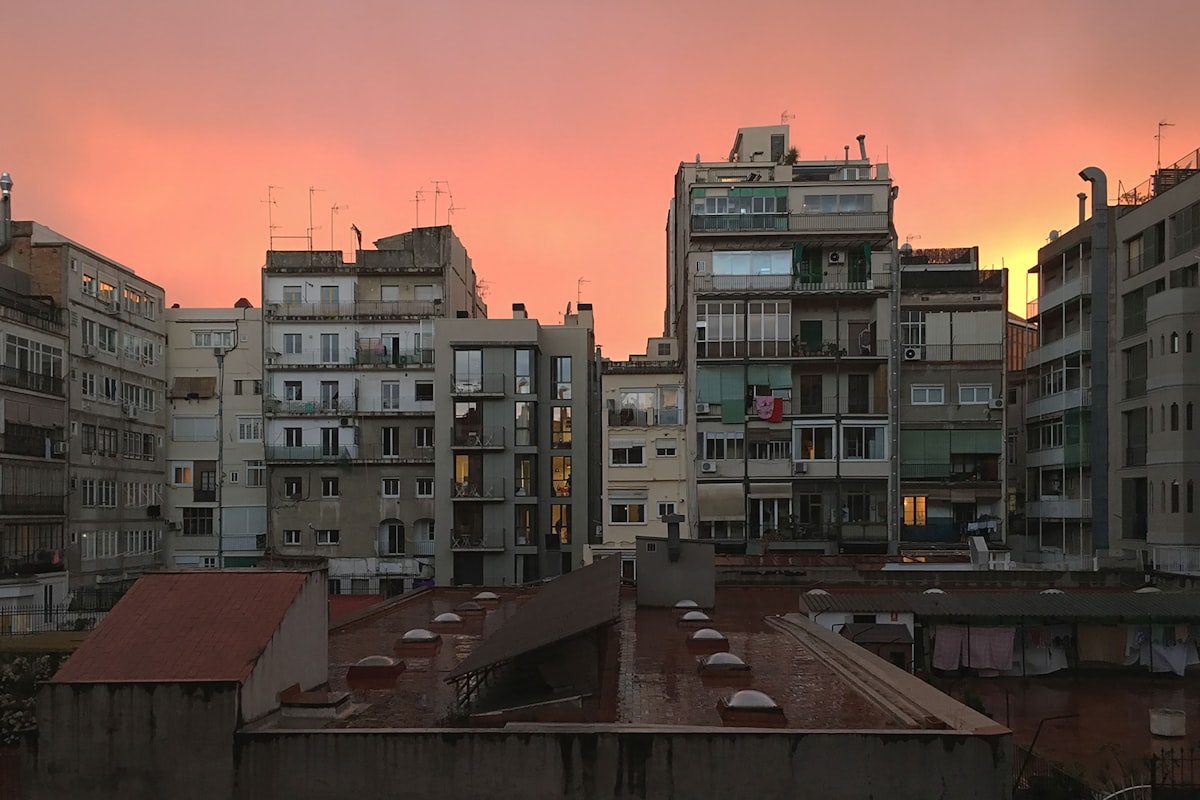
Barcelona
Spain
A Mediterranean city that runs on architecture, food markets, and beach culture — with a tourism problem that makes timing absolutely critical.
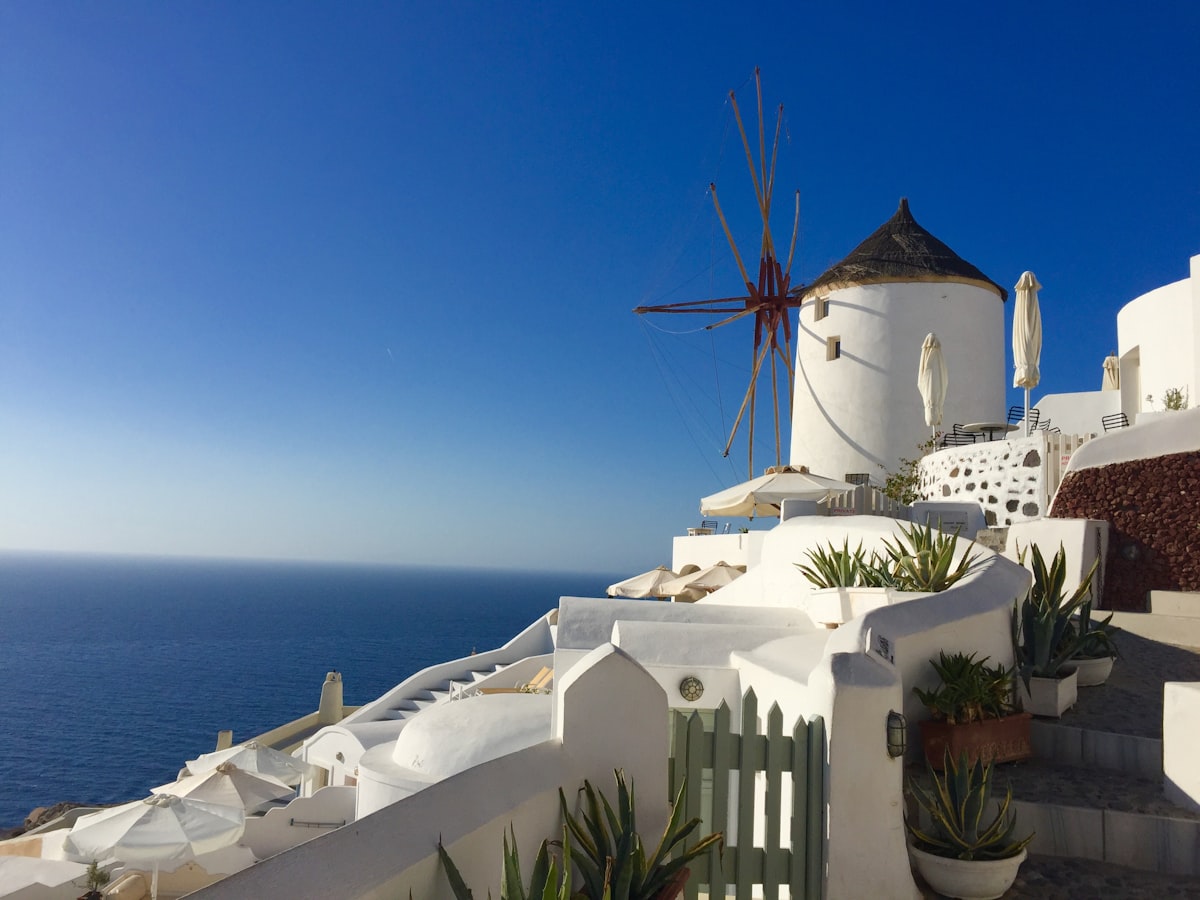
Santorini
Greece
The caldera sunsets and white-washed cliffside villages are real — but so is a tourism infrastructure that was never designed for 3 million annual visitors.
Worth knowing
May scores highest overall. July is the most crowded month — avoid if you can. See crowd-free ranking →
Month by month breakdown
January#11▾
Gains
- ↑January is Oslo's deepest winter: temperatures averaging -1°C by day, -7°C at night, with just 1.8 hours of sunshine. But Norwegian winter culture is genuine rather than something to endure — the city's café scene (Tim Wendelboe coffee in Grünerløkka, Fuglen in Majorstuen), the Munch Museum's vast collection, and the Viking Ship Museum on Bygdøy are all uncrowded and excellent. Winter in Oslo is best experienced indoors-first.
- ↑Holmenkollen ski facilities (30 minutes by T-bane from Central Station) are fully operational: the famous ski jump, the cross-country trails of the Nordmarka forest, and the ski jump simulator at Holmenkollen Museum are accessible and uncrowded on weekdays. Downhill skiing at Tryvann is a 45-minute commute by public transport from the city centre.
- ↑Hotel rates in January are among the year's lowest for a Northern European capital — Oslo's notorious expense is partially mitigated in the winter off-season. Michelin-starred restaurants (Maaemo, Statholdergaarden) take reservations more easily and sometimes offer winter tasting menu deals.
Sacrifices
- ↓Just 1.8 hours of usable daylight per day is the dominant reality of Oslo in January. The sun rises at 9am and sets by 3:30pm — outdoor exploration is entirely limited to this window, and the light is often flat and grey even then. This is not a limitation that can be willed away.
- ↓Note clearly: Oslo is not a Northern Lights destination. The city's southern latitude and light pollution eliminate any chance of aurora viewing. Tromsø (1,500km north) is the correct destination for that experience — this is a frequent tourist misunderstanding.
February#9▾
Gains
- ↑February is typically the best month for snow quality in Nordmarka: Oslo's vast forested backcountry north of the city has 2,600km of groomed cross-country ski trails accessible directly by T-bane. Norwegian cross-country skiing culture — families skiing in the forest on weekend mornings, thermoses of coffee and brown cheese sandwiches — is one of Scandinavia's great accessible pleasures.
- ↑Norwegian Winter Break (vinterferie, typically week 8 in Oslo) brings school holiday energy to the city and ski trails. The tourist crowds remain minimal but the Norwegian family ski culture is at its most visible — a counterpoint to the summer-only visitor perspective.
- ↑Daylight is returning at a measurable pace: February ends with nearly 5 hours of usable light compared to January's 1.8. The increase is psychologically significant in Norway.
Sacrifices
- ↓February remains genuinely cold: -7°C at night requires serious winter clothing — layering systems, not just a coat. Oslo's outdoor food markets and harbour promenades are used only by the hardiest.
- ↓If the winter is mild (a growing climate pattern), snow coverage at Holmenkollen can be inconsistent — artificial snowmaking covers the main slopes but backcountry trail quality can disappoint.
March#5▾
Gains
- ↑The Holmenkollen Ski Festival (typically early-to-mid March) is Scandinavia's oldest and most prestigious ski jumping and biathlon event. The Holmenkollen ski jump hill holds 70,000 spectators on competition day — an extraordinary crowd for a Nordic country of 5 million. Tickets to the main jump day are essential to book months in advance. The atmosphere combines Norwegian national pride, world-class athletics, and the remarkable mountain-above-city landscape of Holmenkollen park.
- ↑March delivers Oslo's best winter light-to-snow ratio: the days are extending rapidly (reaching 12 hours by the equinox), the snow is still reliable, and the Oslofjord's icy blue surface catches early spring light in ways that photographer-travellers specifically seek out.
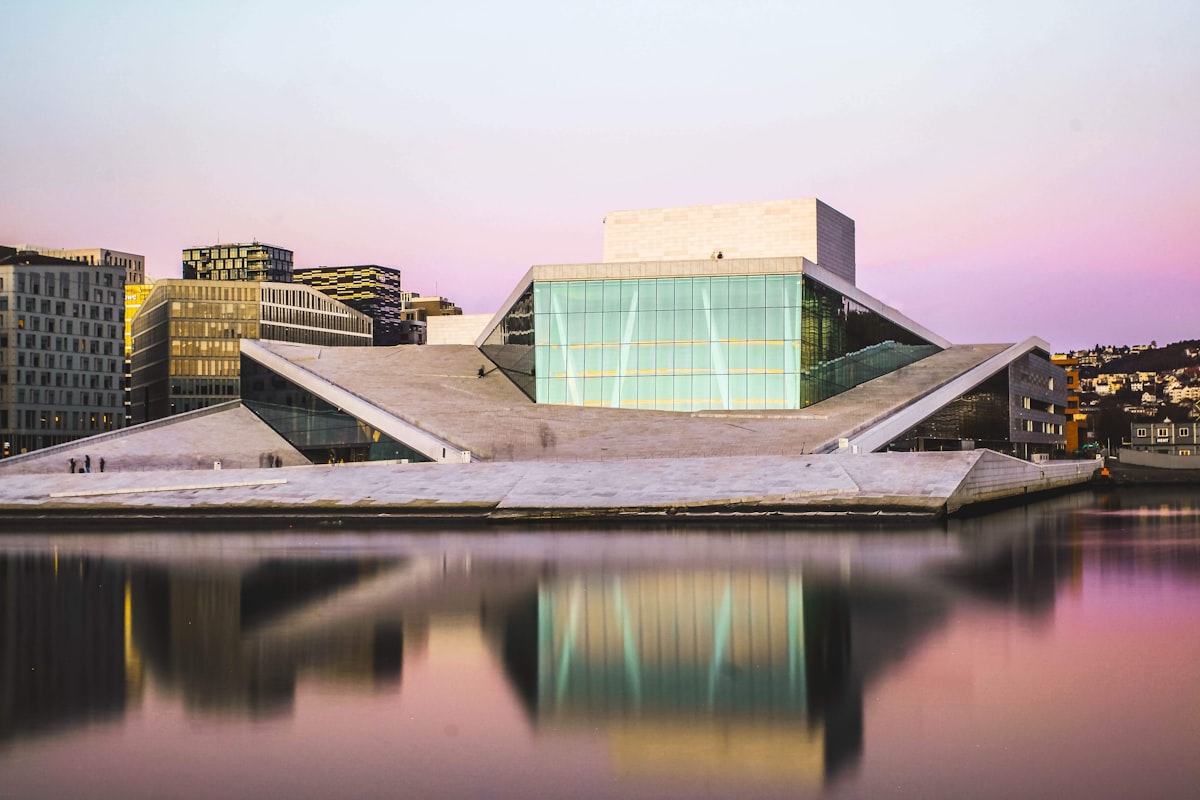
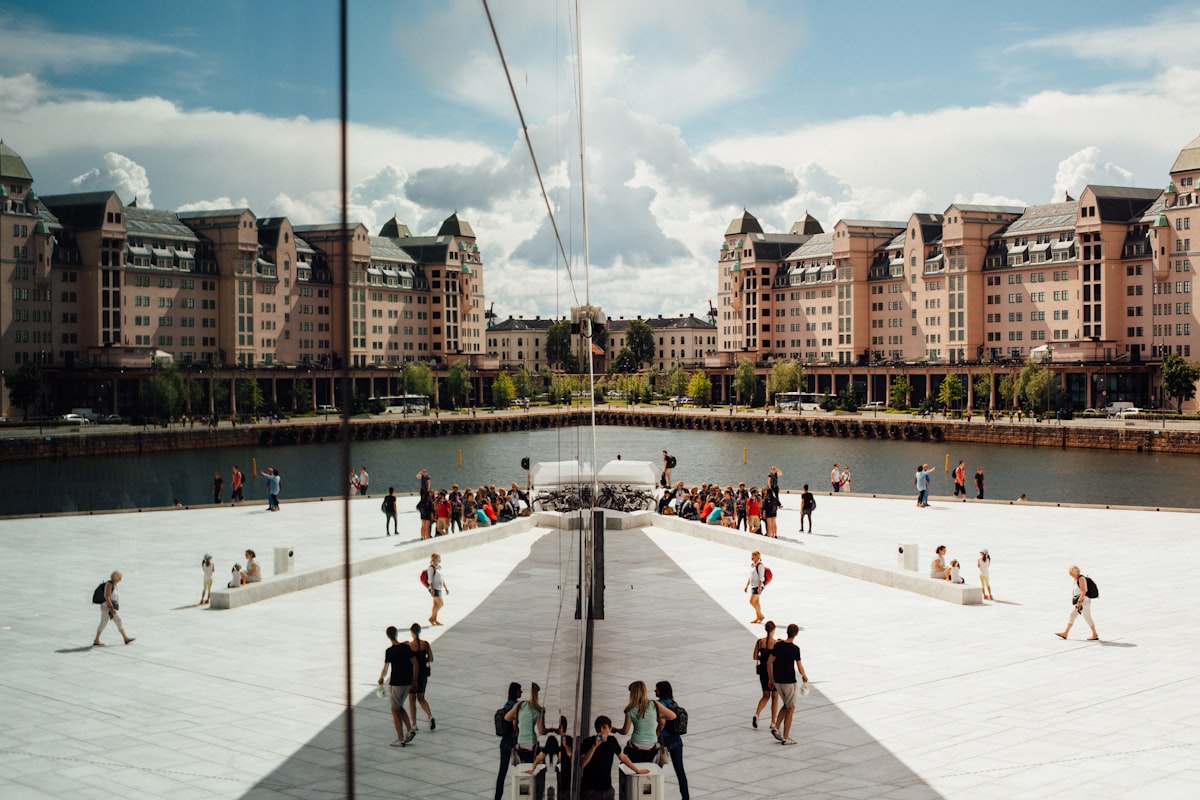
- ↑The Opera House roof — one of the city's great accessible public spaces — becomes genuinely enjoyable in March sunshine, and the walk from the Opera along the Akerselva river toward Grünerløkka is becoming possible without full winter gear.
Sacrifices
- ↓March is a transitional month — the ski season is winding down after Holmenkollen, and spring hasn't arrived. Temperatures can oscillate: -3°C overnight but 10°C on a sunny afternoon, requiring flexible layering.
- ↓Holmenkollen week (if your dates coincide) drives accommodation prices across Oslo significantly and the T-bane to Holmenkollen runs at capacity — plan accordingly.
April#6▾
Gains
- ↑April is Oslo's spring transition: snow retreats from the city's streets (though Nordmarka may retain patches well into April), birch trees leaf with that brilliant Nordic spring green, and Oslofjord islands become accessible as ice retreats. The ferry to Bygdøy peninsula (running from April through October) restores the most pleasant approach to the Viking Ship Museum and Fram Museum.
- ↑Easter (Påske) is a major Norwegian holiday — Norwegians decamp to mountain cabins, leaving Oslo quieter and more local-feeling than most weeks of the year. The city's market halls (Mathallen at Vulkan, Vippa street food market) are excellent April destinations.
- ↑Prices remain affordable: April is not yet on the international tourist radar for Oslo travel, and hotel availability is good even into the month.
Sacrifices
- ↓Norwegian spring is genuinely unpredictable — April can deliver snow and sleet as easily as sunshine. The Scandinavian concept of "there is no bad weather, only bad clothing" applies: flexible layers are essential.
- ↓Some summer-specific experiences aren't yet available: the Oslo Archipelago ferry service to swimming islands starts in late May/June, and outdoor café terraces open cautiously rather than reliably.
May#1▾
Gains
- ↑May 17 is Norway's National Day — Syttende Mai — and it is the best day to be in Oslo. Karl Johans Gate fills with the world's longest children's parade: thousands of schoolchildren in bunad (traditional regional dress) march to the Royal Palace where the King and Royal Family wave from the balcony for hours. The city is a sea of Norwegian flags, the air smells of hotdogs and ice cream, and the joy is completely unperformed. No other European capital delivers this quality of national celebration with this level of access.
- ↑May's rapidly extending daylight (over 17 hours by month's end) transforms outdoor Oslo: Vigeland Sculpture Park fills with Norwegians having their first picnics of the year, the Akerselva river walk from Vulkan to the fjord becomes a genuine outdoor living room, and the mood shift from winter to summer is palpable.
- ↑May is the last month before international tourist volumes increase — hotel prices are still moderate and major attractions like the Munch Museum (one of the world's great purpose-built art museum buildings, opened 2021) are less crowded than summer.
Sacrifices
- ↓May 17 itself — while unmissable — makes Oslo effectively impossible for non-festive purposes: all shops are closed, transport is disrupted, and the city centre is a dense celebratory crowd from morning until evening. Plan around it rather than through it.
- ↓Late May can bring Ascension Day and Whitsun public holidays (moveable feasts) that further disrupt planning. Check the Norwegian public holiday calendar for your specific travel dates.
June#2▾
Gains
- ↑June brings Oslo's extraordinary summer daylight: by Midsummer (June 21) the city has 18.5 hours of usable daylight, with an extended golden hour that stretches from 10pm to midnight. The Oslofjord islets — Gressholmen, Bleikøya, Langøyene — become accessible by regular public ferry (Ruter ticket, integrated with the MTR) and Norwegians spend long summer evenings swimming, barbecuing, and sailing in a collective seasonal joy that is extremely specific to Scandinavia.
- ↑Midsummer (Sankthansaften) on June 23 brings bonfires on the fjord islets — a genuine pagan midwinter-reversal celebration that is far more low-key and local than Danish or Swedish equivalents but entirely accessible.
- ↑June restaurant culture activates: Oslo's outdoor terraces open with genuine enthusiasm after winter. The Aker Brygge waterfront and Tjuvholmen art quarter become evening destinations as Norwegians celebrate the season they've been waiting six months for.
Sacrifices
- ↓June hotel prices are significantly higher than May — the summer tourist season begins in earnest. School holidays start in mid-June, driving Norwegian domestic travel alongside growing international visitor numbers.
- ↓The midnight sun effect is real: even with heavy curtains (or eye masks), sleeping past 4am in Oslo in June requires adjustment. The 3am light is a golden, persistent glow rather than darkness.
July#3▾
Gains
- ↑July is Oslo at its most hedonistic: Norwegians on holiday fill the Oslofjord archipelago, the Aker Brygge promenade, and every square metre of outdoor seating in Grünerløkka and Frogner. The city's 97 outdoor swimming sites — including the fjord pools at Sørenga and Sukkerbiten directly behind the Opera House — are the most used public spaces in Norway per capita.
- ↑The Viking Ship Museum on Bygdøy contains the three best-preserved Viking ships in the world (Oseberg, Gokstad, Tune) — artefacts of extraordinary power and scale that no other country can match. In July it can be visited before 10am before tour groups arrive. Adjacent, the Fram Museum houses the polar exploration ship Fram, the strongest wooden vessel ever built — a genuinely surprising and moving institution.
- ↑Daylight remains close to June's maximum: the long golden evenings of July are the primary reason international visitors come to Oslo in summer.
Sacrifices
- ↓Oslo in July is the most expensive possible time to visit the most expensive city in Europe. A pint of beer at a central bar costs approximately 100 NOK (£7/€8); a midrange dinner for two without wine at a place like Arakataka or Olympen runs 1,200–2,000 NOK. Hotels at Aker Brygge and Tjuvholmen are at annual peak rates.
- ↓Many Oslo businesses close for the July summer holiday — some neighbourhood restaurants and specialist shops take 2–4 weeks off. The city's professional life pauses, which creates a pleasant holiday mood but reduces some services.
August#4▾
Gains
- ↑The Oslo Jazz Festival (typically mid-August) brings world-class performers to venues across the city — Nasjonal Jazzscene at Victoria, Blå in Grünerløkka, and outdoor stages at Youngstorget. The festival is one of northern Europe's most respected, with a programming depth that punches above Norway's size. Evening concerts combine with August's warm outdoor conditions to create the most musically and atmospherically rich week of the Oslo calendar.
- ↑August temperatures (23°C average) remain excellent without July's crowds: European families have returned to school, and the fjord islands and walking trails thin perceptibly in the second half of August.
- ↑Outdoor swimming in the Oslofjord continues in August — the sea temperature reaches 19–21°C by late summer, making the Sørenga Sjøbad fjord pool and the island swimming spots genuinely warm.
Sacrifices
- ↓Hotel prices remain at peak through August — Oslo does not discount in the summer regardless of early return-to-school patterns. Book 2–3 months ahead for quality properties during the Jazz Festival week.
- ↓Rainfall increases slightly compared to July: 89mm with occasional summer thunderstorms. These are brief but intense, and outdoor festival events can be disrupted. Pack a light rain layer.
September#7▾
Gains
- ↑September is Oslo's best-value month for first-time visitors: summer crowds have gone, prices drop 20–30% from July–August peaks, and the weather remains pleasant with 18°C days and the city's outdoor life still largely operational. The Oslofjord islands run their final ferry services and the open-air Viking Ship Museum walk from Dronningen ferry pier retains its summer quality.
- ↑Autumn light on the Oslofjord — the water going silver-grey beneath birch and maple leaves turning yellow — is genuinely beautiful and rarely photographed by visitors who come only in summer.
- ↑Oslo's culinary scene is at its most creative in September: the food markets at Mathallen and Vippa highlight the autumn harvest — Norwegian lamb (pinnekjøtt season begins), cloudberries, chanterelles, and the coastal fish arriving from the Norwegian Sea.
Sacrifices
- ↓September can bring significant rain: 92mm with unpredictable timing. The fjord island swimming season ends after Labour Day (first Monday of September) for most, and daylight drops notably — from 15 hours at month start to 12 hours by the equinox.
- ↓Some summer attractions close or reduce hours in September — the seasonal restaurant terraces retract, and the archipelago ferry services begin winding down their full summer schedules.
October#10▾
Gains
- ↑October's dropping temperatures signal the retreat to Oslo's excellent indoor culture. The Munch Museum (MUNCH, opened 2021) — with its vast collection including multiple versions of The Scream and Madonna — is at its best in autumn: fewer summer tourists and the natural light quality through the architect-designed building creates the most contemplative conditions for viewing.
- ↑Norwegian autumn gastronomy peaks in October: game season, pinnekjøtt (salted lamb ribs), and the foraged mushroom and berry menus at restaurants like Fauna and Maaemo represent some of northern Europe's finest seasonal eating.
- ↑Hotel prices are good in October — the post-summer, pre-Christmas lull makes this a genuine value month for Oslo's usually expensive accommodation market.
Sacrifices
- ↓Daylight collapses: from 12 hours at the equinox to 9 hours by month's end, with the days shortening at nearly 4 minutes per day. The psychological shift is real and rapid. Oslo's fjord swimming, archipelago ferries, and all outdoor water activities are finished for the year.
- ↓October rain at 102mm falls frequently and cold — this is damp-cold rather than dry-cold, requiring waterproof outerwear rather than just insulation.
November#12▾
Gains
- ↑November is genuinely Oslo's weakest month, but value is real: hotel rates at many properties drop to their annual lowest before December's Christmas surge. If a specific museum visit or business reason brings you to Oslo in November, the cost per night at quality hotels near Aker Brygge or Tjuvholmen can be 50% below July rates.
- ↑The Nobel Peace Prize shortlist is announced in November, generating cultural conversation and occasional associated events at the Nobel Peace Center at Brynjulf Bulls Plass — a beautifully designed institution regardless of the month.
Sacrifices
- ↓November is the one month in Oslo that offers little to compensate for the cold and darkness: just 2 hours of pale, grey light per day, no snow yet for winter sports, no Christmas atmosphere (which arrives properly only in December), and no summer outdoor culture. The city is between seasons in the least pleasant way possible.
- ↓If you can choose any month other than November for an Oslo visit, choose it. January in Oslo at least has ski season; November has neither ski nor daylight.
December#8▾
Gains
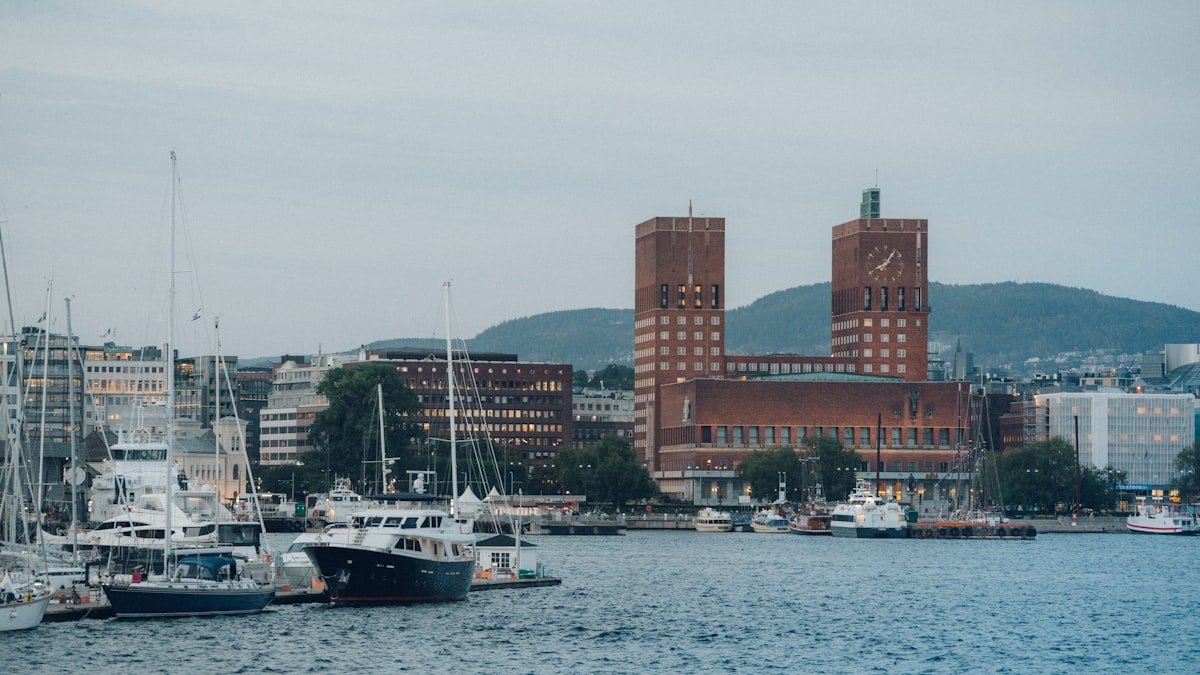
- ↑The Nobel Peace Prize ceremony (December 10 at Oslo City Hall, Nobel Peace Center) is Oslo's most internationally significant annual event — tickets to the ceremony are government-issued, but the week surrounding it includes open lectures, exhibitions, and a Nobel Concert. Staying in Oslo during Nobel Week offers a distinctly different city atmosphere.
- ↑Oslo's Christmas market at Spikersuppa (Einar Gerhardsens plass) and the Julemarked at Frogner Park deliver genuine Norwegian Christmas atmosphere: gingerbread houses, hot gløgg, lutefisk, and a Christmas tree donated annually by Oslo to London (on display in Trafalgar Square — Oslo's most internationally visible gift). The markets are not as large as German Christmas markets but feel more authentic.
- ↑If snow arrives (typically December, though timing varies year to year), the Nordmarka cross-country trails light up with headlamp skiers from after-work on weeknights — uniquely Norwegian urban winter culture.
Sacrifices
- ↓Just 1.6 hours of usable daylight per day — December beats even January's darkness. The sun barely crests the horizon before setting again, and the combination of cold, dark, and Christmas prices makes Oslo in December an expensive proposition requiring psychological preparation.
- ↓Christmas week and New Year's Eve drive hotel prices sharply upward. The Nobel Peace Prize ceremony week (around December 10) also tightens accommodation availability in central Oslo.
How this is calculated
Climate data
Open Meteo ERA5
30-year normals (1991–2020). Temperature, rainfall, sunshine, humidity.
Price & crowd
Tourism research
Seasonal pricing from tourism authority data. Directional — compares months within a destination only.
Personalisation
Weighted scoring
Your priorities change the weights. Budget-first users get different results than weather-first users.
Share this result
May is the best time to visit Oslo
Travel timing updates
New destinations and timing guides, when they land.
No spam. Unsubscribe anytime.