Best time to visit Nepal for local atmosphere
When to visit Nepal to experience genuine local life — the months when residents are present, markets are active, and the city feels like itself.
Best month
October
The finest month — crystal-clear skies, Dashain festival, and the most dramatic mountain views of the year.
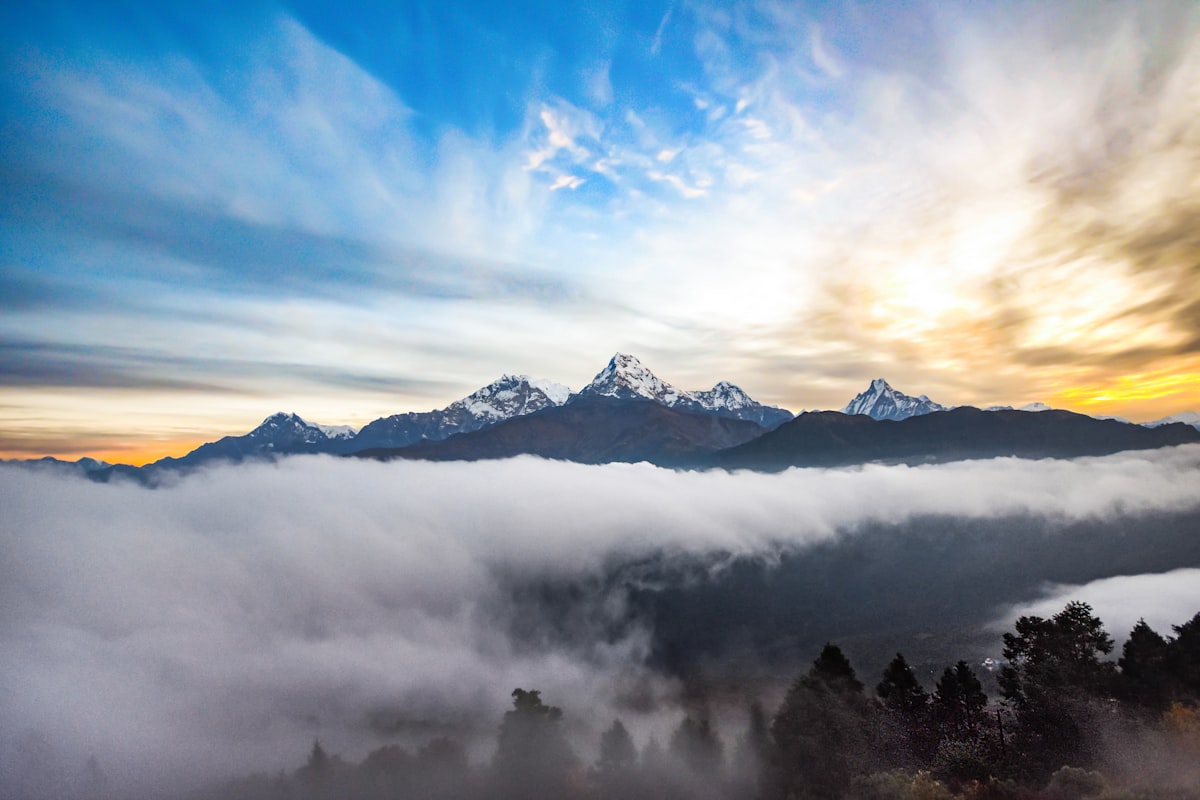
↑October delivers Nepal's most celebrated conditions: the monsoon has ended, the air has been washed clean, and the Himalayan panoramas — Everest from Kala Patthar, Annapurna from Poon Hill, Ganesh Himal from Nagarkot — are at their sharpest and most dramatic; photographers and trekkers specifically plan years around October visits
↑Dashain (Nepal's most important Hindu festival, date varies late September–October) transforms the country: a 10–15 day celebration featuring kite-flying, family reunions, animal sacrifices at Durbar Squares, and the blessing of children by elders with tika (coloured powder and yoghurt); the atmosphere in Kathmandu during Dashain is the most culturally charged of any month
↑Tihar (Festival of Lights, October–November, 5 days): Nepal's equivalent of Diwali, celebrated with oil lamp rows, the worship of crows, dogs, and cows, and the extraordinary Lakshmi Puja evening when the Kathmandu Valley is lit from every window with oil lamps and strings of lights; Tihar in Bhaktapur's medieval Durbar Square is one of the most visually beautiful cultural events in South Asia
All months ranked — Local atmosphere
Best match
The finest month — crystal-clear skies, Dashain festival, and the most dramatic mountain views of the year.
#1 for local atmosphere
Best match
Peak spring — Everest climbing season opens and the rhododendron forests reach maximum colour.
#2 for local atmosphere
Best match
Spring season opens — rhododendrons peak, high passes open, and the Annapurna and Everest circuits wake up.
#3 for local atmosphere
Best match
Late autumn sweet spot — excellent views, fewer trekkers than October, and the high passes still clear.
#4 for local atmosphere
Best match
Pre-monsoon window — Everest summit week, increasing clouds, but still excellent for lower circuits.
#5 for local atmosphere
Strong option
Winter warming — the first rhododendrons appear below 2,000m and trekking season begins to stir.
#6 for local atmosphere
Strong option
Early winter — cold and clear, high passes closing, but lower circuits still excellent and very affordable.
#7 for local atmosphere
Strong option
Cold and clear — the Himalayas at their sharpest, but high passes closed and Kathmandu at its coolest.
#8 for local atmosphere
Worth considering
Monsoon easing — the final heavy rain month before autumn's clear skies arrive in October.
#9 for local atmosphere
Worth considering
Monsoon arrives — trekking stops, temples are empty, and the landscape transforms to vivid green.
#10 for local atmosphere
Avoid
Peak monsoon — the most rain of the year, almost no trekking possible, and Nepal at its most local.
#11 for local atmosphere
Avoid
Second peak monsoon month — conditions essentially identical to July.
#12 for local atmosphere