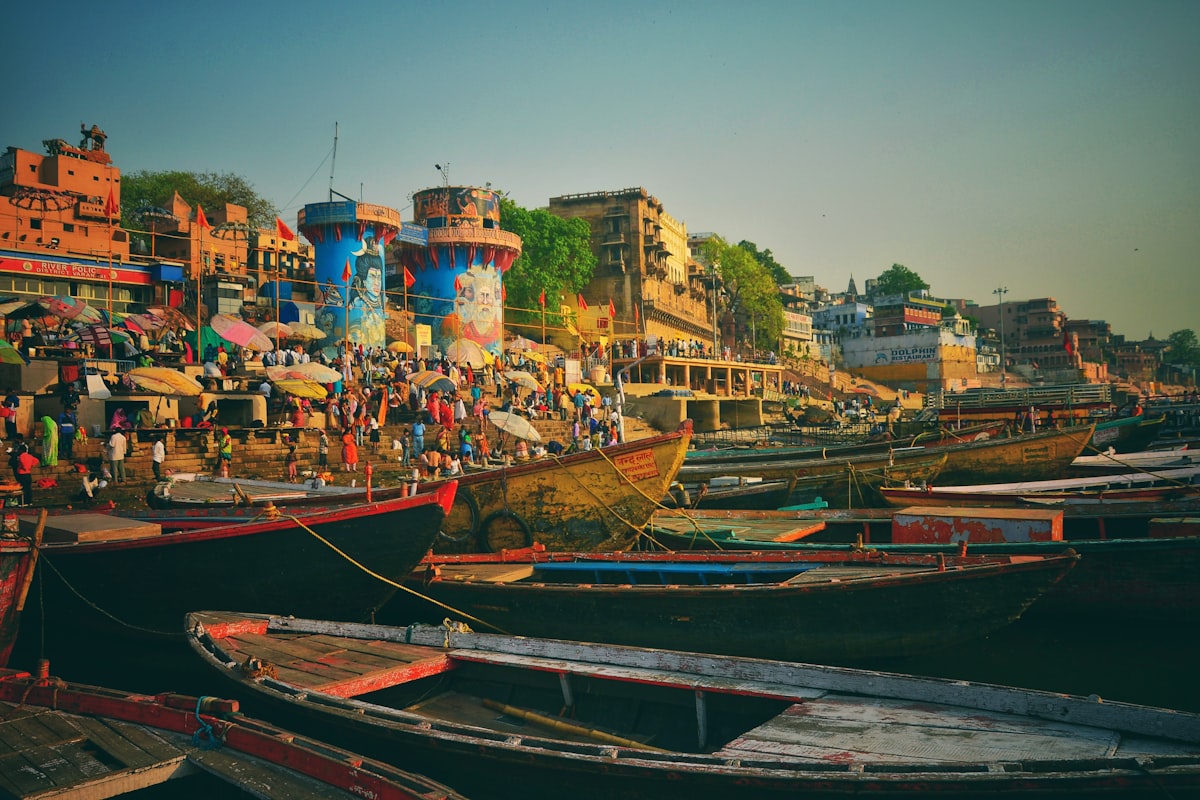
Best time to visit Varanasi for local atmosphere
When to visit Varanasi to experience genuine local life — the months when residents are present, markets are active, and the city feels like itself.
Best month
February
Maha Shivaratri pilgrim crush in late Feb/early Mar — Varanasi's most intense religious event.
↑Maha Shivaratri all-night Shiva worship around Vishwanath Temple
↑Comfortable 27°C / 12°C, lowest humidity
↑Clear skies, sharp photography light
All months ranked — Local atmosphere
Best match
Maha Shivaratri pilgrim crush in late Feb/early Mar — Varanasi's most intense religious event.
#1 for local atmosphere
Best match
Dev Deepawali on Kartik Purnima — a million oil lamps line the ghats, the city's defining spectacle.
#2 for local atmosphere
Best match
Post-monsoon clarity, Dussehra and ten-day Ramlila — Varanasi opens its true season here.
#3 for local atmosphere
Best match
Cool dry mornings cloaked in Ganges mist — the most atmospheric photographic month on the ghats.
#4 for local atmosphere
Best match
Holi festival turns the ghats fluorescent — riotous, joyous, the trip's most photographed day.
#5 for local atmosphere
Strong option
Cool dry mornings on the ghats — peak foreign tourist season, classic Varanasi conditions.
#6 for local atmosphere
Strong option
Late monsoon withdrawing, Ganges receding — atmospheric green ghats before the season returns.
#7 for local atmosphere
Worth considering
Monsoon arrives — Ganges rising, some lower ghats flooding, atmospheric but limiting.
#8 for local atmosphere
Worth considering
Heat starts to crush — 39°C by day, crowds drain away, prices bottom out.
#9 for local atmosphere
Worth considering
Ganges peaks — flat-roof boatmen out of work, half the ghats underwater.
#10 for local atmosphere
Worth considering
Pre-monsoon humidity climbs, first storms break the heat — uncomfortable transition month.
#11 for local atmosphere
Avoid
Hottest month — 42°C+ regularly, only pilgrims around, not a tourist month.
#12 for local atmosphere