Fez
Borj Nord & Medina Panorama
Unsplash / Unsplash
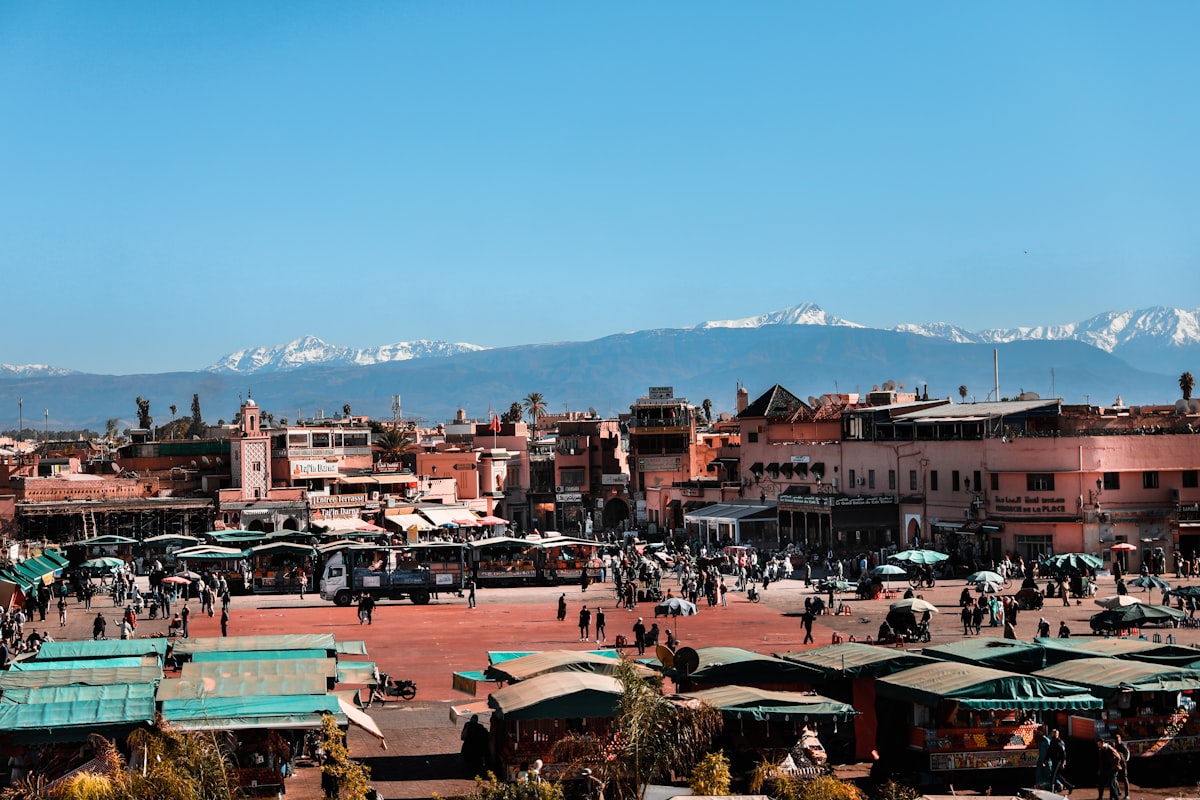
Above the medina walls — the Marinid tombs, the Arms Museum, and the finest panoramic view in Morocco.
The Borj Nord (North Fort) sits on the hill above the Bab Guissa gate on the northern edge of Fez el-Bali: a 16th-century Portuguese-influenced fortification now housing the Arms Museum (Musée des Armes, one of the largest collections of historical weaponry in Africa), and adjacent to the Merinid Tombs — the ruined 14th-century royal necropolis whose crumbling arches frame the medina roofscape below. The view from the Borj Nord terrace encompasses the entire medina: 156,000 rooftops, 2,700 minarets, and the green-tiled domes of the mosques and madrasas, stretching to the hills beyond Fez el-Jdid.
Scores
Walkability
Transit
Price
Local feel
Nightlife
Family-friendly
Centrality
What you gain
- ↑The panorama from the Borj Nord terrace is the finest overview of any medina in Morocco and possibly in the Islamic world: the full extent of Fez el-Bali is visible in a single glance, from the Bou Inania minaret in the west to the Rcif minaret in the east, with the green-tiled Al-Qarawiyyin roof at the centre. Sunrise from this terrace (Bab Guissa hotel has a rooftop that faces the same direction) produces light that turns the clay walls golden..
- ↑The Merinid Tombs — 14th-century royal funerary structures now mostly open to the sky — are freely accessible: the carved stucco fragments that remain on the tomb walls show the quality of the decorative programme that once covered them, and the site is almost never crowded. In the late afternoon, the light on the medina below the tombs is extraordinary.
- ↑The Arms Museum in Borj Nord (entry 20 MAD) contains 8,000 items spanning the 11th–20th centuries: Moroccan, Ottoman, and captured European weapons, including the famous 16th-century Portuguese bronze cannon, and exhibits on the Almoravid and Marinid dynasties who built the city below.
What you sacrifice
- ↓The Borj Nord is a significant uphill walk from Fez el-Bali: the path from Bab Guissa gate is steep, and in summer heat the ascent is demanding. Most visitors take a taxi to the top and walk down..
- ↓This is a viewpoint and museum neighbourhood rather than a lived-in area: there is no accommodation on the hill itself and almost no restaurants or cafés beyond the Bab Guissa gate area.
Best for
Avoid if
Other Fez neighbourhoods
The French colonial grid — restaurants, patisseries, and the most liveable base outside the medina walls.
The world's largest living medieval city — 9,400 streets, 14th-century madrasas, and the Chouara tannery.
The Jewish quarter and Royal Palace gates — a second historic city within the city, almost unvisited.
Know where to stay — now find when to go.
Best time to visit Fez →