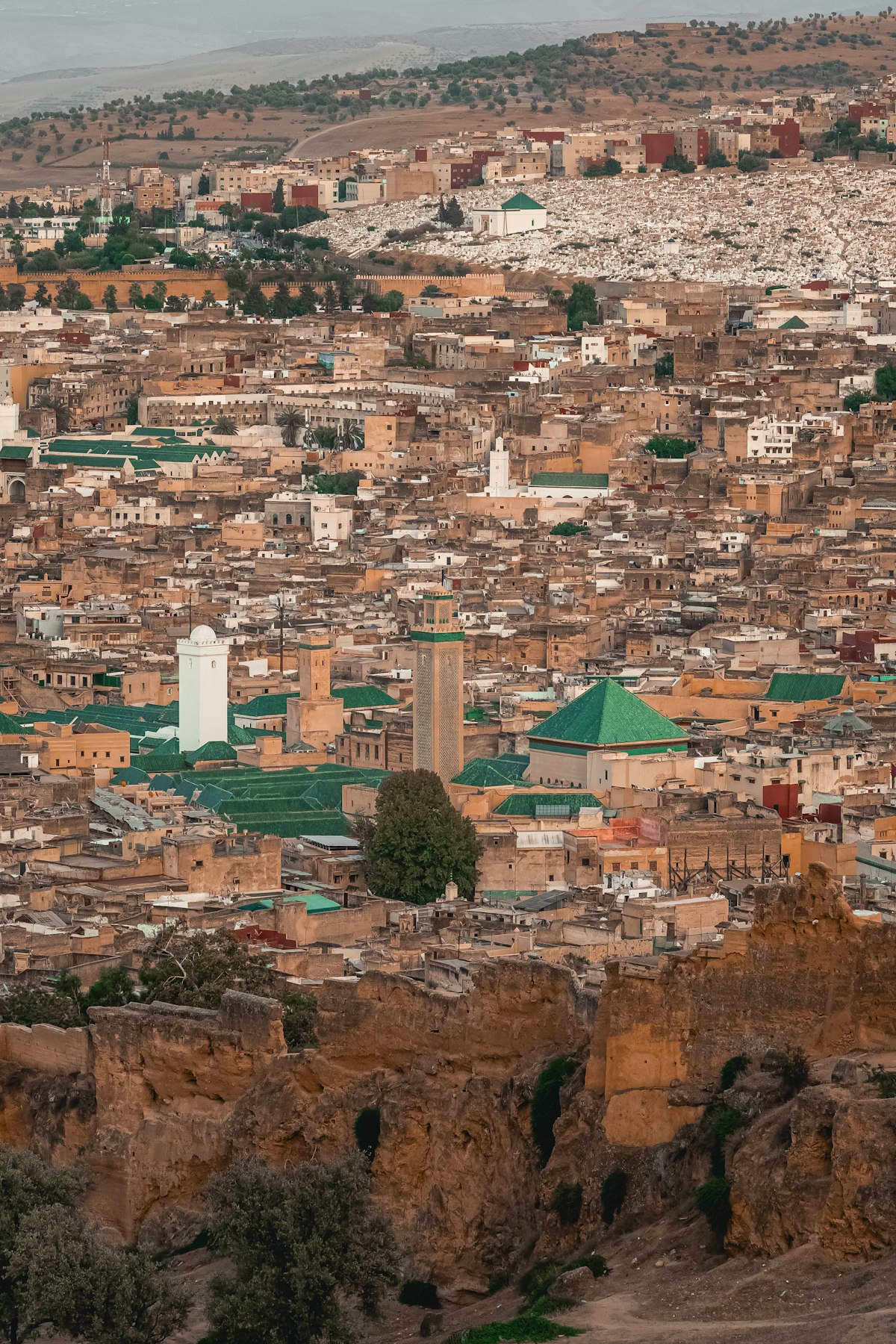
Fez
Fez el-Jdid & Mellah
Unsplash / Unsplash
The Jewish quarter and Royal Palace gates — a second historic city within the city, almost unvisited.
Fez el-Jdid ("New Fez", founded 1276) sits between the old medina and the Ville Nouvelle: the Marinid royal palaces (the current Royal Palace, Dar el-Makhzen, has seven gates of extraordinary gilt bronze and zellige mosaic), the historic Jewish Mellah quarter (one of the oldest in Morocco), and the Grand Mosque of Fez el-Jdid. The Mellah has a distinct architectural character from the medina — taller buildings with projecting wooden balconies for ventilation — and houses the Ibn Danan Synagogue (17th century, one of the finest Jewish heritage sites in North Africa, freely accessible when the caretaker is present).
Scores
Walkability
Transit
Price
Local feel
Nightlife
Family-friendly
Centrality
What you gain
- ↑The Royal Palace gates (Bab Mechouar, the ceremonial entrance to the Dar el-Makhzen) are one of the most impressive ceremonial structures in Morocco: seven bronze-plated gates with zellige tilework borders, each built at different periods by different sultans. The gate complex is freely visible from Place des Alaouites and provides the best introduction to Moroccan royal architecture in the country.
- ↑The Ibn Danan Synagogue is the most significant Jewish heritage site in Fez: a 17th-century building with a beautifully restored interior (blue-painted wooden ark, Andalusian tilework floor) that tells the story of a Moroccan Jewish community that numbered 40,000 in the 1940s and had dwindled to a handful of families by the 21st century. The caretaker opens it for visitors without charge and speaks French and Arabic..
- ↑The Fez el-Jdid souks are less tourist-saturated than the Al-Attarine and Kissaria in the old medina: the Rue des Mérinides has fabric merchants, the Mellah food market has stalls selling preserved lemons, argan oil, and dried herbs for prices aimed at local buyers rather than tourists.
What you sacrifice
- ↓Fez el-Jdid is sandwiched between the old medina and the Ville Nouvelle but feels connected to neither: the Royal Palace is the main attraction and it's not open to public entry, so visitors see the gates and leave. There is limited reason to linger without specific Jewish heritage or architectural interests.
- ↓Accommodation options in Fez el-Jdid itself are very limited — it functions as a walking area from the old medina or the Ville Nouvelle rather than a neighbourhood to base yourself in.
Best for
Avoid if
Other Fez neighbourhoods
The French colonial grid — restaurants, patisseries, and the most liveable base outside the medina walls.
The world's largest living medieval city — 9,400 streets, 14th-century madrasas, and the Chouara tannery.
The southern medina gateway — the Batha Museum palace and the most local section of Fez el-Bali.
Know where to stay — now find when to go.
Best time to visit Fez →