Jordan
Amman
Unsplash / Unsplash
The Levantine capital — a city of seven hills, Ottoman souks, the Citadel above the Roman Theatre, and the finest food scene in the Arab world.
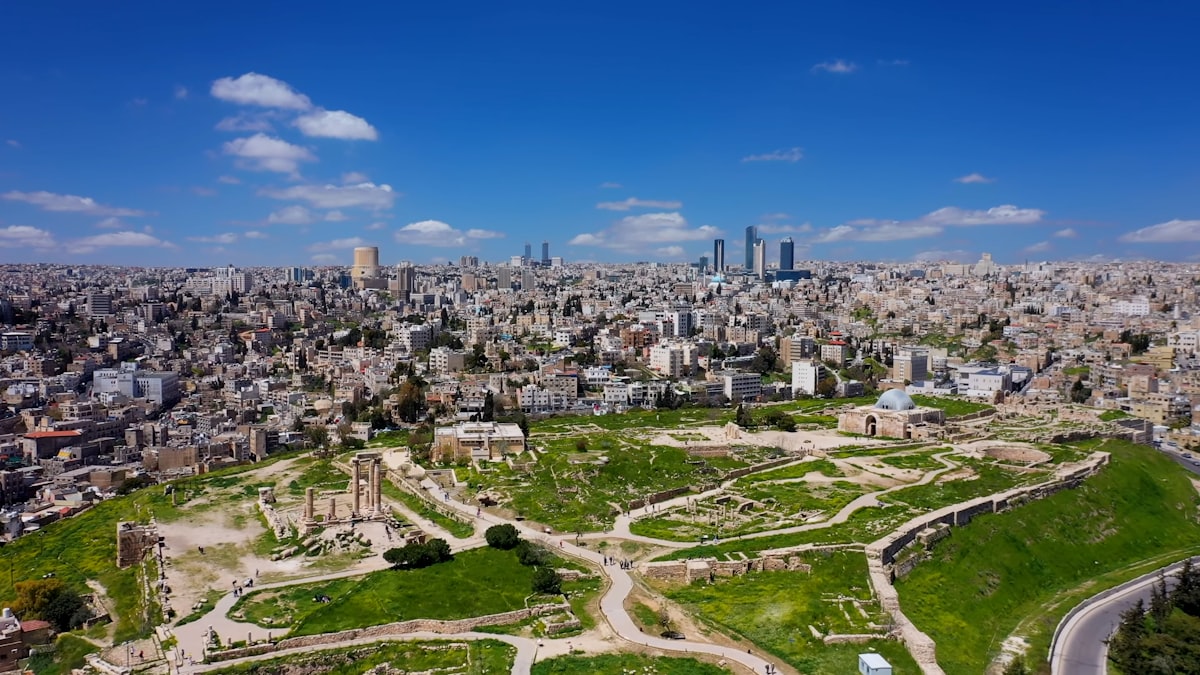
Amman is the capital of Jordan and its largest city, spread across seven (originally) and now more than twenty hills (jabals) at 773–1,100 metres altitude. The city divides culturally between East Amman (older, more working-class, authentically Arab, home to the traditional souks, the Husseini Mosque, and the Iraqi and Palestinian refugee communities that define much of Jordan's demographics) and West Amman (modern, upscale, the Rainbow Street café culture, the galleries of Jabal al-Weibdeh, and the restaurant strip of Abdali Boulevard). The Citadel (Jabal al-Qal'a) is the oldest continuously occupied site in Amman, with ruins spanning Neolithic, Bronze Age, Roman, Byzantine, and Umayyad periods; the 2nd-century Roman Theatre below holds 6,000 people and is still used for concerts. The National Archaeological Museum on the Citadel holds artefacts from the Ain Ghazal Neolithic statues (8,000 BC) to the Dead Sea Scrolls copper fragment. Amman's food scene is the finest in the Arab world by broad consensus: Levantine mezze, grilled meats, and the Jordanian national dish mansaf (lamb cooked in fermented dried yoghurt) eaten communally.
Scores
Walkability
Transit
Price
Local feel
Nightlife
Family-friendly
Centrality
What you gain
- ↑Rainbow Street and Jabal al-Weibdeh: the western Amman café and gallery district is the most genuinely cosmopolitan street in the Arab world — 100-year-old Ottoman townhouses converted into specialty coffee shops, Lebanese mezze restaurants with rooftop city views, independent booksellers stocking Arabic literature, and an outdoor gallery of political murals; the area feels more like Beirut's Gemmayzeh than a Levantine capital and gives Amman an urban quality that Jordan's heritage sites don't provide
- ↑Mansaf at Hashem Restaurant: the 3am falafel institution near the Husseini Mosque is Amman's most loved restaurant — the fried falafel are made fresh every 15 minutes, the hummus arrives in an ocean of olive oil, and the entire meal costs JOD 3–4 per person; shared by Jordanian families, Syrian taxi drivers, and tourists with equal lack of pretension, this is the most authentic food experience Amman offers and has been for 70 years
- ↑The Citadel at dusk: the Roman Temple of Hercules, the Byzantine church ruins, and the Umayyad Palace on the hilltop of Jabal al-Qal'a are best visited an hour before closing — as the afternoon crowds thin and the sun drops to the west, the view over East Amman's beehive of white houses falling down the hills to the Roman Theatre below, with the call to prayer rising from multiple minarets simultaneously, is one of the finest urban views in the Middle East
What you sacrifice
- ↓Amman is a car city — the hills and the absence of a functional metro system make walking between jabals impractical; most sightseeing requires taxis (cheap and abundant) or ride-hailing (Careem operates throughout); the city's sprawl means distances that look short on a map take 20–30 minutes to traverse
- ↓East Amman's sights are not packaged for tourist convenience — the souks, the Husseini Mosque district, and the markets of Jabal Hussein are authentic but unmarked, and navigating them without some Arabic or a local guide is disorienting; this is a feature for confident independent travellers and a problem for those expecting tourist infrastructure
Best for
Avoid if
Other Jordan neighbourhoods
The rose-red city carved by the Nabataeans — the Siq, the Treasury, the Monastery, and one of the ancient world's most extraordinary urban achievements.
Float at the lowest point on Earth and dive the Red Sea coral gardens — Jordan's two sea experiences bookending the desert.
The Valley of the Moon — a UNESCO-protected desert of red sand, towering sandstone jebels, Bedouin camps, and the finest stargazing in the Middle East.
Know where to stay — now find when to go.
Best time to visit Jordan →