Jordan
Dead Sea & Aqaba
Unsplash / Unsplash
Float at the lowest point on Earth and dive the Red Sea coral gardens — Jordan's two sea experiences bookending the desert.
Jordan has two coastal experiences that occupy opposite ends of the country: the Dead Sea in the north (430 metres below sea level, the lowest point on Earth, with water so dense with dissolved minerals — 34% salinity versus the ocean's 3.5% — that floating is inevitable and sinking is impossible) and Aqaba on the Red Sea in the south (Jordan's only port, a 27km strip of coastline between Israel and Saudi Arabia, with among the world's best and most accessible coral reef diving). The Dead Sea's Jordanian shore has five major resort complexes (Kempinski, Marriott, Hilton, Holiday Inn, Mövenpick) with private beaches, spa facilities using Dead Sea mineral products, and infinity pools at the water's edge. Aqaba's diving is concentrated in the Aqaba Marine Park: a 7km protected reef system in shallow water (most dives 8–20m) with exceptional coral coverage and a deliberately sunk ship wreck (Cedar Pride) as a centrepiece dive.
Scores
Walkability
Transit
Price
Local feel
Nightlife
Family-friendly
Centrality
What you gain
- ↑Dead Sea floating: the experience of reading a newspaper while lying on the surface of the sea — or standing upright in water without effort — is one of the few genuinely physics-defying sensory experiences in tourism; the mineral-dense water (the highest concentration of magnesium, potassium, and bromine of any natural water body on Earth) leaves skin extraordinarily smooth, and the view across the water to the Judean Hills of the West Bank creates one of the most geopolitically layered panoramas in the world
- ↑Aqaba night diving: the coral gardens of the Aqaba Marine Park are even more spectacular at night than by day — phosphorescent plankton, hunting octopus, sleeping parrotfish wedged in coral crevices, and the Cedar Pride wreck lit only by dive torches; Aqaba dive operators are well-regulated and the night dive infrastructure (mooring buoys, safety protocols) is among the best in the Red Sea
- ↑Dead Sea mineral spa treatments: the Kempinski and Mövenpick spas on the Dead Sea shore use natural mud and mineral products directly sourced from the sea; a full Dead Sea treatment (mineral bath, mud body wrap, salt scrub) at a 5-star spa on the Dead Sea shore costs US$80–120 and represents exceptional value compared to equivalent spa treatments in Europe or the Gulf
What you sacrifice
- ↓The Dead Sea is genuinely and rapidly shrinking — the water level drops approximately 1 metre per year due to Jordan River water diversion and mineral extraction; the receding shoreline has left dried salt flats between the original resort beaches and the water at some properties, and the sea's northern shore is increasingly rocky and difficult to enter without designated beach access
- ↓Aqaba has limited beach space — Jordan's coastline is only 27km long, shared between a public beach, the Aqaba Marine Park, and the private resort beaches; the beach experience is more compressed and less expansive than Egypt's Sinai or Saudi Arabia's Tabuk coast immediately nearby
Best for
Avoid if
Other Jordan neighbourhoods
The Levantine capital — a city of seven hills, Ottoman souks, the Citadel above the Roman Theatre, and the finest food scene in the Arab world.
The rose-red city carved by the Nabataeans — the Siq, the Treasury, the Monastery, and one of the ancient world's most extraordinary urban achievements.
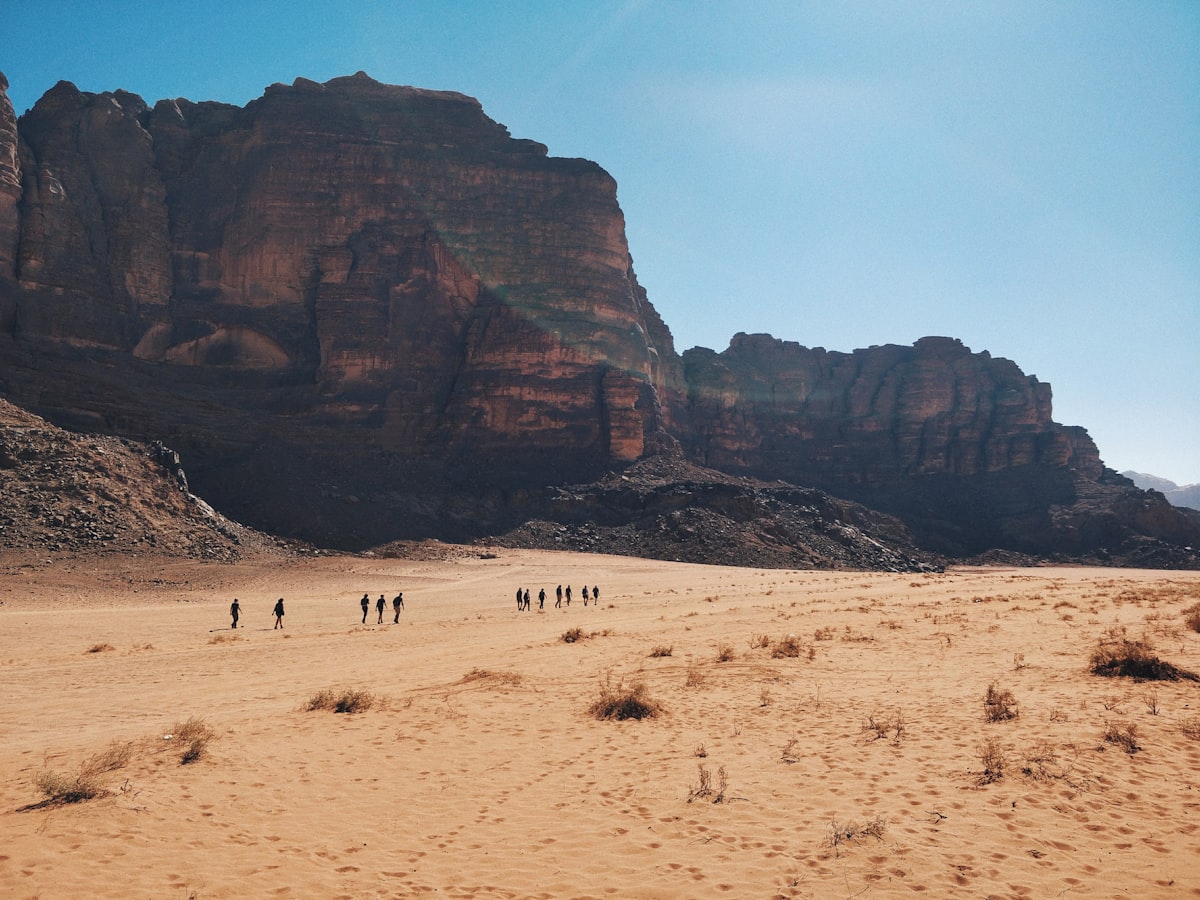
The Valley of the Moon — a UNESCO-protected desert of red sand, towering sandstone jebels, Bedouin camps, and the finest stargazing in the Middle East.
Know where to stay — now find when to go.
Best time to visit Jordan →