Nara
Nara Park & Higashimuki
Unsplash / Unsplash
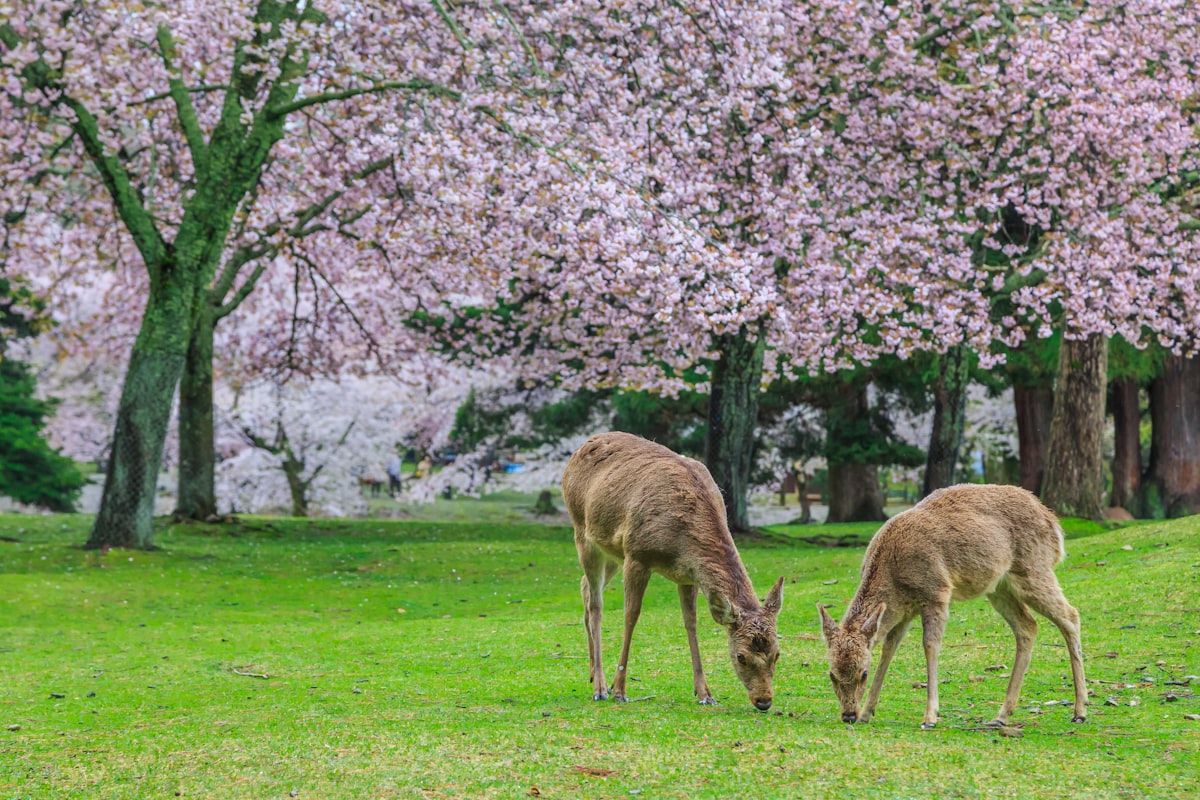
The deer park, Todai-ji, and the tourist core — Nara's reason for existing as a destination.
Nara Park is the heart of the city: 502 hectares of open parkland where over 1,000 sacred sika deer roam freely, framing views of Todai-ji's Great Buddha Hall and the five-storey pagodas of Kofuku-ji. Higashimuki is the covered shopping arcade immediately west of Kintetsu Nara Station, packed with souvenir shops, matcha cafés, and the restaurants that feed the bulk of Nara's daily visitors. This is the area almost every visitor spends the majority of their time.
Scores
Walkability
Transit
Price
Local feel
Nightlife
Family-friendly
Centrality
What you gain
- ↑Todai-ji Great Buddha Hall — one of the most awe-inspiring structures in Asia; best reached before 9am to beat tour groups
- ↑Free-roaming deer throughout the park accept hand-fed crackers (shika senbei) and are gentle enough for children
- ↑Kasuga Grand Shrine's forested approach: 2,000 stone lanterns lining the mossy path are stunning even outside festival nights
What you sacrifice
- ↓Most crowded part of Nara by a significant margin: impossible to avoid tour groups during spring and autumn peak
- ↓Deer can be aggressive around food — bowing and food hiding essential; not ideal for nervous visitors
- ↓Higashimuki is tourist-priced; better food and value found a few streets east in Naramachi
Best for
Avoid if
Other Nara neighbourhoods
Nara's transit hub and accommodation centre — convenient, practical, and the best base for early starts.
The preserved merchant district — quiet lanes, craft shops, and the real Nara behind the deer park.
Western Nara — Japan's oldest surviving wooden structures and a peaceful escape from the main park crowds.
Know where to stay — now find when to go.
Best time to visit Nara →