Nepal
Kathmandu Valley
Unsplash / Unsplash
UNESCO World Heritage at every turn — Pashupatinath's cremations, Bouddhanath stupa, three Durbar Squares, and the chaotic spiritual energy of South Asia's most sacred city.
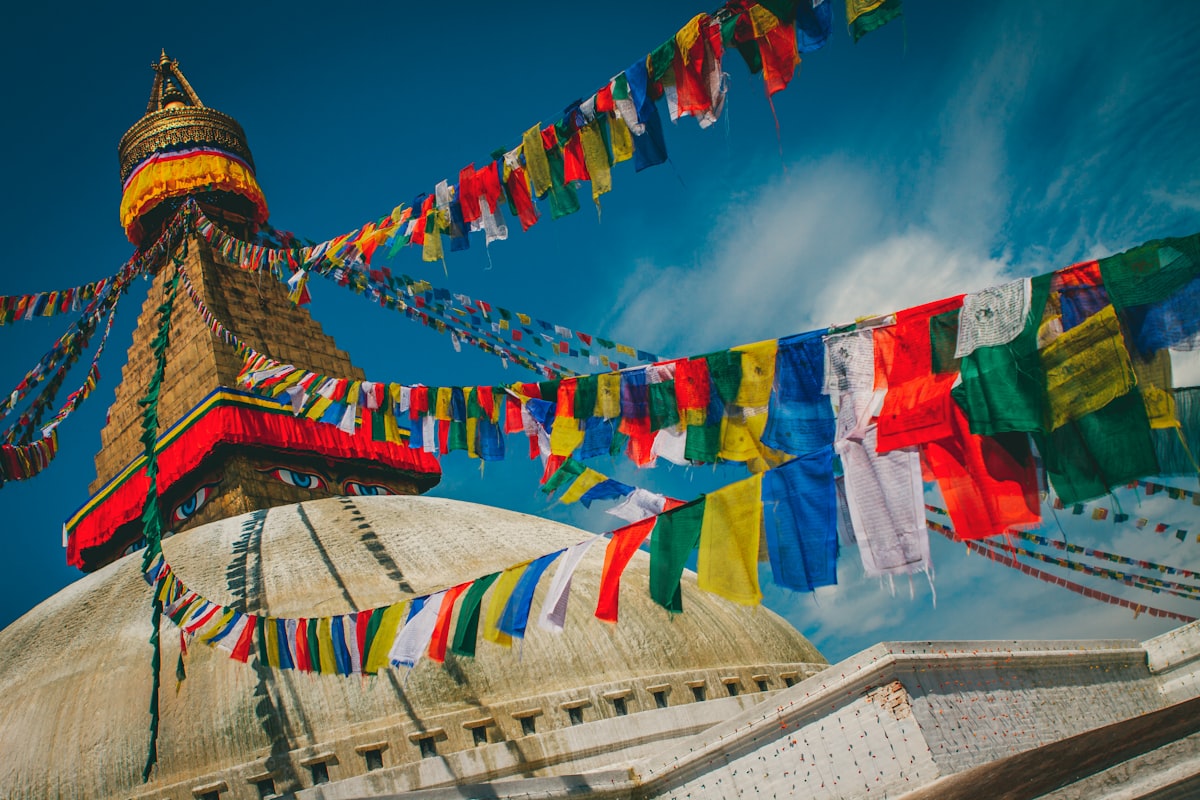
The Kathmandu Valley contains seven UNESCO World Heritage Sites within a 20-kilometre radius, giving it the highest concentration of heritage monuments of any valley on Earth. The city of Kathmandu is centred on Durbar Square — the former royal palace complex with its 55-window palace, living Kumari goddess, and tiered pagoda temples to Shiva. Pashupatinath temple on the Bagmati River is the most sacred Hindu cremation site in South Asia outside Varanasi: the open-air burning ghats (where bodies are cremated 24 hours a day) are simultaneously disturbing and deeply humanising. Bouddhanath stupa — a 36-metre whitewashed dome circled by 50 Tibetan Buddhist monasteries — is the largest stupa in Nepal and the heart of the Tibetan exile community. Bhaktapur, a preserved medieval city 13km east of Kathmandu, is the finest intact example of Newari architecture in the world: the Pottery Square, the 55-window palace, and the Nyatapola temple pagoda form a streetscape virtually unchanged since the 15th century.
Scores
Walkability
Transit
Price
Local feel
Nightlife
Family-friendly
Centrality
What you gain
- ↑Pashupatinath at dawn: arriving at the burning ghats on the west bank of the Bagmati River before 7am allows witnessing the morning cremations in a context of complete normalcy — families bathing in the river upstream, sadhus (holy men) with ash-covered faces seated on the stone platforms, priests conducting rituals while pyres burn simultaneously; the site operates entirely openly and observing it respectfully from the designated viewing area on the east bank is one of the most powerful experiences Nepal offers
- ↑Bouddhanath kora at dusk: the circumambulation route (kora) around the great stupa is walked clockwise by hundreds of Tibetan pilgrims every evening, spinning prayer wheels, chanting mantras, and doing prostrations; joining the kora flow and timing arrival at sunset when the butter lamps are lit in the surrounding monasteries and chanting drifts from the upper floors is a spiritual experience available regardless of one's own beliefs
- ↑Bhaktapur: the most completely preserved medieval city in South Asia — no motor vehicles inside the old city core, intact Newari architecture dating from the 15th–17th centuries in continuous use, potters working in the Pottery Square under techniques unchanged for 400 years, and the absence of the commercial pressure visible in Kathmandu's Thamel district give Bhaktapur a quality of lived history that UNESCO World Heritage sites rarely achieve
What you sacrifice
- ↓Kathmandu's traffic and air quality are among the worst in South Asia: the valley is geographically enclosed by hills on all sides, concentrating vehicle emissions, and the combination of dust, smoke from cremations, and traffic fumes creates air quality readings that are regularly hazardous (AQI 150–300); visitors with respiratory sensitivity should visit October–November when the post-monsoon rains have settled the dust
- ↓The 2015 earthquake caused significant damage to heritage sites in Kathmandu, Bhaktapur, and Patan — while the most celebrated structures have been rebuilt or stabilised, a number of secondary temples and palaces remain in various states of reconstruction; the valley is in genuine restoration but some sites are more scaffolding than monument
Best for
Avoid if
Other Nepal neighbourhoods
Nepal's second city — Phewa Lake, direct Annapurna views, world-class paragliding, and the most relaxed base for the Annapurna region.
Nepal's most diverse trekking circuit — the Annapurna Circuit, Poon Hill sunrise, Annapurna Base Camp, and the transition from subtropical jungle to Tibetan plateau.
The world's most iconic trek — Everest Base Camp, the Sherpa capital of Namche Bazaar, and the Himalayan giants above 8,000 metres.
Know where to stay — now find when to go.
Best time to visit Nepal →