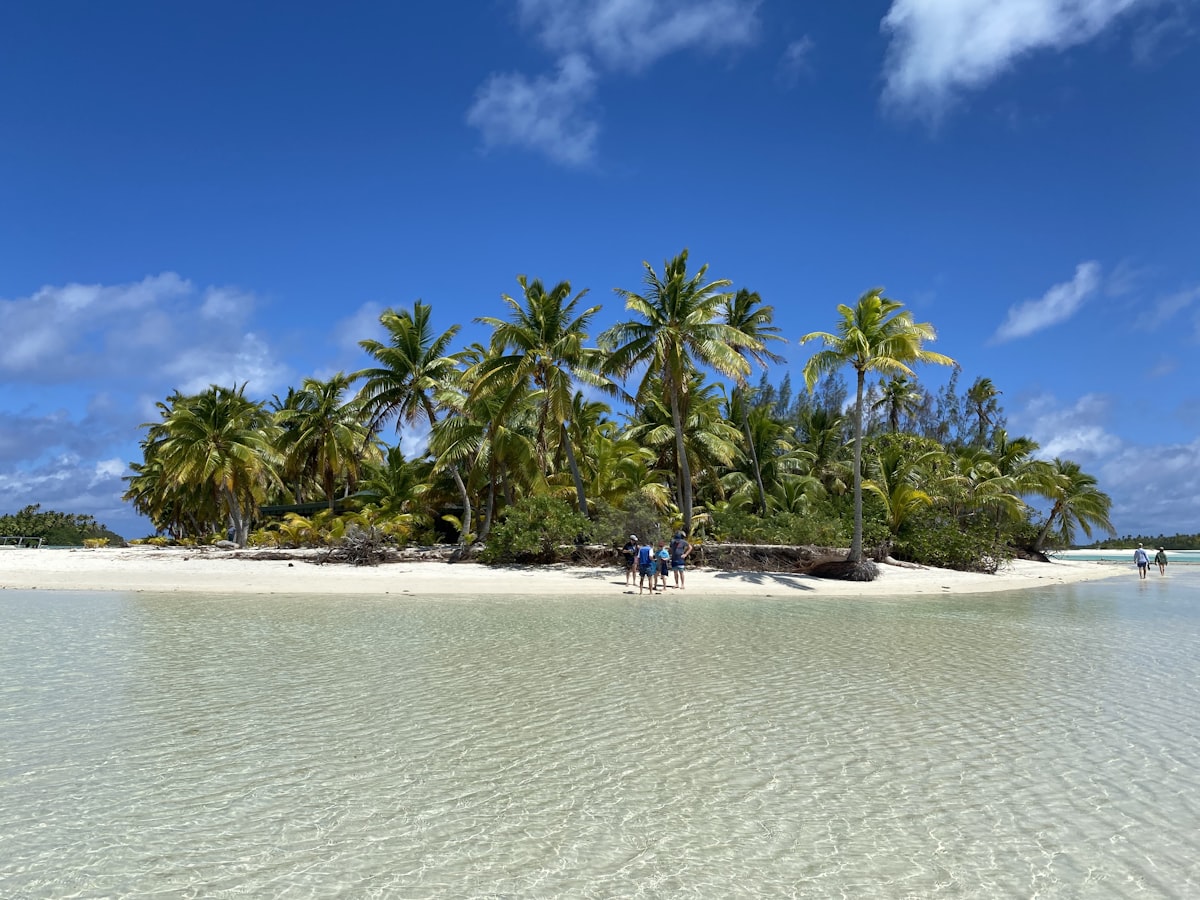
Best time to visit Cook Islands for local atmosphere
When to visit Cook Islands to experience genuine local life — the months when residents are present, markets are active, and the city feels like itself.
Best month
July
The statistical peak — clearest skies, best lagoon conditions, busiest month of the year.
↑70mm rainfall: the driest month alongside August — near-guaranteed sunshine daily
↑Aitutaki lagoon at its absolute best: heart-shaped turquoise from the air, crystal-clear snorkelling
↑Te Maeva Nui Constitution celebrations bring traditional dance, sport, and cultural events
All months ranked — Local atmosphere
Best match
The statistical peak — clearest skies, best lagoon conditions, busiest month of the year.
#1 for local atmosphere
Best match
Driest month of the year at 65mm — and the lowest humidity at 70%.
#2 for local atmosphere
Best match
Dry season opens — the crowd-to-value sweet spot before New Zealand winter school holidays.
#3 for local atmosphere
Best match
Reliably dry at 80mm, warm not hot — arguably the most underrated month of the year.
#4 for local atmosphere
Best match
Dry season continues — school holidays end, prices soften slightly, conditions remain excellent.
#5 for local atmosphere
Best match
Late dry season with warming temperatures — excellent value before the wet season returns.
#6 for local atmosphere
Strong option
Transitional month — 145mm keeps it under the hard cap, and clear days genuinely increase.
#7 for local atmosphere
Strong option
Transitional month — 120mm is manageable but the wet season is unmistakably returning.
#8 for local atmosphere
Worth considering
Still firmly cyclone season at 190mm — but crowds thin and late March brings occasional clear days.
#9 for local atmosphere
Worth considering
Cyclone season: 190mm of rain and genuine storm risk make January a clear avoid.
#10 for local atmosphere
Worth considering
The wettest month of the year at 200mm — and the peak of cyclone season.
#11 for local atmosphere
Worth considering
Christmas crowds meet returning cyclone risk at 165mm — a difficult value proposition.
#12 for local atmosphere