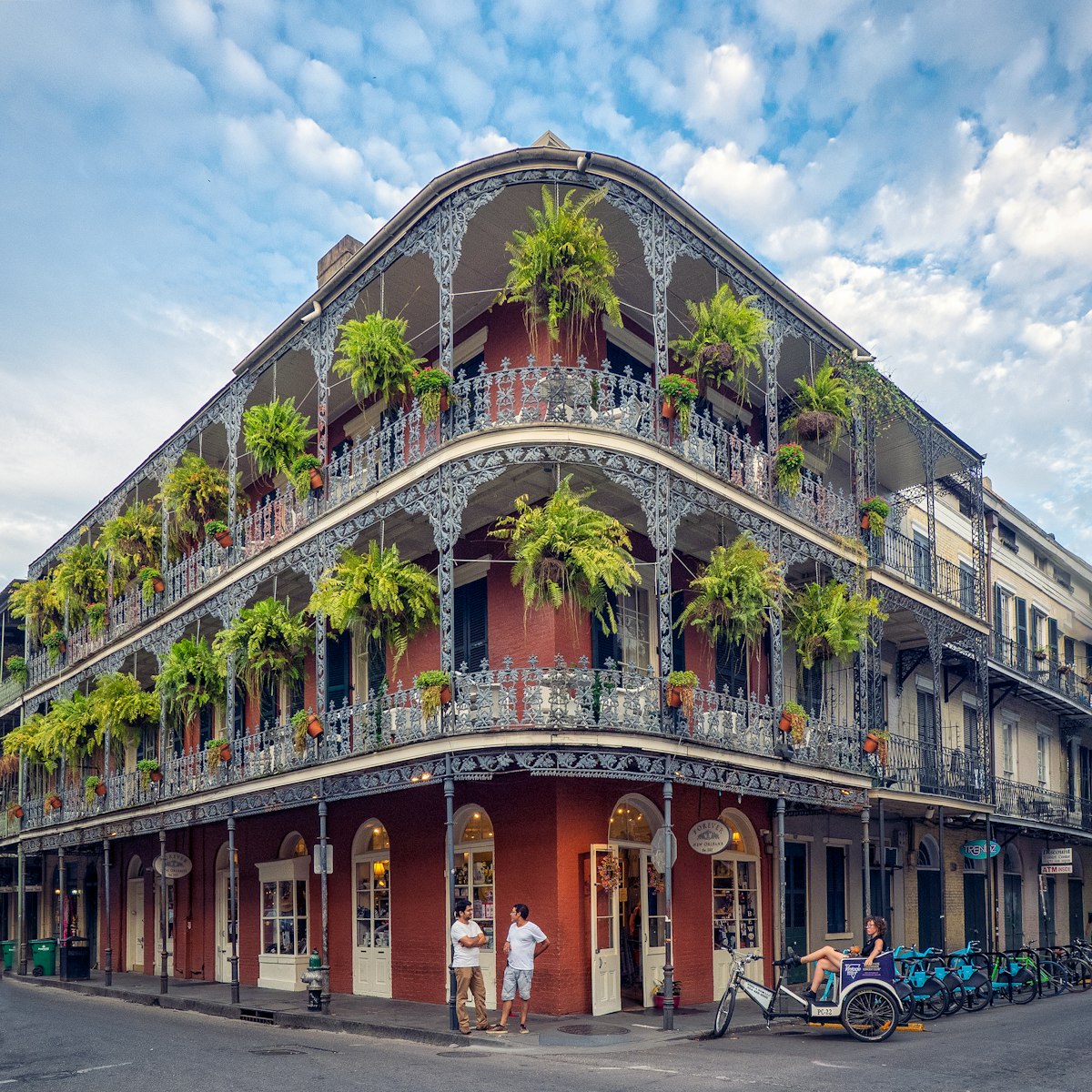

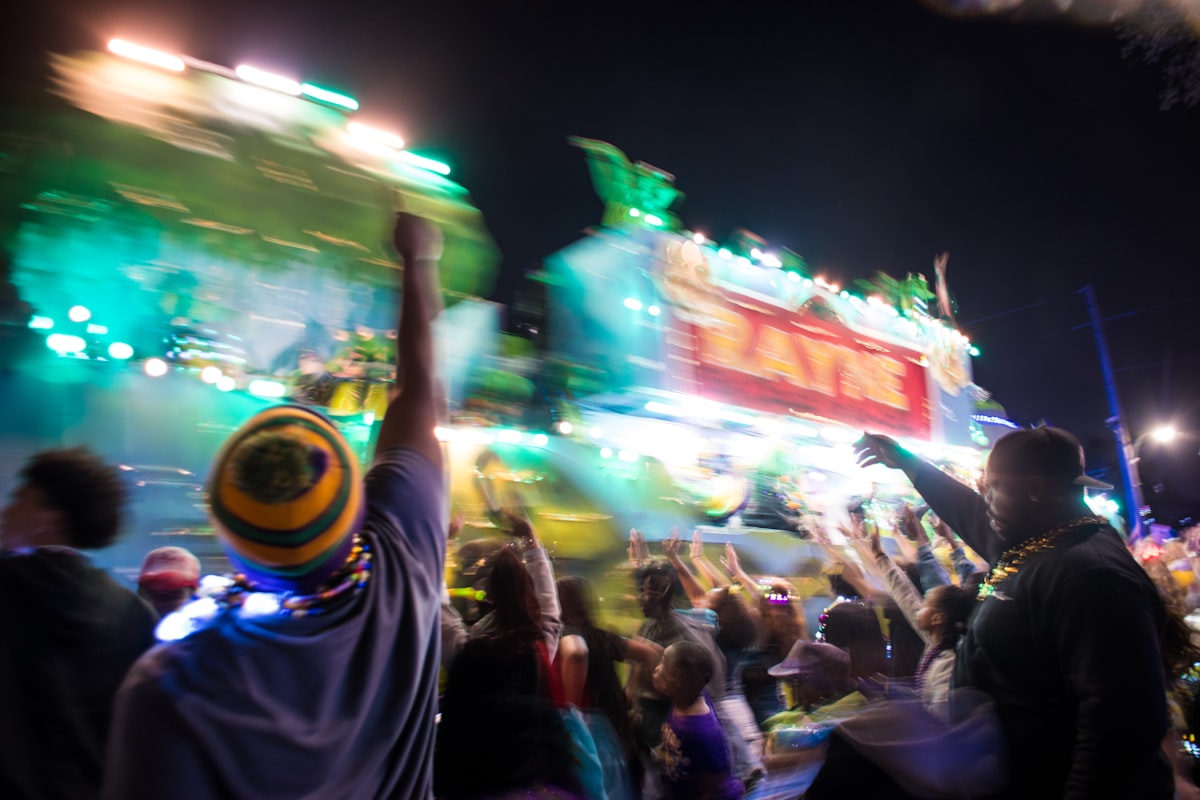

Showing: Apr · Camille Stelly / Unsplash
United States · North America
Best time to visit New Orleans
April
Apr scores highest overall — reliable weather and strong local atmosphere. Set your priorities below to personalise this result.
What matters most to you?
All 12 months — click any to expand
Apr
Camille Stelly / Unsplash
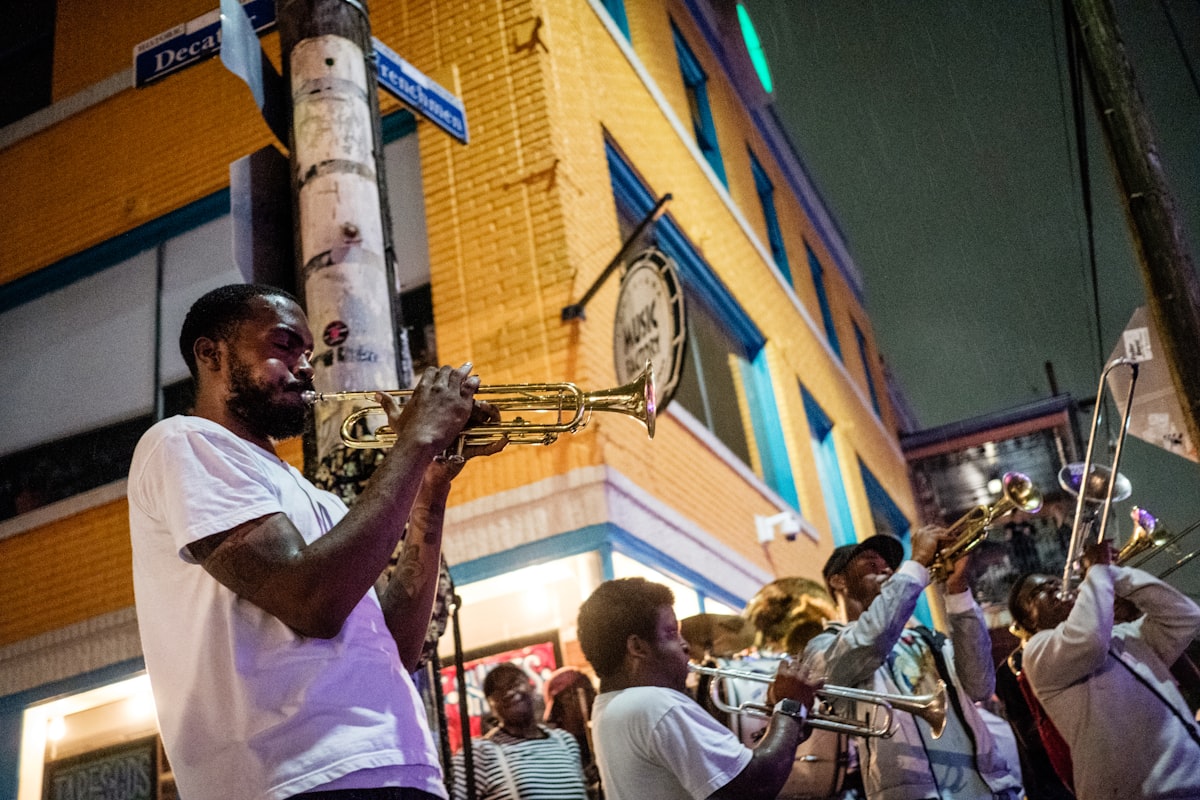
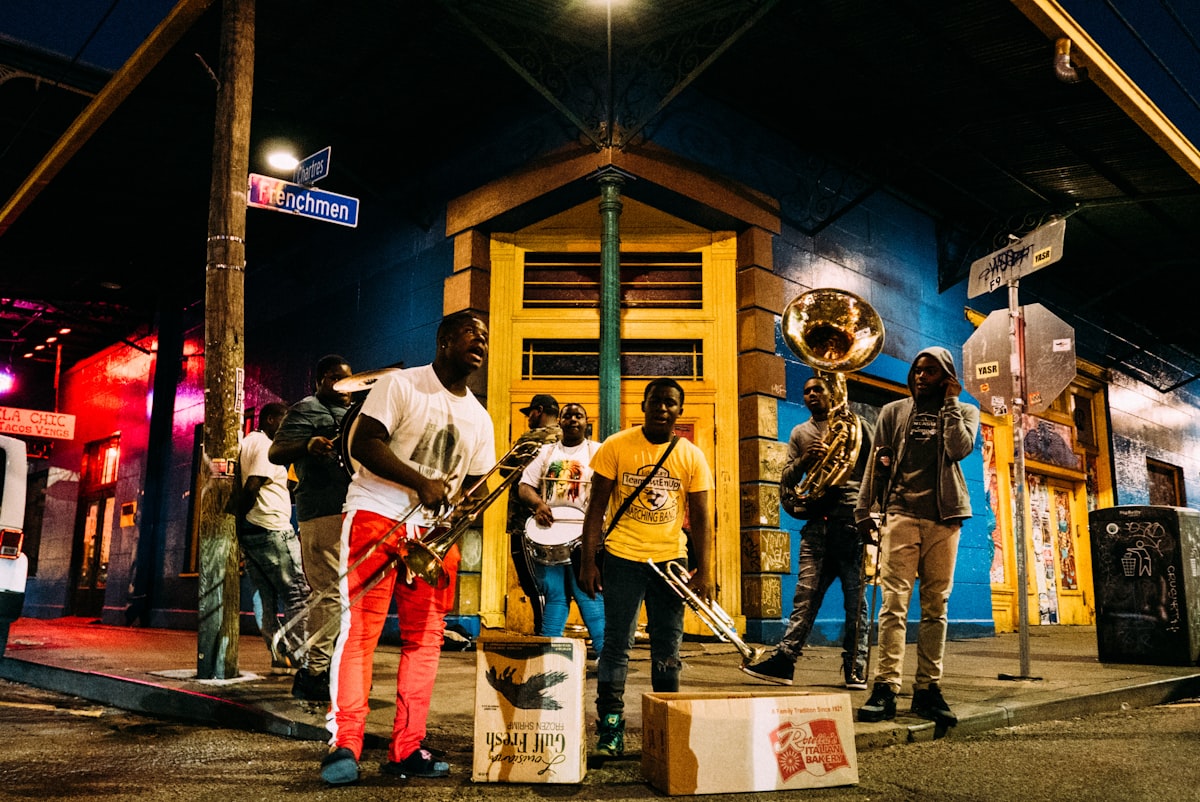
Jazz Fest weekend (late April): the city's other peak event — 500,000 people, 12 stages, the best live music in America.
26.4°C
High
16.7°C
Low
105mm
Rain
7.8h
Sun/day
What you gain
- ↑New Orleans Jazz & Heritage Festival (last weekend of April, first of May): 12 stages at the Fairgrounds with everyone from local brass bands to international headliners — the world's greatest concentrated live music event
- ↑26°C and low humidity: the single most comfortable weather window of the year for outdoor eating, walking, and the festival grounds
- ↑French Quarter Festival (early April) is entirely free and draws the best local brass bands and Mardi Gras Indians to outdoor stages throughout the Quarter
What you sacrifice
- ↓Jazz Fest weekend: hotels within 20 blocks of the Fairgrounds sell out months in advance; prices spike 60–80%
- ↓The city is genuinely packed during both festival weekends — book Commander's Palace, Dooky Chase, or Cochon weeks out
- ↓105mm of rain: April showers are real — the Fairgrounds becomes muddy in wet years; bring boots
Apr scores highest overall — reliable weather and strong local atmosphere. Set your priorities below to personalise this result.
Apr
Jazz Fest weekend (late April): the city's other peak event — 500,000 people, 12 stages, the best live music in America.
26.4°C
High
105mm
Rain
7.8h
Sun
- ↑New Orleans Jazz & Heritage Festival (last weekend of April, first of May): 12 stages at the Fairgrounds with everyone from local brass bands to international headliners — the world's greatest concentrated live music event
- ↑26°C and low humidity: the single most comfortable weather window of the year for outdoor eating, walking, and the festival grounds
- ↑French Quarter Festival (early April) is entirely free and draws the best local brass bands and Mardi Gras Indians to outdoor stages throughout the Quarter
- ↓Jazz Fest weekend: hotels within 20 blocks of the Fairgrounds sell out months in advance; prices spike 60–80%
- ↓The city is genuinely packed during both festival weekends — book Commander's Palace, Dooky Chase, or Cochon weeks out
- ↓105mm of rain: April showers are real — the Fairgrounds becomes muddy in wet years; bring boots
Top travel windows
★ BestApril
Best overall
Highest combined score
26.4°C
High
105mm
Rain
7.8h
Sun
August
Best for value
Lowest prices & fees
33.1°C
High
149mm
Rain
7.2h
Sun
August
Fewest crowds
Quietest month
33.1°C
High
149mm
Rain
7.2h
Sun
Breakdown by priority
Best for weather
April
26.4°C high · 105mm rain · 7.8hrs sun/day
Best for budget
August
The absolute lowest hotel prices of the year — downtown properties at prices that feel impossible any other month
Fewest crowds
August
The absolute lowest hotel prices of the year — downtown properties at prices that feel impossible any other month
Worst time to visit
August, September
August carries genuine life-safety risk — Hurricane Katrina made landfall on 29 August 2005 and destroyed 80% of the city; the structural vulnerability to Category 3+ storms has not changed, and the threat is not theoretical
Where to stay in New Orleans
All neighbourhoods →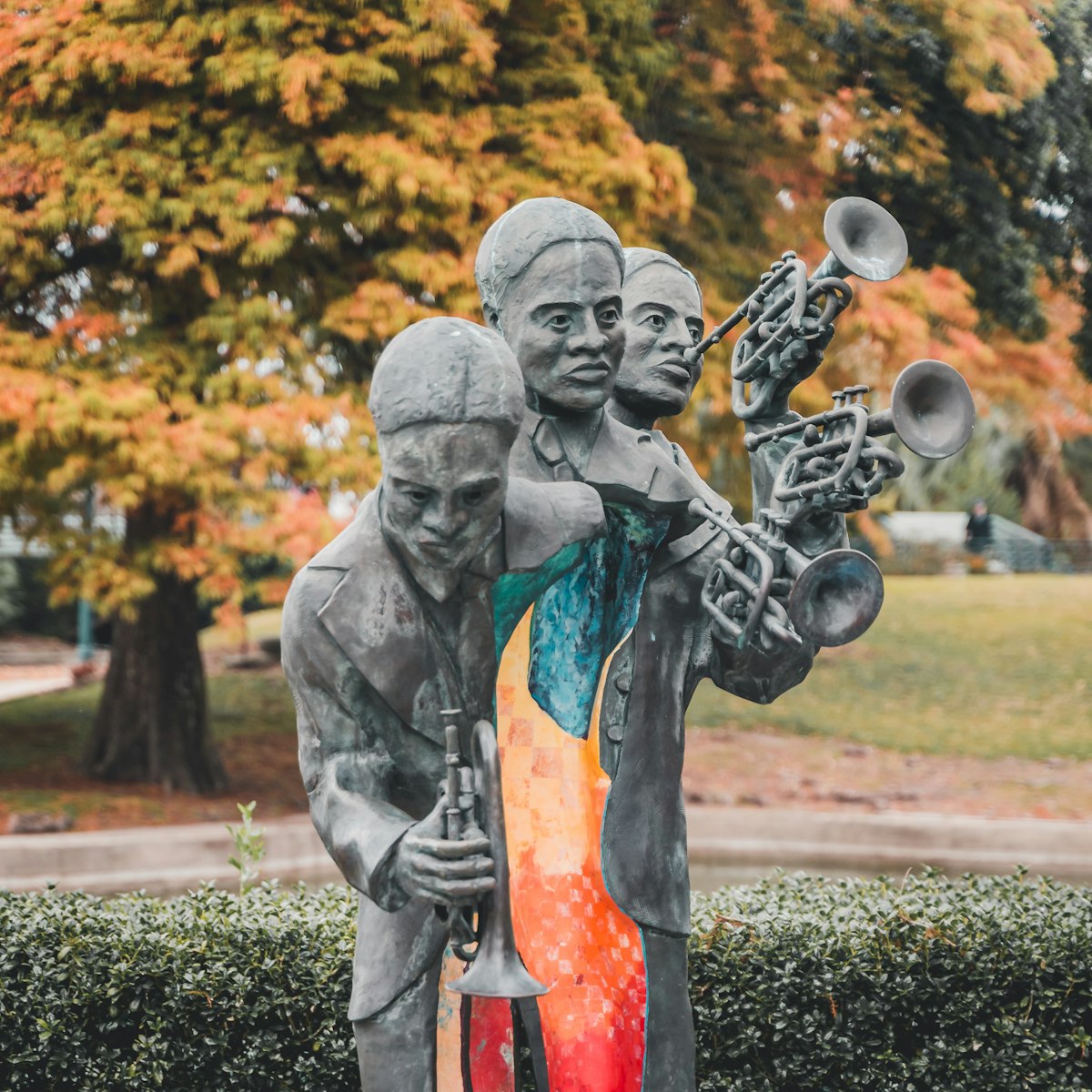
Marigny & Bywater
Frenchmen Street live music, local bars, and the neighbourhood New Orleans musicians actually live in.
7/10
Central
8/10
Walk
6/10
Transit
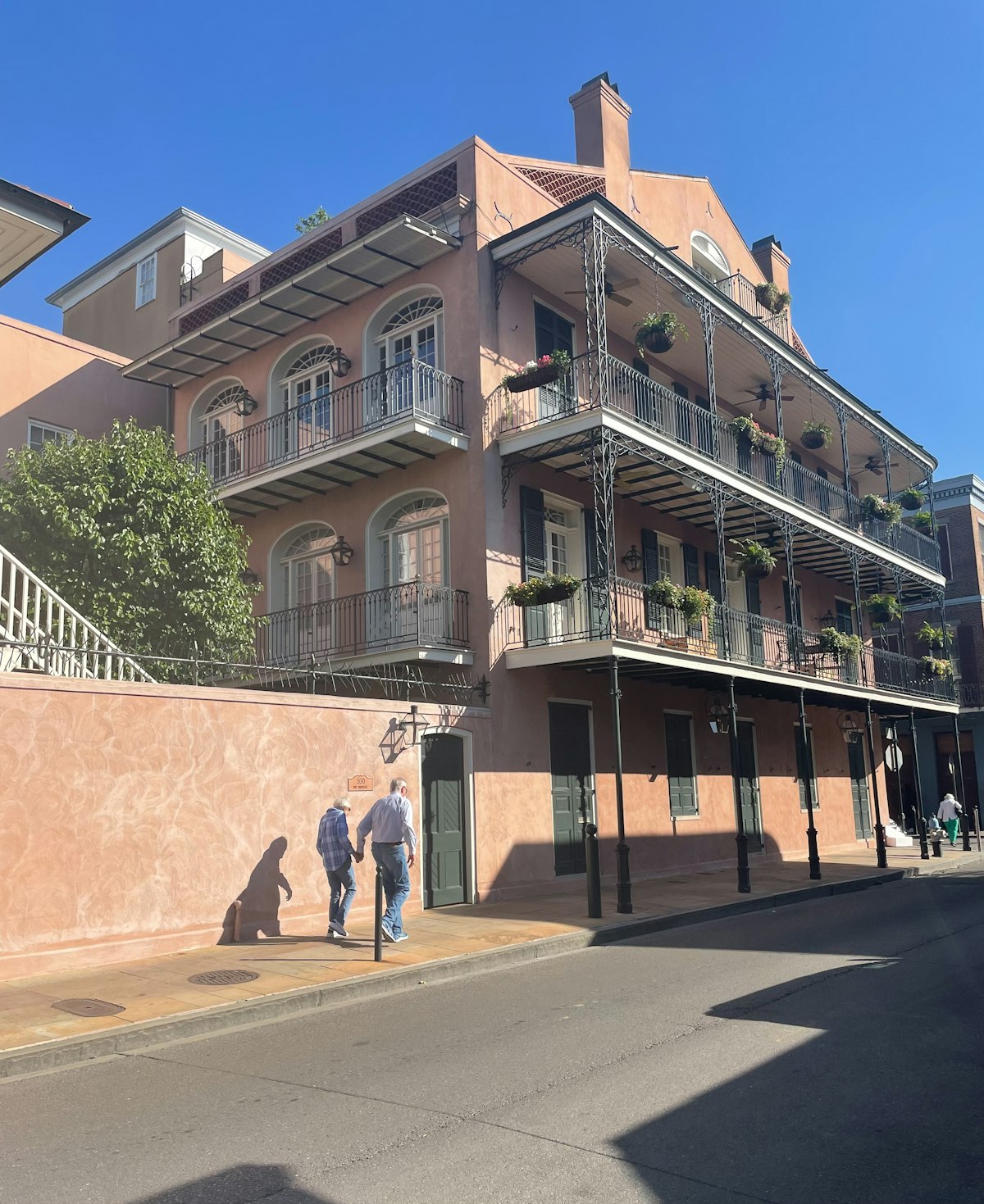
French Quarter
Bourbon Street, Jackson Square, and Cafe Du Monde — the most famous neighbourhood in America, for better and worse.
10/10
Central
9/10
Walk
7/10
Transit
Also exploring
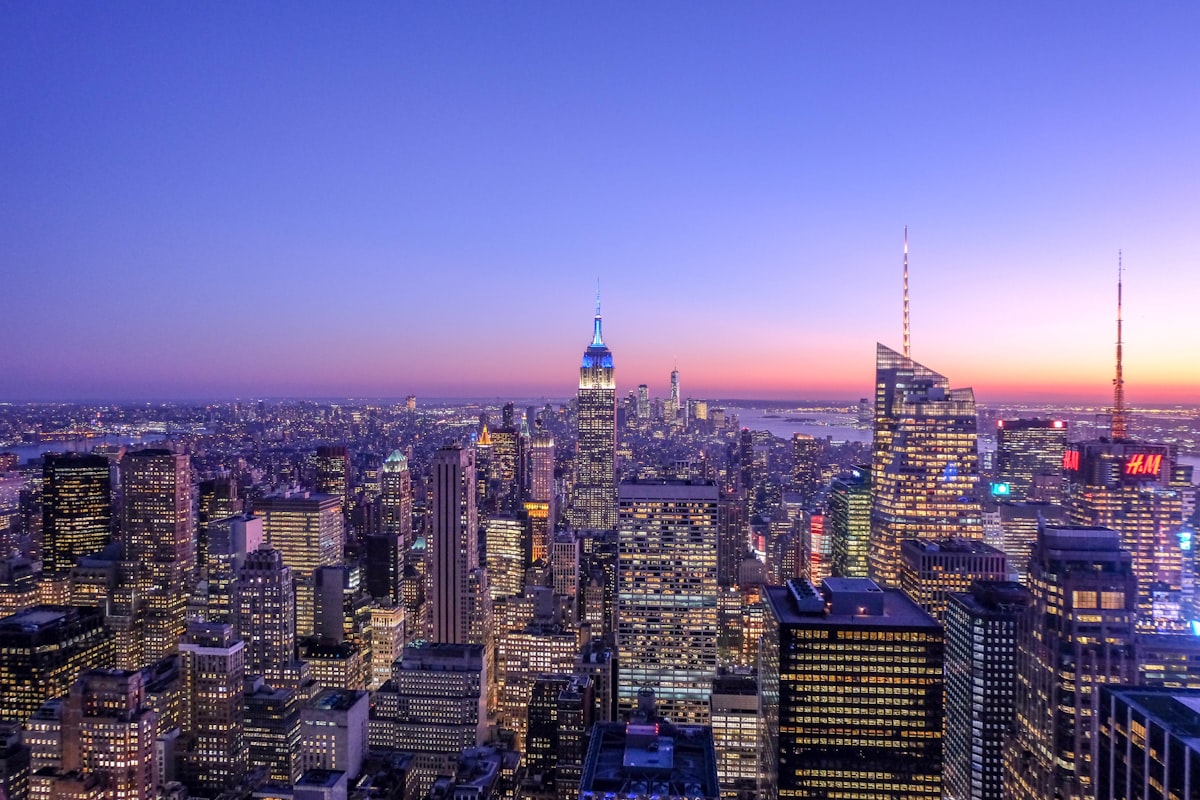
New York
USA
A city that never fully quiets — but its personality shifts dramatically by season, from sweltering humid summers to crisp autumn perfection to blizzard-prone winters.
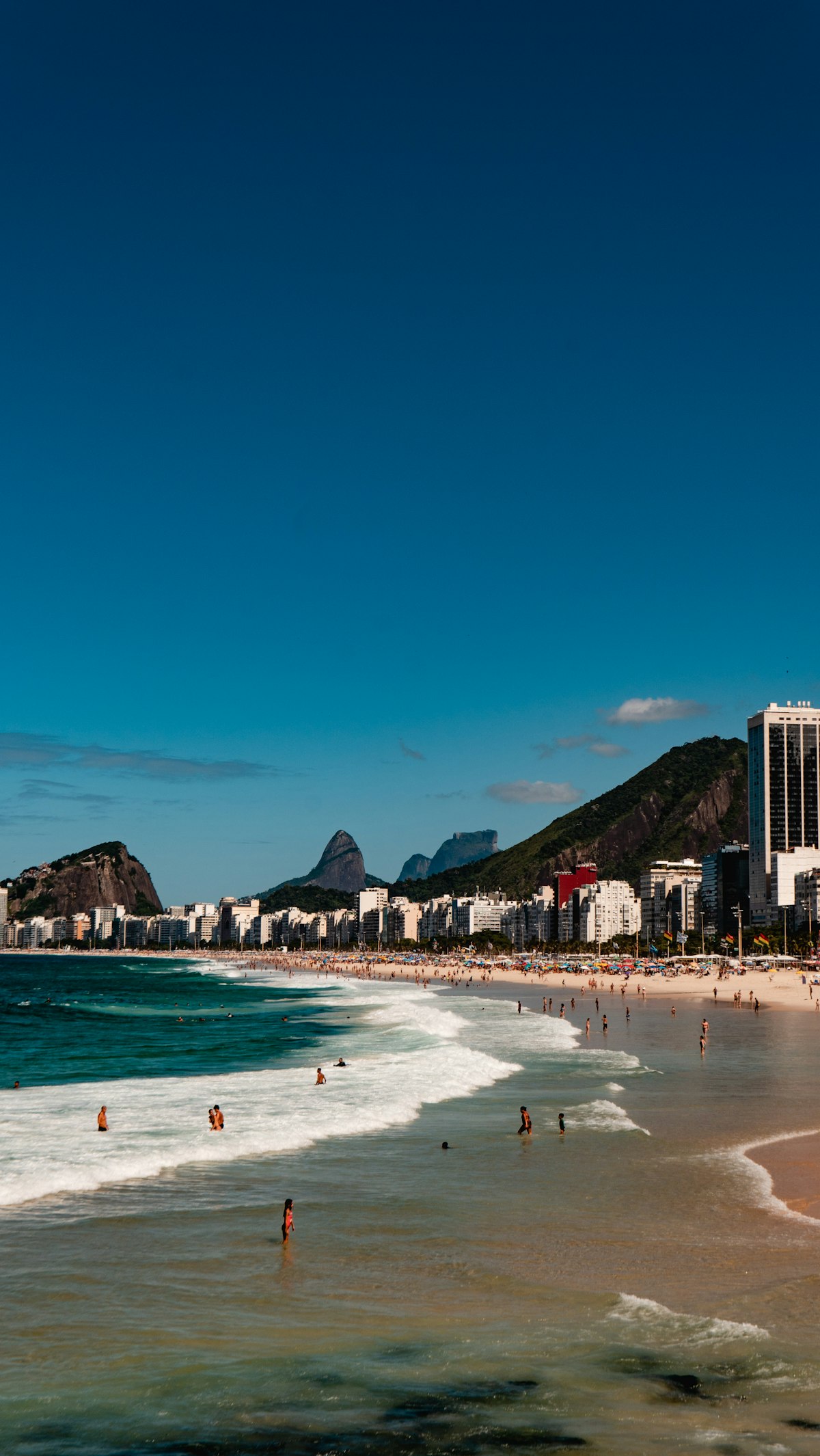
Rio de Janeiro
Brazil
A Southern Hemisphere city where summer (December–March) brings Carnival and 264mm of rain simultaneously, and the real sweet spot is the dry Southern winter — June to September — when most travellers don't think to come.
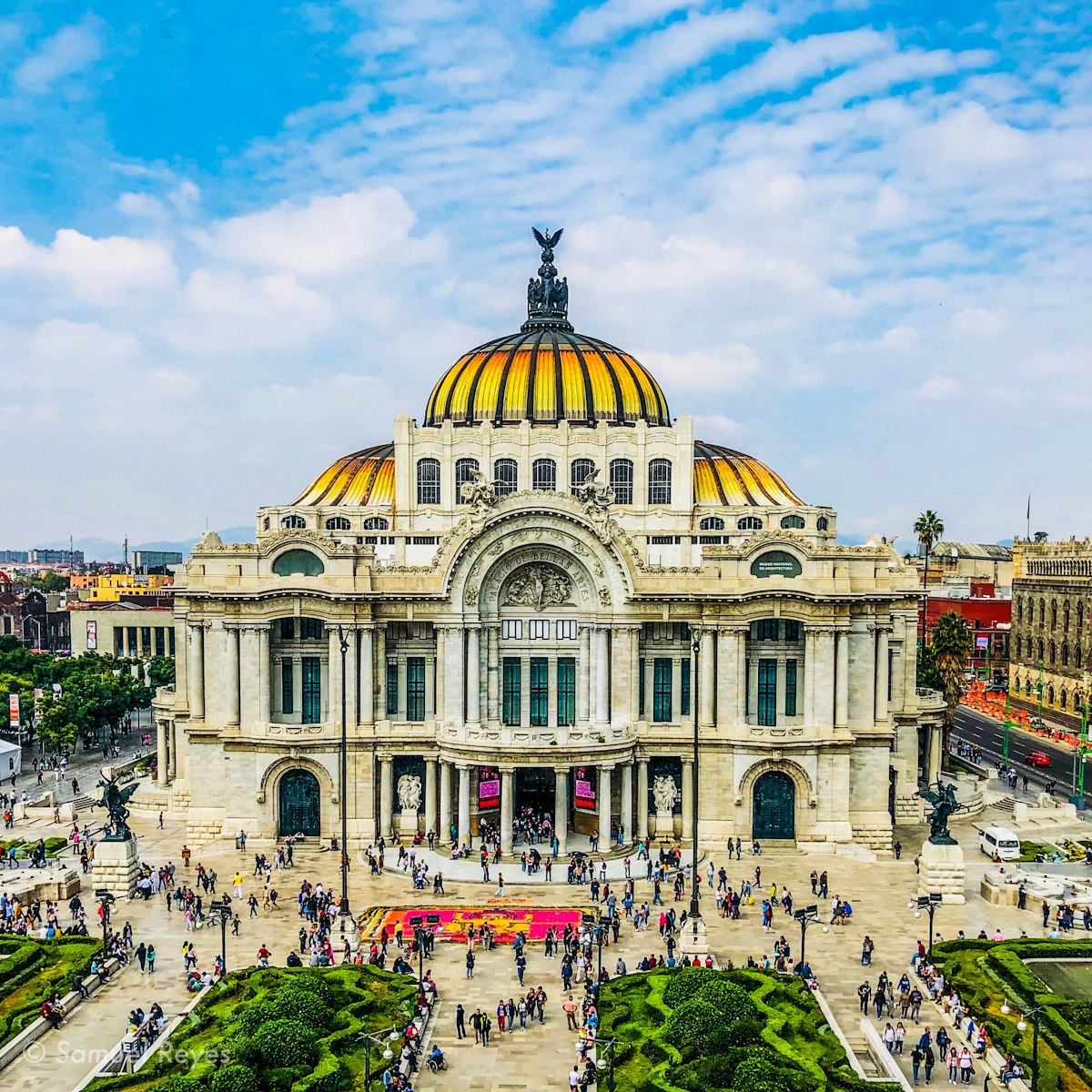
Mexico City
Mexico
A highland metropolis at 2,240 metres where the altitude tempers the heat to perpetual spring in the dry months, Día de Muertos transforms Mixquic and Azcapotzalco into one of the world's great ceremonies, and the October–April dry season gives the clearest conditions for exploring what is genuinely one of the planet's finest food, museum, and architecture cities.
Worth knowing
April scores highest overall. February is the most crowded month — avoid if you can. See crowd-free ranking →
Month by month breakdown
January#7▾
Gains
- ↑Krewe balls and early Mardi Gras parades begin — the social calendar opens with events most tourists never see
- ↑Hotels at winter lows before the Mardi Gras premium hits in February; excellent value for the Warehouse Arts District
- ↑Sugar Bowl weekend (early Jan) brings energy to the French Quarter without the full Mardi Gras crowds
Sacrifices
- ↓Coldest month: 6.9°C overnight lows mean a proper coat is essential — not the New Orleans most visitors imagine
- ↓126mm of rain spread across grey overcast days; the city is atmospheric but not photogenic
- ↓Mardi Gras season has started but the spectacle is weeks away — you get the build-up, not the explosion
February#8▾
Gains
- ↑Mardi Gras Indian tribes — the Black Masking Indians in their hand-sewn beaded suits are one of the most extraordinary cultural spectacles in the United States; catch them on Super Sunday or Fat Tuesday itself
- ↑Rex and Zulu parades on Fat Tuesday transform St Charles Avenue into a city-wide celebration that has no equivalent anywhere in America
- ↑Frenchmen Street, Preservation Hall, and Tipitina's operate at absolute maximum during Mardi Gras week — the live music scene is incomparable
Sacrifices
- ↓Hotels cost 3–5× their off-season rate during Mardi Gras week; book six months out or accept staying outside the city
- ↓Bourbon Street crowds during peak nights are genuinely dangerous in the crush — French Quarter requires planning and exits
- ↓If Mardi Gras falls in February (it moves each year), some of the city shuts down for the holiday; check dates carefully
March#4▾
Gains
- ↑Post-Mardi Gras calm: crowds drop sharply after Fat Tuesday but the city's bars and restaurants remain fully alive
- ↑St Patrick's Day parade down Magazine Street is a genuine neighbourhood event, not a tourist spectacle — locals line the route for flying cabbages and moon pies
- ↑22°C average highs make this one of the best months for walking the Garden District mansions, Audubon Park, and the cemeteries
Sacrifices
- ↓121mm of rainfall means showers are frequent — jazz clubs and covered courtyards become your fallback
- ↓If Mardi Gras falls late (March), expect the hotel premium to carry over; check the calendar
- ↓Jazz & Heritage Festival (late April) is weeks away — the city is good but not yet at its musical peak
April#1▾
Gains
- ↑New Orleans Jazz & Heritage Festival (last weekend of April, first of May): 12 stages at the Fairgrounds with everyone from local brass bands to international headliners — the world's greatest concentrated live music event
- ↑26°C and low humidity: the single most comfortable weather window of the year for outdoor eating, walking, and the festival grounds
- ↑French Quarter Festival (early April) is entirely free and draws the best local brass bands and Mardi Gras Indians to outdoor stages throughout the Quarter
Sacrifices
- ↓Jazz Fest weekend: hotels within 20 blocks of the Fairgrounds sell out months in advance; prices spike 60–80%
- ↓The city is genuinely packed during both festival weekends — book Commander's Palace, Dooky Chase, or Cochon weeks out
- ↓105mm of rain: April showers are real — the Fairgrounds becomes muddy in wet years; bring boots
May#3▾
Gains
- ↑Jazz Fest first weekend (early May): second of the two festival weekends at the Fairgrounds — typically slightly less crowded than the last April weekend
- ↑Essence Music Festival announced and building buzz; the city's food and music culture remains fully activated
- ↑29°C with 8.2 hours of daily sun — genuinely warm and bright, the last comfortable outdoor month before humidity becomes oppressive
Sacrifices
- ↓Humidity reaches 71% and climbing — the subtropical heat begins to feel heavy; midday outdoor activity requires acclimatisation
- ↓114mm of rain: May showers can be sudden and heavy; the city floods easily in low-lying areas near the lake
- ↓Post-Jazz-Fest there's a noticeable drop in energy — the great cultural calendar shifts to summer mode
June#9▾
Gains
- ↑Essence Music Festival (late June/early July): one of the largest music events in the US, centred on the Superdome — four nights of R&B, hip-hop, and gospel with 500,000 attendees
- ↑Hotels drop 30–40% from Jazz Fest highs; great value for the Warehouse District and Marigny/Bywater
- ↑Frenchmen Street and Preservation Hall operate nightly regardless of season — the live music scene never goes dark
Sacrifices
- ↓32°C with 76% humidity: the heat index regularly exceeds 40°C; outdoor sightseeing before 10am and after 7pm is the only viable strategy
- ↓152mm of rain: heavy afternoon thunderstorms are almost daily — the city floods quickly in the lower-lying districts
- ↓Hurricane season has officially begun (1 June) — not peak risk yet, but the threat is real from this point forward
July#11▾
Gains
- ↑Accommodation costs at or near annual lows; the French Quarter guesthouses and Marigny B&Bs offer exceptional value
- ↑The city's food culture — Dooky Chase, Cochon, the Parkway Bakery po'boys — is entirely unaffected by the season
- ↑Frenchmen Street at 10pm after the heat breaks is one of the great late-night music experiences in America: five clubs within 100 metres, no cover charges
Sacrifices
- ↓33°C with 78% humidity and 159mm of rain: the heat index is 42–45°C for much of the day — outdoor New Orleans is genuinely uncomfortable
- ↓Hurricane season enters its active phase in late July; the statistical risk of a named storm affecting the city is rising week by week
- ↓The great event calendar — Jazz Fest, Mardi Gras, French Quarter Fest — is entirely behind you; the city runs on local rhythms rather than tourist energy
August#10▾
Gains
- ↑The absolute lowest hotel prices of the year — downtown properties at prices that feel impossible any other month
- ↑The city is almost entirely local: Frenchmen Street operates for the neighbourhood, not for visitors
- ↑White Linen Night (Warehouse Arts District, early August) is a genuine neighbourhood event worth planning around if you're committed to visiting this month
Sacrifices
- ↓August carries genuine life-safety risk — Hurricane Katrina made landfall on 29 August 2005 and destroyed 80% of the city; the structural vulnerability to Category 3+ storms has not changed, and the threat is not theoretical
- ↓33°C and 79% humidity: the heat index regularly exceeds 43°C, making outdoor New Orleans genuinely dangerous for extended periods
- ↓Evacuation logistics: understanding mandatory evacuation routes, monitoring the National Hurricane Center, and having a departure plan is not optional if you visit this month
September#12▾
Gains
- ↑Near-empty city and deeply discounted prices — those who must visit for work or family will find it easy to navigate
- ↑Temperatures begin a slow retreat from August peaks; end of September starts to feel slightly less brutal
- ↑The local food scene — Cochon, Galatoire's, Cafe Du Monde — operates year-round regardless of tourist volumes
Sacrifices
- ↓September is statistically the peak month of the Atlantic hurricane season — the Gulf of Mexico's warm water temperatures are at their annual maximum, providing maximum fuel for intensifying storms
- ↓Hurricane Katrina (August 2005), Rita (September 2005), and Ida (August 2021) all struck in this window: the pattern of destruction is a documented fact, not a distant possibility
- ↓Travel insurance that covers hurricane evacuation is mandatory; non-refundable bookings are a significant financial risk in a named-storm scenario
October#2▾
Gains
- ↑Voodoo Music + Arts Experience (Halloween weekend): a major three-day festival at City Park — rock, hip-hop, and electronic acts in an outdoor festival that has nothing of the tourist veneer of Mardi Gras
- ↑25°C and the lowest humidity since May: finally comfortable for walking the Garden District, the cemeteries, and Magazine Street antique shops
- ↑Boo at the Zoo and the Krewe of Boo Halloween parade: New Orleans does Halloween with genuine local enthusiasm — costume culture runs deep here
Sacrifices
- ↓The hurricane season officially ends 30 November; October still carries residual risk, though the statistical peak has passed
- ↓88mm of rain is light by New Orleans standards but showers remain frequent; an umbrella is still standard equipment
- ↓The city is quiet enough that some smaller restaurants and bars keep reduced hours compared to Jazz Fest and Mardi Gras season
November#5▾
Gains
- ↑Hurricane season ends 30 November — from early November you can book with genuine confidence that the weather-related risk profile is normal
- ↑20°C and comfortable evenings: the best conditions for the St Charles streetcar ride and Magazine Street's independent restaurants and galleries
- ↑Thanksgiving week brings locals home — the city's restaurant culture is fully alive, and Commander's Palace's Thanksgiving service is a New Orleans institution
Sacrifices
- ↓Few anchor events: November is between Voodoo Fest and the December holiday season — the city is good but not spectacular for event-seekers
- ↓10.6°C overnight lows by month's end require a jacket; the subtropical city feels unexpectedly cold to visitors expecting perennial warmth
- ↓Thanksgiving week itself sees hotel prices spike and restaurant bookings fill up — plan at least two weeks out
December#6▾
Gains
- ↑Réveillon dinners: the Creole Christmas tradition of elaborate multi-course prix-fixe menus at Antoine's, Galatoire's, and other historic restaurants — a genuine culinary event with no equivalent in other American cities
- ↑St Charles Avenue lined with Christmas lights; the streetcar ride through Uptown's decorated mansions is one of the great free winter experiences in the US
- ↑New Year's Eve in the French Quarter: the Sugar Bowl countdown and midnight festivities on Bourbon Street are a full-city event
Sacrifices
- ↓Christmas and New Year week: hotel prices approach Mardi Gras levels in the French Quarter and Warehouse District
- ↓7.1°C overnight lows and 16°C daytime highs — visitors expecting warm winter temperatures will be surprised; this is wool-coat weather
- ↓114mm of December rain falls on short days with only 5.5 hours of sun; the city is atmospheric but moody
How this is calculated
Climate data
Open Meteo ERA5
30-year normals (1991–2020). Temperature, rainfall, sunshine, humidity.
Price & crowd
Tourism research
Seasonal pricing from tourism authority data. Directional — compares months within a destination only.
Personalisation
Weighted scoring
Your priorities change the weights. Budget-first users get different results than weather-first users.
Share this result
April is the best time to visit New Orleans
Travel timing updates
New destinations and timing guides, when they land.
No spam. Unsubscribe anytime.