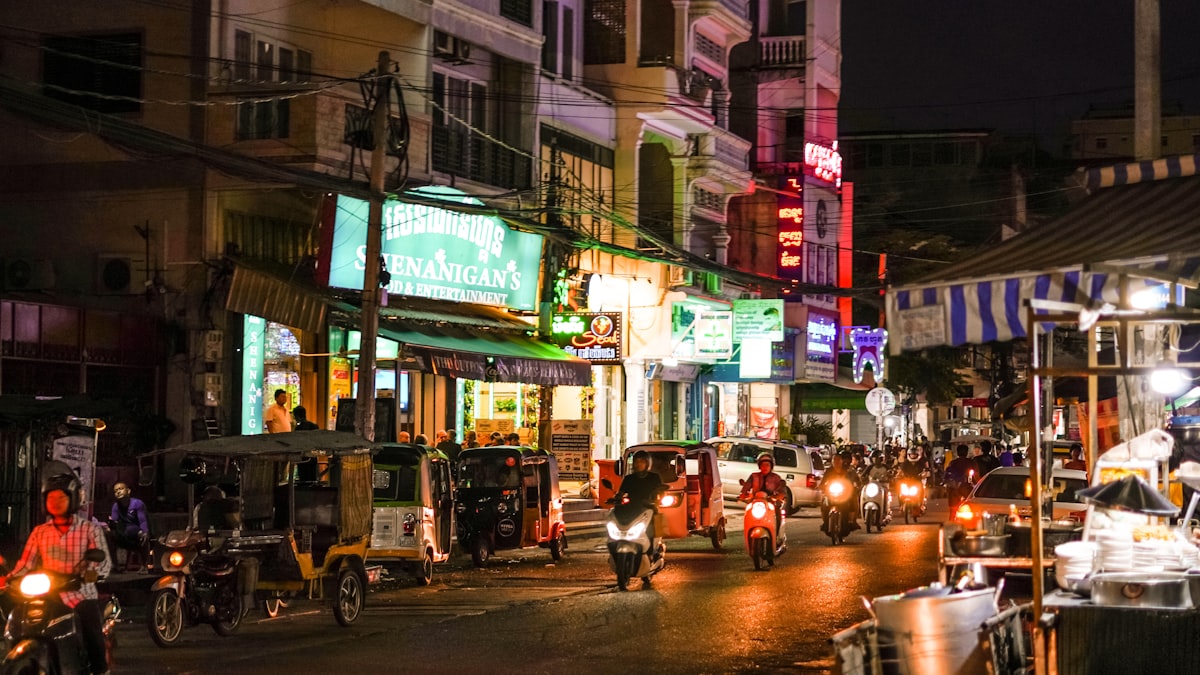
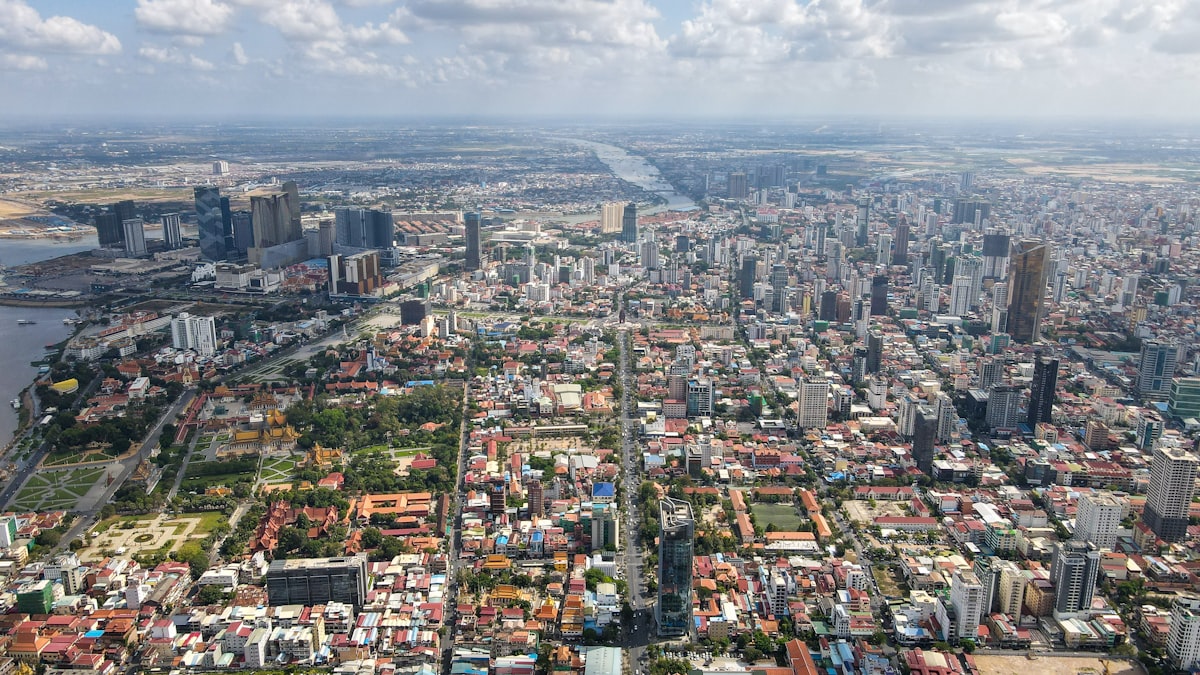
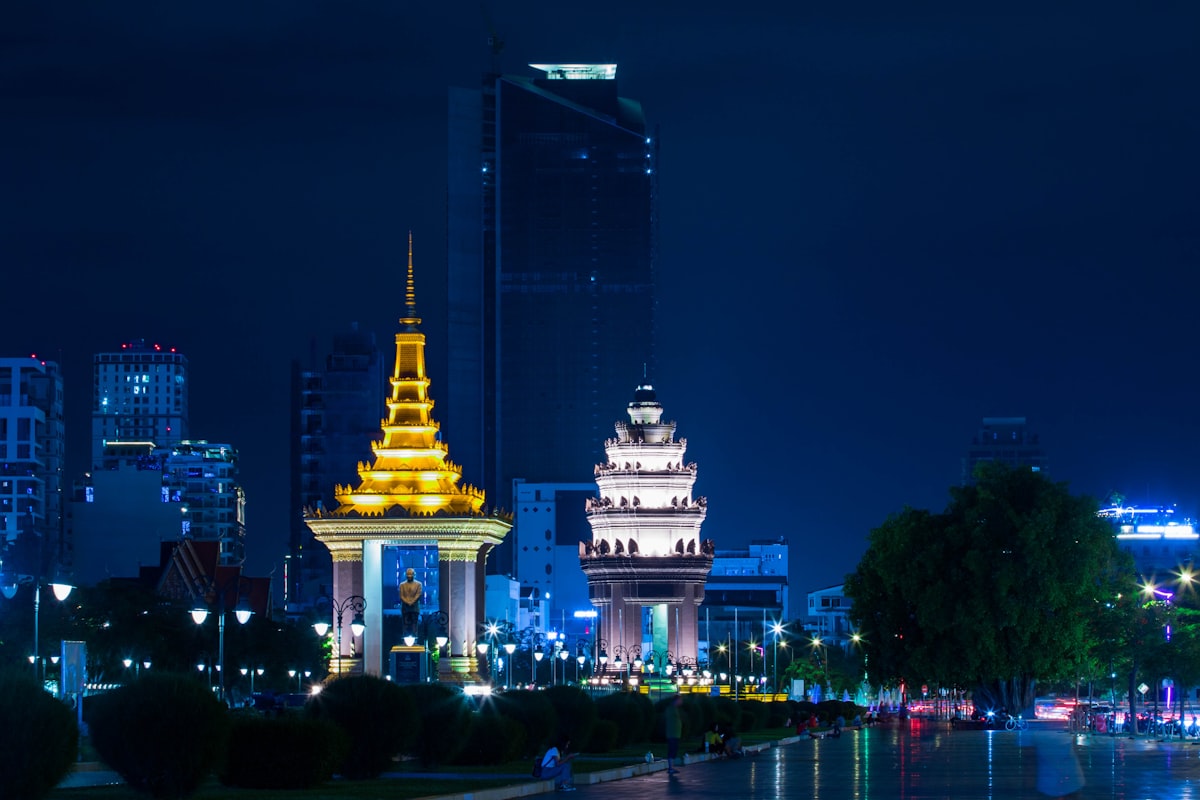
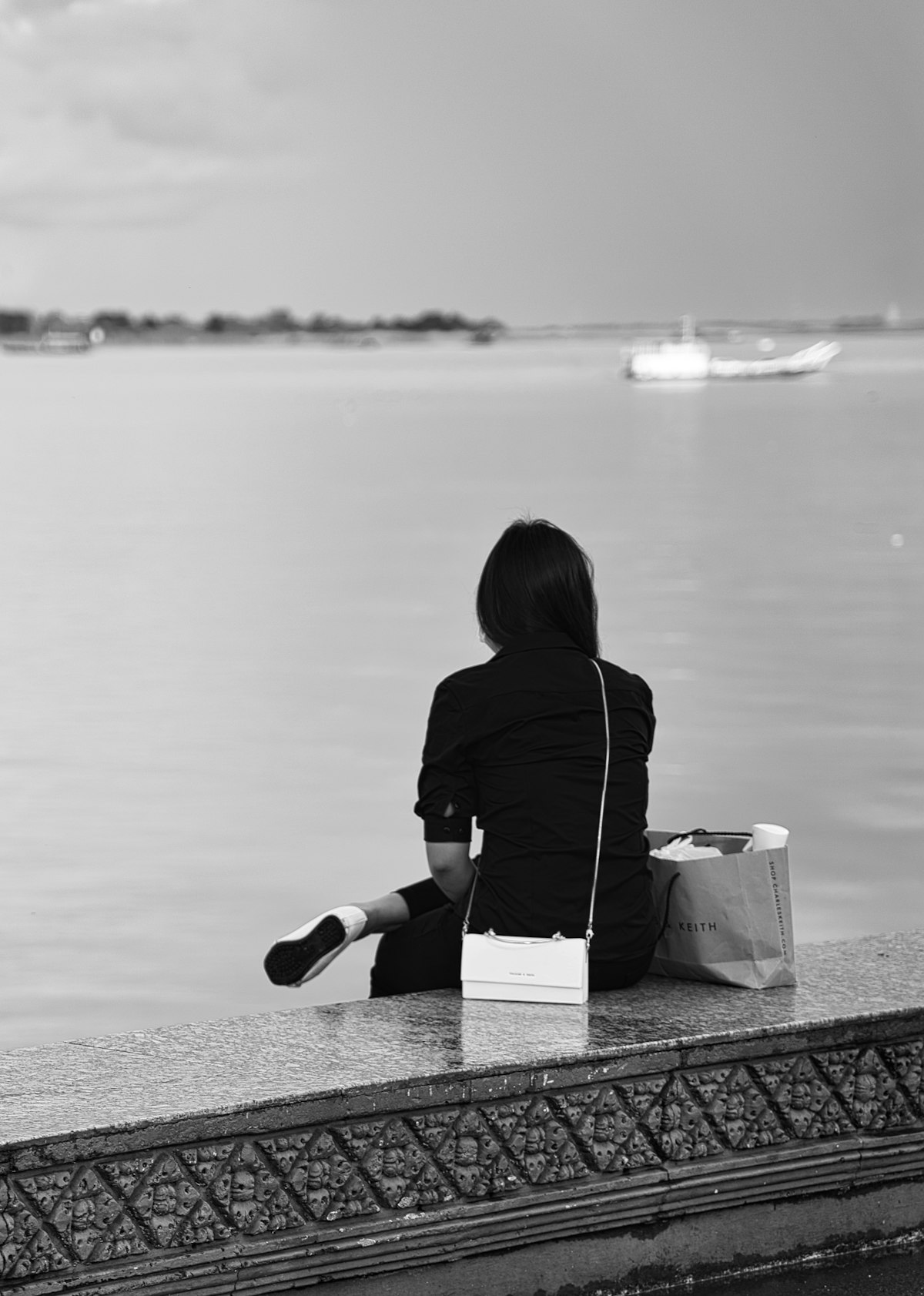
Showing: Nov · Roth Chanvirak / Unsplash
Cambodia · Southeast Asia
Best time to visit Phnom Penh
November
Nov scores highest overall — reliable weather and good value. Set your priorities below to personalise this result.
What matters most to you?
All 12 months — click any to expand
Nov
Roth Chanvirak / Unsplash
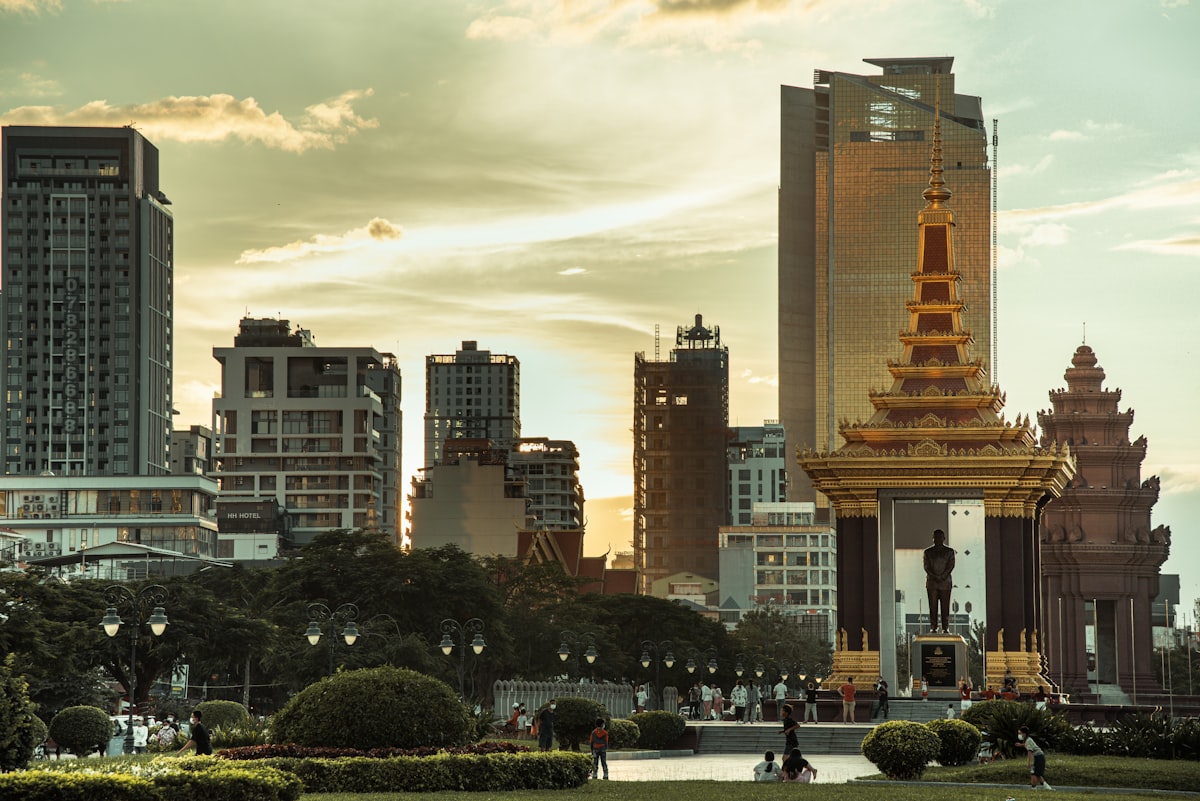
Best all-round month: dry season re-establishes, Water Festival peaks if not in October, city at full energy.
31°C
High
23°C
Low
90mm
Rain
7.5h
Sun/day
What you gain
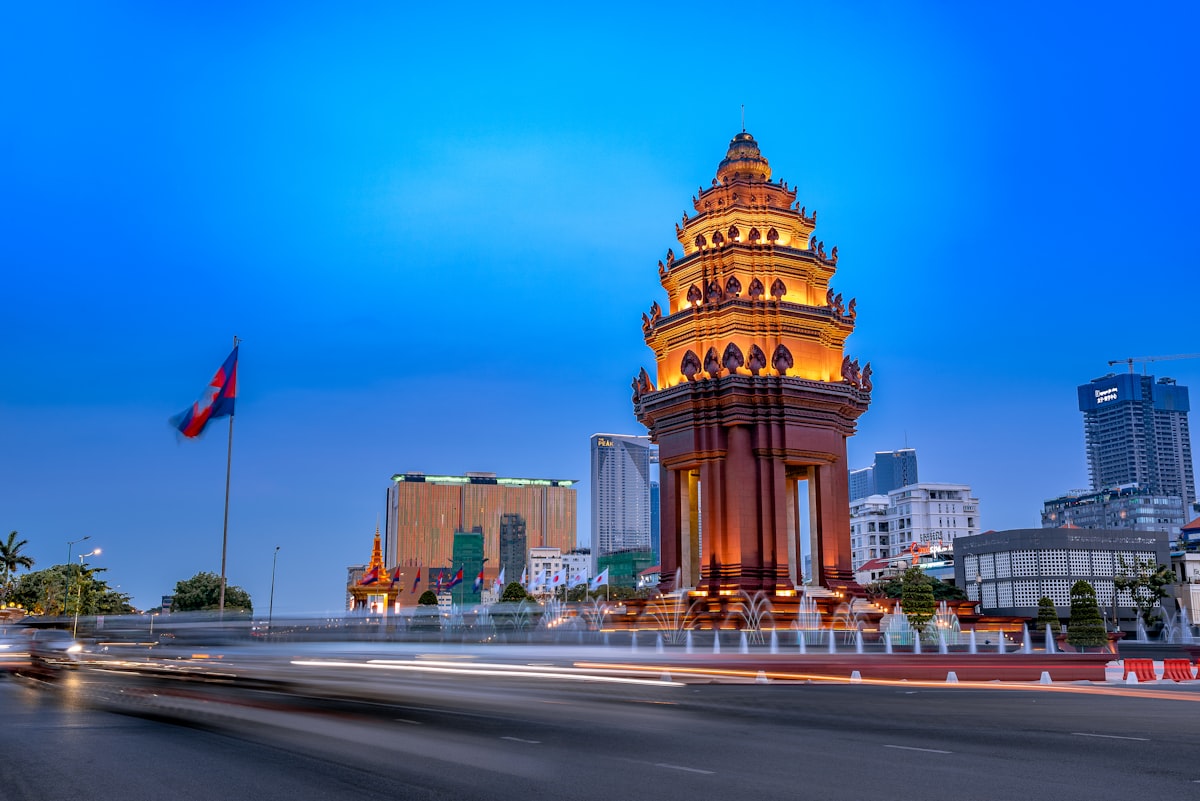
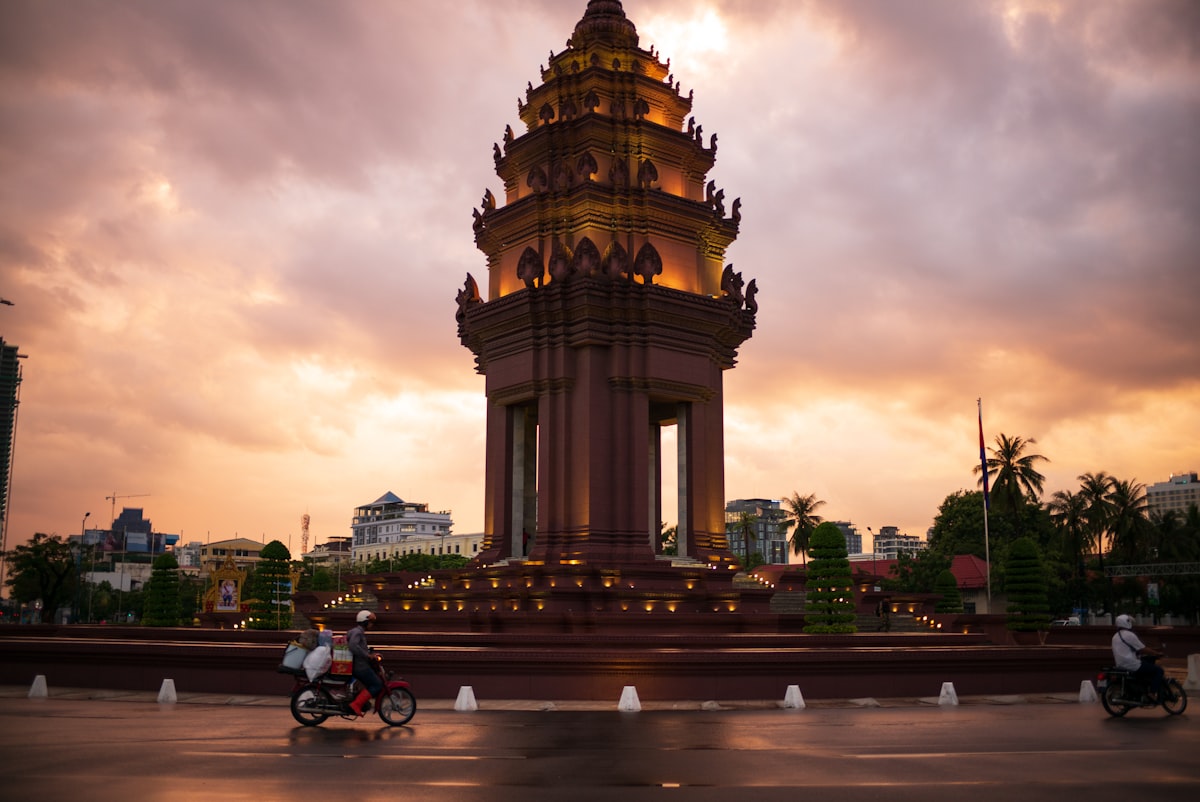
- ↑Bon Om Touk (Water Festival) can fall in November depending on the lunar calendar — if so, the riverside boat races, illuminated floats, and fireworks over the Royal Palace are unmissable; the most spectacular event in Phnom Penh's year
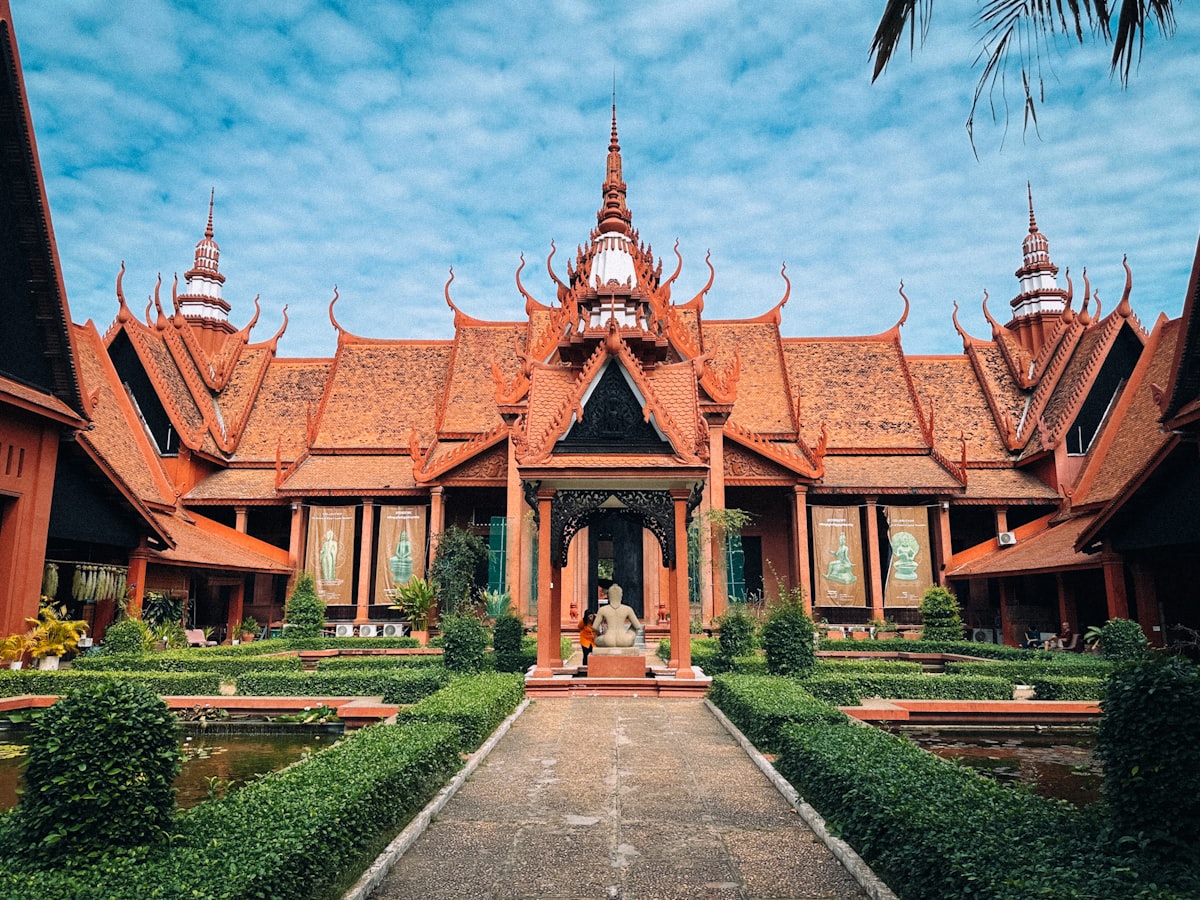
- ↑Dry season is re-establishing rapidly: 90mm of rain with 7.5 sunshine hours daily; the Royal Palace, Silver Pagoda, and Killing Fields memorial are all fully enjoyable again
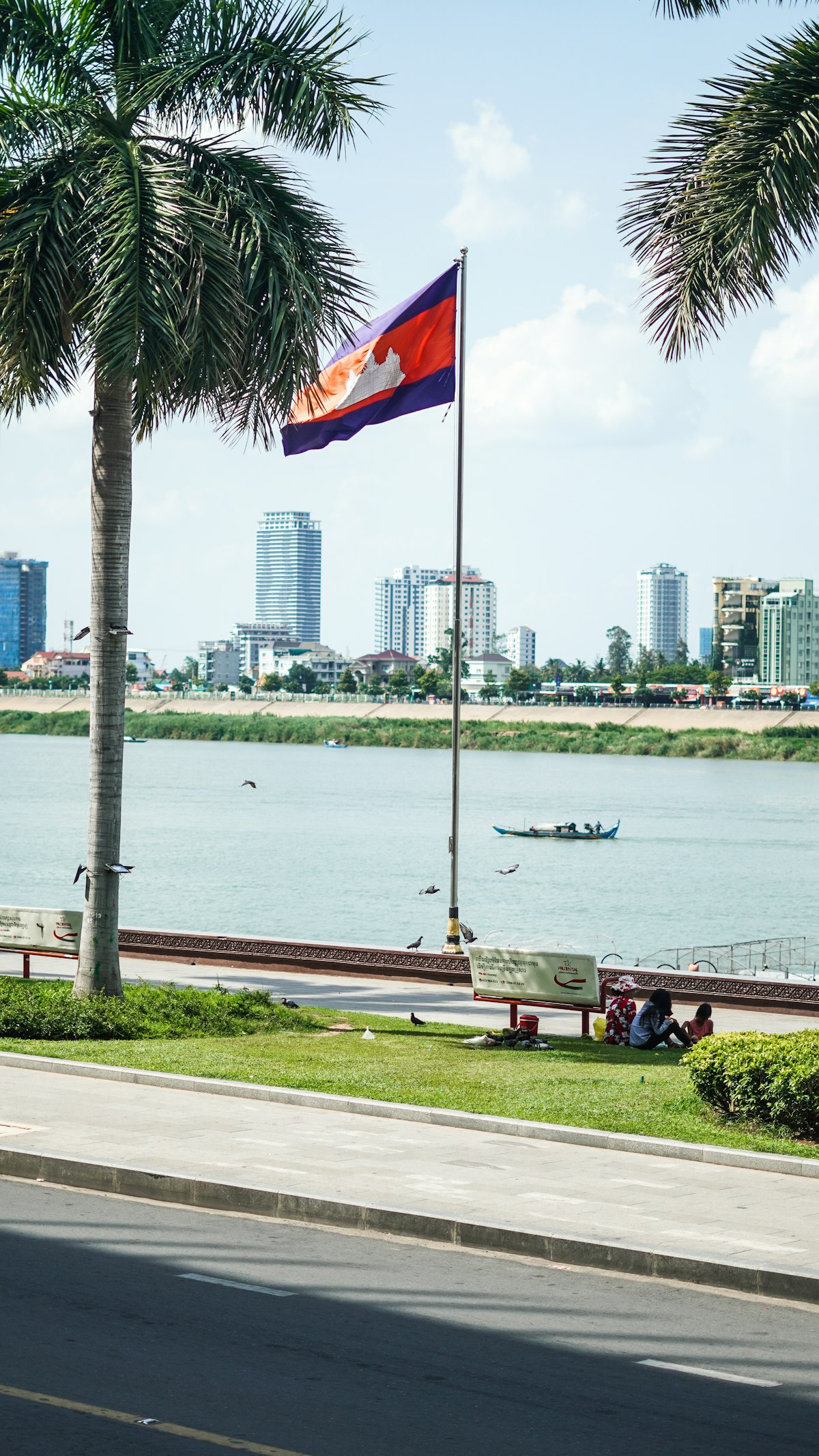
- ↑Temperatures drop to a comfortable 31°C with lower humidity than the monsoon months — evenings on Sisowath Quay are genuinely pleasant for the first time since April
What you sacrifice
- ↓If the Water Festival falls in November, hotel prices spike significantly for the festival weekend — early booking essential
- ↓Tourist season rebuilding from the wet-season low: accommodation prices rising from October budget levels; advance planning increasingly necessary
Nov scores highest overall — reliable weather and good value. Set your priorities below to personalise this result.
Nov
Best all-round month: dry season re-establishes, Water Festival peaks if not in October, city at full energy.
31°C
High
90mm
Rain
7.5h
Sun
- ↑Bon Om Touk (Water Festival) can fall in November depending on the lunar calendar — if so, the riverside boat races, illuminated floats, and fireworks over the Royal Palace are unmissable; the most spectacular event in Phnom Penh's year
- ↑Dry season is re-establishing rapidly: 90mm of rain with 7.5 sunshine hours daily; the Royal Palace, Silver Pagoda, and Killing Fields memorial are all fully enjoyable again
- ↑Temperatures drop to a comfortable 31°C with lower humidity than the monsoon months — evenings on Sisowath Quay are genuinely pleasant for the first time since April
- ↓If the Water Festival falls in November, hotel prices spike significantly for the festival weekend — early booking essential
- ↓Tourist season rebuilding from the wet-season low: accommodation prices rising from October budget levels; advance planning increasingly necessary
Top travel windows
★ BestNovember
Best overall
Highest combined score
31°C
High
90mm
Rain
7.5h
Sun
October
Best for value
Lowest prices & fees
31°C
High
250mm
Rain
6h
Sun
June
Fewest crowds
Quietest month
33°C
High
175mm
Rain
5.5h
Sun
Breakdown by priority
Best for weather
January
31°C high · 15mm rain · 8hrs sun/day
Best for budget
October
Budget accommodation across the city remains extremely affordable — except for the 3-day Water Festival weekend itself when demand spikes sharply
Fewest crowds
June
Lowest tourist crowds of the year: the National Museum, Tuol Sleng, and the Royal Palace can be explored with remarkable unhurried access
Worst time to visit
October, September
250mm is Phnom Penh's single wettest month — weather score capped at 2; flooding is a real risk in lower-lying districts and around the lake areas
Where to stay in Phnom Penh
All neighbourhoods →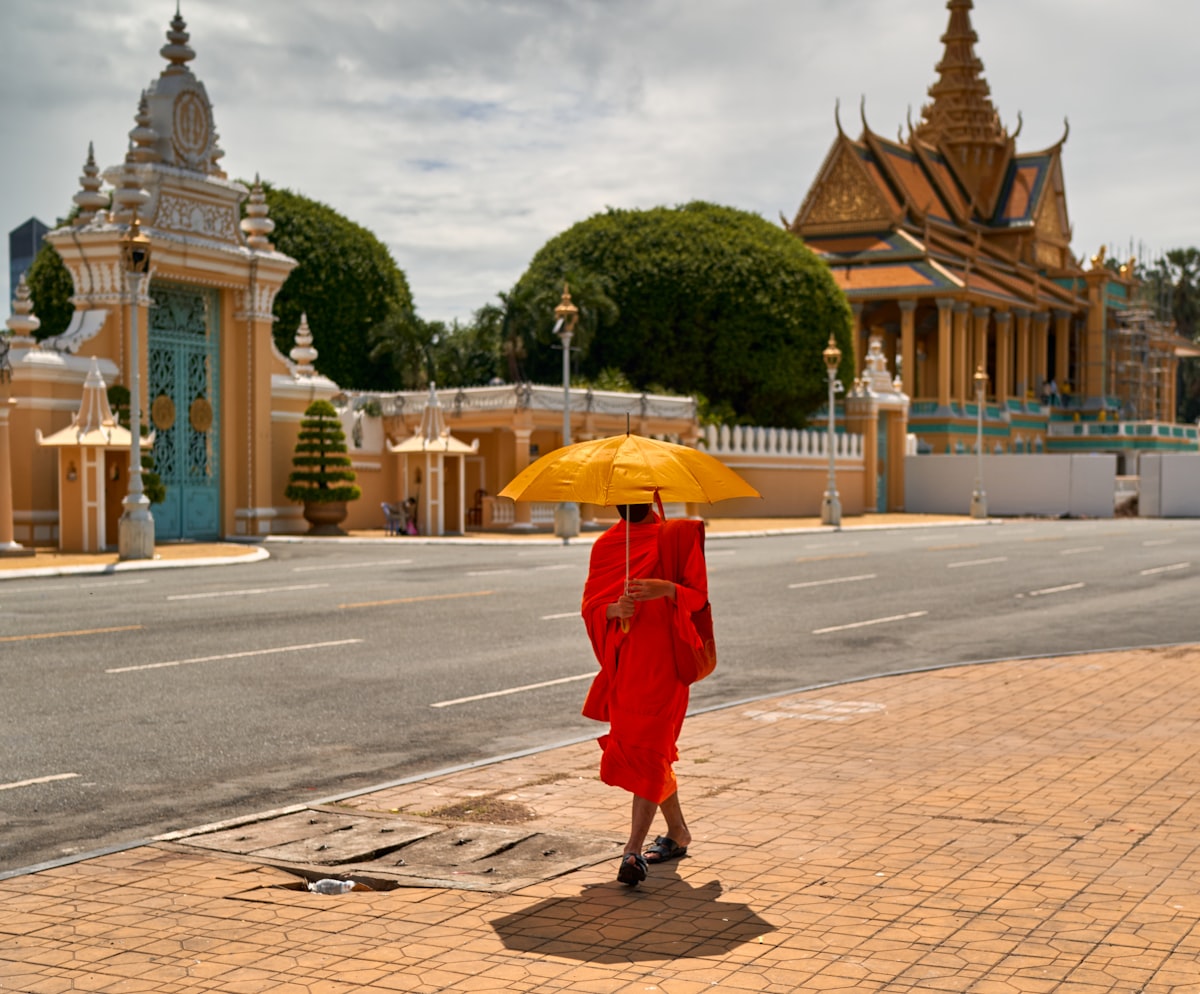
Riverside / Daun Penh
The colonial heart of Phnom Penh — Royal Palace, Sisowath Quay promenade, FCC, and the National Museum within walking distance.
10/10
Central
9/10
Walk
7/10
Transit
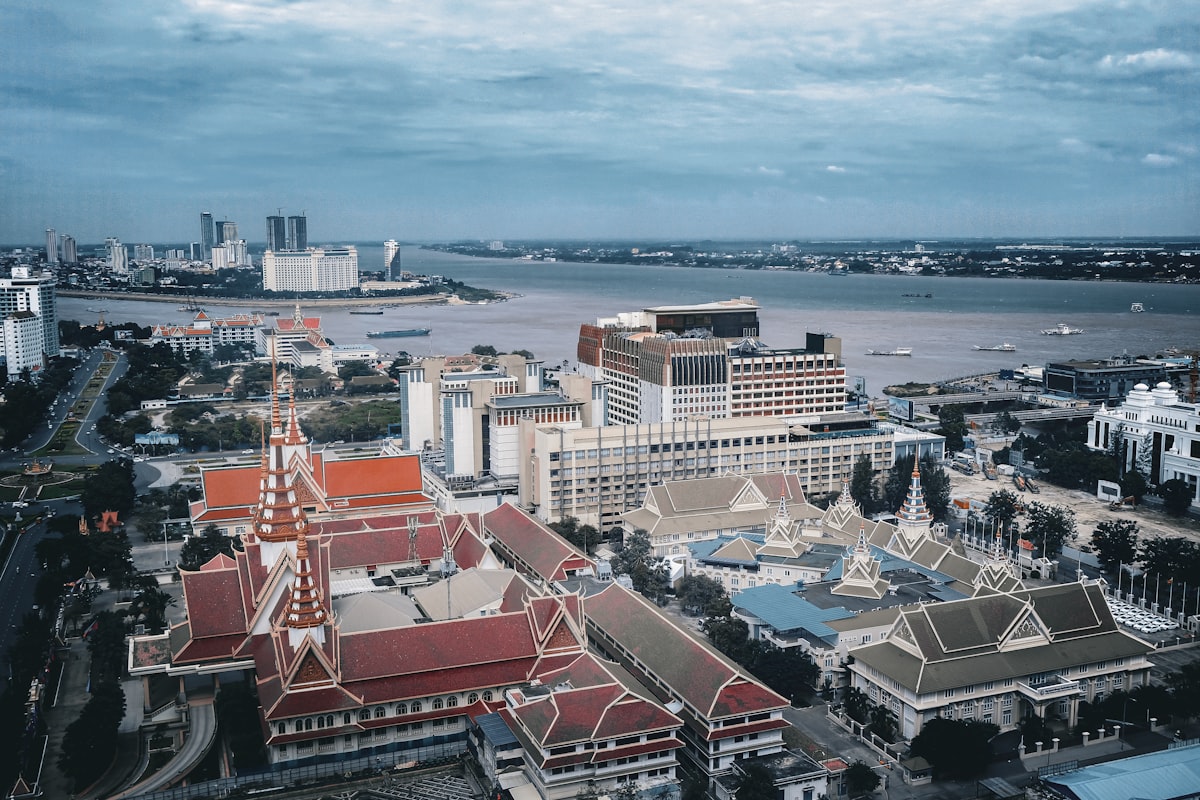
Toul Tom Pong / Russian Market
Phnom Penh's creative quarter — the Russian Market, boutique design shops, arts studios, and the most local street food in the city.
6/10
Central
8/10
Walk
6/10
Transit
Also exploring
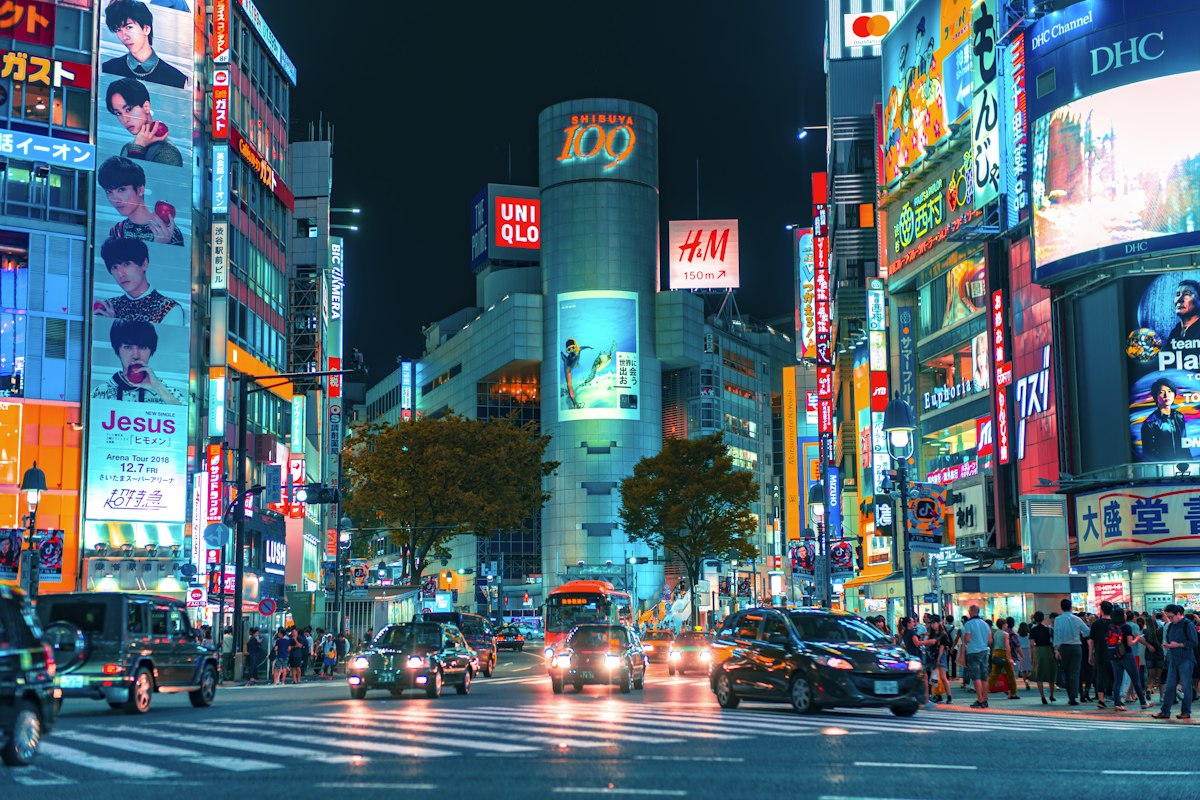
Tokyo
Japan
A city of dramatic seasonal contrasts — cherry blossom crowds, oppressive summer humidity, and golden autumn foliage — where the wrong timing can make or break the trip.
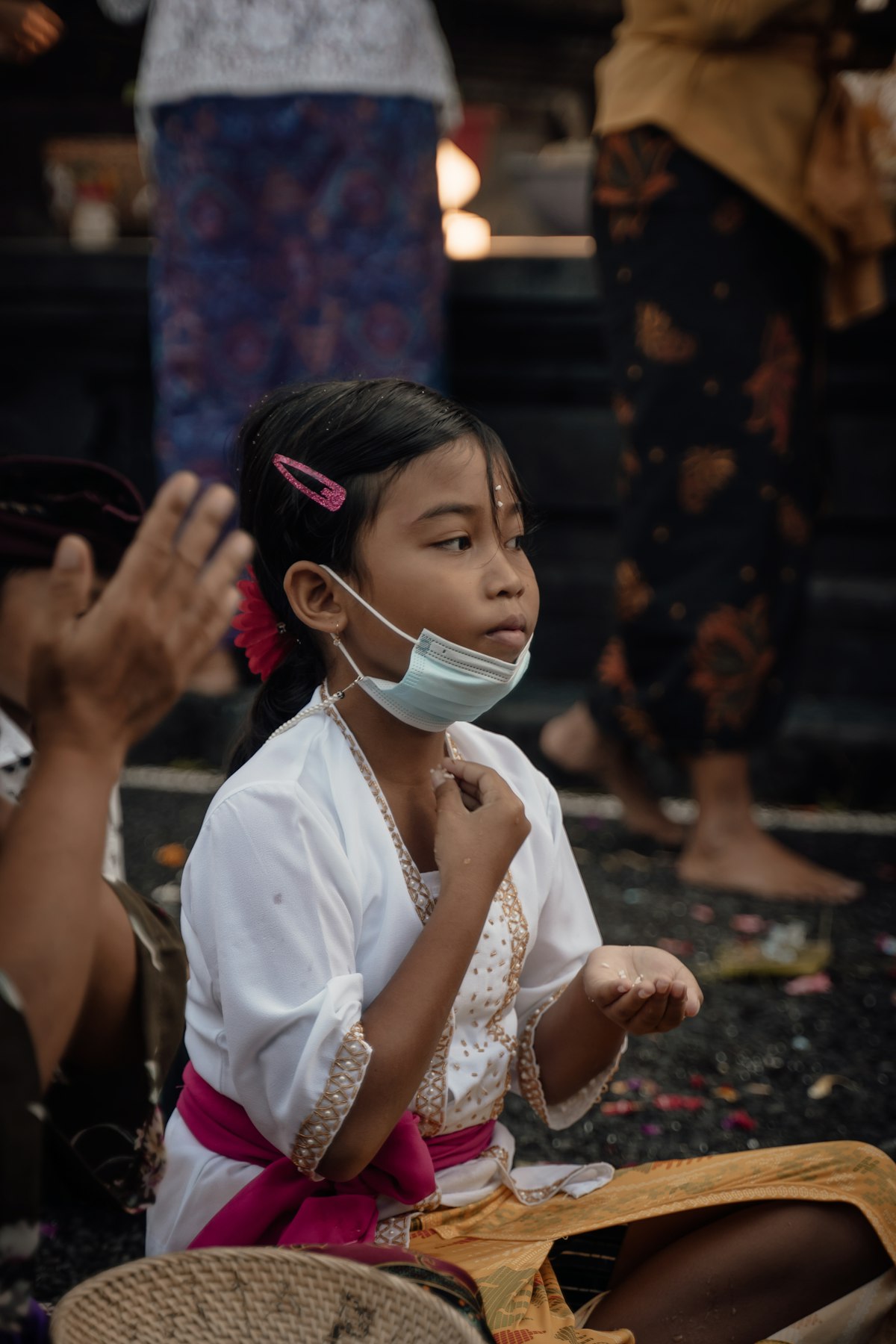
Bali
Indonesia
A Hindu island of rice terraces, temple ceremonies, and surf breaks where the monsoon makes timing genuinely binary — the difference between dry and wet season is not subtle.
Maldives
Maldives
A destination defined almost entirely by its monsoon calendar — the difference between the NE dry season (November–April) and SW wet season (May–October) is not subtle and shapes every aspect of the experience.
Worth knowing
November scores highest overall. December is the most crowded month — avoid if you can. See crowd-free ranking →
Month by month breakdown
January#2▾
Gains
- ↑Only 15mm of rain all month — the Royal Palace, Silver Pagoda, and National Museum are all fully enjoyable outdoors without rain contingency
- ↑Cool by Cambodian standards at 31°C with pleasant evenings on Sisowath Quay; the riverside promenade is at its most comfortable for walking
- ↑Water Festival atmosphere lingers from November — tuk-tuk drivers and riverside restaurants operate at full capacity with competitive pricing
Sacrifices
- ↓International tourist season in full swing: popular sites and Sisowath Quay restaurants are busier than the wet-season months
- ↓Hotel prices are 25–35% above wet-season rates — advance booking essential for riverside and central properties
February#4▾
Gains
- ↑February records only 10mm of rain — the driest month in Phnom Penh's calendar, making Killing Fields and S-21 visits fully reliable without rain disruption
- ↑Chinese New Year brings additional festive energy to Phnom Penh's Cambodian-Chinese community — street celebrations and temple activity add to the city atmosphere
- ↑The Mekong and Tonlé Sap rivers are at their most photogenic and navigable; sunset boat trips from Sisowath Quay are excellent value
Sacrifices
- ↓Peak tourist season with prices still elevated from the post-Water Festival high — independent guesthouses fill faster than in the wet season
- ↓Heat builds toward 33°C by afternoon — midday outdoor sightseeing at the Killing Fields of Choeung Ek requires careful timing
March#5▾
Gains
- ↑International tourist numbers beginning to ease from February peak — temples and the National Museum feel noticeably less crowded
- ↑Khmer New Year preparations start in temple districts; peach-coloured decorations and offerings begin appearing at pagodas across the city
- ↑Prices moderate from February peak — a value window that combines acceptable weather with lower crowds
Sacrifices
- ↓35°C average high makes midday sightseeing genuinely punishing — the Royal Palace grounds and outdoor sites require early morning or late afternoon scheduling
- ↓45mm of rain begins to appear as occasional heavy afternoon downpours; the first wet-season forerunners
April#6▾
Gains
- ↑Khmer New Year (Bon Chol Chhnam Thmey, mid-April) is the most important celebration in Cambodia: the city erupts in water fights, traditional games, music, and temple offerings — an extraordinary cultural experience unlike anywhere in Southeast Asia
- ↑Temple complexes throughout Phnom Penh host New Year ceremonies and blessing rituals; access to authentic religious life is at its most open during this period
- ↑Despite the heat, the festive atmosphere on Sisowath Quay and in pagoda courtyards makes evening hours genuinely memorable
Sacrifices
- ↓36°C average high is the hottest month of the year — combined with 72% humidity, daytime outdoor sightseeing beyond Khmer New Year celebrations is inadvisable between 10am and 4pm
- ↓Khmer New Year week drives hotel prices to their annual peak; many properties sell out weeks in advance
- ↓Much of the city closes for several days around the New Year — logistics for non-festival activities require careful planning
May#8▾
Gains
- ↑Hotels drop 30–40% from peak season rates; even riverfront properties become genuinely affordable — a budget window for experiencing the city at its most Cambodian
- ↑The city operates almost entirely for locals — street food markets, tuk-tuks, and the Phsar Thmei (Central Market) are authentic rather than tourist-facing
- ↑Pchum Ben preparations begin, adding ceremony to temple visits — monks chanting at dawn adds an atmospheric layer absent in the dry season
Sacrifices
- ↓155mm of rain — just over the hard threshold; heavy afternoon downpours are daily events; outdoor attractions including the Killing Fields require weatherproof preparation
- ↓Tuol Sleng Museum's outdoor courtyard areas and the Silver Pagoda become genuinely difficult to visit during downpours
- ↓Humidity at 78% makes the heat feel heavier than the thermometer suggests — 34°C with daily rain feels considerably more oppressive than dry-season heat
June#9▾
Gains
- ↑Lowest tourist crowds of the year: the National Museum, Tuol Sleng, and the Royal Palace can be explored with remarkable unhurried access
- ↑Excellent accommodation value — mid-range hotels are at their competitive minimum, and boutique guesthouses on BKK1 are significantly discounted
- ↑Phnom Penh's café culture is at its best when seeking shelter from rain — BKK1's coffee shop scene operates at full capacity regardless of weather
Sacrifices
- ↓175mm of rain with persistent afternoon downpours — the Killing Fields of Choeung Ek, which requires extended outdoor time, is difficult to visit meaningfully in June
- ↓Only 5.5 daily sunshine hours — photography at the Royal Palace and Silver Pagoda depends on catching the narrow morning window before the cloud cover builds
- ↓The monsoon-swollen Tonlé Sap begins reversing its flow direction; boat trips on the river can be choppy and less comfortable than the dry season
July#10▾
Gains
- ↑Budget accommodation at its best — Phnom Penh in July offers some of the best value of any Southeast Asian capital; guesthouses and boutique hotels are priced for backpackers
- ↑Phsar Thmei (Central Market) and Phsar O'Russei operate at full local intensity with no tourist markup; street food at its most authentic
- ↑European summer visitors return to Southeast Asia in July, giving the city a modest but noticeable injection of café and bar activity
Sacrifices
- ↓165mm of rain: heavy daily downpours; the Killing Fields outdoor memorial requires long stretches between the 17 mass grave sites — challenging without dry periods
- ↓The Tonlé Sap's flood season is fully underway; the riverside area floods occasionally and the promenade can be muddy after sustained rain
- ↓Photography conditions are poor — overcast skies dominate and golden-hour light at the Royal Palace is rare
August#11▾
Gains
- ↑Cheapest month for accommodation — riverside hotels and BKK1 guesthouses are available without advance booking at significantly reduced rates
- ↑Tuol Sleng Genocide Museum and the National Museum of Cambodia are climate-controlled and excellent in any weather; August is a fine month for Phnom Penh's indoor culture
- ↑The city's street food and restaurant scene operates at full Cambodian intensity regardless of weather — late-night Khmer BBQ on BKK1 streets is a genuine experience
Sacrifices
- ↓180mm of rain — the wettest of the core monsoon months; the city's drainage struggles with sustained heavy rain, and low-lying areas flood temporarily after downpours
- ↓The heat and humidity combination (32°C / 83%) is Phnom Penh at its most oppressive; even short outdoor walks require strategic rest in air-conditioned spaces
- ↓Pchum Ben ancestor festival preparations are underway but the main event falls in September; August has no major events to anchor a visit
September#12▾
Gains
- ↑Cheapest month of the year: extraordinary hotel rates across all tiers, including properties that would otherwise be well out of budget in dry season
- ↑Pchum Ben (ancestor festival, date varies by lunar calendar): Cambodians bring offerings to pagodas at dawn for 15 days — an authentic cultural immersion that few tourists witness
- ↑Phnom Penh operates entirely for its residents in September — the markets, street food stalls, and local restaurants are completely untouched by tourism infrastructure
Sacrifices
- ↓220mm of rain is the second-wettest month in Phnom Penh's calendar — sustained downpours, localised flooding near Boeung Keng Kang, and daily outdoor disruption
- ↓Weather score is capped at 2: conditions are genuinely difficult for any destination involving outdoor exploration, including the Killing Fields memorial
- ↓Humidity reaches 85% — the most uncomfortable combination in the year; even short walks feel exhausting and the city smells of wet earth and standing water
October#7▾
Gains
- ↑Bon Om Touk (Water Festival / Bon Om Touk) marks the miraculous reversal of the Tonlé Sap river flow: the spectacular boat races on the river in front of the Royal Palace draw hundreds of thousands of Cambodians — the single most electrifying event in the Cambodian calendar
- ↑Budget accommodation across the city remains extremely affordable — except for the 3-day Water Festival weekend itself when demand spikes sharply
- ↑Sunshine hours recover to 6 daily — more reliable morning windows for photography and outdoor visits than the July–September core monsoon
Sacrifices
- ↓250mm is Phnom Penh's single wettest month — weather score capped at 2; flooding is a real risk in lower-lying districts and around the lake areas
- ↓Water Festival weekend drives hotel prices to their peak for the year — book months in advance or accept very limited availability; the city hosts over 2 million visitors for the festival
- ↓The combination of extreme crowds during the festival and heavy rain requires significant logistical planning; the 2010 stampede tragedy has made the city security-conscious during peak festival moments
November#1▾
Gains
- ↑Bon Om Touk (Water Festival) can fall in November depending on the lunar calendar — if so, the riverside boat races, illuminated floats, and fireworks over the Royal Palace are unmissable; the most spectacular event in Phnom Penh's year
- ↑Dry season is re-establishing rapidly: 90mm of rain with 7.5 sunshine hours daily; the Royal Palace, Silver Pagoda, and Killing Fields memorial are all fully enjoyable again
- ↑Temperatures drop to a comfortable 31°C with lower humidity than the monsoon months — evenings on Sisowath Quay are genuinely pleasant for the first time since April
Sacrifices
- ↓If the Water Festival falls in November, hotel prices spike significantly for the festival weekend — early booking essential
- ↓Tourist season rebuilding from the wet-season low: accommodation prices rising from October budget levels; advance planning increasingly necessary
December#3▾
Gains
- ↑20mm of rain all month — one of the two driest months in Phnom Penh; the full circuit of Royal Palace, Silver Pagoda, National Museum, and riverside promenade is achievable in a single comfortable day
- ↑Coolest month of the year at 30°C with 21°C evenings — genuinely pleasant for walking Sisowath Quay at night and exploring the French colonial quarter at any hour
- ↑Christmas and New Year festivities bring additional energy to BKK1's bar and restaurant scene; rooftop bars above the Mekong are at their most atmospheric in the cool evening air
Sacrifices
- ↓International tourist peak: December brings the highest volumes of Western visitors; the Royal Palace and Tuol Sleng Museum can feel crowded by mid-morning
- ↓Hotel prices are at the premium end of the moderate range; last-minute bookings are difficult and expensive
How this is calculated
Climate data
Open Meteo ERA5
30-year normals (1991–2020). Temperature, rainfall, sunshine, humidity.
Price & crowd
Tourism research
Seasonal pricing from tourism authority data. Directional — compares months within a destination only.
Personalisation
Weighted scoring
Your priorities change the weights. Budget-first users get different results than weather-first users.
Share this result
November is the best time to visit Phnom Penh
Travel timing updates
New destinations and timing guides, when they land.
No spam. Unsubscribe anytime.